
Standing before an AI-generated film of a younger Lee Kuan Yew floating through space in an astronaut suit, I couldn’t help but wonder what our founding father would have to say. September 16 marks the day that Singapore’s late prime minister would have turned 100 and it seemed ironic that an exhibition has been launched to honour his legacy.
After all, the visionary leader made it clear over the years that he was against hero worship. Even prime minister Lee Hsien Loong once mentioned that “Mr Lee made it very clear throughout his life that he did not need and did not want any monument.”
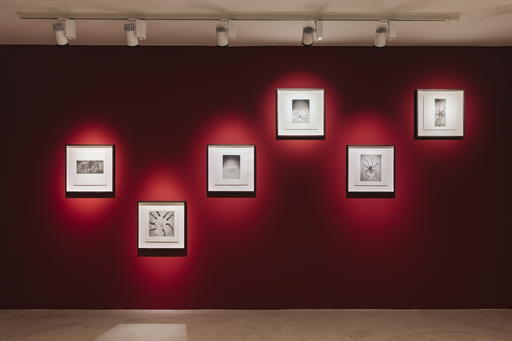
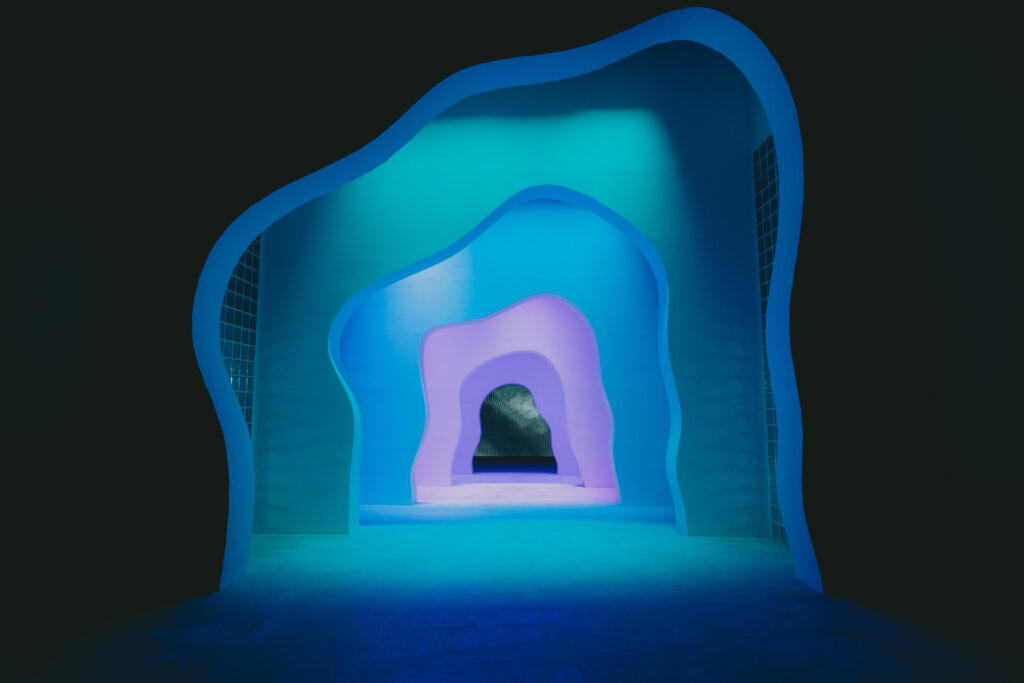
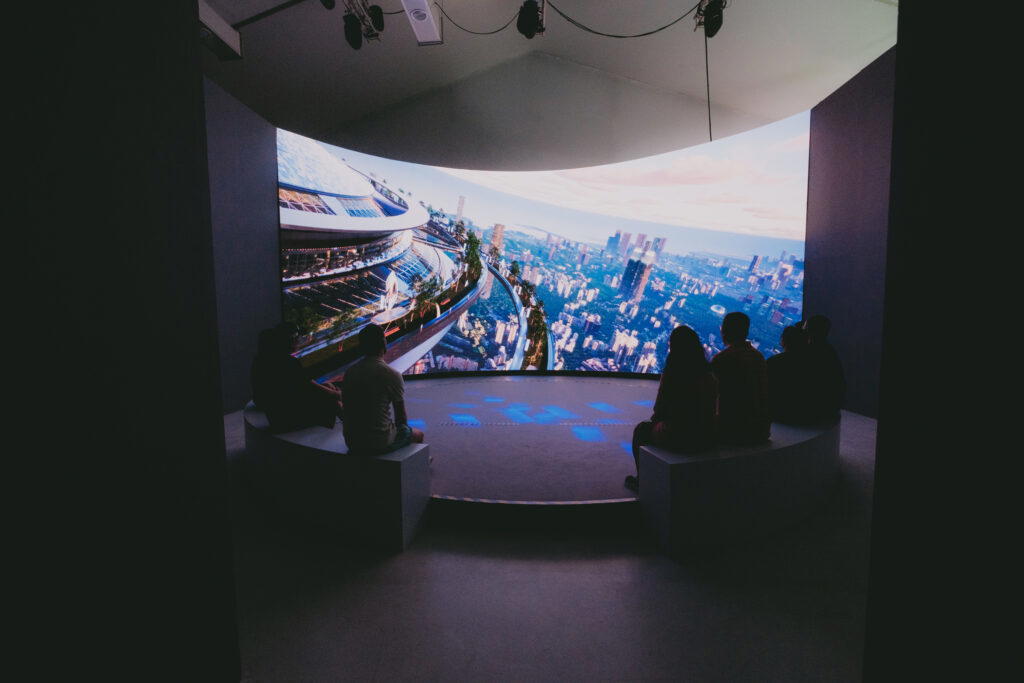
Nonetheless, times have changed. New technology has made remembrance easier, especially in the case of “Now is Not the Time”, an immersive art exhibition that celebrates his life. It runs from now until September 24 at 25 Pasir Panjang Road. Produced by virtual production and animation house X3D studio, the exhibition features artificial intelligence, generative art, architecture, sculpture, film, and music from a pool of global talent.
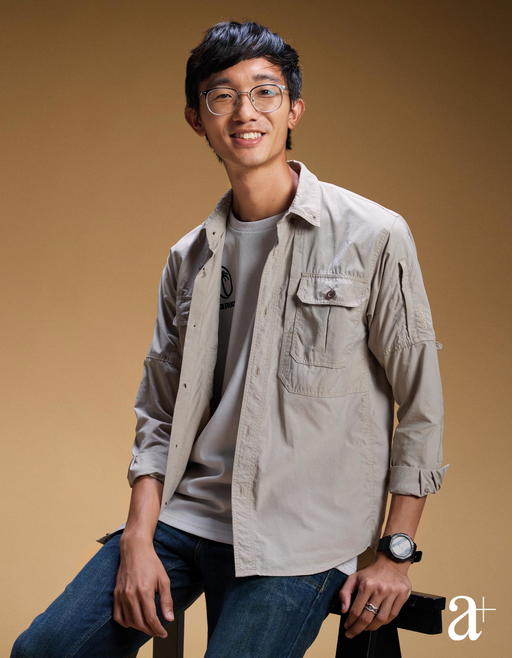
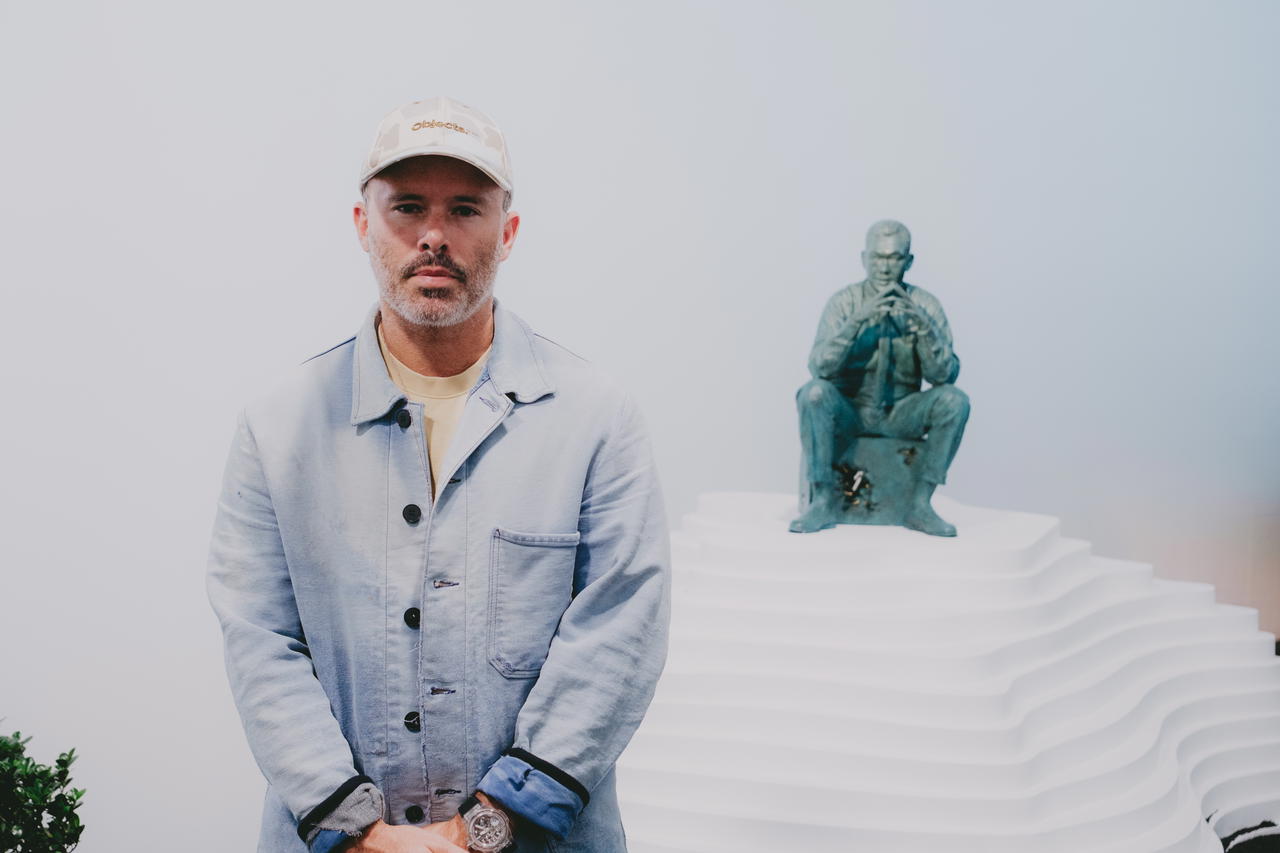
One of these talents is Daniel Arsham, a New York-based artist known for a practice that spans fine art, architecture, performance, and film. Even though he has worked with brands like Dior, Rimowa, and even Pokémon, this is the first time he has made a sculpture of a global leader.
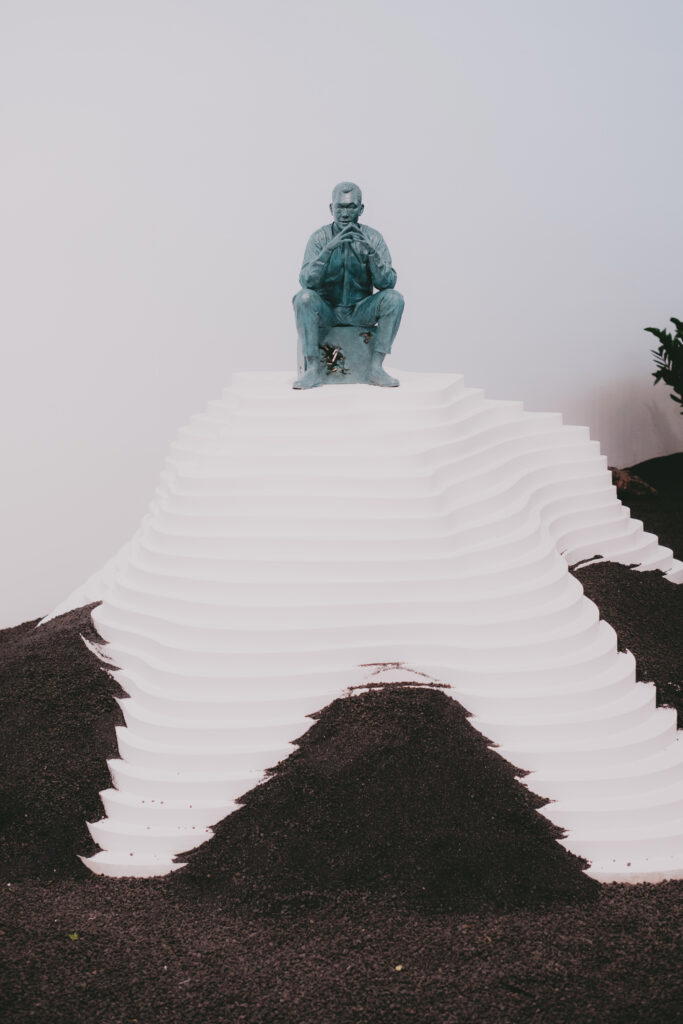
Among the exhibition’s highlights is a full-body sculpture of Mr Lee in a pivotal moment in history, right when he declared Singapore’s separation from Malaysia. Surrounding it is an abundance of plant and organic life, which reflects Singapore’s unique position as a high-tech nation filled with greenery, Arsham explains. The separation signifies not only a vulnerable moment for Mr Lee, but also a turning point for the nation.
“I’ve been intrigued by Singapore since my first visit over 10 years ago,” he says. “The futuristic nature of the city is incredibly inspiring to me and I’m truly humbled to be part of the of the celebrations marking Mr Lee’s 100th birthday.” He hopes that the sculptures he has made in his honour will inspire a new generation and help them to understand and appreciate the importance of his legacy as a revered global leader.
Ashram’s works blend the past, present, and future to showcase the malleability and power of nostalgia. “So much of our everyday experience is governed by the way that we package time. Morning and night; weeks and months. We’re constantly orienting ourselves around our relationship with time,” he says. He hopes that his work can allow us to escape the idea of time and even be a little confused about it.
An example is a series of artworks he created in collaboration with the Louvre Museum, where he depicted antique Greek busts next to Pokémon characters like Pikachu. They were all made of the same material, “eroding” thanks to the passage of time. Likewise, his sculpture of Mr Lee had a dark green patina that subtly hints at the way time passes, reminding us how long it’s been since his departure.
When it comes to inspiration for his art, Ashram tends to look at the past instead of the future. “We can look at history. We know for certain what we experience in our own lifetime. We can look back 100 years or 2,000 years,” he says. However, going into the future limits how much we can project on the possibilities.
Even as he dives into the past, he isn’t opposed to futuristic and emerging trends like AI. He notes that with each new form of technology, it’s another useful tool for artists to implement in their work. “One of the things I’ve has asked AI to do is to imagine other variations of my painting or sculpture.”