
In his thuggish youth, Boi Kwong joined a street gang and recruited his younger brother into the ring. But while Kwong eventually got back on the straight and narrow, the latter did not—not until a series of life-altering events. Kwong remains “extremely remorseful” to this day no thanks to “prevailing repercussions”.
“My brother was a smart kid. What I did not only made him give up on his studies, but also led him to drugs,” reveals the 45-year-old. Prompted by penitence, he made a triad-themed feature film about his brother’s spiral into vice and their tempestuous relationship. Released in 2008, The Days was screened at local theatres and earned a nomination for the Asian New Talent Award at the Shanghai International Film Festival.
By then, he was no greenhorn: prior to his feature directorial debut, he had cut his teeth at various production houses and was assistant director of local cult classic Becoming Royston. He was also a full-time filmmaking lecturer.
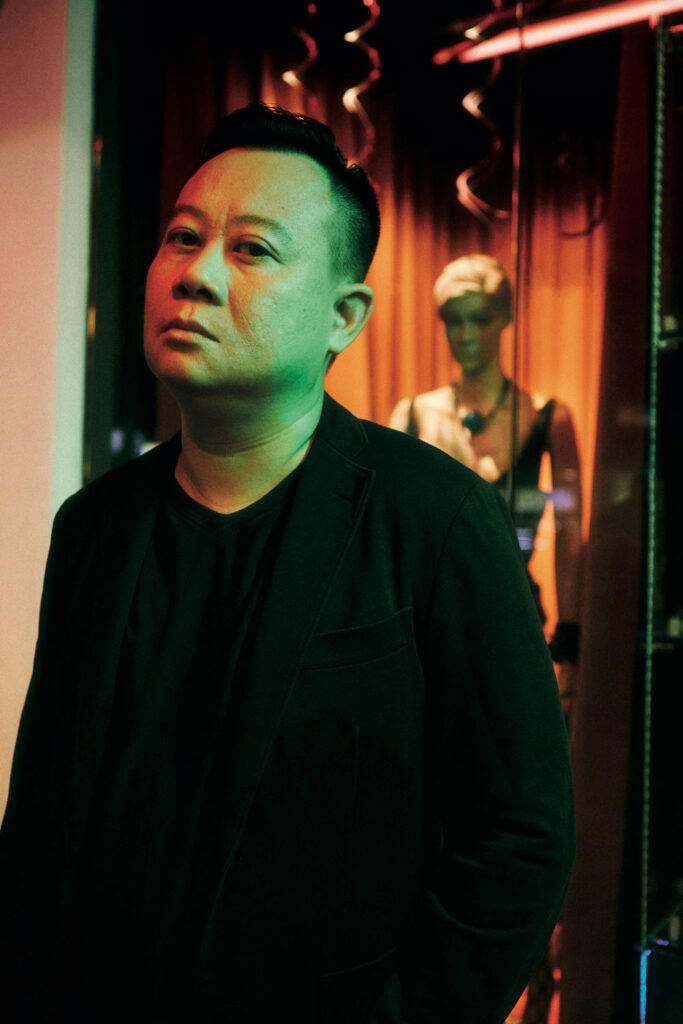
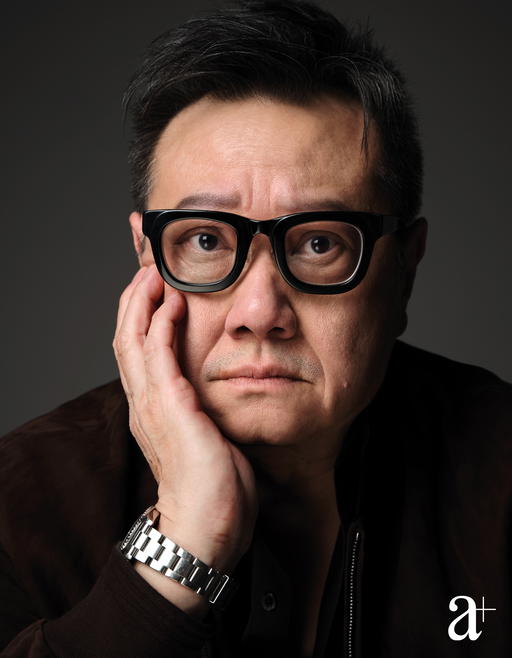
Photo: Mun Kong.
But a decade into teaching, he decided to return to fulfilling his own passion for telling stories on the big screen. “I realised that if I don’t step out of my comfort zone, I’d retire in the classroom,” he lets on. So, in 2015, he took on a role as a film producer at Singaporean film production and distribution company MM2 Entertainment, helping to produce films such as Wonder Boy, Number 1 and Zomebiepura.
It is a job he still holds, and emboldened by the new skills he has honed through working with some of the best-known local film directors in recent years, he decided he was ready to make his second film during the height of the pandemic. A neo-noir thriller, Geylang features a pimp, prostitute and politician as its protagonists and is set in the eponymous red-light district. The film starring Mark Lee and Sheila Sim was released last month.
The original plot centred on motorcycle gangs but was revised to better deliver a message he wanted underscored. Specifically, “that human nature is not black and white”.
“Many people are forced to do things against their will because of the things that happen to them, and many of us will go the distance for the people we love, like family. Therefore, all the characters in the film are shown to have two sides,” he says.
Moral ambiguity aside, the film is also replete with bloodshed and obscenity at a scale perhaps never seen before in a Singaporean production. It might as such be surprising that nearly 40 percent of its $1.3 million budget was funded by IMDA. “It is a common misconception” that the statutory board is conservative,” explains Kwong. “IMDA will lend its support as long as the story is interesting and the film is well-executed. Our audiences are already exposed to content on streaming platforms with 10 times more violence and gore,” he explains.
“If we want to stop perpetuating the stereotype of Singaporean films being family dramas or family comedies, we have to do something different—something parallel to what the rest of the world is doing.”
Boi Kwong on what it’ll take to propel the Singaporean film industry
It was dogged determination to disrupt the local film landscape that made him push the envelope with Geylang. Certain that the film would receive either a M18 or R21 rating, he made sure to “push the gore and violence to the extremes of the guidelines”. And his efforts paid off, with the film earning a Best Action Choreography nomination at the recent Golden Horse Awards.
Nonetheless, making a film in Singapore is a Herculean task, acknowledges Kwong. For one, it isn’t lucrative, so aspirants tend to lose their enthusiasm after years of corporate videos and TV commercials as their bread and butter. “Making a feature film is a different ball game altogether—it requires a lot of determination and self-discipline. Even writing for a short film can be tough.”
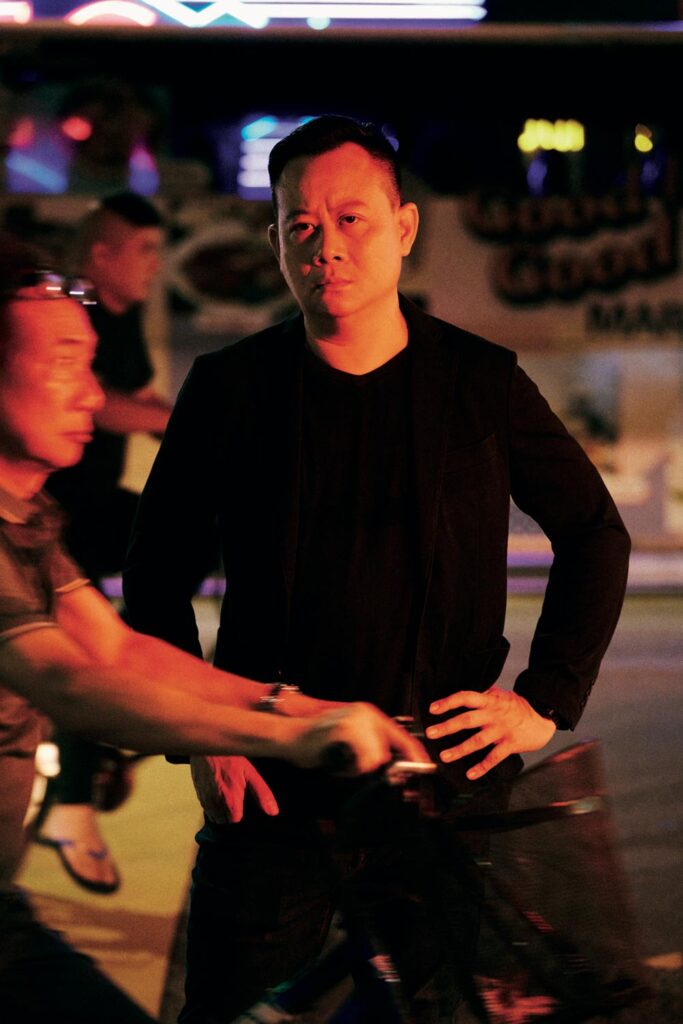
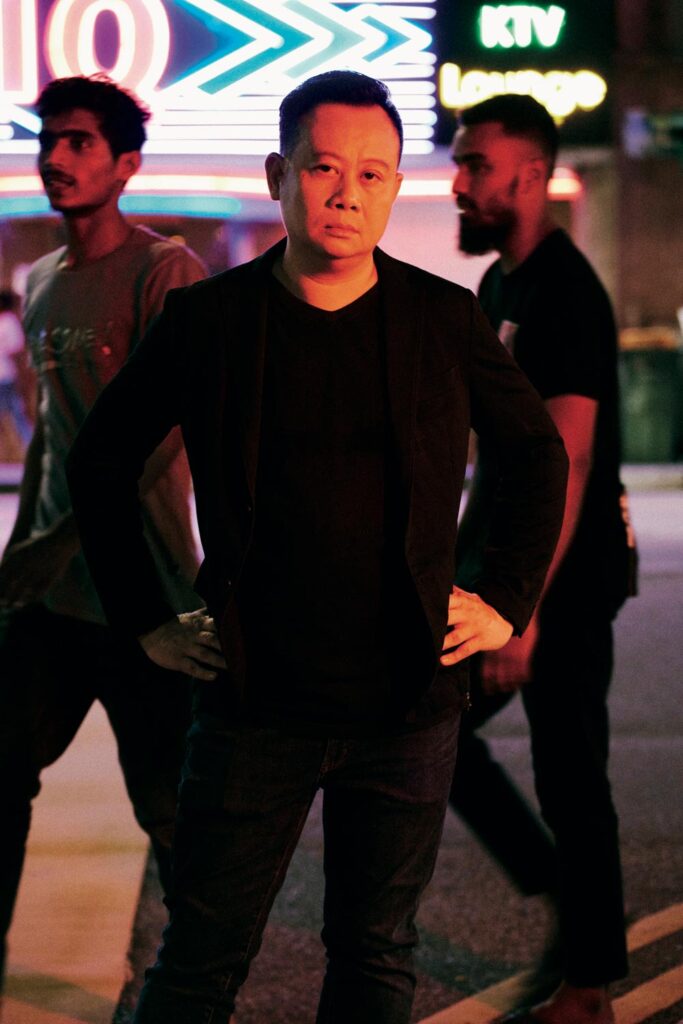
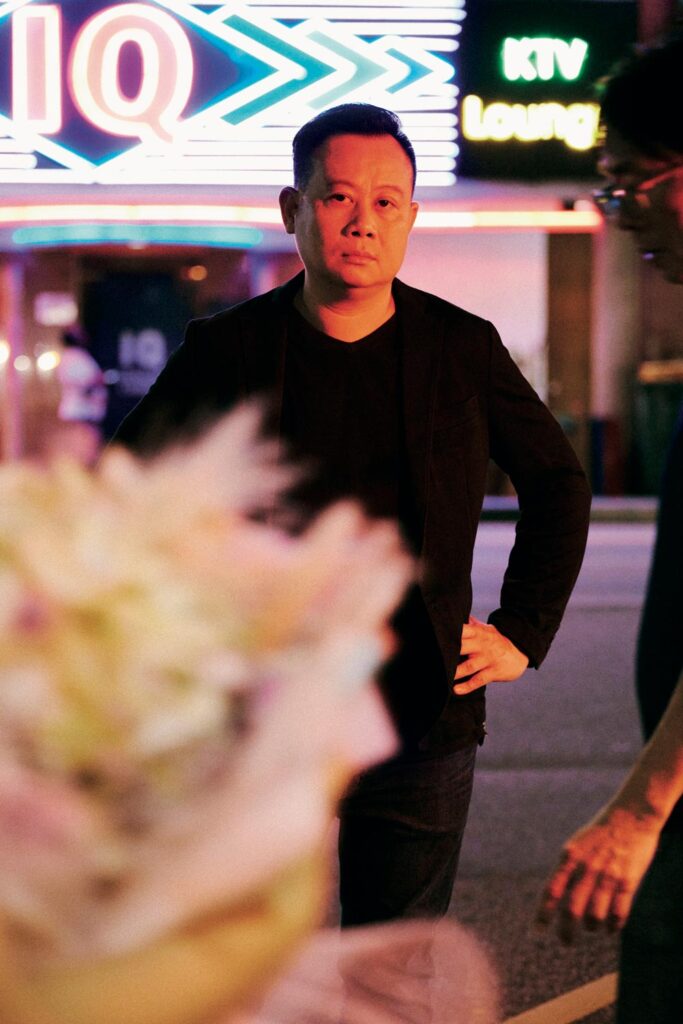
The greatest challenge, he adds, is one beyond our control: our small market. But it is not without a solution, which Kwong contends is making films that will be palatable to the larger markets in the region. And he practices as he preaches. At the time of writing, Geylang has been acquired by a major streaming platform. Although unable to disclose details, he teases that it “is not Netflix” and “for a good fee”.
Kwong considers himself to belong to the second generation of Singaporean filmmakers. The first, he reckons, is synonymous with the likes Eric Khoo, Jack Neo, Royston Tan and Kelvin Tong. And the third, the likes of Boo Junfeng and Anthony Chen. Why do the distinctions matter? “Because every generation has their own voice,” he reasons. “As the industry matures, the talent pool is more skilled. Our capabilities are more developed than before.”
He is happy to dish out advice to filmmaking hopefuls, like don’t hire a good team—build one yourself. “Build a team you can trust to ensure that everyone has faith in the project. And build strong relationships with people,” he rationalises. “We will always face budget limitations and will have to call in favours often.”
And don’t believe that you always need the best. “I don’t need to work with the most skilled people. I just need them to have the best attitude.”
Given that he took 13 years to put together his second film, Kwong jests he might take another 13 to make his third. But it will probably materialise a lot sooner. The film director is already working on two new scripts, one of which will explore school bullying and mild autism in children. The other, like his first, will be a personal tale, this time about his relationship with his late father.
This second-gen film director may be far from the guy putting out family dramas or family comedies. Yet, it is apparent that familial love is consistently the bedrock of his inspiration.
“The film will be about a man and his father with Alzheimer’s disease. My dad suffered from the disorder and I understand the frustrations of a caregiver. It will be a mainstream film with some fantasy elements, something new I want to try.”
Style director: Chia Wei Choong
Photography: Mun Kong
Photographer’s assistant: Hizuan Zailani
Grooming: Keith Bryant Lee