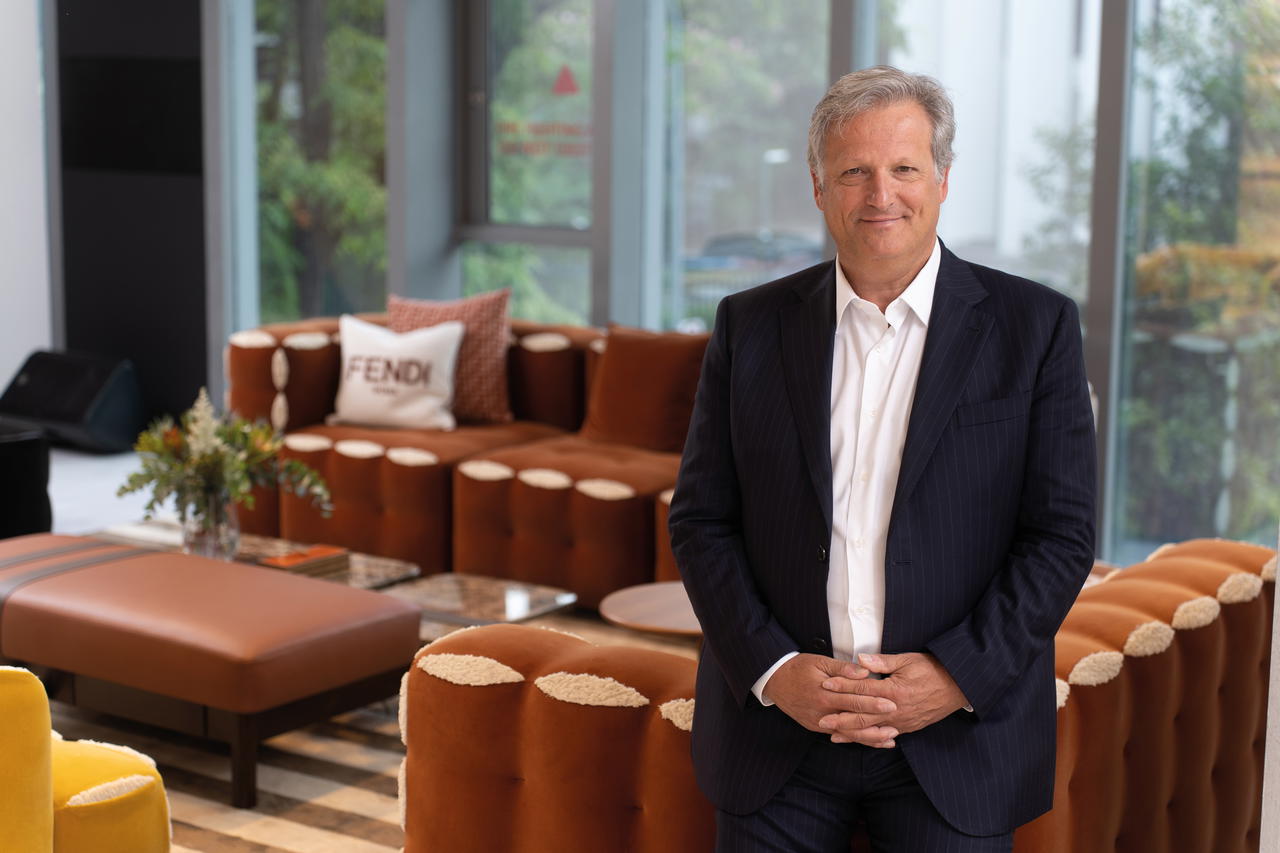
With a chuckle, Alberto Da Passano says, “Maybe you’d want a Peekasit sofa if you’re wearing a Peekaboo [bag].” The CEO of Fendi Casa flew in for the flagship store opening of the brand’s first Singapore outpost. Walking us through the two-storey showroom, he points out how fashion and furniture seamlessly intertwine.
Controvento’s Peekasit seating project draws inspiration from Fendi’s legendary Peekaboo bag. Designed with a soft, welcoming structure, the sofa exemplifies the powerful bond between luxury fashion and design.
Additionally, the store design features signature Fendi Casa elements, such as the FF logo and Arabescato Vagli marble. “The store offers a blend of tradition and modernity, providing a luxurious environment that highlights our commitment to quality and artisanal savoir faire,” says Passano.
Designed by the Fendi Casa team under the supervision of the Fendi headquarters’ architecture department, the boutique covers over 468 sq m on two levels. On the ground floor, a wall featuring the iconic FF logo welcomes visitors. Opposite, a large window overlooks the inner garden, flooding the space with natural light. The centrepiece? A soaring, double-height Arabescato Vagli marble staircase that connects the first and second floors.
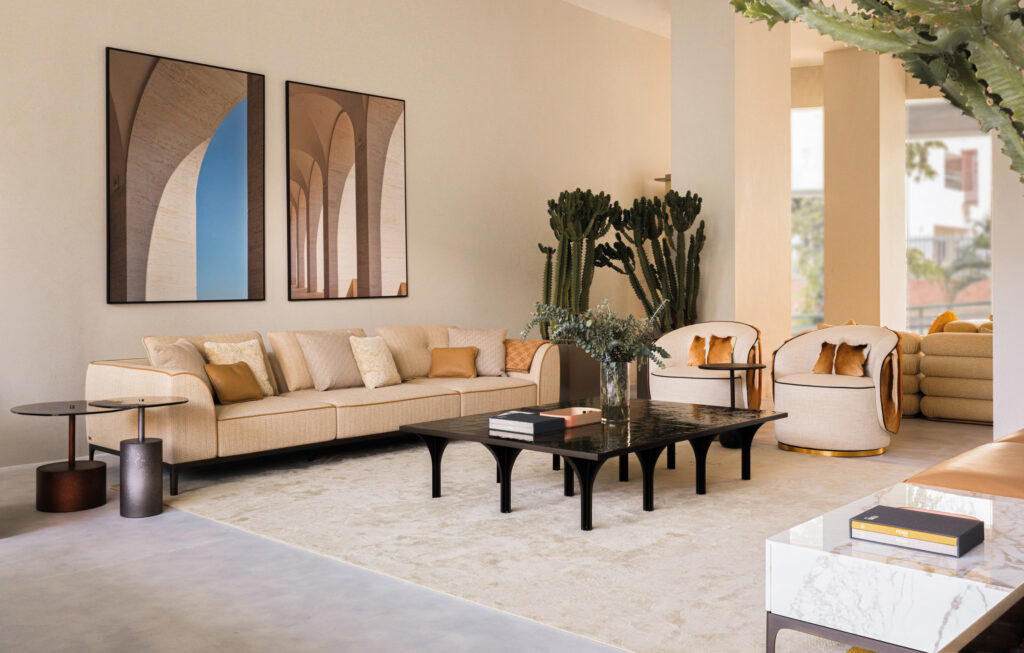
The Groove armchair sits at the foot of the staircase. Designed by Toan Nguyen, it stands alone with three Louis Poulsen Pequin chandeliers hanging gracefully at different heights. Characterised by resin floors and Pozzolanica walls, the upper floor’s long windows create a spacious atmosphere. If you looked at Fendi Casa, you might think it is an art gallery. In contrast to the clean backdrops, the furniture and accessories stand out like masterpieces.
The Singapore boutique represents a significant milestone in Fendi Casa’s expansion plans in Asia. In May and June, the brand opened flagships in Jakarta, Phnom Penh, and Seoul. The new locations complement the Shanghai monobrand boutique that opened in 2023. Together, these five stores expand the brand’s reach across Asia.
Passano is especially excited about the Singapore flagship. “Asia is a key market for us”, he says. “Singapore, a cosmopolitan and ultra-modern metropolis, is particularly important to us because it gives us the opportunity to reach a local and international clientele that already knows and appreciates the Fendi universe. At the same time, this move offers new opportunities to develop and grow in a burgeoning market.”
In keeping with the brand’s Italian heritage and culture, Fendi Casa’s furniture undergoes rigorous curation. In addition to the brand’s most recognisable products, which embody the timeless elegance and craftsmanship of the brand, the latest novelties highlight its continuous desire for innovation. “This blend ensures our stores reflect our overall product offering, which is often customised by our clients in fabric and finish choices,” says Passano.
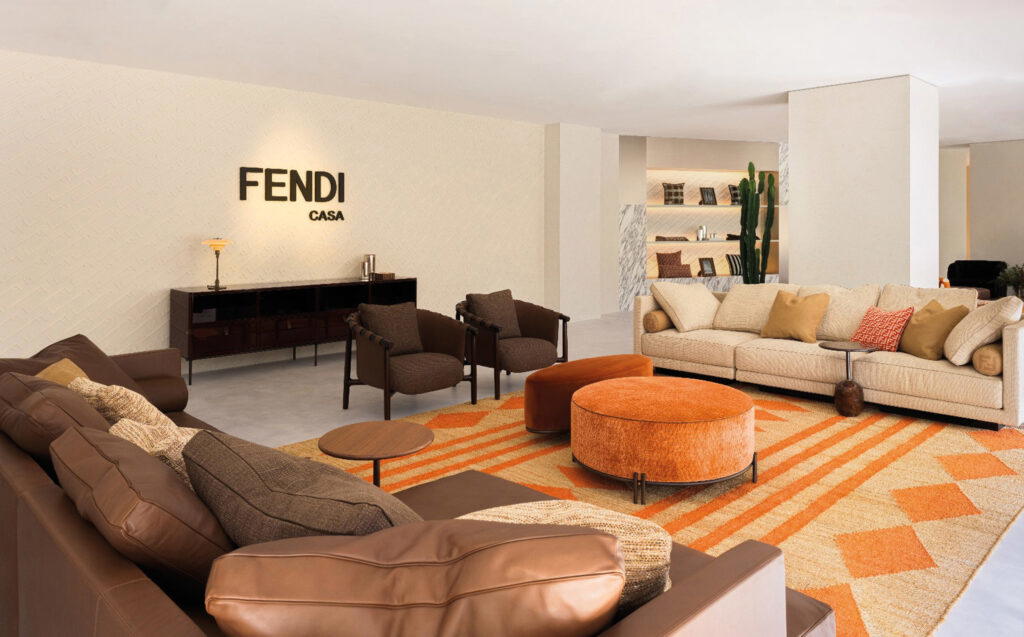
The layout and interior design of the store also influence the customer experience. “The arrangement of furniture and accessories is designed to create a harmonious flow and an immersive shopping experience. Signature elements like the FF logo pattern, Arabescato Vagli marble, and distinctive lighting installations enhance the visual appeal and brand identity of the space,” he shares.
Fendi Casa remains committed to sustainability despite its luxury roots. The brand employs several initiatives to ensure ethical standards and eco-friendly practices. The durability of the product is a priority, ensuring that it will last for years to come. “This approach not only reduces waste, but also promotes a culture of sustainability through longevity and quality,” Passano adds.
Partner companies of Fendi Casa must adhere to a strict ethical code that mandates responsible practices in all aspects of production to align with the brand’s values of sustainability and ethical conduct throughout the supply chain.
“This reflects our commitment to protecting the environment while maintaining the highest standards of quality and responsibility in the luxury interior design industry,” he explains.