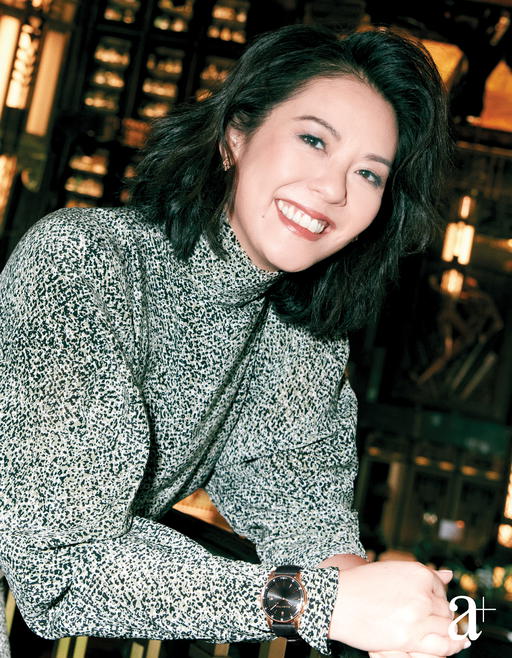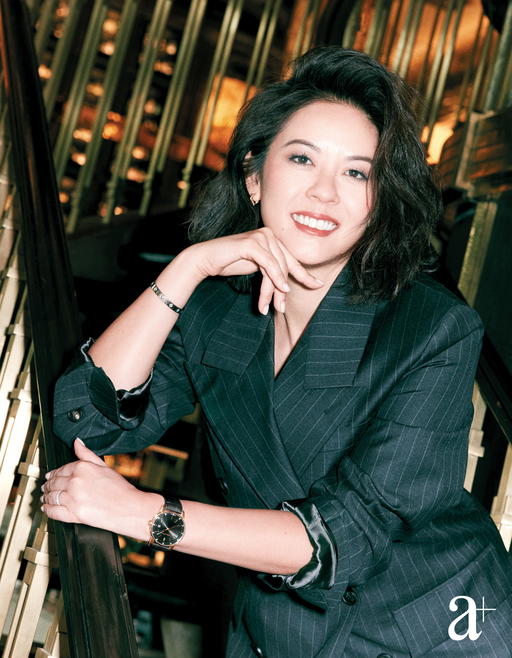
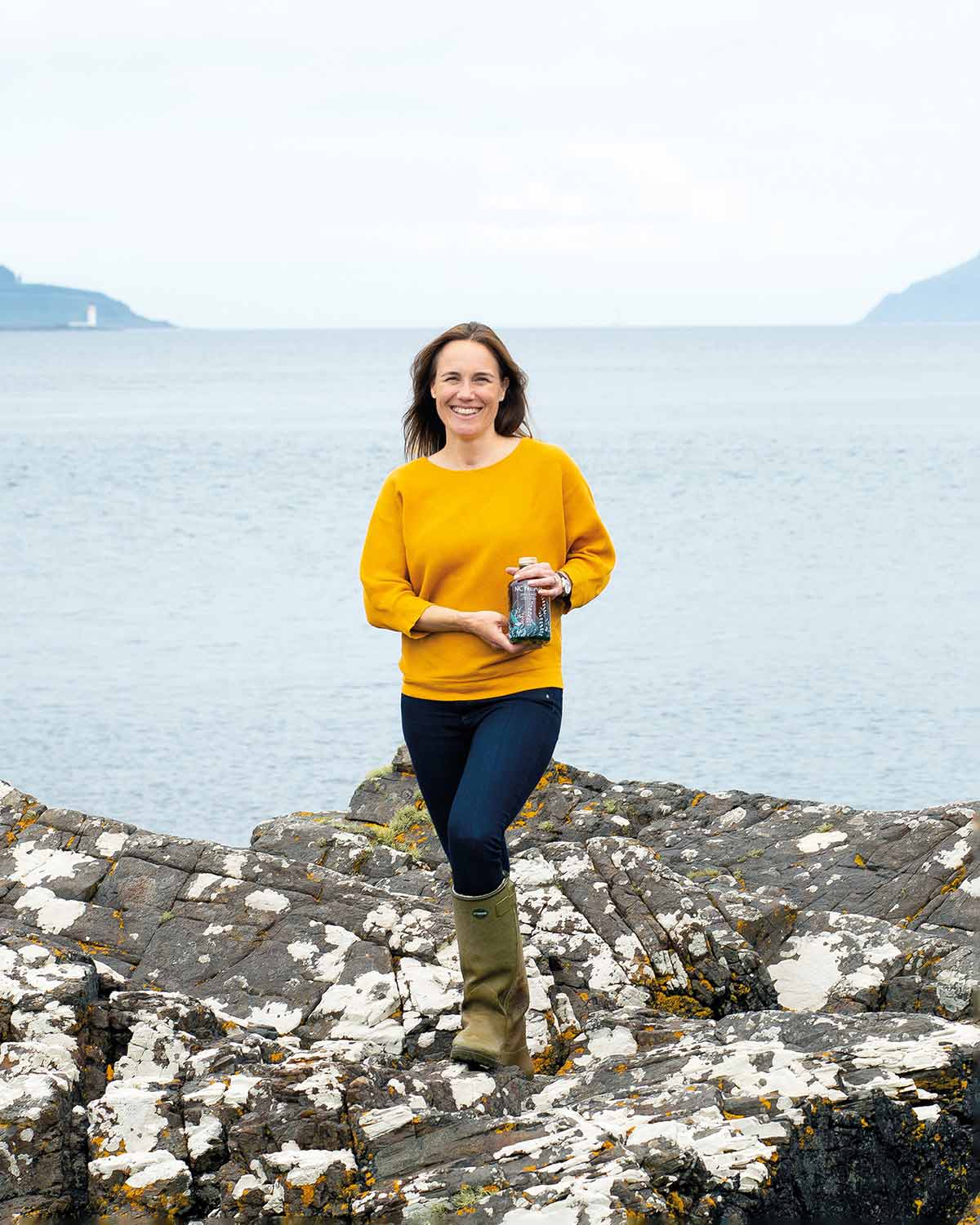
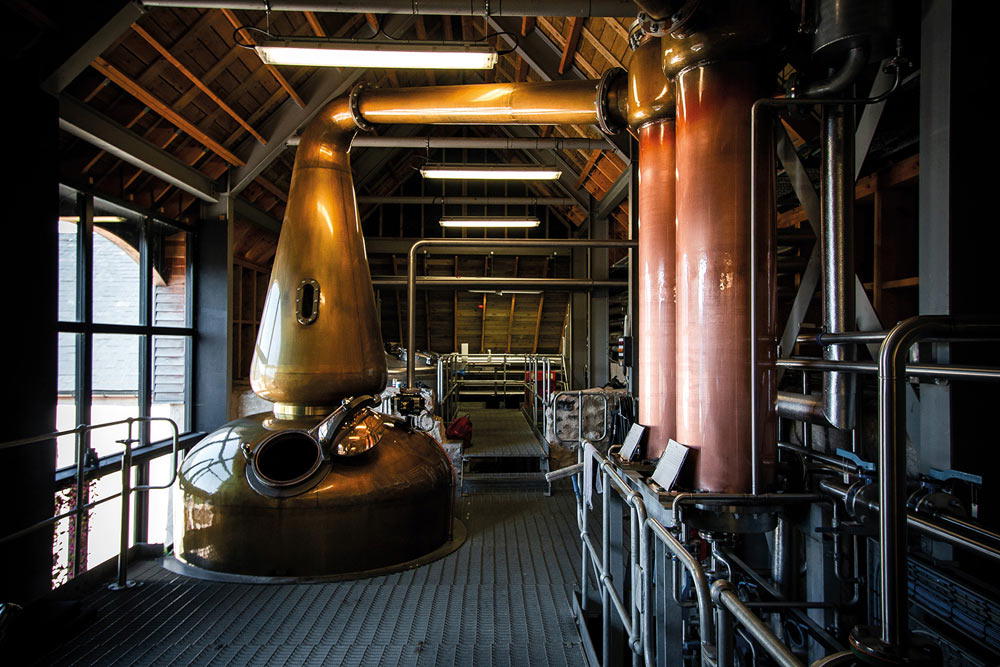
Annabel Thomas had lofty ambitions. Having her own distillery and making and drinking whisky was her dream. Leaving her management consulting career with Bain & Co in London, she founded a pioneering green Scotch whisky distillery with super-sustainable credentials and made independent, organic experimental spirits.
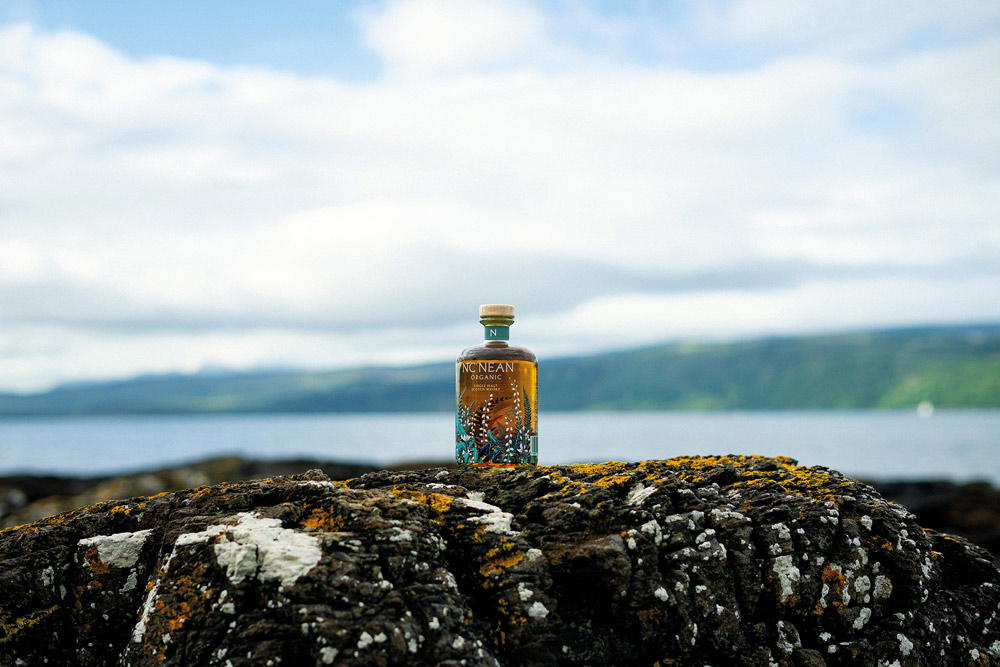
Thomas runs Nc’nean on the Morvern peninsula at Drimnin on the west coast of Scotland. It was named for the ancient Gaelic goddess of the spirits, Neachneohain, who protected the natural world fiercely.
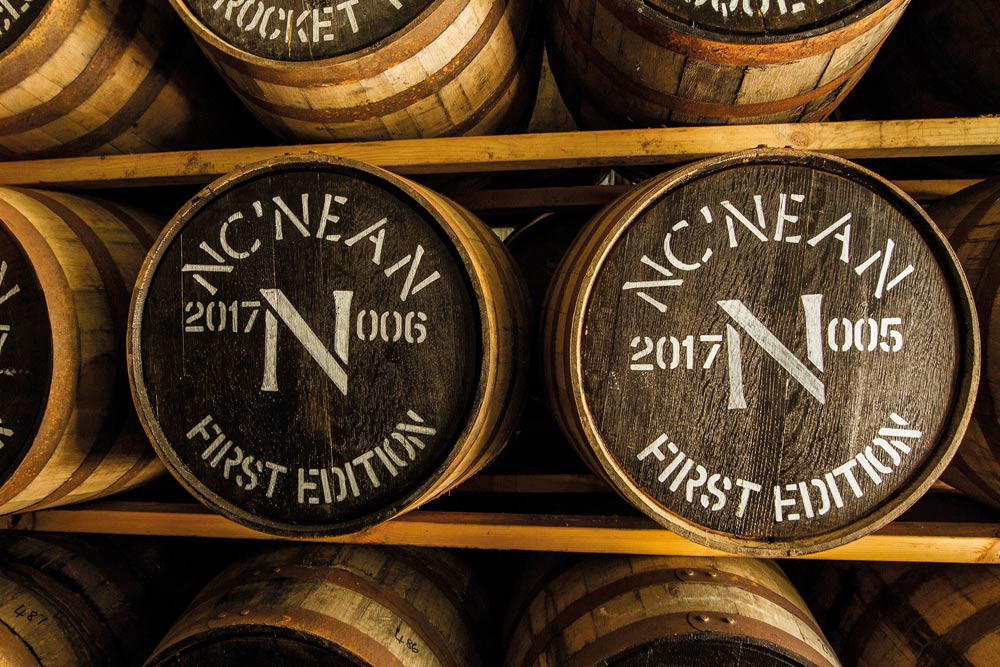
The distillery has an annual capacity of 96,000 litres or 700 casks. Huntress 2022 is the latest release, distilled in 2018 and bottled in March. Essex-born Thomas says, “We try to make small-batch whiskies from low yields and good soil, which enables the underlying spirit to shine through.”
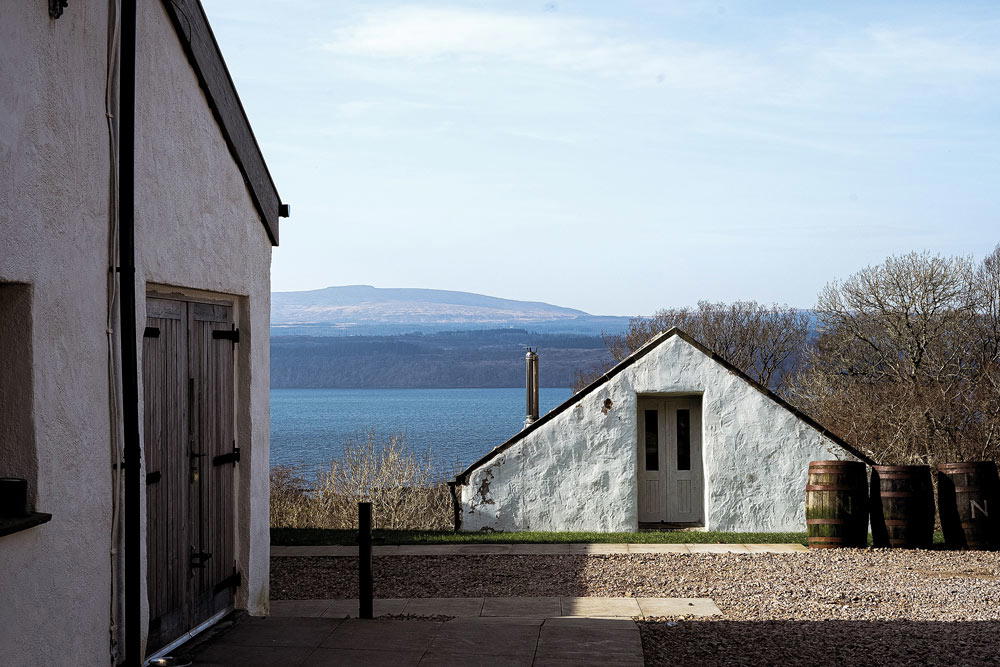
Nc’nean, powered by renewable energy, is on Thomas’ parents farm near Oban. It uses organic Scottish barley and recycles 99.97 percent of its waste.
The production process began with a botanical and aged botanical spirit. It welcomed its first whisky, Ainnir, in 2020. The distillery only released 1,320 bottles of the unpeated, no-age-statement expression. To raise money for charity, the first 10 numbered bottles were auctioned off. After fetching £41,004 (S$66,763), the first bottle in the original batch set a new world record. All 10 bottles sold for more than £92,000.
In addition to being Scotland’s leading certified organic whisky producer, Nc’nean is is also the first distillery in the UK to achieve net zero emissions.
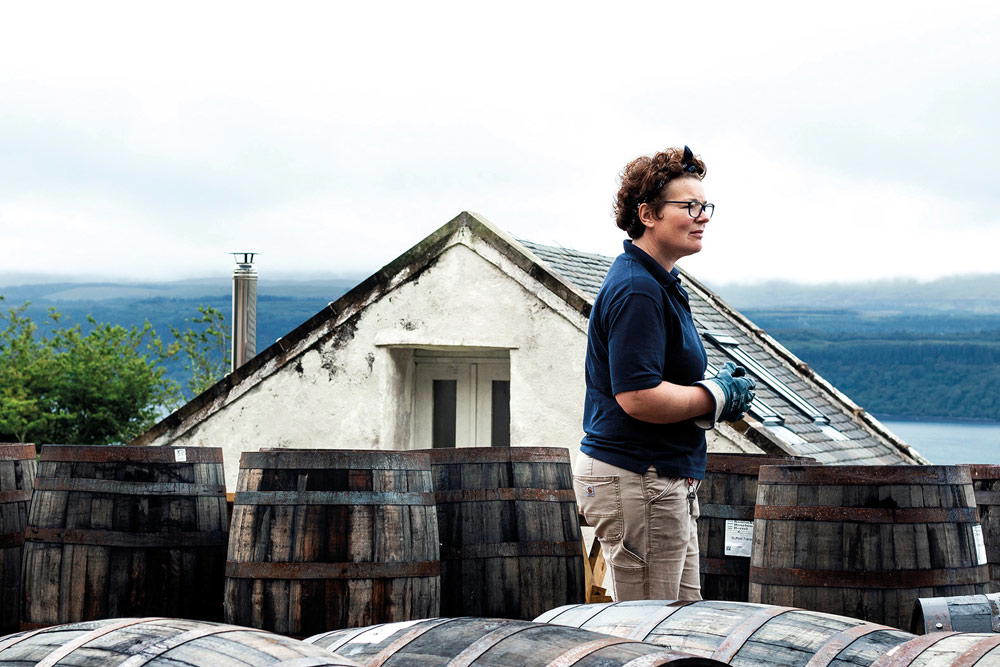
“Zero waste takes a lot of effort and vigilance,” says Thomas, a pioneer in the Scotch whisky industry’s 2040 net zero target. Her parents’ land, a biomass boiler, a closed- loop water-cooling system, and the ability
to dispose of waste products on-site helped Nc’nean achieve the coveted status years ahead of schedule.
Though women in whisky might seem like a recent development, it is not. Women led the way in the US. They were distilling at home in the late 18th century, and it was common for prostitutes to sell whisky legally by 1850. With the prohibition of alcohol in the 20s, women were banned from drinking liquor at bars. Even after prohibition ended in 1933, the ban remained in place.
Before Thomas, there was also Bessie Williamson, the only woman to own and run a distillery in the 20th century. She started at Laphroaig as a shorthand typist. Soon,
Ian Hunter, the owner of the Islay distillery, made Williamson his right-hand woman. When he passed away in 1954, he left Laphroaig in her name.
There was also Rita Taketsuru, born Jessie Roberta Cowan. She met her Japanese husband, Masataka Taketsuru, when he came to study whisky-making in Scotland. Together they founded Nikka.
Margie Samuels, wife of Maker’s Mark’s Bill Samuels, collected fine pewter. She suggested the iconic bourbon’s name as a reflection of the mark that pewter makers etched onto every piece. The bottle shape and the iconic red wax-dipped top were her ideas.
Women changing whisky today
Despite their tireless efforts, the whisky industry remains predominantly male. However, things are changing. In the UK and the US, more than a third of drinkers today are women. Around the world, women who love whisky are now rebalancing the industry’s gender bias.
Dawn Davies, MW head buyer at Specialty Drinks Group and The Whisky Exchange, is among the increasing number of female whisky influencers.
There are several members in this group, including Rachel Barrie of Glendronach and Ben Riach, Kirsteen Campbell of The Macallan, Gillian Macdonald of Glenmorangie, Stephanie Macleod at Dewar’s, Emma Walker of Johnnie Walker, and Anna Thomas of Old Bushmills in Northern Ireland, the world’s oldest licensed distillery.
In Wales, Penderyn has a three-woman distilling team—head of distilleries Laura Davies, blender Lithuanian Aisla Jukneviciute, and distiller Bethan Morgans.
Halfway around the world in New Zealand, Desiree Reid founded Cardrona Distillery. She fell in love with single malt whisky while living in the UK. Former winemaker Sarah Elsom is head distiller supported by Mikey Austin and Jamel Barber.
Heather Nelson is the first woman to open a distillery in Scotland since Helen Cummings launched Cardhu in 1824. She built and designed the Toulvaddie Distillery on the former Royal Naval Air Base HMS Owl at Fearne in Ross-shire. “I believe we all have the same goal in the industry, no matter what your approach, and that is to make the finest Scotch malt whisky for you to enjoy in your own way,” says Nelson, who practically did everything herself.
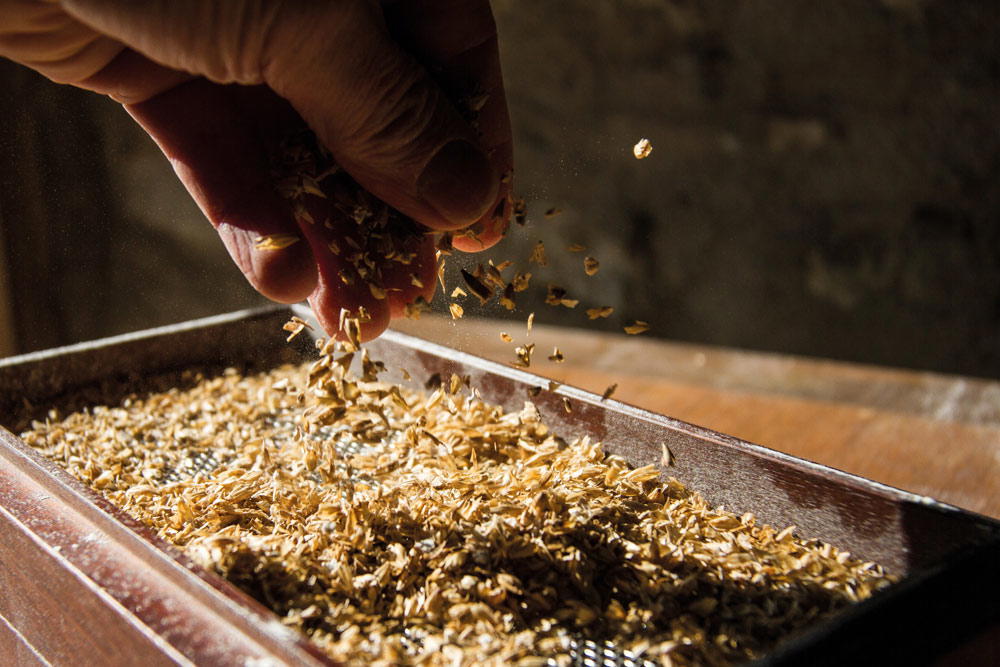
“I dug the foundations, made the forms and levelled them for the concrete. Then I dug the drains with some help from my parents and husband. A friend poured the concrete floor and laid the damp proof course and rebar. Building the steel structure was easy with the assembly instructions. Then we lifted it with the help of family members and a teleporter forklift. My mother and father helped me clad the building and roof while a local contractor finished the electric wiring.”
In America, where prostitutes made their mark in the whisky industry in the 19th century, Becky Harris co-founded Virginia’s Catoctin Creek Distilling Company 200 years later in 2009 with her husband Scott.
Catoctin is derived from the Indian tribal name Kittocton, which means Place of Many Deer. It’s an apt location. Virginia claims to be the birthplace of American whiskey in 1607 with Jamestown colonists as the first distillers.
“I believe we all have the same goal in the industry, no matter what your approach, and that is to make the finest Scotch malt whisky for you to enjoy in your own way.”
Heather Nelson of Toulvaddie Distillery and the second woman ever to open a distillery
The award-winning craft distillery is the first in Loudoun County since the Prohibition and makes Roundstone Rye.
Harris, who majored in chemical engineering, is the chief distiller. Prior to making alcohol, she worked at Amoco and CIBA, specialising in industrial processes and production systems.
In 2020, she was appointed president of the board of directors for the American Craft Spirits Association.
Women’s selling touch
Even though the golden liquid has grown in popularity, its production methods remain largely unchanged except for better equipment. Despite this, Louise McGuane, founder of County Clare’s award-winning Chapel Gate Irish Whiskey Company, wants to change the way it is sold.
A farmer’s daughter, she studied philosophy and literature, then plunged straight into the industry, working for several alcohol companies including Moët Hennessey, Veuve Clicquot, Pernod-Ricard and Diageo.
“We have revived a 19th-century business model for the 21st century,” says McGuane, who is bringing back the lost delicious flavours of Irish whiskey.
Until the 1930s, Irish bonded whiskey was a thriving industry. Bonders sourced whiskies from different distilleries, matured, blended, bottled, and branded them. The most prominent was JJ Corry, an innovator and entrepreneur who inspired McGuane.
“He was a whiskey bonder who sold his special malt for three pennies a glass or in a jar. His shop was at 63 Henry Street, Kilrush. It was a port that received Indian tea, Caribbean rum, French wine, and Portuguese port.
“In addition, he invented a bicycle called the Gael. We named our first blended whiskey—60 percent malt and 40 percent grain—after it. His family still lives in the parish of Cooraclare,” says McGuane.
In Ireland, her bonded rackhouse is the only one of its kind, modelled after a traditional Dunnage house and inspired by Kentucky maturation houses in America and France.
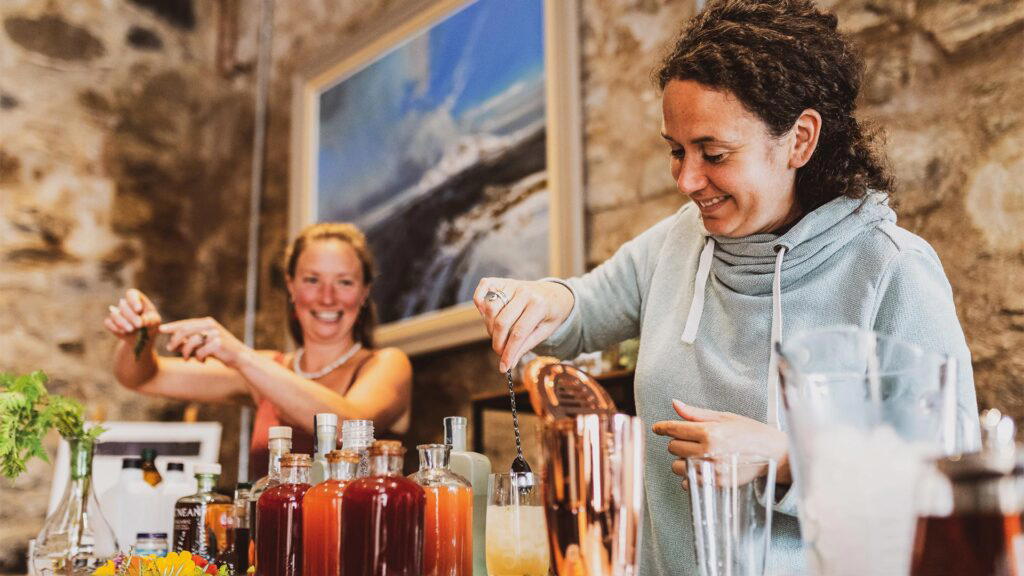
McGuane is also responsible for the most expensive bottle of Irish whiskey ever sold. Called The Chosen, it was bottled at 27 years and sold for US$8,200 each. “The Chosen made a huge impression globally,” she says.
It is hopefully one of many milestones in her whiskey journey. Ultimately, she wants more women to join the trade and continue pushing the industry forward.
“The majority of my team is female, but men work on the farm as well. I am in favour of hiring women. The best thing I can do is give young women opportunities so they can orchestrate change themselves.” With women like McGuane and the rest, the whisky industry’s future is looking bright.