
Does the earth have the capacity to feed a planet that is becoming increasingly populated? More than two billion tonnes of food are wasted every year, making it a major global problem. As part of ongoing efforts to curb wastage, one company has stepped up to the plate. CRUST Group upcycles surplus ingredients and creates value-added products to reduce food waste.
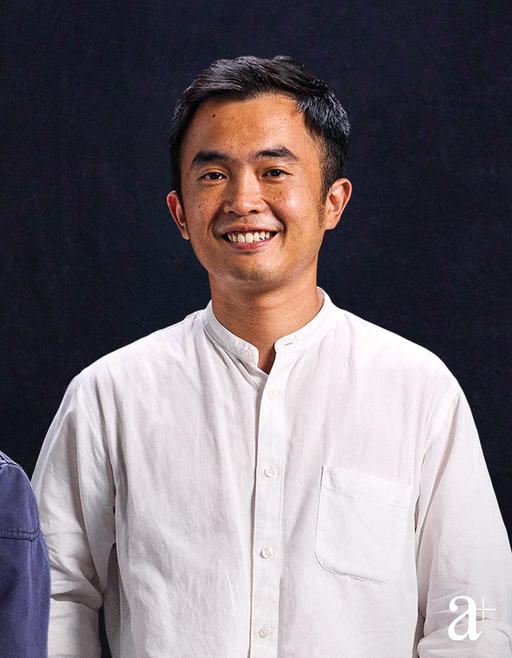
Despite not coming from a startup background and having no connections, Travin Singh has already carved out a niche in the US and Japan, thanks to the CRUST Group, which he founded shortly before Covid.
Growing up, he watched his mother transform leftovers into something else the next day. The experience led to Singh’s experiments with homebrewing. It was not an auspicious start.
“I once ground bread and used it in a homebrew batch,” says Singh. “Then, I realised we couldn’t extract the sugar and that it was a really nasty beer.”
After spending a month at 11 breweries across the American West Coast, Singh restarted his homebrewing project with greater success. His business grew and went on to source surplus bread from bigger partners like Tiong Bahru Bakery, Gardenia, Cold Storage and RedMart. This led to the formation of CRUST Group.
With a goal to achieve profitability without sacrificing environmental and social causes, CRUST Group has saved over 2.5 tonnes of food surplus so far through its work with three local facilities and five in Japan. “As we have had successful proof of concepts in Japan, we are raising our Pre- Series A at this time to increase our impact,” Singh adds.
“It’s not so much an upcycling company. It’s more about bringing real-world solutions to the market and starting a value-based company.”
Travin Singh defines CRUST Group
Currently, the company has two product lines: Crust and Crop. The former puts out sustainable, artisanal beers made from surplus bread and other ingredients, while the latter is dedicated to producing nonalcoholic beverages made from fruit peels.
In addition to maximising the sugar content in bread and rice, Singh has also experimented with using local botanicals from Gardens by the Bay to replace hops in the Crust line. “We even did 50 percent bread and 50 percent malt spirits during our R&D. That turned out to be pretty interesting.”
Has he had any failures in his experiments? “We made different water kefirs from food waste; the worst was watermelon rinds. Please, do not try that.”
Such episodes of trial and error are useful to Singh. It’s a scientific approach to taking all you know about the market and product, putting them through the wringer, and seeing what survives. “That reduces our limiting beliefs and all the biases, so we can start afresh.”
Singh aims to reduce global food loss by one percent by 2030. It’s a lofty goal, but one he’s determined to reach with collaboration. The Valorisation-as-a-Service (VaaS) model CRUST Group uses allows it to partner with hotel groups, supermarkets, and other organisations, upcycle surplus food, and create house-brand beer and sodas.
His team has developed proof of concepts for Cold Storage Singapore, Foodpanda, SaladStop, and Torasho. In Japan, it has worked with big players such as Aman Tokyo and The Ritz-Carlton, Osaka. Singh has further plans to work with more prefectures in Japan to build hyperlocal products for them and scale their VaaS models.
It won’t be long before CRUST Group can achieve its goals: an end to food waste and everyone having access to food.
Videography: Yvonne Isabelle Ling
Photography: Cher Him
Producer: Adora Wong
Styling: Chia Wei Choong
Hair: Peter Lee, using Goldwell
Makeup: Keith Bryant Lee, using Shiseido
Photography Assistant: Glin