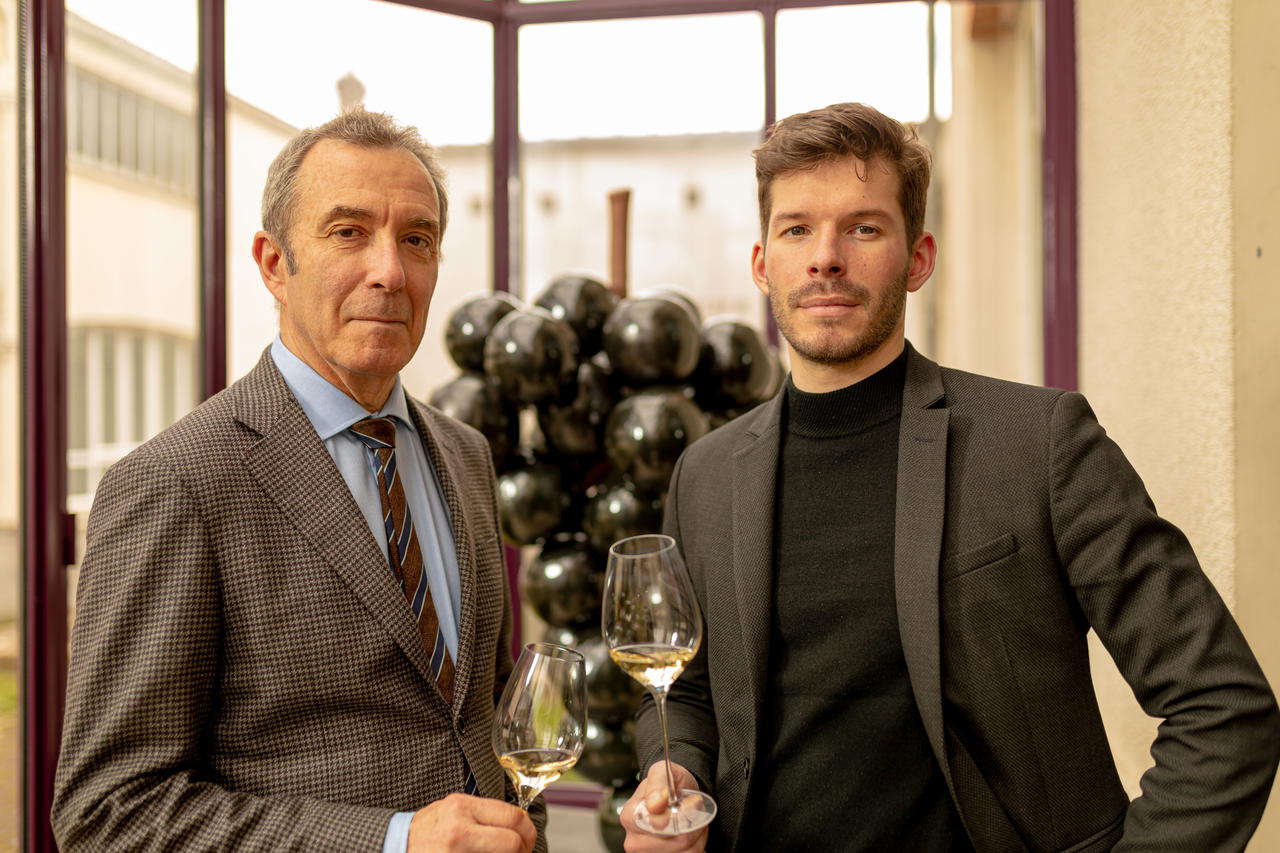
Celebrating a milestone with champagne is a common practice for most people. In Thomas Lombard’s opinion, however, sparkling wine signifies much more than success. It is the jewel of his bloodline.
Growing up in a family of champagne producers, he naturally fell in love with the craft. It was his passion that convinced his father Thierry to let him take over Champagne Lombard. Founded in 1925 by his great-grandfather Robert Andrieu, the family-run champagne house is based in Épernay, France.
Lombard’s career wasn’t served to him on a silver platter; he had to earn it. While in school, he was already involved in the business. He joined the company in 2017 as a project manager and Champagne Lombard’s North America manager. To grow the business in competitive times, he studied economics and management at the University of Reims, followed by an advanced master’s degree in wine science and international wine trade at AgroSup Dijon.
His father appointed him CEO in 2020 after he demonstrated his keen business acumen and understanding. The younger Lombard was 28 at the time. “This is not the normal age [to take over a business], so there is no room for error. I could never have imagined it when I was a student. You must experience it to know that you like it.”
Since becoming the fourth-generation owner, Lombard continues to promote the brand’s single-vineyard principle. This movement has gained traction in recent years with more champagne houses following suit. The term describes wines produced only from grapes grown in one vineyard, which are typically of higher quality due to the unique terroir of the region. They’re also harder to produce.
Lombard acknowledges that the art of blending different grape varieties is a traditional approach and well mastered by historic champagne houses. However, he wants to cultivate his vision. “I hate copying from others. I prefer to unite around a new goal and give the house a reason to exist, even if it takes longer to achieve.”
With 20 more ageing in the cellar, Champagne Lombard currently offers four lieu-dit cuvées. Typically, a lieu dit is the smallest parcel of vineyard land.“We still have a lot of terroirs to discover,” he says.
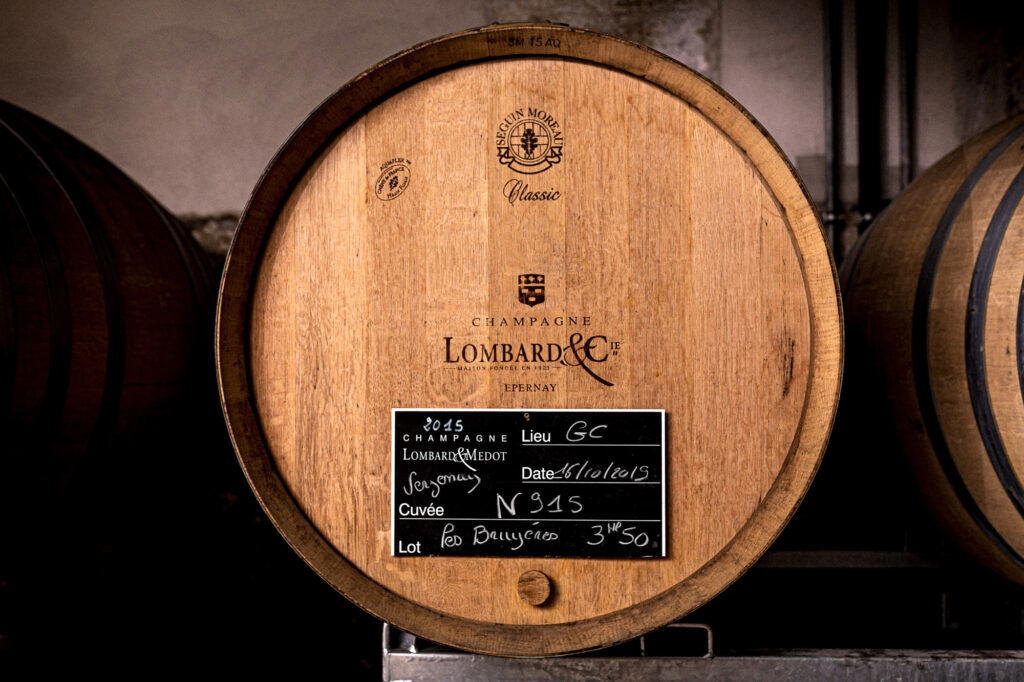
In a terroir-driven approach, terrain, topography, climate, and viticulture all contribute to champagne quality. The champagnes are aged and matured in oak barrels in an 18th-century cellar measuring 1.5km. This results in champagne having a unique aroma.
Taking a Burgundian, nature-forward approach to sourcing quality grapes, Lombard continues to forge relations with grower-partners to create single-village or single-plot cuvées.
This allows him to highlight the charm and authenticity of Épernay, while amplifying the expertise of the maison’s winemakers. As CEO, Lombard only intervenes at key decision-making moments, such as during harvest time and when tasting clear wines to determine blends. As for the cellars and vineyards, cellar master Laurent Vaillant takes care of them every day.
While his team runs the maison’s day-to-day operations, Lombard keeps in touch with its wine-grower partners. “The work lies in continuing our creative trajectory. It is easy to create attention when launching something new. The challenge is to stay desirable,” he says.
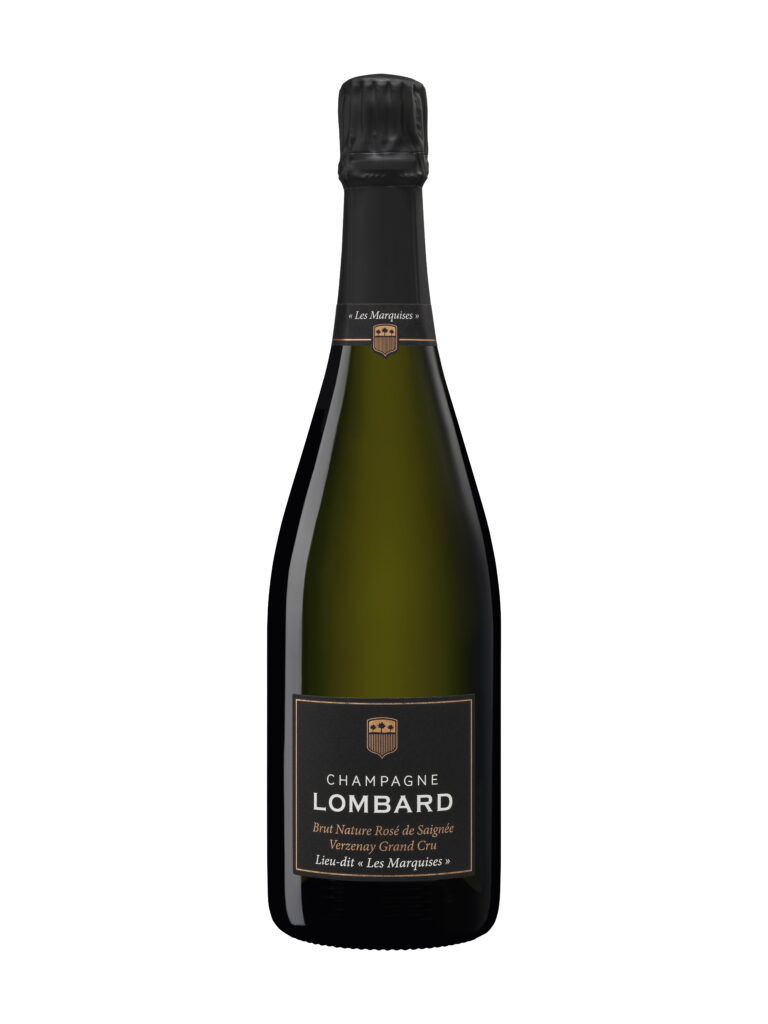
Among his favourites is Champagne Lombard’s Brut Nature Rosé De Saignee Verzenay Grand Cru Lieu-Dit ‘Les Marquises’, which he recommends pairing with fleshy seafood like lobster, crab, and scallops. Previously, he barely drank rosé. Now, he enjoys the consistency and velvety texture of a red wine mixed with the chalky brightness of a terroir champagne.
For champagne connoisseurs, he endorses the Champagne Lombard Brut Nature Rosé de Saignée Verzenay Grand Cru Lieu-Dit. A prominent part of the maison’s lieu-dit range focuses on topography and terroir. “This type of cuvée opens the floor to extremely technical appreciation of the vinification process, something an experienced drinker would enjoy,” he says.