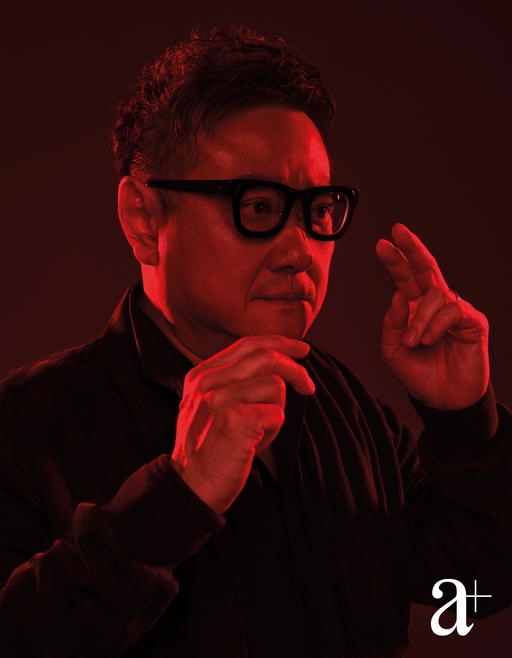

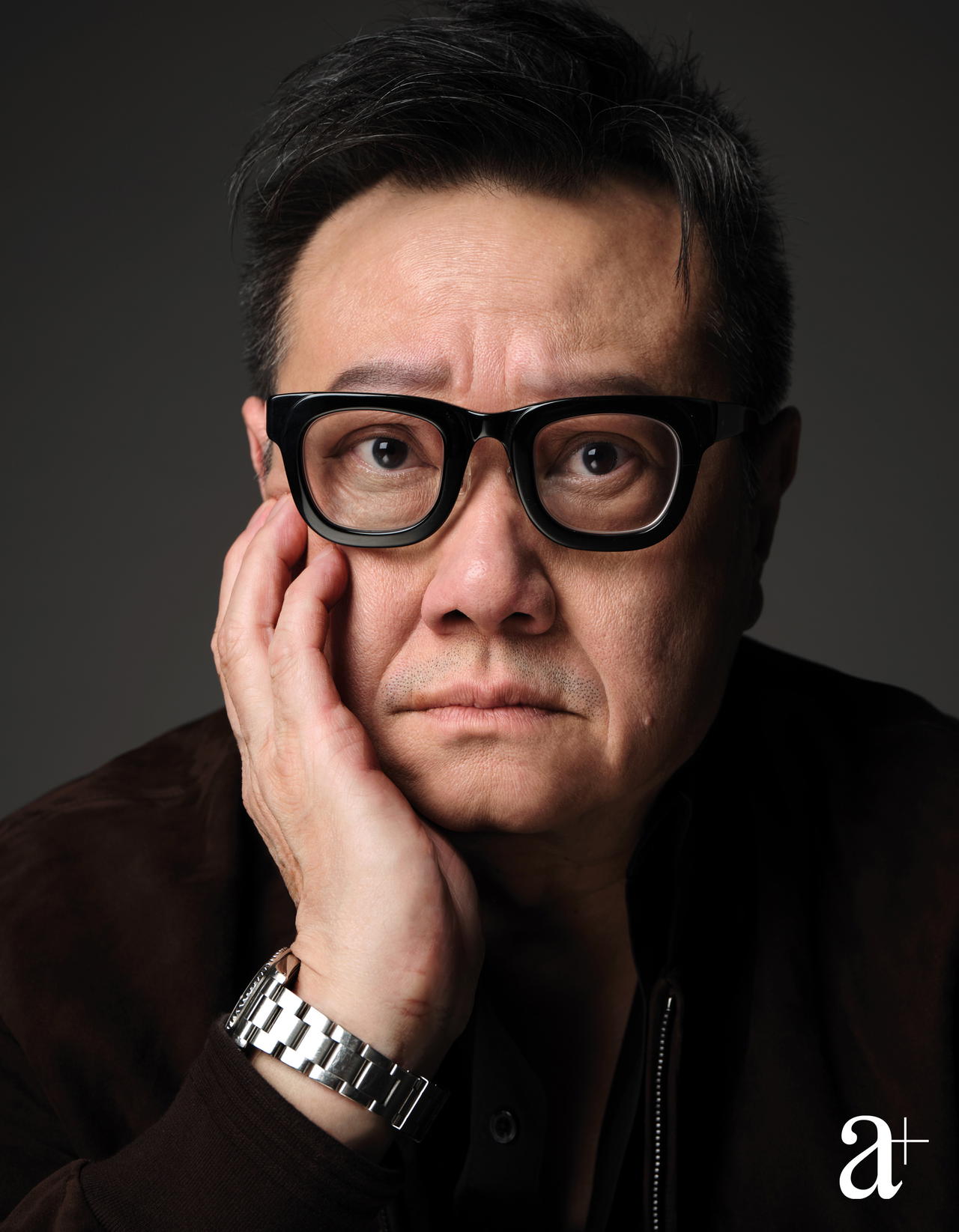
It’s hard to imagine the man behind the revival of the Singapore modern film industry to be “very boring”. But that’s exactly how Eric Khoo describes himself as we chew the fat at a bar in Holland Village. The 60-year-old orders a double whisky highball while I ask for a single. “Make it a double lah,” he urges impishly. I cave. This is anything but a boring start.
Khoo has directed eight feature films, including cult classics Mee Pok Man and 12 Storeys. Both have been screened at over 60 film festivals, with 12 Storeys notably the first Singaporean film invited to the Cannes Film Festival.
Last year, he released Spirit World, a fantasy drama starring Catherine Deneuve. There was no secret sauce to getting the legendary film actress on board. Khoo just made sure to shoot his shot. “My publicist introduced us when I was in France and I passed her the film treatment. She had a read and said, ‘Let’s do it’.”
The son of the late businessman and philanthropist Khoo Teck Puat, Khoo grew up with six elder sisters and a mother who was an ardent fan of cinema. He was three when she began taking him along to the theatre twice a week. “Her favourite genre was horror and it became something I also fell in love with, to the point that when I saw The Exorcist when it was first released, I wasn’t scared. I just wondered how they made her head turn like that,” he recounts.
His first flick ever was a stop-motion film he made with a Super 8 camera. He was eight and had acquired the know-how from Famous Monsters of Filmland, a horror, sci-fi, and fantasy film magazine he used to devour cover to cover. But fanatical as he was about film, he never aspired to be a filmmaker. The local film industry was non-existent back then. The idea was inconceivable.
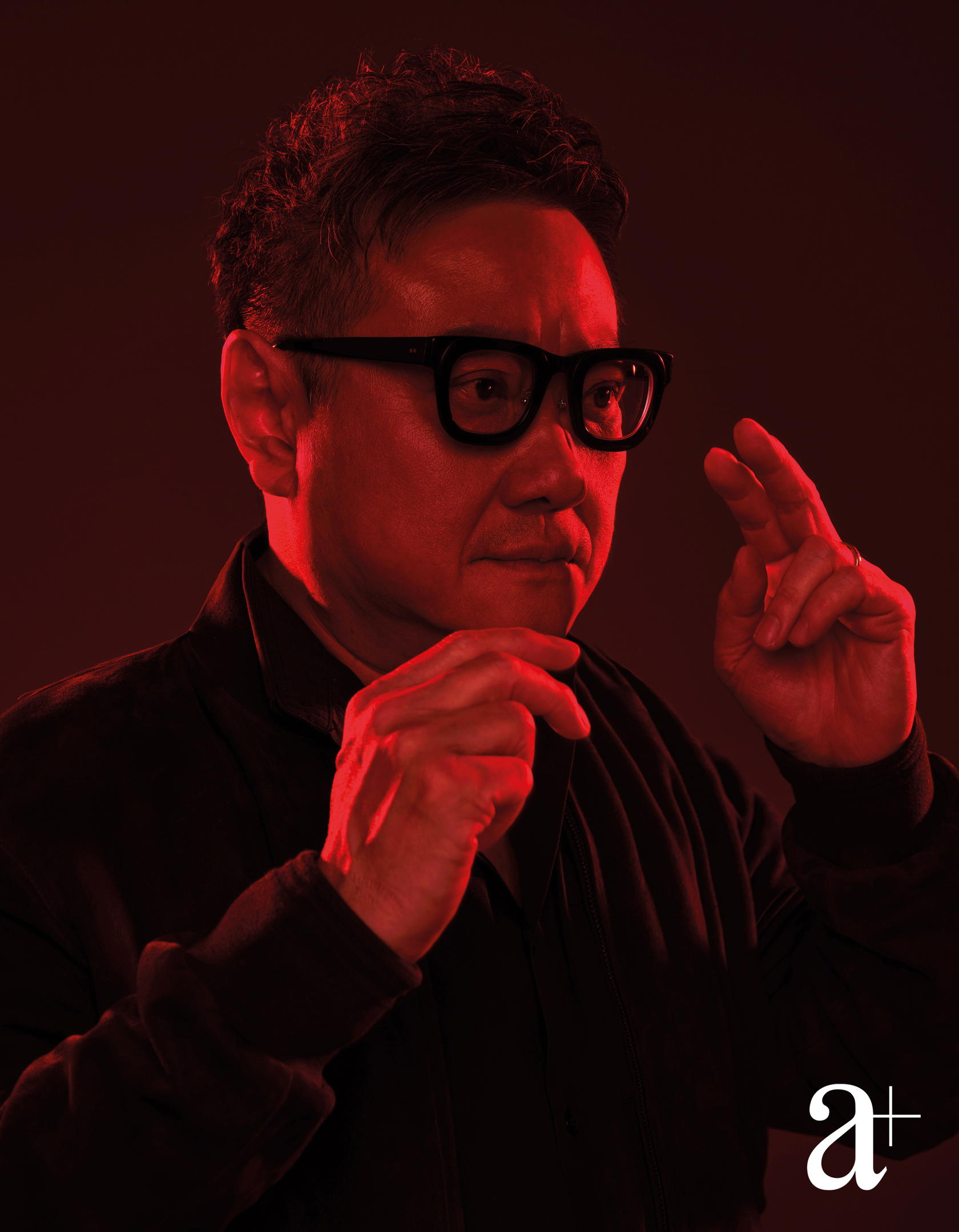
Instead, he yearned to be an artist. Specifically, he dreamt of hand-painting film posters, the craft of which used to dominate cinema promotion before the advent of digital printing. “I’d look around the theatres and think to myself, ‘Maybe I can paint these canvasses one day’. I remember the Cathay canvasses to be better than the Shaw canvasses because they were by different artists.”
Fortunately for both Khoo and Singapore cinema, his father eventually agreed to send him to film school in Australia. Among other things, his time there enabled him to fill in the blanks of popular film plots. Unlike Singapore, Australia already had a film classification system in place in the 1980s, so when Khoo rewatched arthouse films, he was for the first time an audience to the uncensored versions. “Everything suddenly made sense because they weren’t chopped up,” he says with a chuckle.
VERY SINGAPOREAN STORIES
We’re on our second round of double highballs and two things are clear. First, Khoo is a raconteur who keeps you waiting for the next punchline—he is after all one of Singapore’s most prominent storytellers.
Second, he’s rhapsodic about not just film, but also the history of Singapore cinema. He easily recites the way in which local cinema operators once distributed studio films: “Shaw would screen films from Universal, Paramount, and Warner Brothers, while Cathay would screen films from Columbia Pictures and 20th Century Fox. Then the first cineplex opened in Yishun, so they started sharing.”
He also isn’t afraid to play favourites. A film he made that has a special place in his heart? Mee Pok Man for the simple fact that it was his first feature, released in 1995. The film he found most challenging to work on? Also Mee Pok Man because everyone went in blind, he says unabashedly. “It was a bunch of friends coming together to do something, but we didn’t really know what we were doing. There were so many variables that could have made it a flop.”
The original short story that inspired Mee Pok Man is a lot more profane than the film version. Written by the late local horror writer Damien Sin, it tells a tale of a mortuary attendant who begins a relationship with a corpse he becomes enamoured by.
But Khoo wanted the morbidity attenuated for his rendition and had a brainwave one evening over, well, mee pok and beer. “I was eating and drinking, and the smell of everything together was horrible. But suddenly, I was like, ‘I got it. The story will be about a noodle seller who falls in love with a woman of the night’,” he recounts. “As much as I love horror, I didn’t want to be a horror filmmaker.”
In 1997, he released 12 Storeys, which follows a day in the lives of several households living in the same HDB block.
The next few years were spent directing TV commercials and producing films through his film production company Zhao Wei Films. “I felt a bit lonely as a director, so I helped other filmmakers make their films to have more directors within the circuit,” he explains. These films included Jack Neo’s Liang Po Po: The Movie and Royston Tan’s 881.
But in 2004, Khoo became bedeviled by a niggling feeling that he needed to make his third feature film and that he needed to make it fast. “I remember being unable to sleep one night and breaking out in cold sweat. I remember thinking, ‘If I don’t direct another film soon, I’d never direct again’.”
The omen recurred the very next day through a friend. “We were talking about a commercial job when he suddenly said, ‘You know Eric, if you don’t direct a film this year, you’ll never direct again’. He’s always been a bit of a clairvoyant, so it made my hair stand on end. I freaked out.”
To eschew a scuppered film career, Khoo got cracking on Be With Me, which hit our silver screens in 2005. It was the first Singaporean film to explicitly feature a lesbian relationship. Three years later, he released My Magic, the first Singapore film to be nominated for the Palme D’Or at the Cannes Film Festival. Since then, he has also released films like Tatsumi in 2011 and Ramen Teh in 2018, and has altogether produced over 30 films and TV shows to date.
A fascination with the knotted fabric of our society means his films are typically works of social realism.
“Singapore is an amazing success story, right? There’s no two ways about it. Yet, we have people who are kiasu. We have all sorts of funny characters that are just so nuanced and it’s important to show that reality.”
Eric Khoo on his love for Singaporean stories
In 2007, he was awarded the Cultural Medallion for his contributions to the local film landscape. He has also served both as a judge and head of jury at numerous prestigious film festivals.
Khoo typically carries out his shoots at preternatural speed for one simple reason: he abhors the sweltering heat. But relocating will never be an option. He’s a Singaporean through and through. “I love my wanton mee and bak kut teh. What we have here is special.”
IT’S ALL CONTEXTUAL
Like our jocund cover star, Singapore turns 60 this year. To commemorate the occasion, Khoo recently executively produced the Kopitiam Days anthology, which comprises six short films by six local writer-directors and premiered last month. He’s very much a kopitiam type of guy and his go-to is Killiney Kopitiam at Killiney Road.
His usual coffee order is kopi-o kosong, though as I now know, he also loves his whisky. We’re knocking back our third round of doubles as he holds a brief masterclass in humility: when it comes to criticism of his work, he’ll defend anyone’s right to dish it. “Of course, when we put our heart and soul into something, we want people to like it. But if they say, ‘Ah, it’s not good’, then so be it. We can’t expect to please everybody. It’s all subjective. I’m just glad to still be doing what I do.”
That said, Khoo hopes audiences will be more amenable to local films even if they’re slapstick. Diversity in genre is important and getting high-octane comedy films made for a native audience to be recognised on the world stage is pie in the sky. “How many of us watch German comedies? It’s stuff that’s in a league of its own,” he analogises.
He cites Jack Neo’s Money No Enough as an example. Several film foreign directors have tried replicating the rags-to-riches storyline here in Singapore, but to no avail. “That’s because Jack Neo has his finger on the pulse of the local audience. He’s the only local filmmaker who has made a lot of money from his films. I hate to say it, but it’s dollars and cents. Money No Enough 3 grossed $4.8 million. That’s huge in Singapore.”
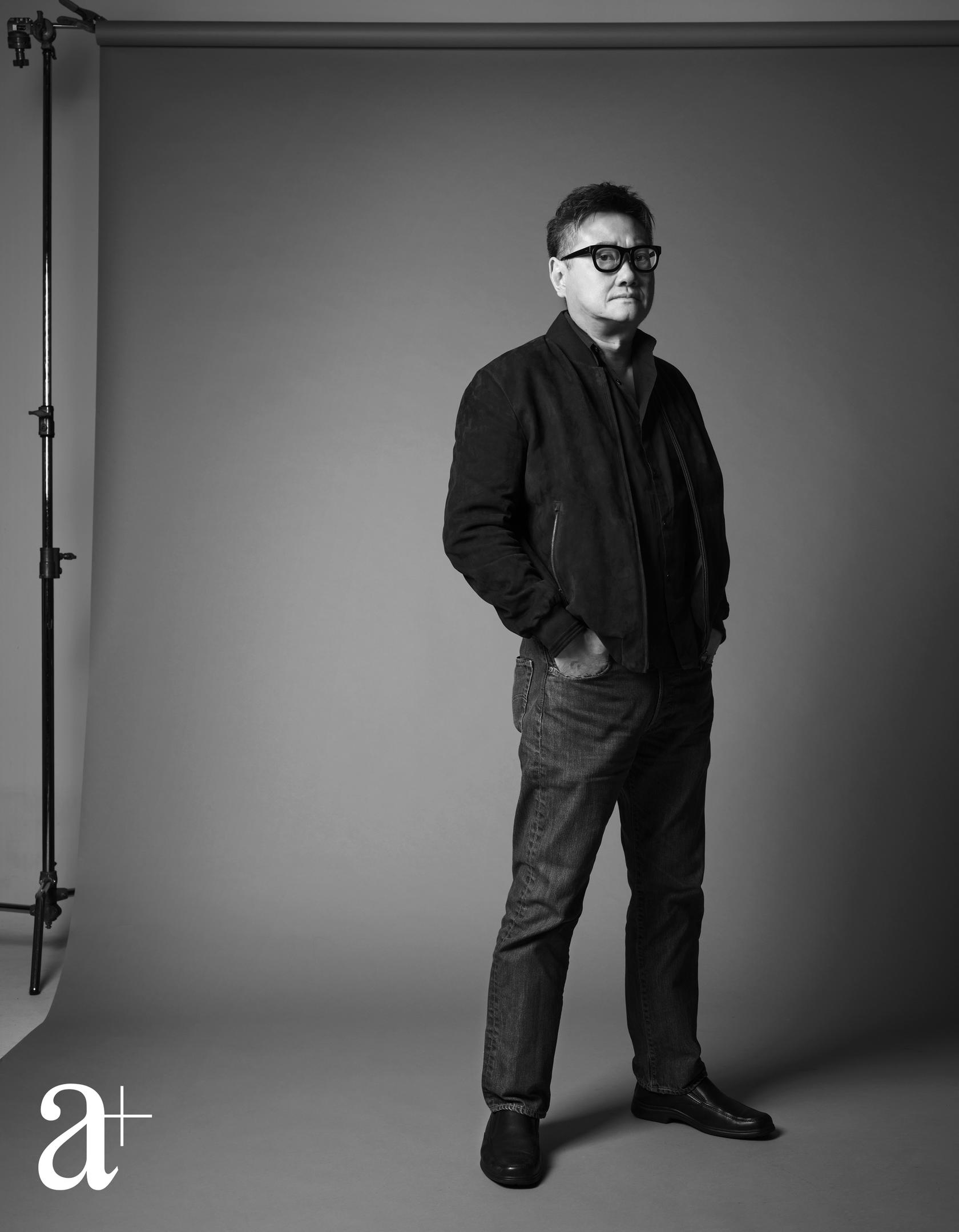
If anything, we should be taking greater pride in our array of local films given our market size. As it stands, only 2.6 million people of our population of 5.5 million could vote in the recent general elections. “How small a number is that? Still, we have the likes of Chris Yeo, Boo Junfeng, Royston Tan, and Anthony Chen. It’s wonderful,” he makes plain.
It helps that our institutions now offer first-rate film programmes. “I look at the short films I used to make and they’re so rudimentary it’s almost embarrassing. But our film students now are world-class. It’s really good talent.”
As a filmmaker, Khoo prefers visual impact over dialogue in film. He thinks it’d be “fantastic” if he could make a film without dialogue one day. He also loathes going over budget because it demonstrates a lack of control, and for this reason expects the actors on his sets to reprise performances from rehearsals with precision. “There’s no room for improvisation because that could kill the shoot.”
He’s heartened that his four sons share his zest for filmmaking. In fact, Spirit World was somewhat a family affair since Edward, 31; James, 30; Christopher, 28; and Lucas, 26, helped put it together. Edward, who wrote the screenplay, is currently writing a feature film that he will also direct. James, who helped produce the film, has been working closely with his father on other projects. This includes an upcoming Indonesian film with supernatural and martial arts elements that Khoo will be producing. Filming will kick off either later this year or early next year.
As we wrap up, I catch sight of Khoo’s phone wallpaper: a collage of four pomeranians. “I have a pom fetish,” he says without missing a beat. Perhaps unsurprising, though, since the breed is known to be bold, lively, and vocal—and it is Khoo’s embodiment of these very traits that Singapore has had a lodestar in filmmaking.
His advice for the next generation of filmmakers? Don’t be threatened by the way in which the rise of content creation has materially impacted the film industry. Everyone shares a common goal. “It’s still storytelling one way or the other,” he avers.
Also, be well-disposed to the proliferation of AI in film. If we want to make more exciting movies, we’ve got to find a way to realistically depict things like monsters and explosions within budget constraints. “As much as I love film, I’m a big subscriber of digital technology.
“At the end of the day, it’s about giving the audience the best experience.”
For more inspiring stories in a+ all year round, gift yourself or loved ones a digital subscription.
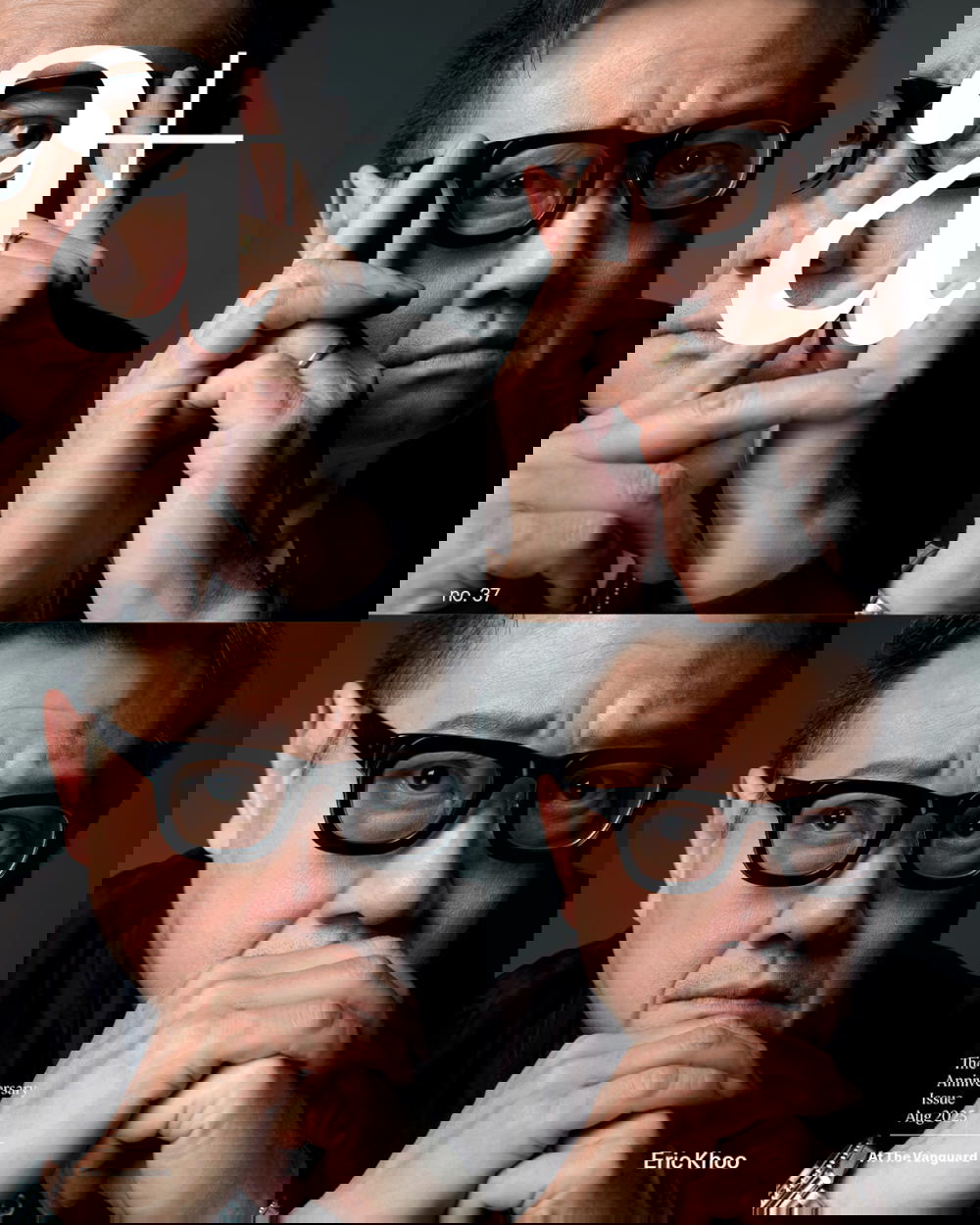
Photography Wee Khim
Styling Chia Wei Choong
Behind-the-scenes photography Samantha Francis
Grooming Keith Bryant Lee using Kevin Murphy & Shiseido
Photography assistant Ivan Teo
Styling assistant Annalisa Espino Lim