
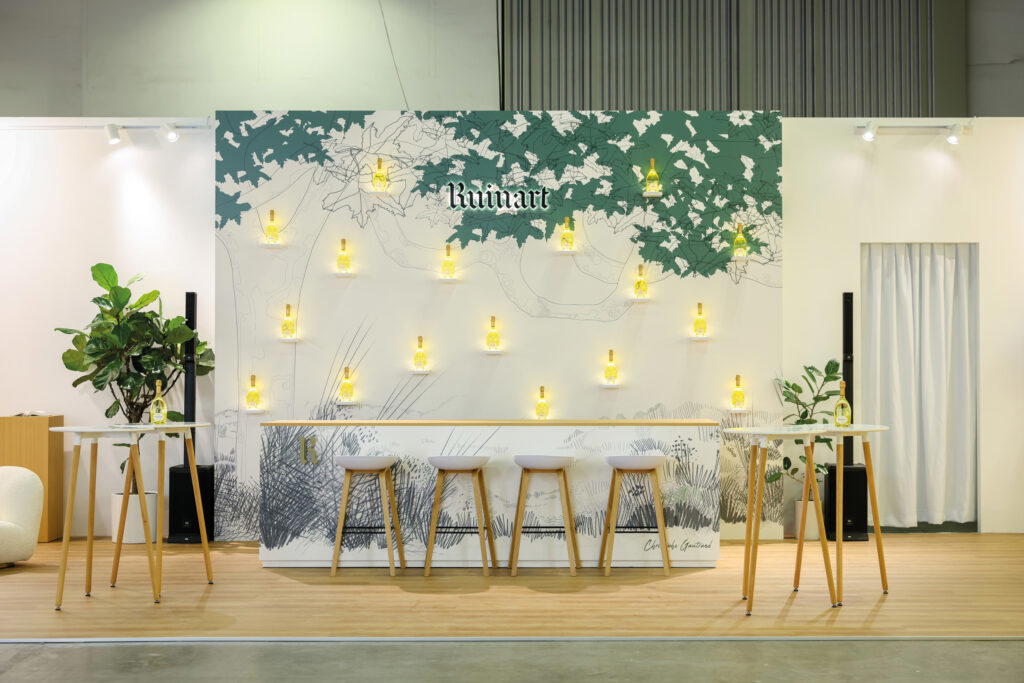
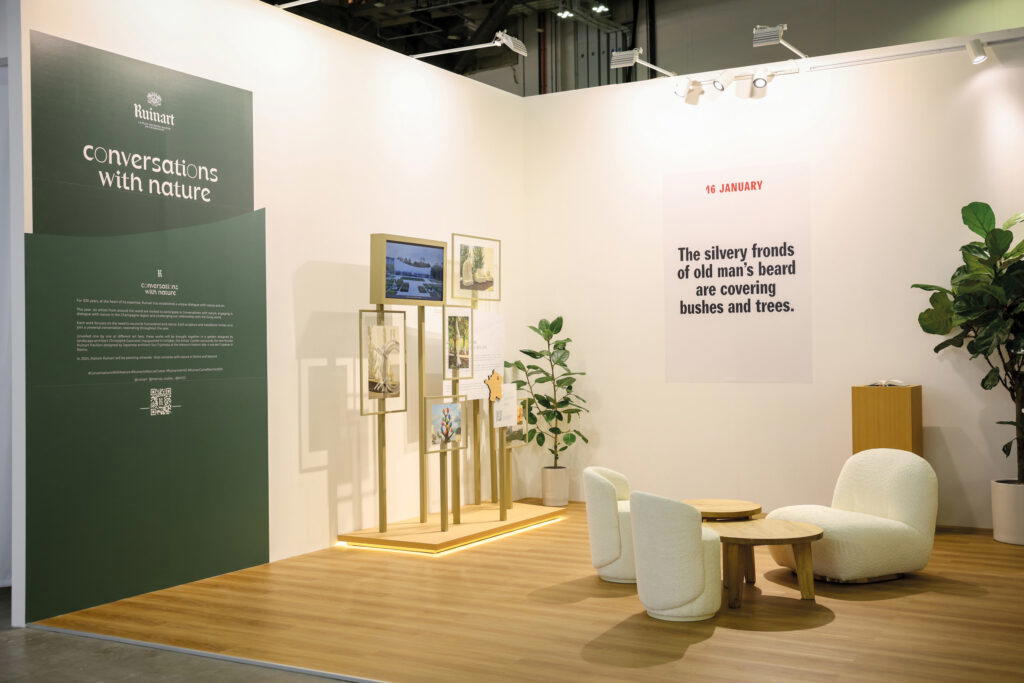
Earlier in January, nature, art, and champagne converged at Art Sg 2025’s Ruinart Art Lounge, marking the house’s third consecutive outing as the official champagne partner.
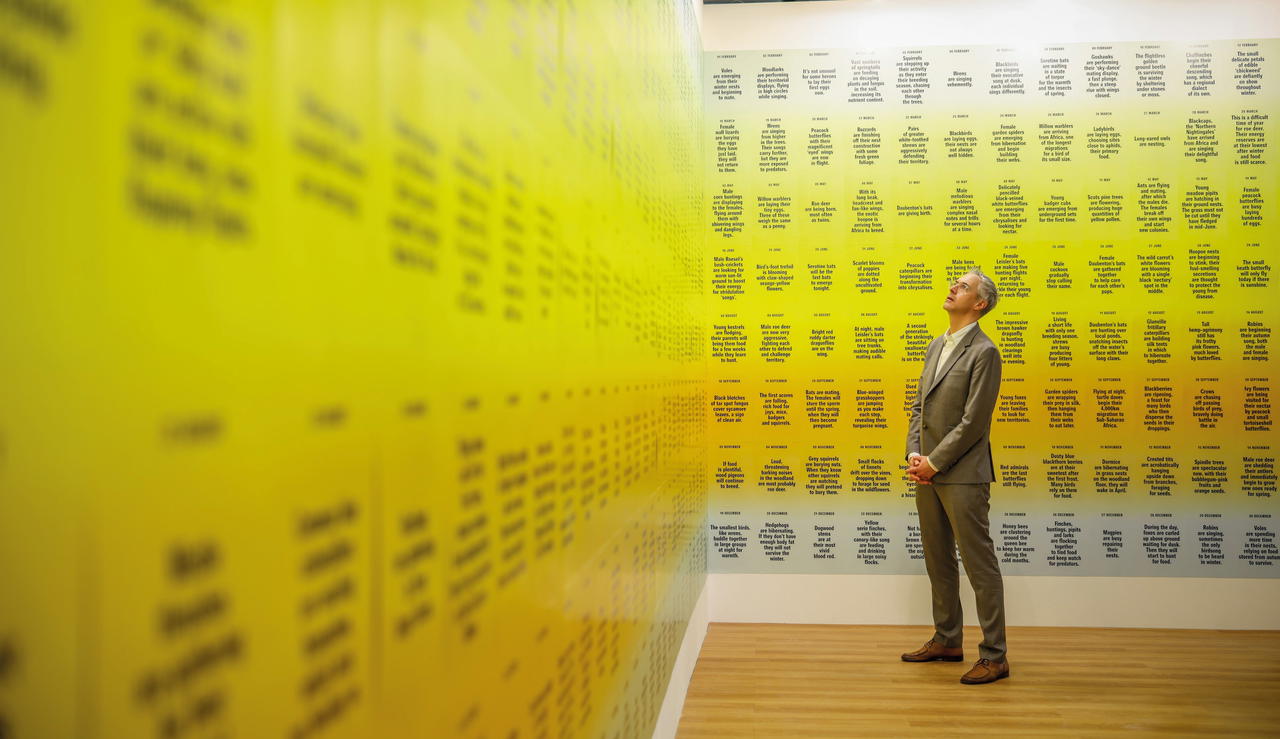
British contemporary artist and ornithologist Marcus Coates’ acclaimed ‘Nature Calendar’ was the star of the lounge, with its chic pop-up bar and excellent Blanc de Blancs cuvee.
As part of Ruinart’s Carte Blanche 2024 initiative, he is one of six visionaries whose works explore human relations with nature as part of the Conversations With Nature project. His evocative description of the daily activities observed at the historic Taissy Vineyard provided a poignant reminder of nature’s passing time. The oldest champagne maker in the world, Ruinart was founded in 1729, almost three centuries ago.
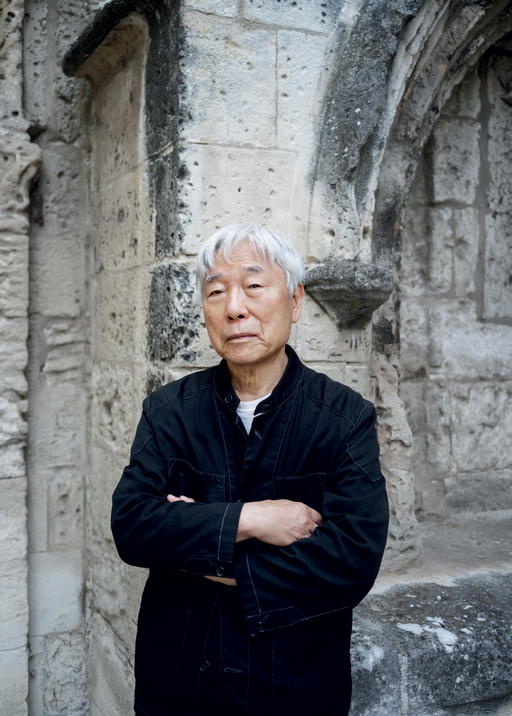
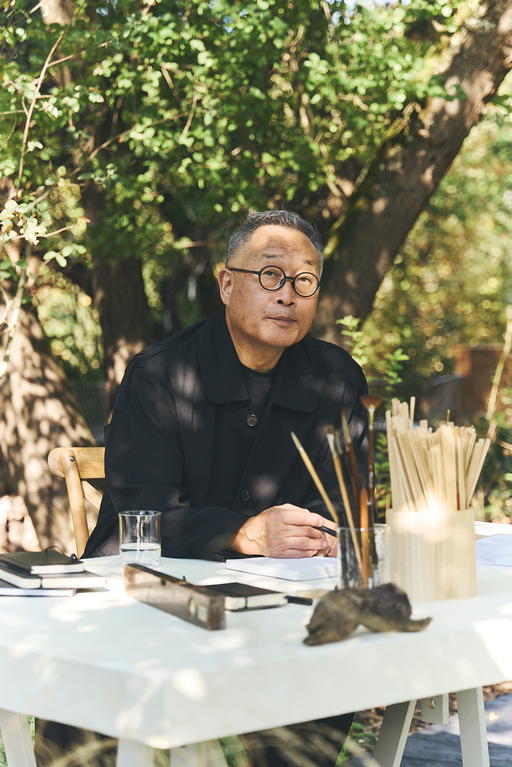
In this interview, the award-winning artist, who works across media such as painting, photography, sculpture, and sound installations, tells us more about his vision.
How did this collaboration with Ruinart for Art SG 2025 come about?
My work with French curator Alice Audouin focused on climate change and sustainability. After she showed my work to Ruinart, I was invited to collaborate.
What draws you to nature themes?
The natural world has always been a fascinating and endless source of curiosity for me. The way culture defines nature in relation to being human also intrigues me, since it says so much about our needs as a species.
What is your view of the relationship between art and nature?
Animal representations on cave walls and rocks are the oldest surviving evidence of mark-making. We are looking to this art more than ever to guide us during the present crisis. It has embodied a relationship beyond the material, one we are hoping to rediscover or reconnect with. Through art, we can play and experiment with imagined versions of ourselves and new ways of relating to nature.
What should we know about the ‘Nature Calendar’?
For each day of the year, I exhibited a poster illustrating a species of animal or plant and its predicted behaviour on that specific day. There could be anything from spiders eating their webs to rabbits leaving their parents’ territories to beetles emerging from their eggs in the ground.
While the species may seem insignificant from our perspective, I demonstrated compelling aspects of its life that come close to our challenges, such as birth, family, mating, feeding, sheltering, and thriving. Connecting with these lives is crucial to bringing more value and protecting natural habitats.
How does Ruinart’s philosophy of sustainability resonate with your creative vision and process?
From grape cultivation to packaging, the company is committed to sustainability throughout its entire production process. Its focus on biodiversity and the stewardship of vineyards, soil, animals, and plants drew me to Ruinart.
Insects, worms, invertebrates, birds, bats, and wild plants are all essential for grape health. In and around the vineyards, I was fascinated by the ecosystems and wanted to celebrate and honour the animals and plants living there. Ruinart’s efforts to protect biodiversity in its vineyards are an integral part of its ethos.
How did your installation embody and reflect these values?
With my ‘Nature Calendar’, I inform the public about what’s happening with wild animals and plants in a small area of France each day. Even if you lived there, you wouldn’t see much of this nature as it occurs outside human awareness.
These lives play a vital role in creating a sustainable, healthy environment for us, which is why the project recognises them and the crucial role they play for us. Anywhere in the world, a relationship with nature is possible, and cultivating these relationships in our imaginations is just as important.
How do you envision your collaboration with Ruinart catalysing new alliances between art and sustainability?
The partnership I have with Ruinart is a cultural exchange. The results go beyond myself as an artist or Ruinart as a brand. For me, this is the ultimate aim. By linking luxury, excellence, and exclusivity with environmental protection and biodiversity, brands can create identification and values that are fruitful.
Photo: Ruinart