

Among Cartier’s many legends, none captivates quite as much as the tale of the panther. It first prowled into Cartier’s iconography in 1914, slinking across a woman’s wristwatch in a pattern of black onyx and diamonds. This was the beginning of a fascination that would boldly define Cartier’s aesthetic.
At the heart of this legacy was Jeanne Toussaint, the visionary head of creation known as “La Panthere”, who is said to have found her muse on a safari with Louis Cartier, during which the majestic predator’s grace and power left an indelible impression.
From that moment, big cats began stalking Cartier’s collections, and were soon joined by a menagerie of fauna. Birds, insects, reptiles, giraffes, and zebras—every creature, great and small, has its place in Cartier’s enchanted bestiary.
In the summer of 2024, Cartier again paid homage to the natural world with the unveiling of Nature Sauvage, a high jewellery collection that reimagines its emblematic fauna.
This collection takes the house’s artistry to untamed realms, blending natural landscapes with dreamlike fantasies. Through trompe-l’œil techniques and illusionary effects, each piece invites the wearer into a world where its creativity reigns supreme.
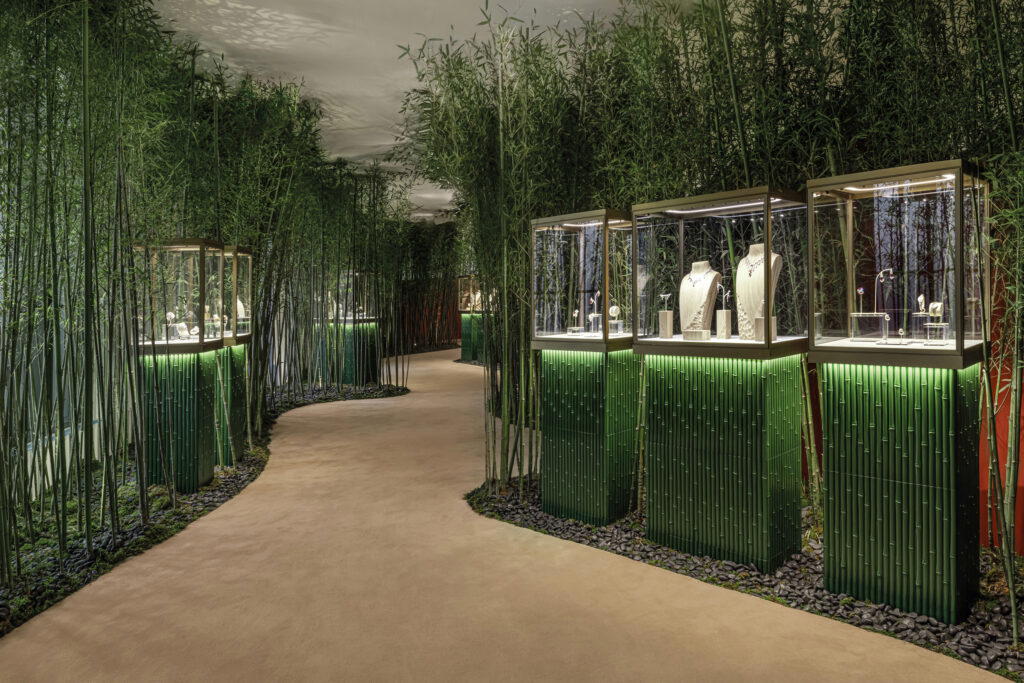
Last November, the story continued with a second chapter, revealed in Shanghai. Comprising 35 new creations, this evolution of Nature Sauvage extends the narrative, offering fresh perspectives on Cartier’s fantastical creatures.
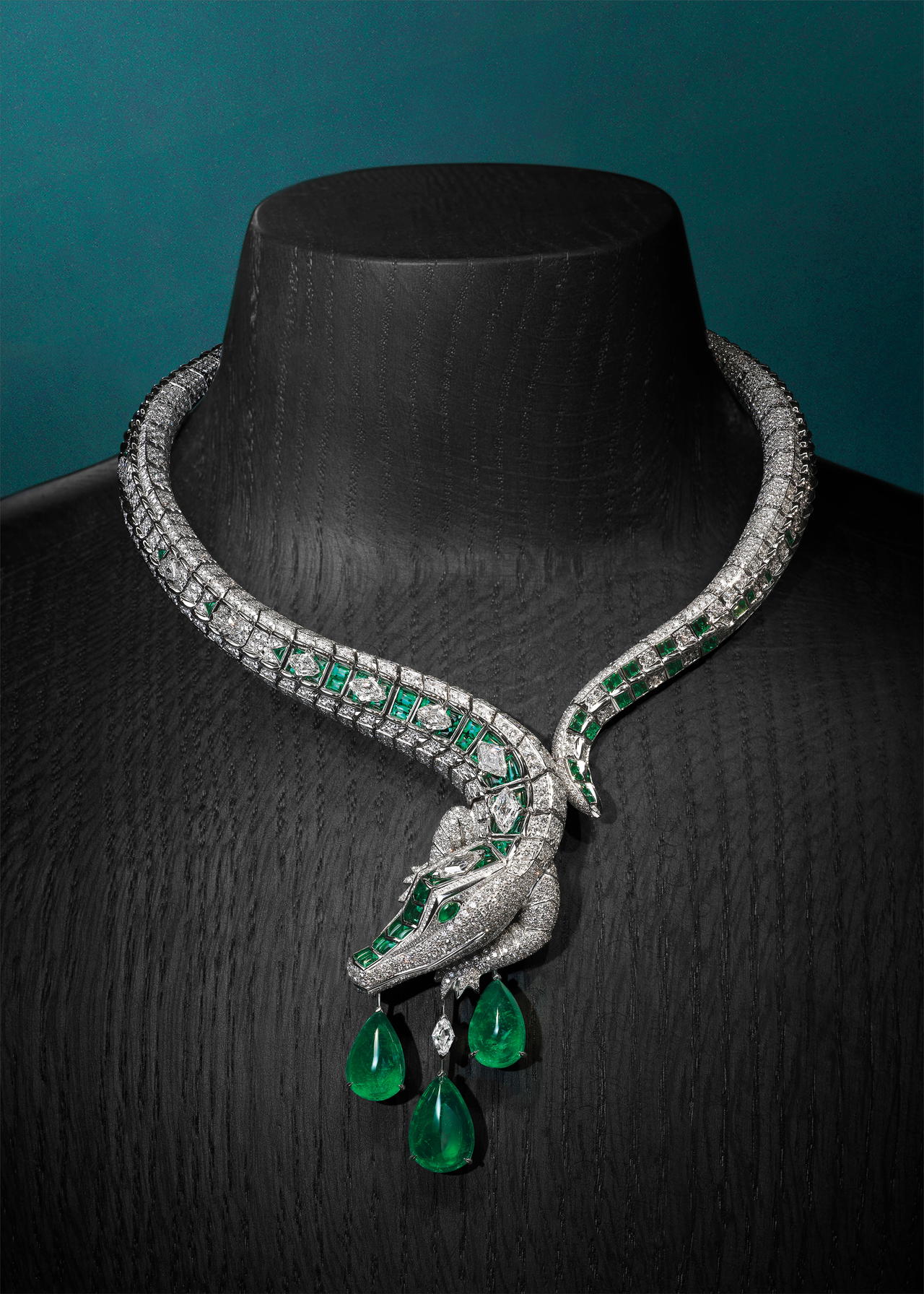
Among the standouts is Wani, a necklace inspired by the crocodile. Its centrepiece: three pear-shaped cabochon-cut Zambian emeralds totalling 27.83 cts. Crocodiles first slithered into Cartier’s repertoire in 1975, when Mexican actress and singer Maria Félix commissioned a necklace modelled after her pet reptiles.
“This piece captures a crocodile’s strength and grace with incredible precision,” says Alexa Abitbol, director of Cartier’s high jewellery workshop. “It took over 2,800 hours to create—2,000 just for the body. Even the underside is as detailed as the top. What’s remarkable about this piece is how realistic it is.”
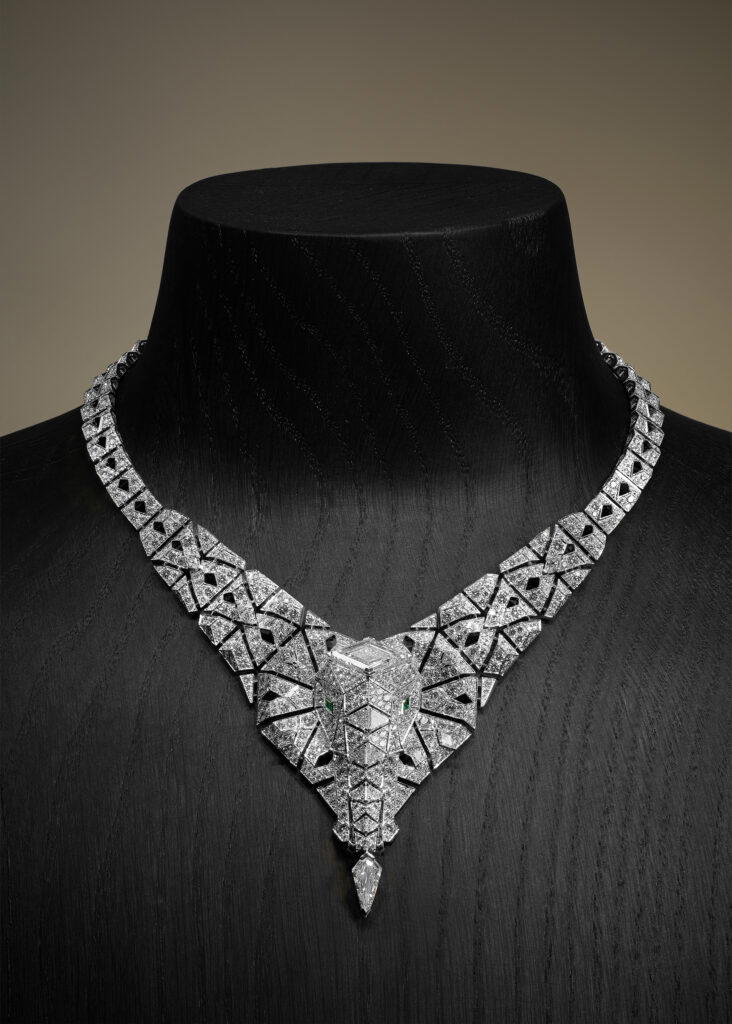
The collection also spotlights Vamana, a necklace featuring a stylised elephant rendered in a geometric interplay of triangles, lozenges, and kite-shaped diamonds.
“This is a departure from how Cartier typically depicts the elephant,” Abitbol notes. “It took over 1,000 hours to create, with 900 devoted to the jewellery alone. The empty spaces are as important as the design itself, allowing the form to emerge. Its emerald eyes add a striking, lifelike intensity.”
Abitbol speaks passionately about the workshop’s commitment to perpetuating artistry: “We are one of the few maisons where all our pieces are still entirely handmade,” she explains.
“This tradition isn’t something you’ll find written in books or shared on social media. It’s an oral legacy passed down through generations. In our workshops, experienced jewellers mentor younger artisans, who in turn bring fresh energy and perspectives. It’s a living collaboration that ensures these techniques thrive.”
This dedication to preserving traditional craftsmanship extends far beyond Cartier’s walls. The maison has cultivated long-standing partnerships with specialised artisans worldwide. These external collaborators, some of whom have worked with Cartier for decades, are entrusted with crafting the complicated details that define its pieces.
“For us, it’s not about trying to do everything in-house,” Abitbol acknowledges. “Even though we have over 20 lapidaries skilled in shaping Tutti Frutti stones and more than 30 setters working internally, we rely on external experts for certain tasks.
These partnerships allow us to maintain unparalleled artistry, as they truly understand the Cartier way. After working with us for years, they have integrated our DNA into their processes, making it second nature to bring our vision to life.”
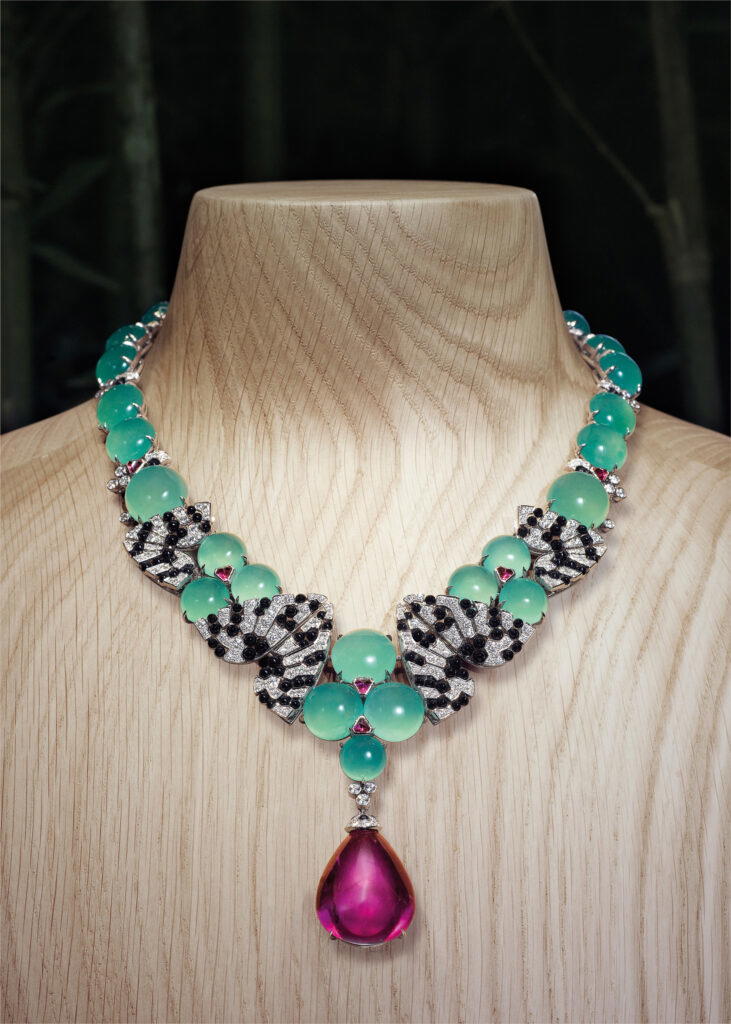
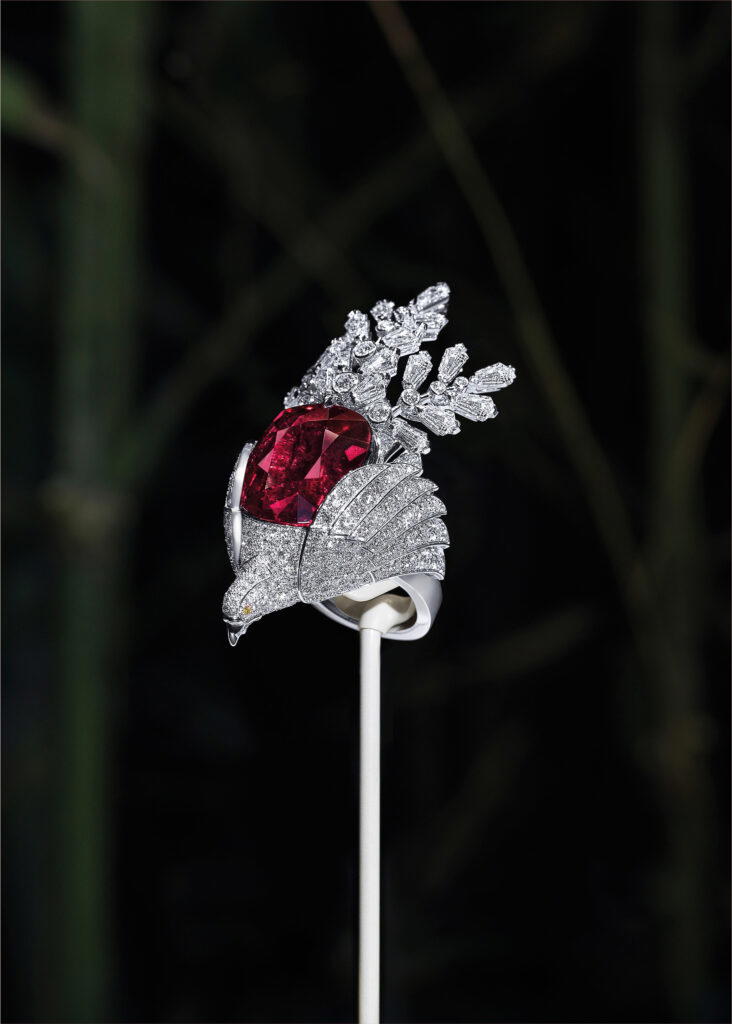
The gemstones on the Tutti Frutti Tokari earrings and ring, for example, offer a breathtaking example of this synergy. Indian lapidaries are entrusted with sculpting the emeralds, rubies, and sapphires into leaves and blooms, a technique steeped in heritage and perfected over generations. Meanwhile, in Paris, external setters handle bead settings for pieces featuring thousands of stones, ensuring every detail meets Cartier’s exacting standards.
“Our collaborations are about more than technical expertise—they’re about relationships,” Abitbol adds. “Many of these artisans have been with us for over 30 years. That continuity is rare, and it’s essential for maintaining the precision and artistry that defines Cartier,” says Abitbol.
For all its glittering opulence, Nature Sauvage is more than an ode to beauty. It’s a celebration of Cartier’s ability to reimagine its heritage and a reminder of the profound connection between nature and art. In Cartier’s hands, even the wildest beasts become more than symbols of untamed splendour—they transform into timeless works of art.
Photos: Cartier