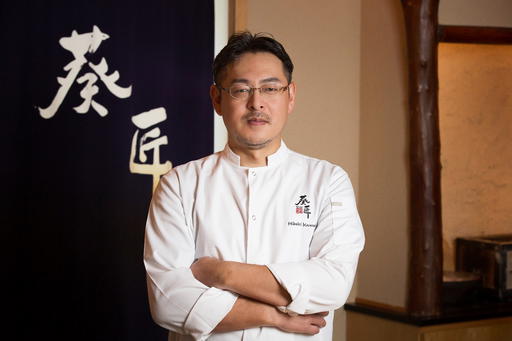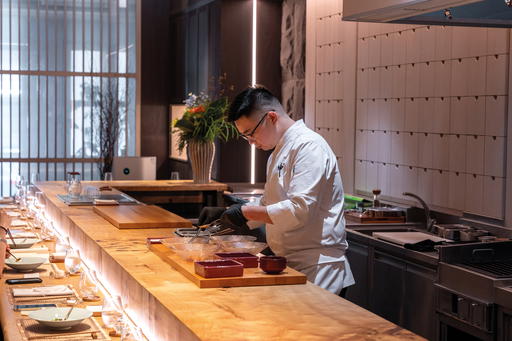
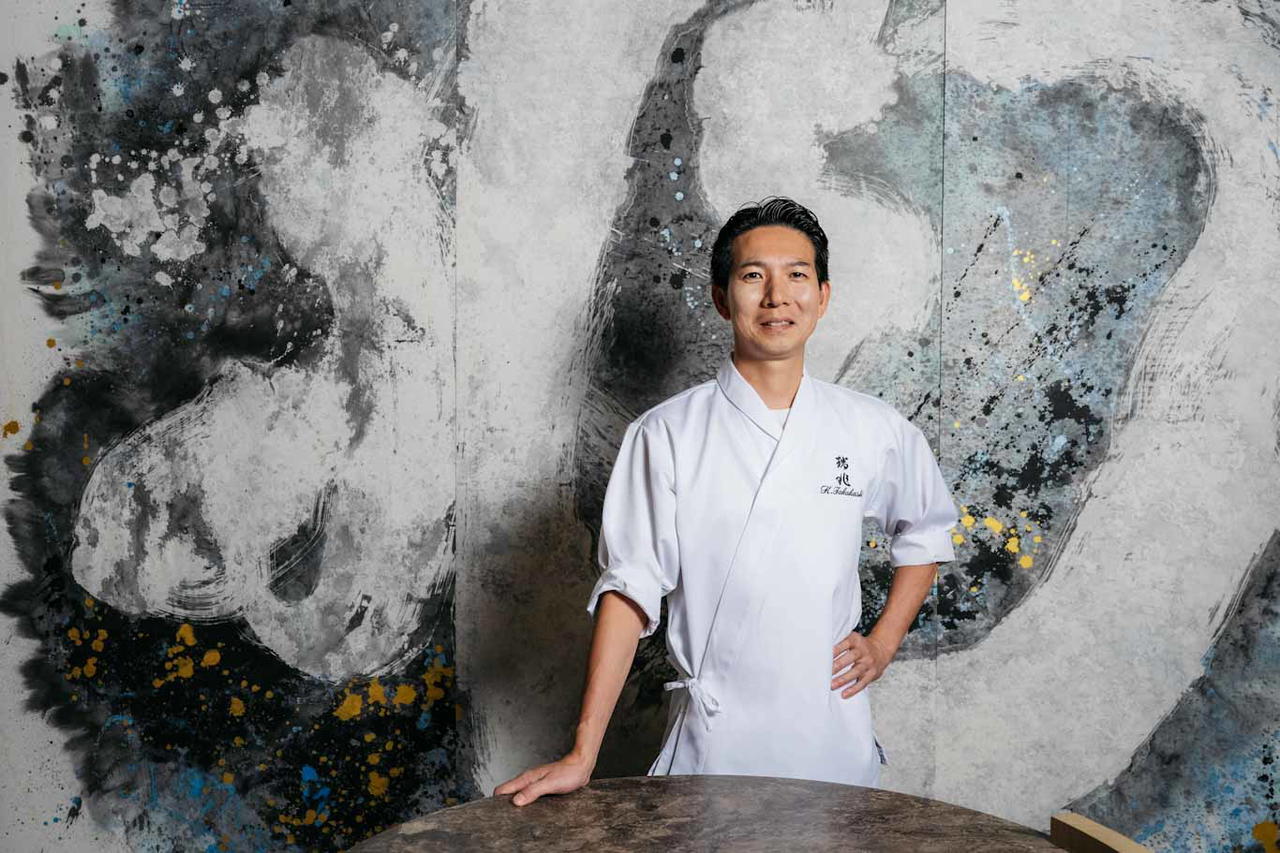
There is always that magical moment during a Japanese degustation meal that will leave you in awe. Sometimes, it’s the fiery theatrics like at Kappo Shunsui. Other times, it’s the chef’s skill at ingredient selections such as at Sushi Sato. At Zuicho, that moment came when I observed head chef Kenji Takahashi preparing the A5 miyazaki wagyu chateaubriand. Prepared in two styles, grilled and fried, Takahashi meticulously cut every serving into identically sized rectangles before placing each piece on the plate at a precise angle. If cooking was an exact science, Takahashi is the mathematician.
But it shouldn’t come as a surprise to those familiar with his background. Takahashi previously ran the Michelin-starred Yoshifuku in Ginza, Tokyo for nine years before coming to the Mandarin Oriental Singapore to helm Zuicho. Owned and operated by Wa Creations, which specialises in Japanese fine dining, Zuicho’s first outpost was in Hong Kong. Within a year of opening, it received a Michelin star in 2021.
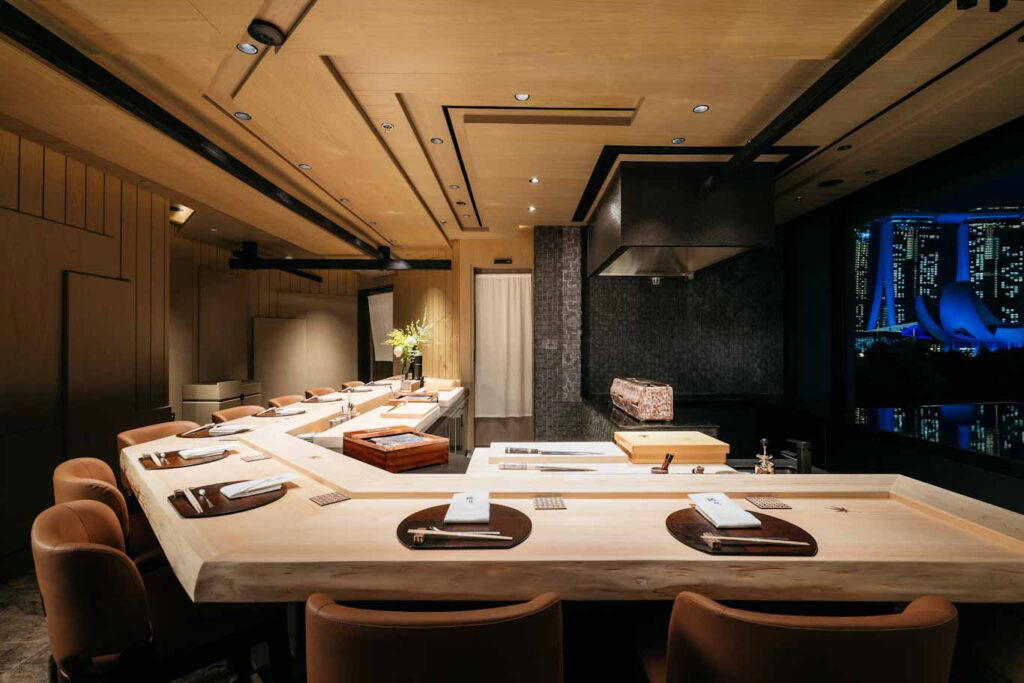
Zuicho can seat 10 people at every meal and offers two private dining rooms, one for eight diners and the other can house six. If needed, the two rooms can be combined for bigger groups. The menu in Singapore also hews closely to the one in Hong Kong. The aforementioned chateaubriand dish is one such item found in the original outpost. Others include the flavourful uni with somen and the A5 wagyu sirloin meat poached in a delicious broth blended with black truffles and a slow-cooked egg.
Most omakase-style restaurants, whether kappo or kaiseki, in Singapore offer similar dishes. That’s not a knock against these places. It’s just the nature of Japanese cuisine. Zuicho offers one I’ve never had the pleasure of trying in a Japanese restaurant before: a soy milk hotpot with snow crab, cabbage, and konjac noodles. Takahashi cooks the broth in front of you and as always, meticulously portions each serving.
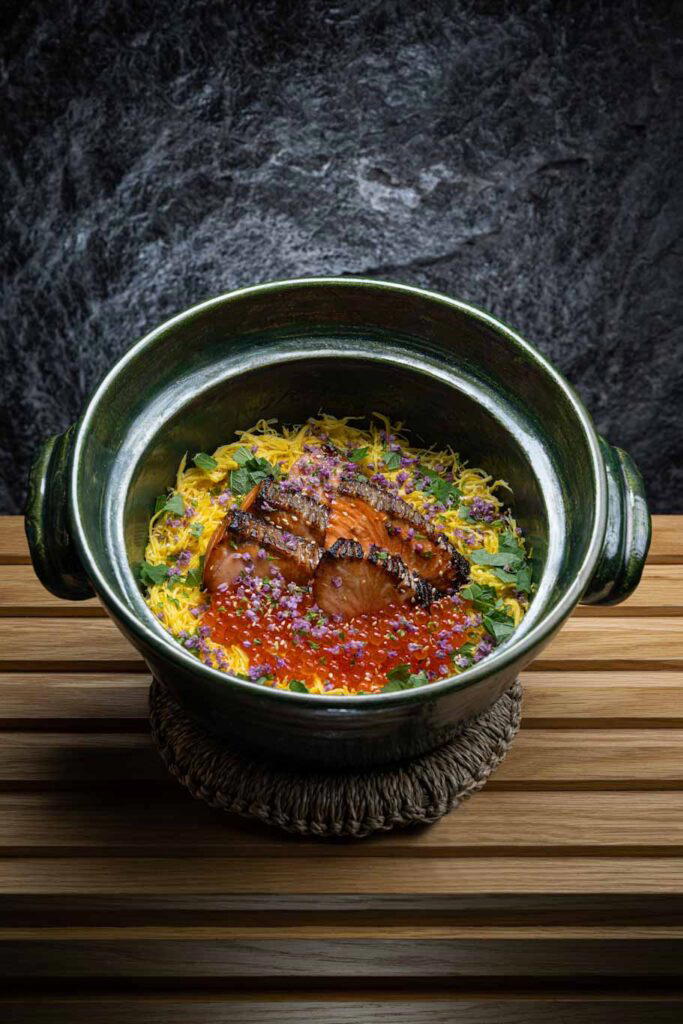
The menu will change monthly, says Takahashi, depending on the seasonal ingredients available. He also tells me that in the first two days of opening, a hotel guest loved the restaurant so much that he came twice and ate the same meal. It’s a testament to Zuicho’s excellent start. Coming up with new menus every month is immensely challenging, made even more difficult with Takahashi’s clear dedication to create something out of the norm. For example, desserts in many omakase restaurants are usually relegated to an afterthought. Perhaps a scoop of ice cream or hand-whirled mochi. Takahashi uses the latter, but presents it in a crispy house-made monaka sandwich together with fresh strawberries and brown sugar ice cream. It was a fitting end to the 10-course meal.
In a sea of omakase offerings, it’ll take something special for a new entrant to stand out. Time will tell whether Zuicho in Singapore will reach the heights of its sister outlet in Hong Kong. But its debut has made a strong, some would say magical, impression.