
A portmanteau of the Chinese characters for numbing and spicy, ‘Mala’ is a well-known characteristic of Sichuan cuisine. Nevertheless, it barely scratches the surface of what the Southwestern China region has to offer.
At Kun, you will get a broader taste, with its four-course lunches and 12-course dinners exploring 24 different flavour profiles, from sweet, sour, bitter, and aromatic to umami. As a matter of fact, diners familiar with communal-style dishes will be pleasantly surprised by the concept of Sichuan omakase, the first of its kind in Singapore.
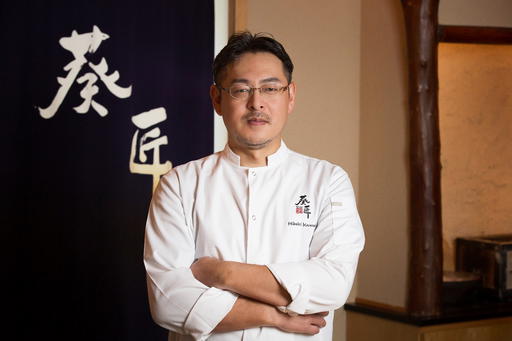
The brainchild of executive chef Bruce Chao Jie, who hails from Henan, China, the dining experience intertwines classic Sichuan flavours with unconventional ingredients such as Hokkigai surf clams and turbot, Yunnan morel mushrooms, New Zealand beef tongue, South African abalone, and sea cucumbers from Dalian.
Both of Kun’s founders are from Leshan, Sichuan province. One of them moved to Singapore 10 years ago. As Chao points out, there is a Chinese saying that goes, “The food is in Sichuan, but the taste is in Leshan”. This is why the Leshan people’s distinctive seasonings are authentically Sichuan.
“Many traditional Sichuan dishes from the past are not spicy. We want everyone to know that Sichuan cuisine is not only numbingly spicy. There are other flavour profiles,” he says.
Creating an omakase dining experience for Sichuan cuisine is not without challenges. Chao’s primary concern was controlling the temperature of dishes, especially when serving them individually and piping hot. “Freshness is the essence of Chinese cuisine. Therefore, it was crucial that we closely monitor serving times and expedite the process, from plating dishes to serving them,” he says.
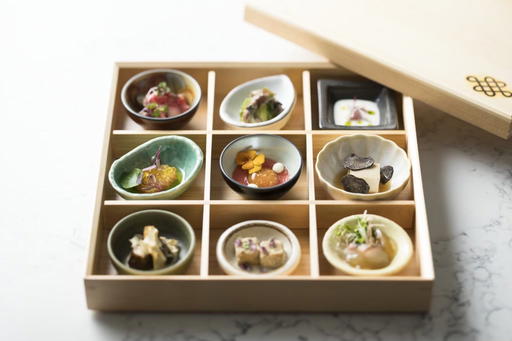
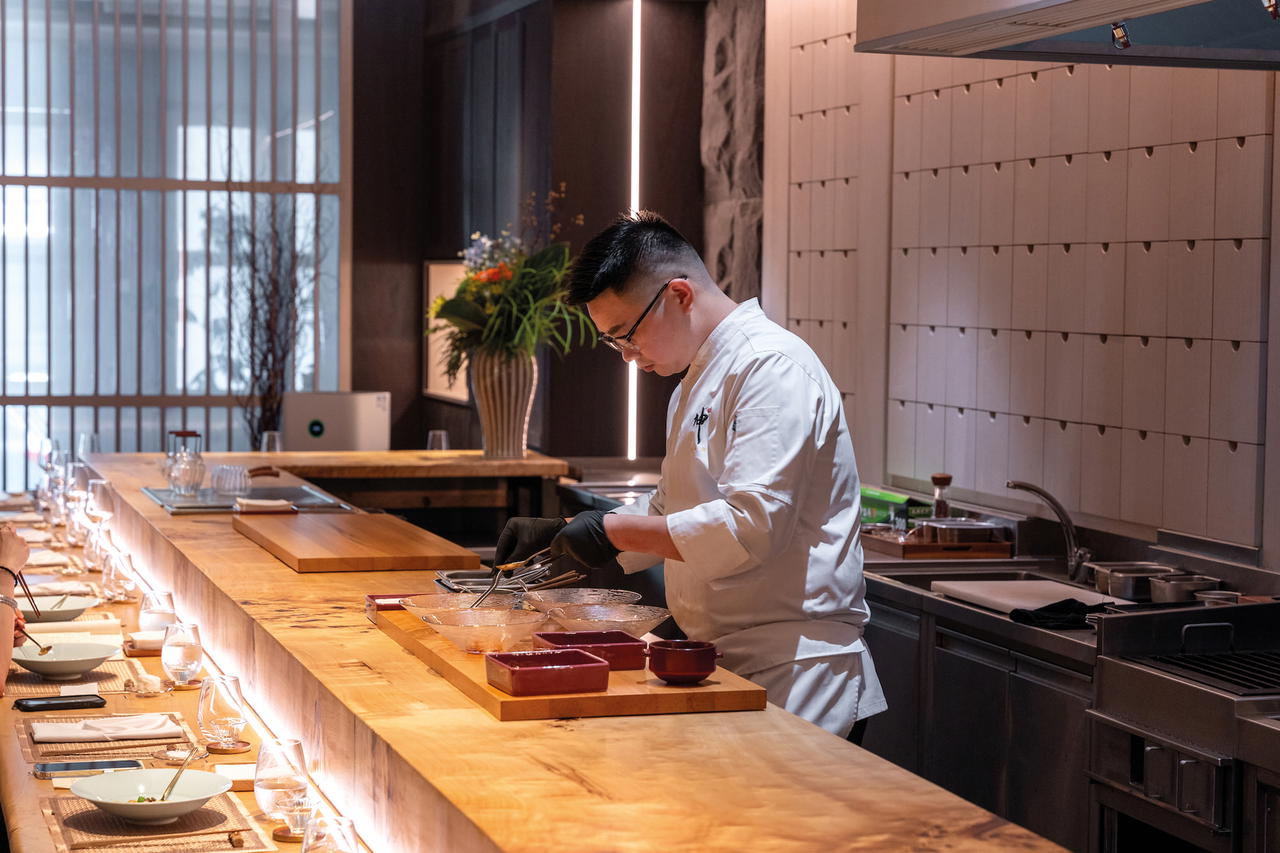
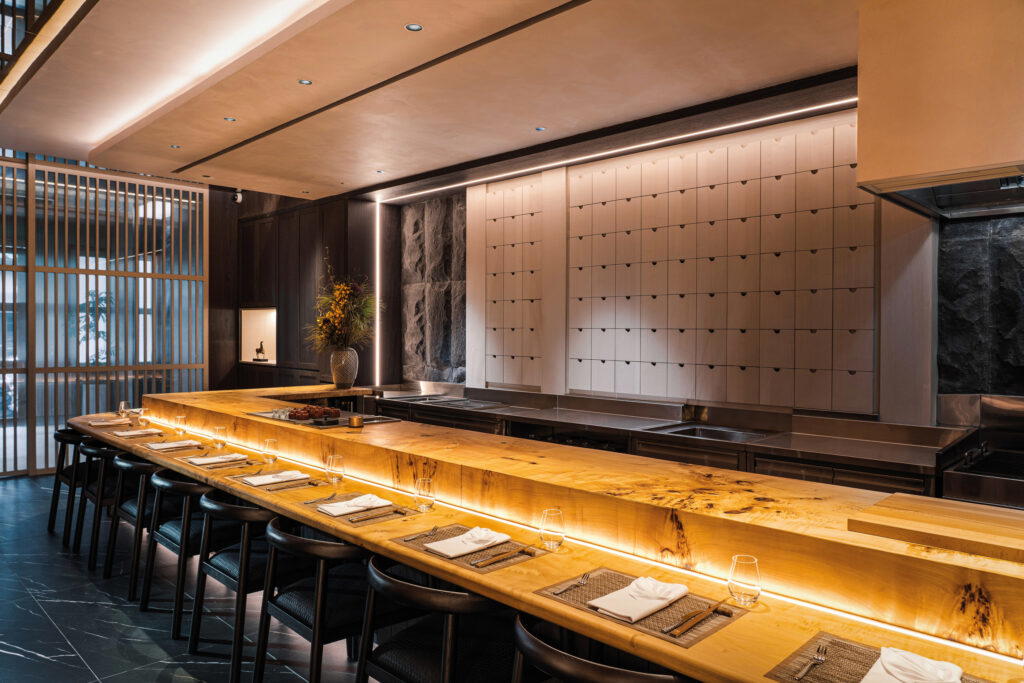
Like Japanese kaiseki restaurants, Kun has an 18-seat counter behind elegant, wood-panelled doors. The culinary theatre allows Chao to add the final touches to his dishes in front of diners while sharing fun facts regarding each creation. For instance, the appetisers served at the beginning of the meal are an ode to the Sichuan tradition of a pickle altar as part of a bride’s dowry.
Whetting my appetite, the pickled trio of Chinese kale, snow pear, and cherry radish symbolises a mother’s ability to manage a household, heralding a happy family.
Chao counts Mapo Tofu and Dry-Fried Spicy Eel among his favourite dishes from the omakase menu. The former features a numbingly hot and fragrant seasoning that perfectly complements the soft tofu. The latter uses the same stir-frying technique as the Black Tiger Prawn dish, elevating the crispy texture of the protein.
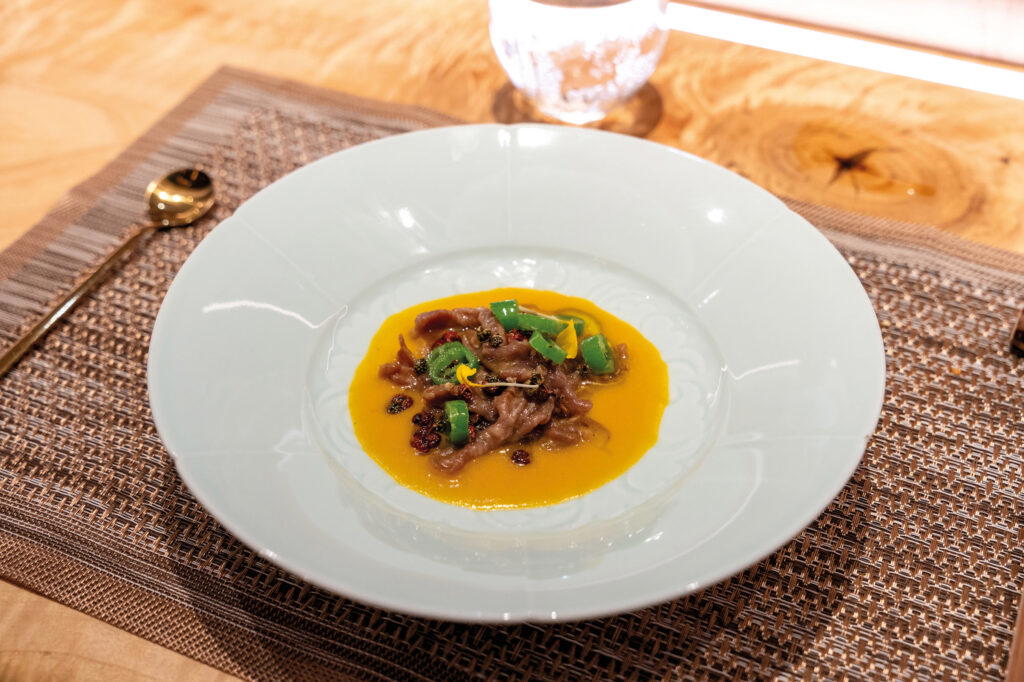
The Poached New Zealand Beef Tongue teases my taste buds with its house-made dressing and peppercorns. Tender slivers of tongue lie in a sunshine yellow dressing meticulously prepared by sautéing ingredients like canola oil, onion, and carrots. The final touch? A drizzle of oil infused with Sichuan peppercorns to balance the creaminess with a hint of heat.
Simple yet moreish, Dry Braised Sea Cucumber captures the rich flavours of Sichuan cuisine highlighted by the fermented essence of a 20-year-old bean paste. Although the sea cucumbers from Dalian, China, require an arduous preparation process, they are Chao’s favourite ingredient.
“The process is fascinating, from the repeated steaming to soaking in ice water, and nurturing in pure water without oil or salt. It takes more than three days to fully soak the sea cucumbers. They are used in Sichuan-style braising or stir-fried with pickled peppers and er jing tiao chillies for a delightful, chewy texture,” he says.
Out of Sichuan’s 24 flavours, the chef likes the “peculiar flavour” the most. This unusual term encapsulates a melding of salty, sweet, spicy, sour, fragrant, and numbing tastes.
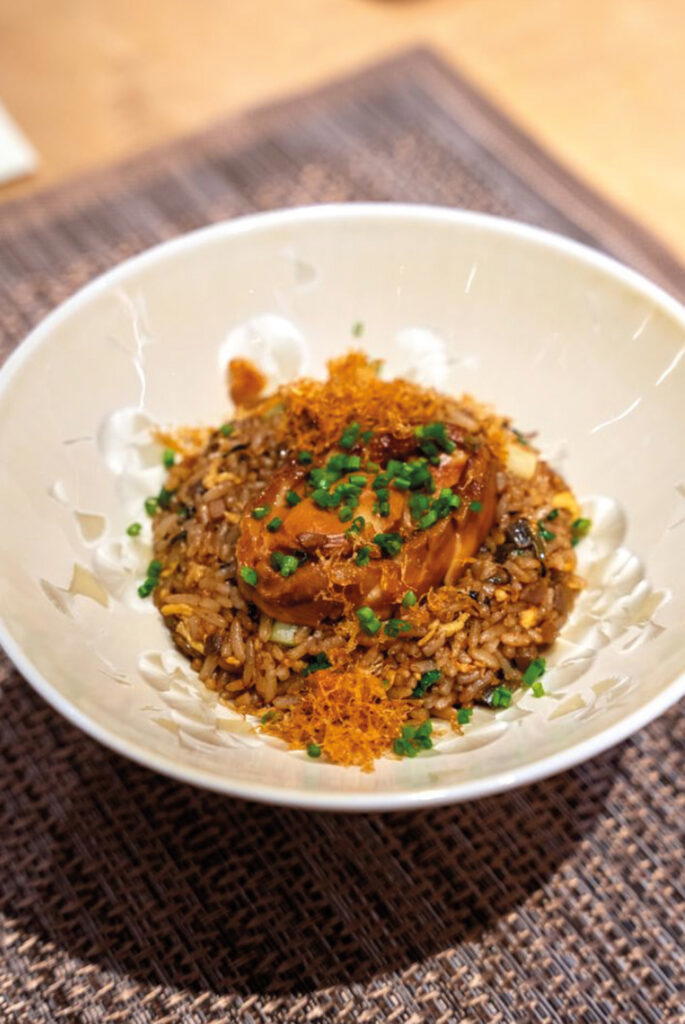
I found this description most suited to the Preserved Vegetable Fried Rice with Chinese sprouts from Yibin. The subtle sweetness and crunch of the sprouts complement the rich abalone bits and the umami of the morel mushrooms.
Returning diners can customise their omakase experience based on their preferences whenever they grow bored with the menu. It only takes three days’ notice. “The team will serve them new dishes they’ve never tried before,” says Chao.