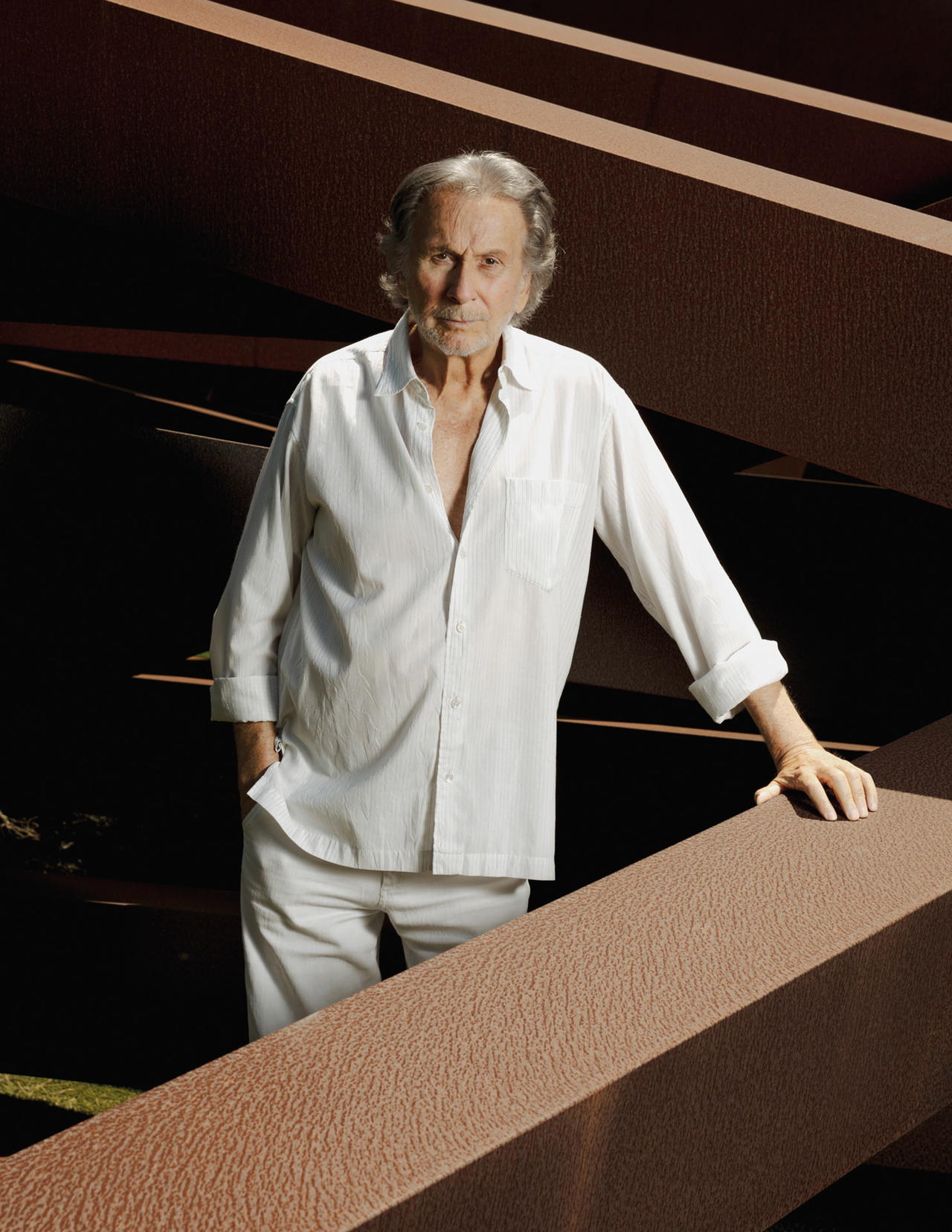
Bernar Venet is not only one of France’s greatest living artist, but also a man endowed with infinite amounts of mental and physical energy. Together with an assistant, the 83-year-old artist has just pushed and pulled with his bare hands 20 oversized arcs weighing nearly a tonne each, which had been carefully arranged vertically along their curves in a structured disorder.
The arcs rumbled as they came crashing down, rocking back and forth and colliding before toppling over on top of one another in an entirely unpredictable manner that he calls “very dangerous and spectacular”. As part of his ‘Collapses’ series, the piece reflects his long-standing interest in chaos, entropy, gravity, instability, chance, and uncertainty.
We are watching this spectacle at the Venet Foundation in Le Muy, a tranquil setting at the crossroads of Provence, the Verdon and the Mediterranean. It is one of the south of France’s most important contemporary art destinations and a testimony to one of contemporary art’s most influential figures.
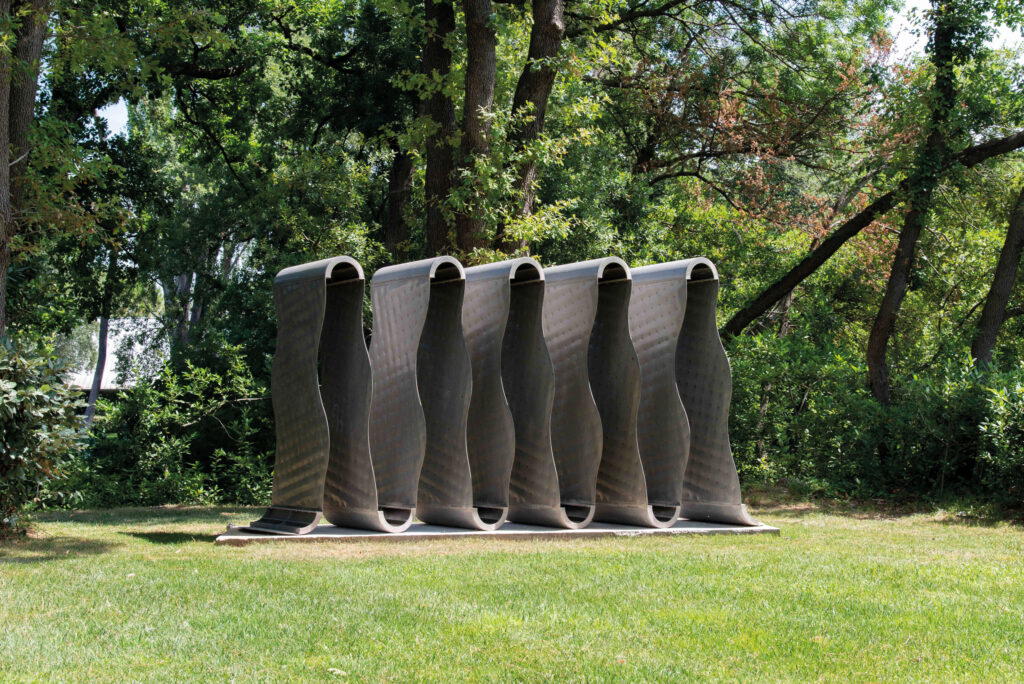
Known for his pioneering work in conceptual art, Venet envisioned a space where sculptures could exist in their purest form, a place where nature and art live harmoniously. “I was born with zero, so if I have managed to survive, it is because the art world accepted me and helped me. I have a debt to society, so giving everything I have back to society through my foundation today is the most natural thing.”
This year marks the foundation’s 10th anniversary since its establishment in 2014 on the site of an abandoned factory and 18th-century watermill in Venet’s native Provence. It also features gallery spaces and a sculpture park. A cultural beacon that attracts museum directors, curators, critics, and art lovers from around the globe, it showcases 500 pieces from one of the most important private collections of contemporary art in France.
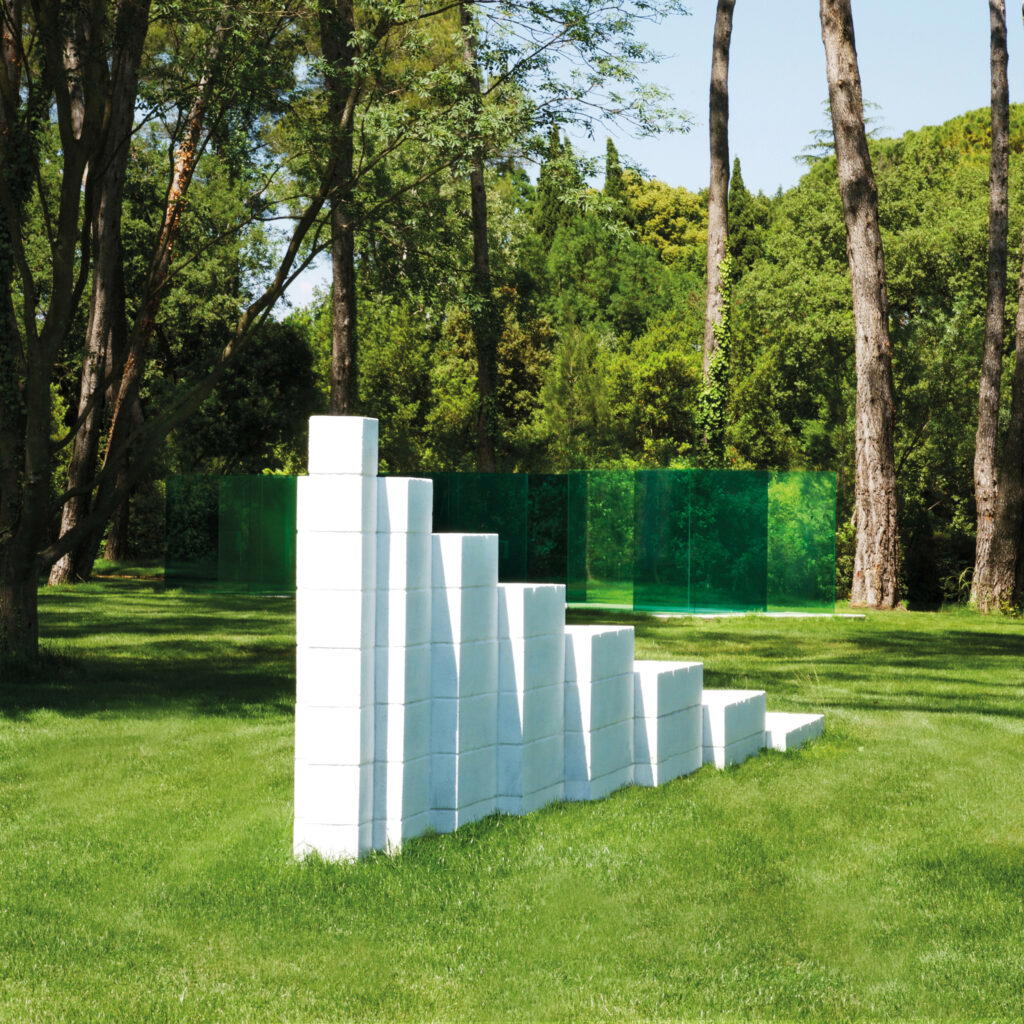
With 65 years of art-making and the dream of a lifetime, the foundation is Venet’s long-term work-in-progress and the journal of his life, which includes his exchanges with prominent minimalist and conceptual artists. As a result of his relationships with them, he built his collection by exchanging works with them or buying pieces at a discount.
A visitor to the foundation will discover not only his extensive body of work with monumental steel sculptures in his signature language of straight, curved, indeterminate and angled lines, but also works by Anthony Caro, Tony Cragg, Richard Deacon, Dan Flavin, Anish Kapoor, Phillip King, Sol LeWitt, Robert Motherwell, and James Turrell.
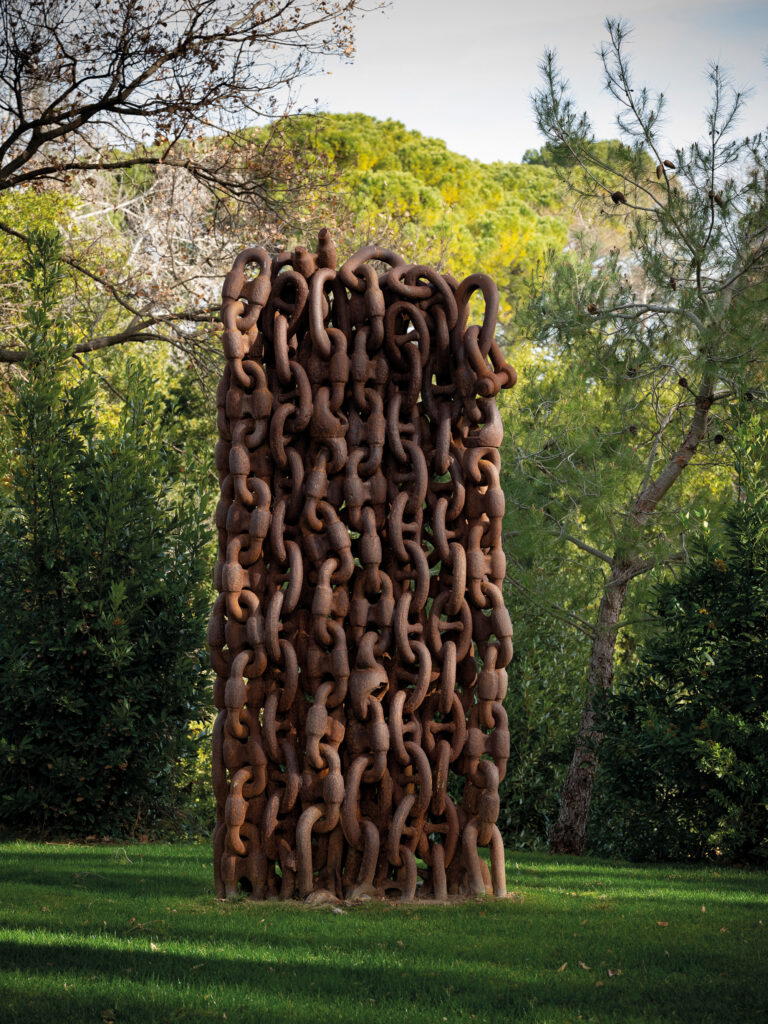
“I had the good fortune to regularly meet most of the artists whose work I now own,” recalls Venet. “Almost all were done for me and accompanied by a story. To name a few, there was François Morellet, who created a piece from the letters of my name; Arman, who did my Poubelle (Trash Can) and Portrait Robot; César, who compressed my car; and Jean Tinguely, who presented me with a baroque candlestick for my 50th birthday.
“Soon after my arrival in New York, Christo also did a wrapped portrait for me. In exchange, I offered him a diagram painting, which I saw each time I visited him. That was the spirit in which my collection began to take shape.”
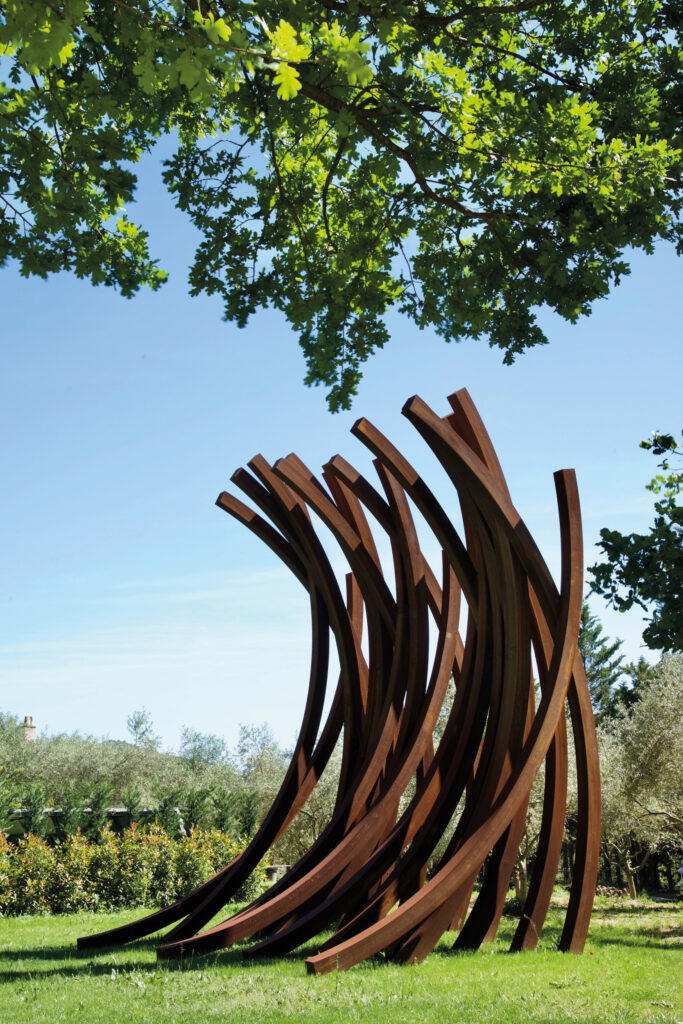
In constant expansion, the Venet Foundation has grown from four to nine hectares in the past 10 years, and Venet is currently negotiating with his neighbours to acquire adjacent plots for the collection of works by minimalist artists donated by Austrian-French husband and wife Wolfgang and Anne Titze. They include Sol LeWitt, Donald Judd, Carl Andre, Robert Morris, Olafur Eliasson, Anselm Kiefer, Georg Baselitz, Lucio Fontana, and Kazuo Shiraga.
“Pushing the limits of art is my only goal. It’s about going beyond, creating art that will be remembered, not settling for what has been done before, and not making sculptures people simply want to buy and display. Otherwise, I become an artist just producing for the market, and that’s the worst thing… The goal is not to make something or to become famous but to participate in and add something to human culture.”
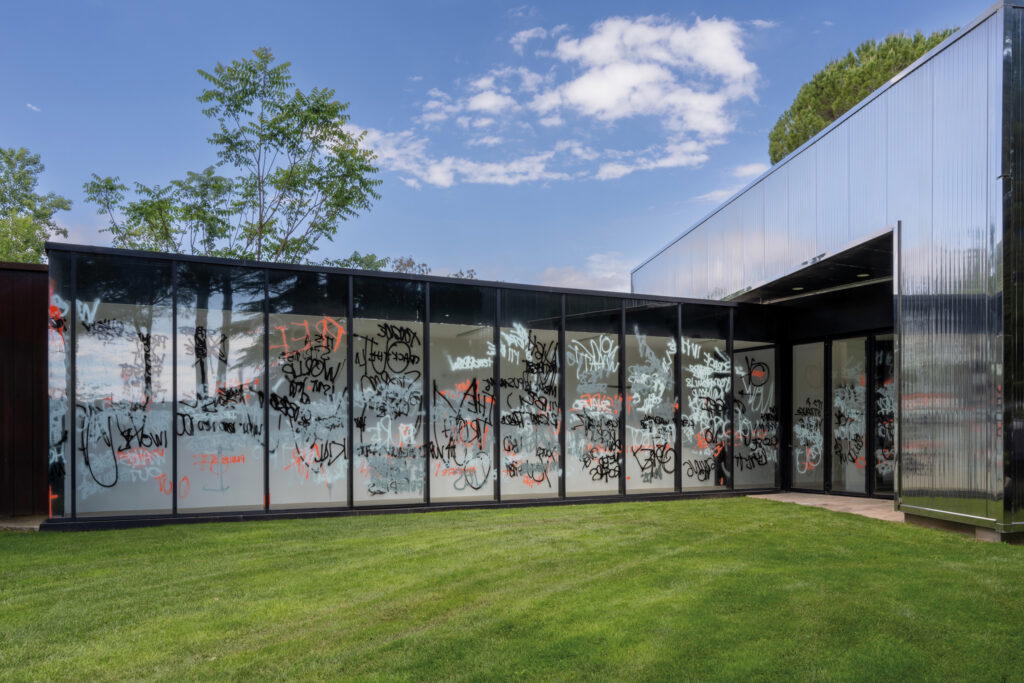
The foundation’s exhibition programme is equally ambitious and diverse, ranging from Yves Klein and Claude Viallat to Mexican artist Stefan Brüggemann, who presents a radical graffiti intervention with “Inside Out”, his second solo show in France. Curated by Jérôme Sans, it runs until 28 September.
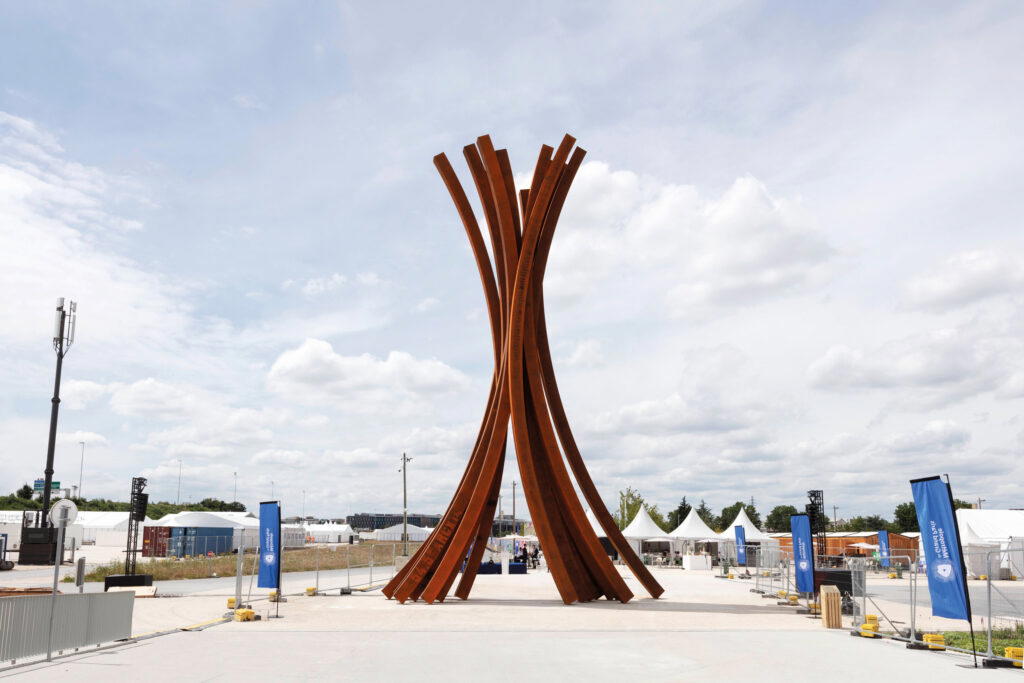
As far back as Venet’s early days in the 1960s, when he experimented with tar paintings, coal piles, and cardboard reliefs, to his latest work at the Paris Olympics, ‘Convergence: 54.5° Arc x 14’, which consisted of a pair of Corten steel arcs measuring 18m high that touch gently, his work has consistently challenged convention.
Throughout his career, Venet has maintained a commitment to evolving his practice, a philosophy that has driven him to adopt new concepts, mediums, and techniques. As a result of his foray into AI this year, he will release his first generative art collection of 500 algorithmic sculptures in November in collaboration with Sotheby’s. Some will be transformed into actual large-format canvases at a mechanised painting facility in Nice.
Before that, the Phoenix International Media Center in Beijing will host a major retrospective of his work from 1959 to the present in September, followed by the Perrotin gallery in Paris in October.
“I have been using tar, charcoal, cardboard, canvas, photography, and wood for my reliefs, and steel for my sculptures,” he says. “I don’t follow any rules. My only interest is creation, trying to go beyond where I have been, what others have thought, and what I have thought.
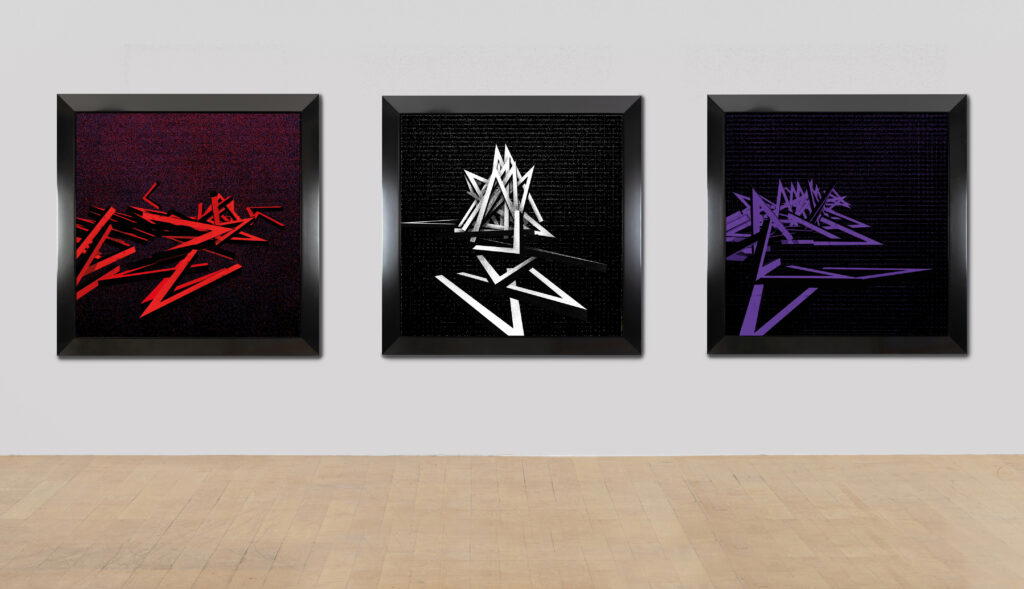
My goal is to constantly challenge all that. AI is fantastic because it shows you things you never thought of doing. You can have a concept, and your brain visualises what you can do, but it’s still very limited. I am opening up a new area for myself with artificial intelligence, and in the end, people will judge whether I achieved anything right.”
Art is not a destination, but a journey for Venet.