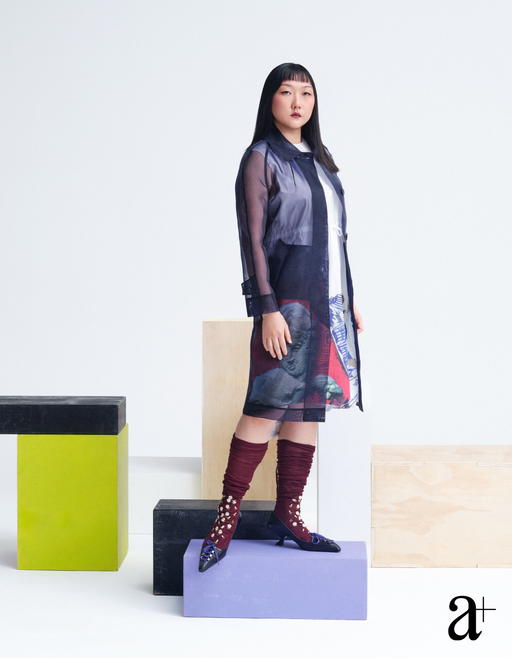
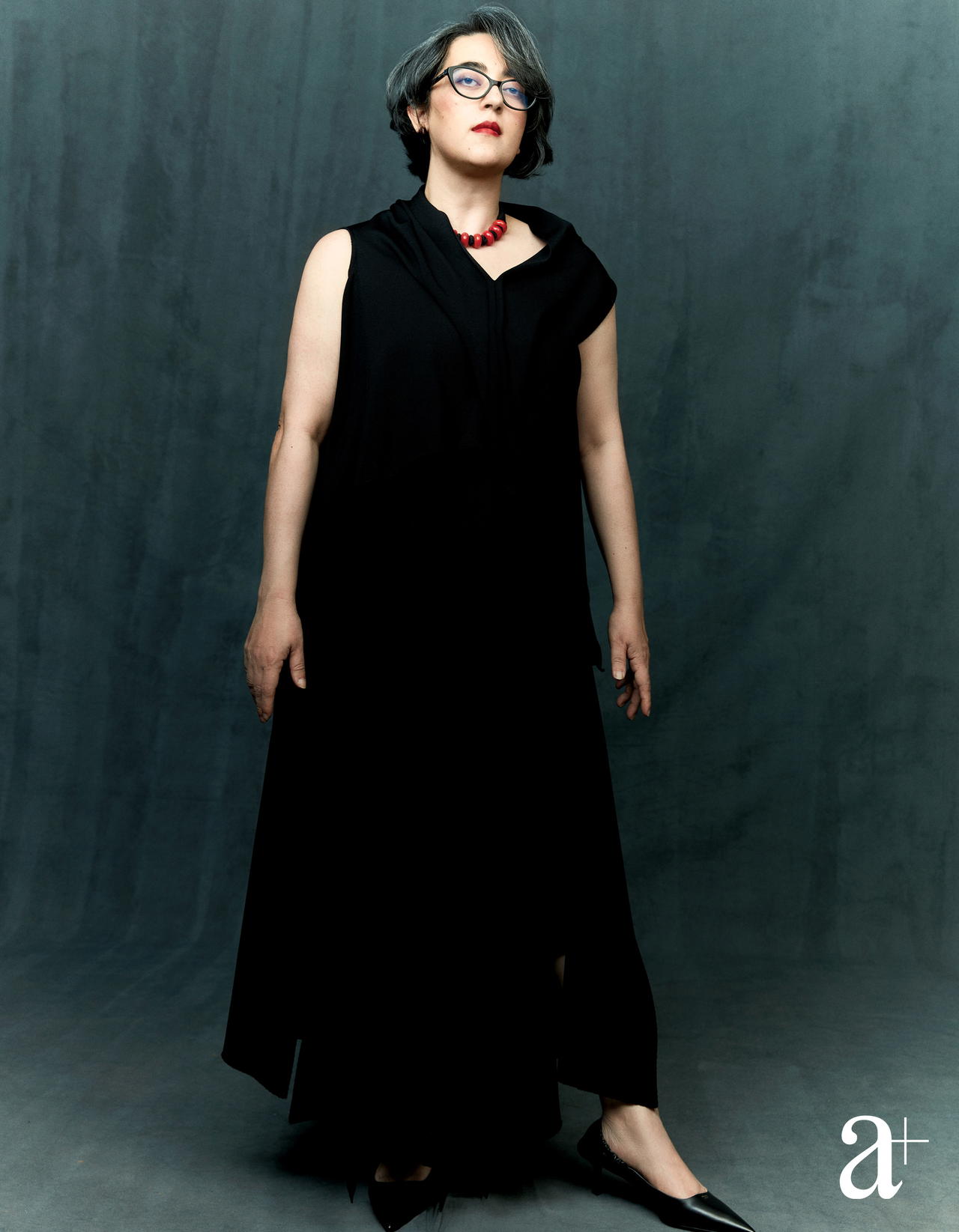
Shubigi Rao is best known for Pulp: A Short Biography of the Banished Book, a film-book-visual art documentary project that examines themes such as destruction of libraries, censorship, preservation of knowledge, and repression and violence.
The first of five volumes was published in 2016; consecutive ones every two years thereafter. Between them, the books have snagged accolades such as Singapore Literature Prize (2020 and 2024), AIGA (New York) 50 Best Books, and D&AD Pencil. The final volume comes out in 2026.
Born and raised in India, Rao became a Singapore citizen in 2013. Powerful, provocative, and profound, her works have earned acclaim from the international arts community, featuring in prestigious festivals such as Venice Biennale, where in 2022 she became the first woman artist from Singapore to present a solo pavilion show.
Her first survey exhibition in Sweden, “Shubigi Rao/Pulp I-IV” (until 11 January 2026 at Bildmuseet, Umeå), features a new film Shadowstitch. A continuation of her research on endangered minority languages, it emphasises women’s cultural work and role in the Philippines’ literary heritage.
You are an artist, a writer, and a filmmaker. How do you choose a medium?
The medium follows the idea. I allow myself to be guided by the idea, according to its required time and effort. Sometimes, as the idea evolves, I’ve had to change or refine the medium. [Smiles] Very often, that’s how I end up learning a new medium. For Pulp I, I taught myself filmmaking. While the books are my voice to a large extent, I sought to preserve the integrity of people I interviewed. I didn’t want to over-editorialise or -extemporalise what they shared, so it was important to do a recording. The film is literally their voices.
How does switching between mediums enhance your creative process?
I love it. What excites me most about the creative process is having to go down a rabbit hole of knowledge and information. One reason I became an artist is so I can learn knowledge outside of my assumed field. People are used to having artists popping up, asking questions, and collaborating. I feel incredibly lucky to be able to do all this. When I first learnt my Pulp books were categorised under Library Science at the National Library, I thought it was hilarious. I told them to please not to, as I’m not a trained librarian.
Pulp I-IV examine censorship, book destruction, and cultural heritage across regions from Sarajevo to Singapore. During this decade-long project, what was the most challenging part for you?
There have been many. The most difficult part was not being able to help the people I interviewed. After listening to their horrific tales of war, genocide, and survival, I became friends with them. This work has forever changed me; it’s hard to avoid becoming affected by what they shared. Often, all I can do is listen. Many of these things were said in confidence, which I’ll never show or write about. And given that I have spoken to hundreds of people, I will have to carry all this within me.
There were days I’d say to myself, I want to go home to be with my child, and see the world through his joyful perspective again. But I’d stop and remind myself about my greater responsibility to help tell the story. I’m a lot less exuberant now; it’s a lot harder to find hope. And as for whether I’ve helped to change things, I’ll never know. [Pauses.]
I’m still in touch with many whom I met through the project. Sometimes we don’t speak the same language so we use Google Translate to communicate. We’re not so different from one another. We fight for or care about the same things; we understand the atrocity when a library is burnt down.
Do awards still matter to your work?
[Laughs] Let’s just say, they help me get through a lot of doors. Access was terribly difficult when I was younger as I had no credentials. Why would anyone let me into the special collections of a library to film there? Only in England was I rebuffed as an interloper by certain libraries—though that could just be unconscious colonial guilt on their part!
Awards have made my work easier. Firstly, I don’t have an assistant so I make these requests myself. Cold calls are easier when you’re “credentialled” this way. Secondly, as an introvert, it’s challenging to put myself out there (especially as an outsider) and approach strangers.
Awards also allow me to deal with fewer a**h****. I had to fend off a very shocking instance of territorial gatekeeping after Pulp I was published. Someone who hadn’t read the book said to me, “What gives you the right to even write this? There are people with PhDs who have written papers about this—who the hell are you?” Nobody can do this to me now. But I’d rather lay more credence to my decade of research, travel, and work.
How do you incorporate “Singapore” elements into your work?
I think of myself as a citizen of the world, primarily. We need to stop thinking about privileging our own communities or families over those of people we don’t know. “Singaporean” should not be an insular term; we must recognise the global scales of the problems we face, from neofascism and inequality to environmental crises.
As such, my works strive to celebrate differences. A singular narrative is the most damaging narrative because there is no one book of the human race. It is what we don’t understand that we must make space for. Ignorance can breed fear and spur xenophobia, racism, and sexism. This is usually discouraged in Singapore. I believe diversity and plurality build resilience, and are necessary to tackle problems.
Does our food have anything to do with it? [Chuckles] Nah, but every time I’m away, I do miss my yong tau foo.
For more inspiring stories in a+ all year round, gift yourself or loved ones a digital subscription.
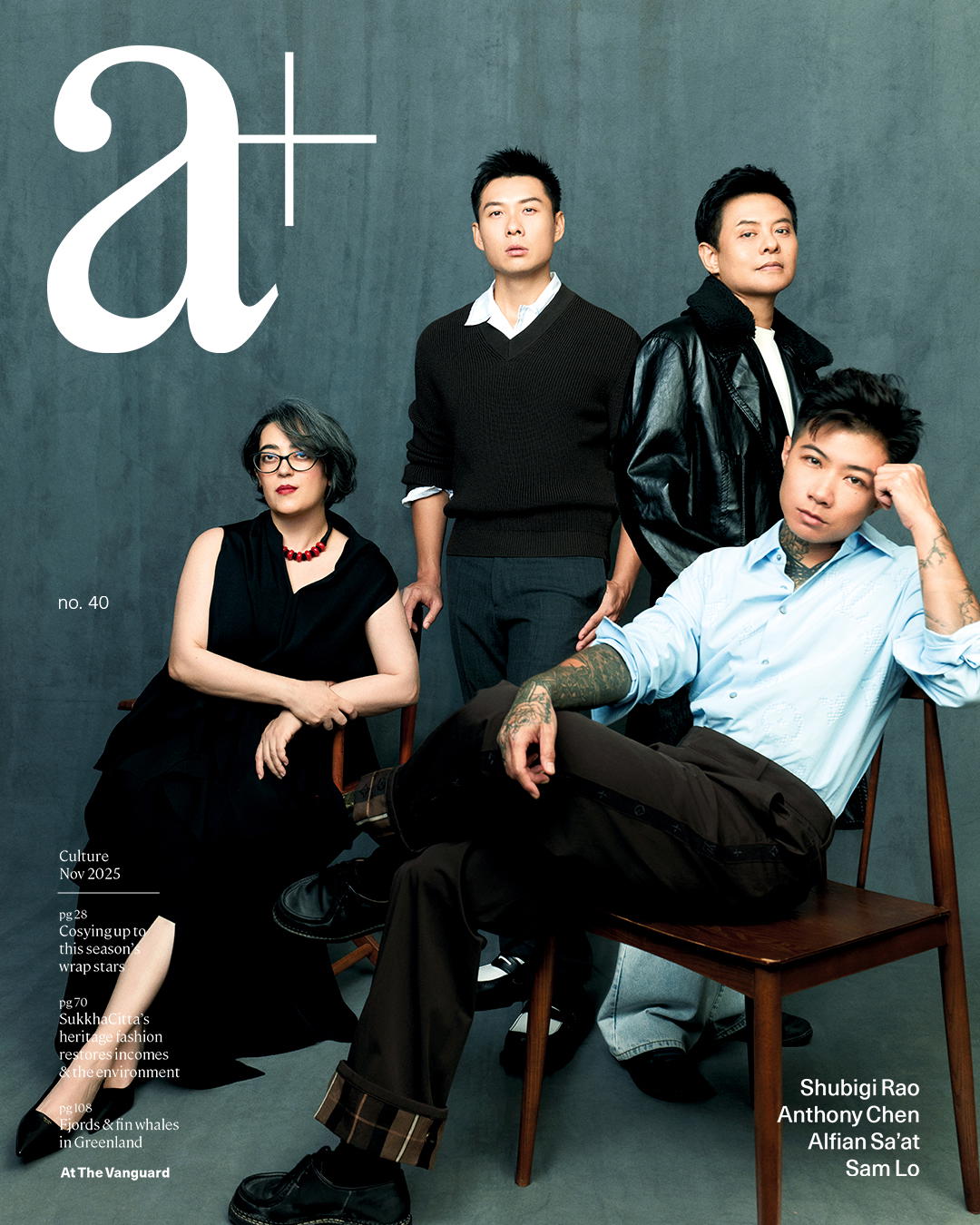
Photography Joel Low
Styling Chia Wei Choong
Hair Jenny Ng
Makeup Keith Bryant Lee, using Dior Beauty
Photography assistant Eddie Teo
Styling assistant Annalisa Espino Lim