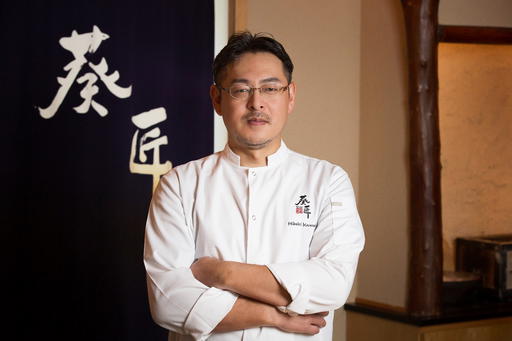
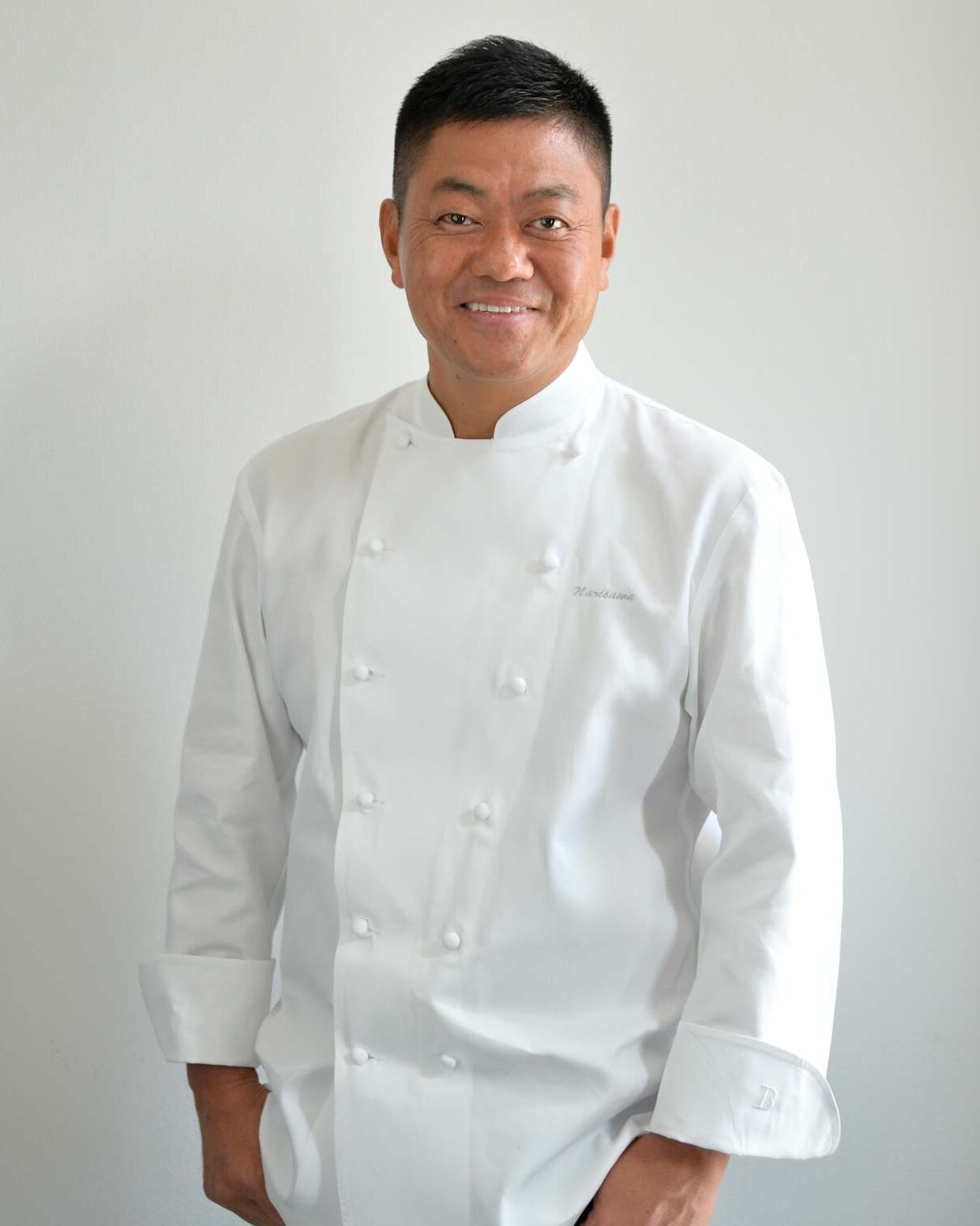
Yoshihiro Narisawa is a man of few words. The Michelin-starred Japanese chef has held court at his eponymous restaurant in Tokyo since 2003, wowing diners with a cuisine critics call Innovative Satoyama—food that not only nourishes the body but the spirit. Before that, Narisawa ran a restaurant called La Napoule in the Kanagawa Prefecture. He opened it in 1995 after an eight-year overseas stint, chopping away in the kitchens of Joel Robuchon and other leading chefs. But, when I ask what keeps him going after so long, Narisawa’s reply is succinct. “The people. Meeting people in the industry around the world stimulates and motivates me.”
It’s the same reason he’s unbothered by the pressure. In the past decade, interest in fine dining has exploded and the cooks whom society previously shunned have become sought-after rock stars. With fame naturally comes criticism, and some have questioned the sustainability of this manic industry. The latest—and certainly not the last—is Rene Redzepi of Noma. He recently announced that he was shuttering the doors of the boundary-pushing restaurant at the end of 2024. “It is unsustainable. Financially and emotionally, as an employer and as a human being, it just doesn’t work,” he said in a New York Times interview.
Narisawa feels differently. He tells me he’s still unsatisfied with where he is, which is why he constantly challenges himself. “I try not to play safe and always step out of my comfort zone.”
So, when his restaurant in Tokyo closes for several weeks to complete renovations, Narisawa is occupying himself with two projects. The first is a Narisawa outpost in Shanghai. It’s the first time the chef has opened an international venture. “I am interested in China and its culture because Japanese culture has roots in the country. I wanted to explore it with my own eyes. China is also a large and influential country, so I hope to bring my positive message of sustainable and beneficial cuisine to the people.”
The second is here in Singapore. For five weeks from 24 March to 30 April, the chef is running the Narisawa pop-up at Mandala Club. It’s part of the long-running Mandala Masters programme, which previously welcomed other luminaries that include Virgilio Martinez and Pia Leon of Central, Gaggan Anand, and Mauro Colagreco of Mirazur. Narisawa promises to be in the kitchen every day. He also promises to transplant the atmosphere of Tokyo’s Narisawa to Singapore.
He admits sourcing for ingredients is a problem because of rising costs, which he attributes to the environmental crisis. “I felt limited because of the immense difficulty of acquiring some rare ingredients,” says Narisawa. Still, he plods forward, guided by his culinary zeitgeist.
I had one last question. He smiles. “No, I have no plans to open a restaurant in Singapore.”