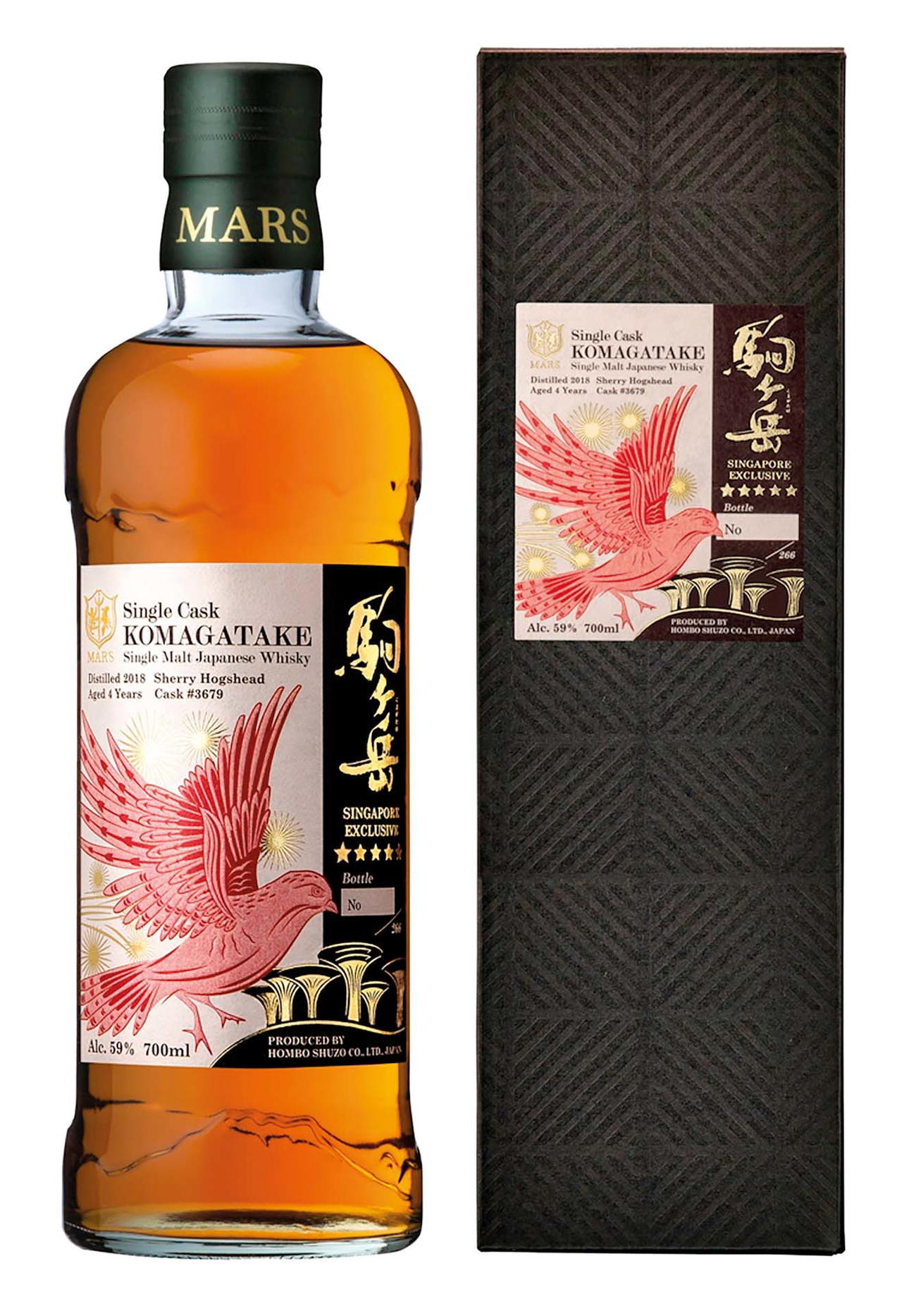
One of Japan’s oldest whisky makers plans to release five single cask single malts in Singapore.
Each edition, released annually over the next five years, will feature a Japanese sparrowhawk soaring over Singaporean landmarks—the first is the Supertree Grove. The kicker is that it’s not from Suntory or Nikka, whom you might expect to craft such a collaboration, but from the lesser-known—but still just as iconic—Shinshu Mars Distillery.
If you’ve never heard of Mars, you’re not alone. Japanese whisky history usually celebrates its two biggest pioneers, Shinjiro Torii and Masataka Taketsuru, founders of Suntory and Nikka, respectively.
But few outside of Japan will remember the industry’s third key figure, Kiichiro Iwai, the man who ioriginally sent Taketsuru to Scotland. Iwai helped Hombo Shuzo, a producer of shochu and wines, get its whisky licence in 1949 and produce its first Mars whiskies in 1960 at a distillery in Yamanashi Prefecture.
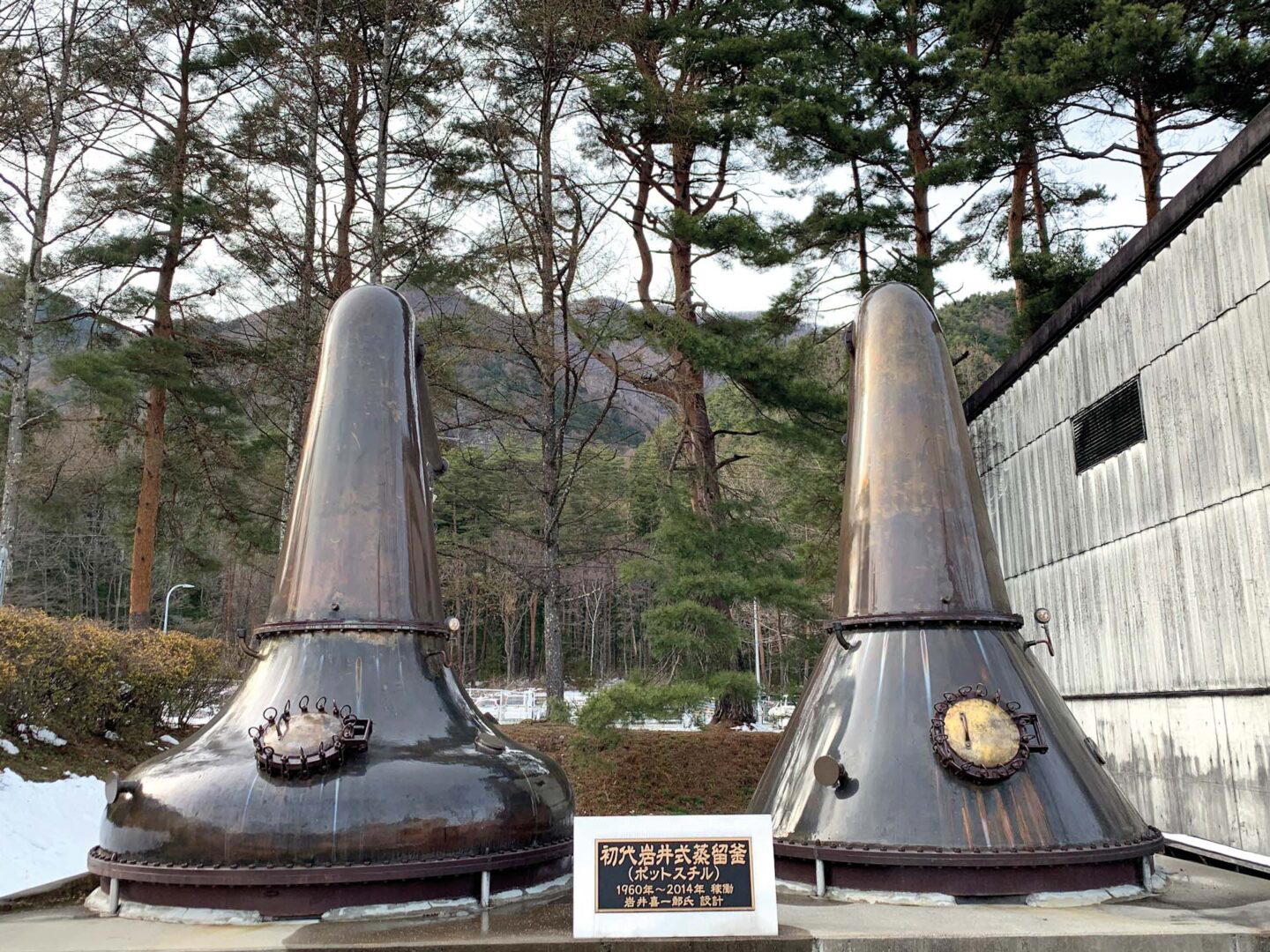
The delicate Japanese palate found the earliest Mars whiskies too powerful, so the distillery transformed into a winery, after which the company looked for a new site to perfect its whiskies.
In 1985, it established the Shinshu Mars Distillery in the Nagano Alps, about 792m above sea level, making it Japan’s highest distillery. “Based on the notes Iwai got from Taketsuru, we wanted an environment similar to Scotland,” explains Kazuto Hombo, eighth president of Hombo Shuzo. “At the Shinshu distillery, there is soft, glacial water, cool temperatures, and a bit of fog. We looked for these factors to make our whiskies.”
Although the distillery had an idyllic environment and ageing conditions, it was mothballed in 1992 due to rising production costs from Japan’s tax reform in the 1980s and dwindling whisky demand worldwide.
Fortunately, Japan’s highball boom a decade later renewed interest in the spirit. The distillery reopened in 2011, a second one called Tsunuki rose in 2016 in Kagoshima, and a third maturation facility on Yakushima Island opened shortly afterwards.
“We are not one of the big boys. Companies like Suntory and Nikka can open distilleries in different places, but we are the only craft producer to do so,” says Hombo. The diversity of Mars’ locations means a greater range of flavour profiles across its product range. Tsunuki has a warmer climate than Shinshu, and Yakushima is practically tropical. Since Hombo Shuzo’s portfolio includes wine and craft beer, the company also wants to experiment with wine- and IPA-seasoned casks in the future.
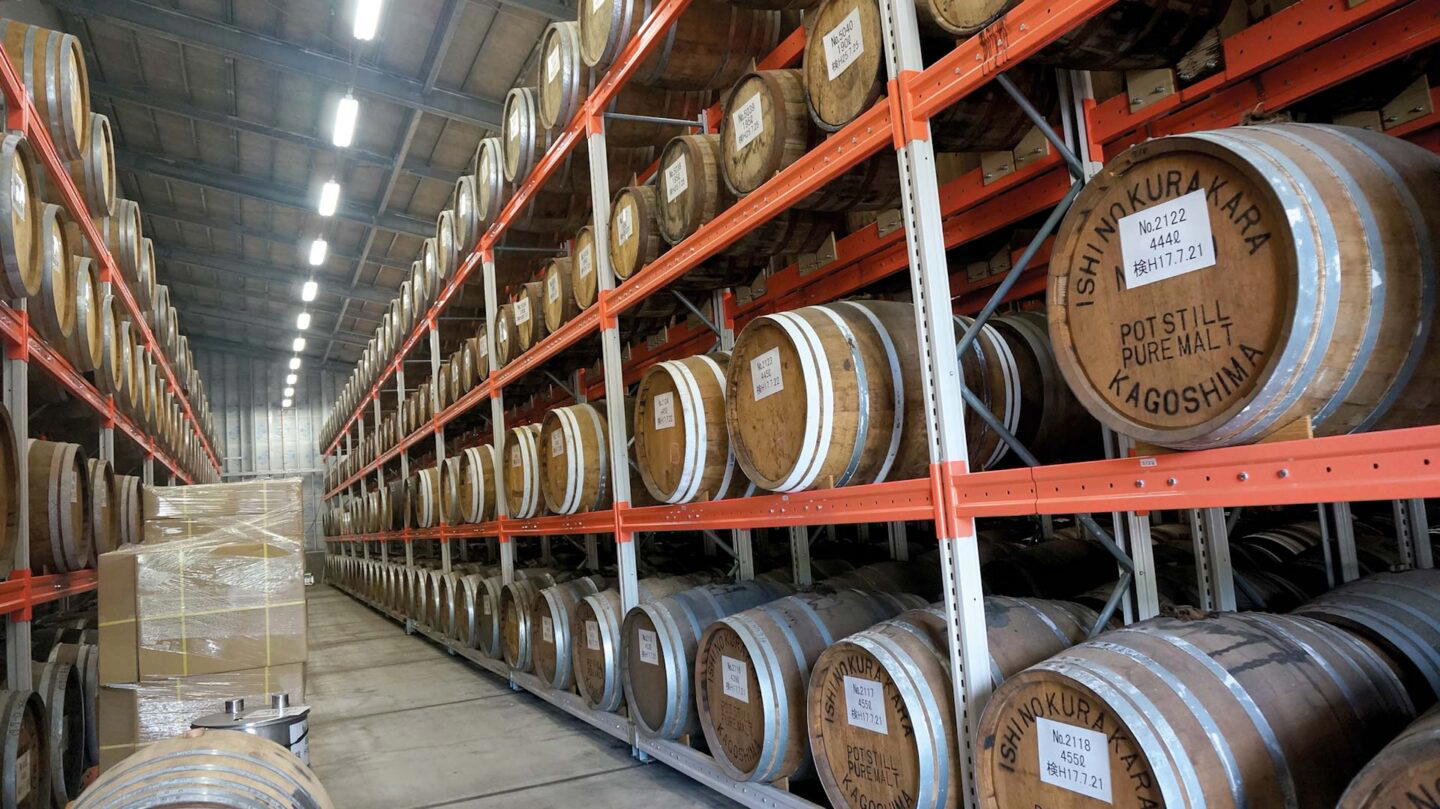
The core range now includes annual releases of Komagatake single malts, Tsunuki single malts, and an extensive Iwai blended whisky range.
Mars’ relative youth means its stock of older spirits is smaller, which explains why many of its releases are No Age Statement (NAS) whiskies. Don’t write them off just yet, though. The upside is that Mars whisky is easier to buy and collect than its more famous—and prohibitively expensive— competitors for now. Still, Hombo would prefer to make his whiskies available to anybody who wants to drink it.
“The company has older whiskies, but not enough to release more age-statement whiskies, although the Shinshu Mars Komagatake 30 Year Old was released in 2021. We will release 12-year-old Komagatake and Tsunuki next. However, please drink our releases. When people buy whiskey to invest and flip, it’s problematic. We want to introduce our terroir, and for you to taste what went into each bottle.”
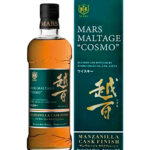
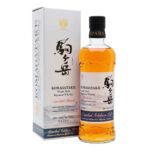
There is much to explore from Mars, but you can start with the Mars Komagatake Singapore Exclusive 2022. Matured in a sherry hogshead cask and limited to about 150 bottles, the single cask spirit promises a nose of almonds and latte that eases into the sweet richness of burnt caramel and light peat on the palate, while the cocoa-tinged finish is long and smoky. The cask was selected in partnership with local distributor Barworks Wine & Spirits, as both parties understand Singaporeans’ proclivity for sherry cask-seasoned whisky.
“Since we’re small, we can adjust to customers’ wants, but they may have to wait because it’s a matter of stock,” says the president. “Our size also means we can’t supply to huge markets, but we are not thinking about that. We want to give our whiskies to places like Singapore with high-quality fans.”