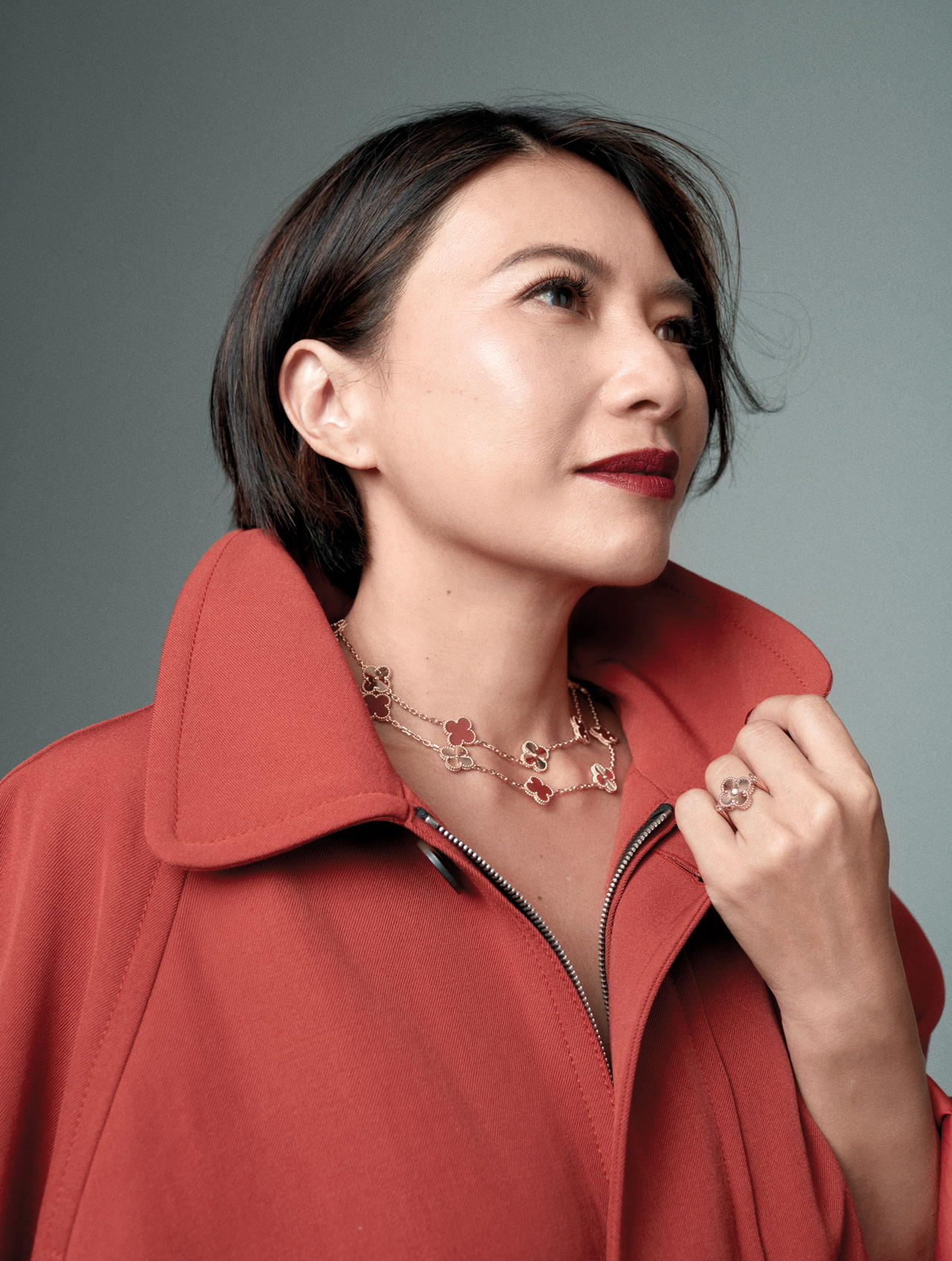
We remember happiness. We crave episodes that spark joy. However, it is the most difficult moments in our lives that define us. Cheah Sui Ling had a happy childhood. She grew up in a small town in Penang. Her father was a teacher who coached her and her sister in tennis. Mum worked in the education ministry. “We spent a lot of time together as a family. They weren’t traditional parents; we hardly got caned, which is incredibly rare for parents of that generation,” says Cheah.
But they did push their children to achieve excellence. Cheah thrived in this environment. She became a head prefect, regularly topped the academic lists, and represented the state in the national tennis championships. It’s a life lesson she is eternally grateful for.
While her parents encouraged mastery, Cheah’s grandfather indirectly taught her the value of hard work. As a self-made man, he taught himself English in his 20s and never took a day off. “In his 80s, he was still developing a small piece of land at the back of his house, even after retirement. He led a monastic life and was incredibly frugal. Through him, I learned the merits of applying myself.”
She remembers going to the tennis court, weather permitting, and staying until she’d served at least 200 balls. She was only 14. “My sister was a natural tennis player. She was five years younger and a head shorter than me, yet she was way more talented,” Cheah candidly admits. “I had to work so hard just to be on the same level as her.”
Healthy competition and a nurturing environment shaped her to be the woman she is today. After watching Wall Street, the 1987 film starring Charlie Sheen and Michael Douglas, a young Cheah became enamoured by the bright, glamorous lights of Wall Street. She loved how someone like Sheen’s character could rise to the top with persistence and hard work. Age didn’t matter. She was also enamoured with the fast-paced environment and the adrenaline rush she got from the dealmaking portrayed in the film. It was a completely different universe from Penang.
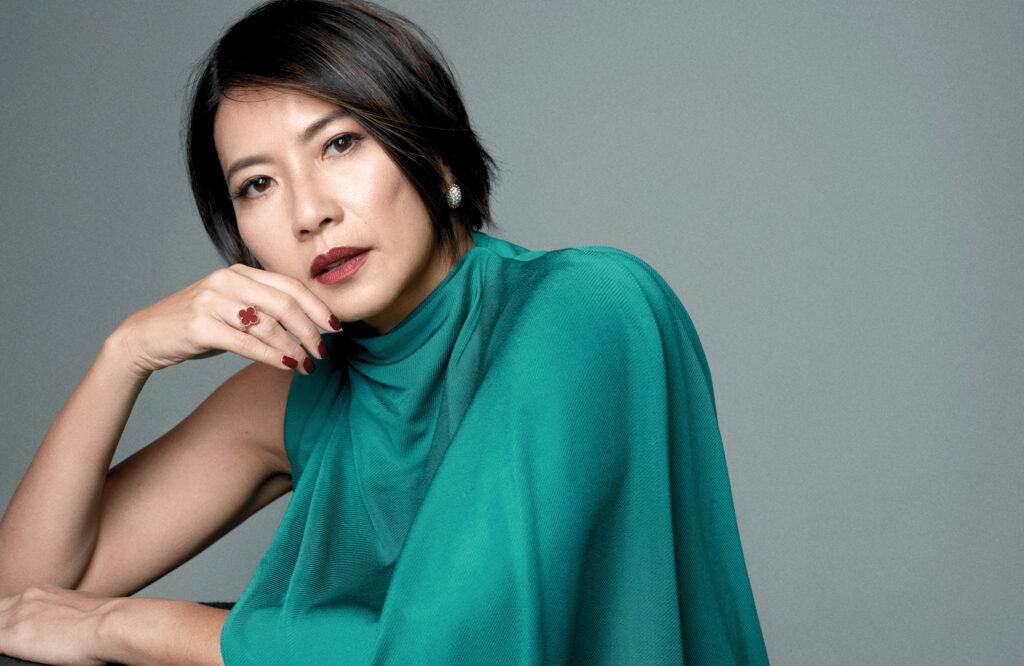
Photo: Joel Low
So, she set course for Wellesley College, where luminaries such as Hillary Clinton and Madeleine Albright graduated. Cheah majored in French—she wanted to read Albert Camus in his native tongue—and economics there. She landed an internship at Merrill Lynch in the summer of her second year and did well enough to secure a job offer by the end of her tenure. In college, she also gained an appreciation for Baroque music and Rhone Valley wines after spending a year in Aix-en-Provence with a family whose father played Bach brilliantly and where Chateauneuf-du-Pape was the beverage of choice at dinner.
While some people’s ambitions change after university, Cheah never wavered, although she received another job offer to pursue art curation. She considered it briefly until someone asked her, “Do you ultimately want to hang art? Or buy them?” That question squashed any romantic notions she had of heading down an alternative route.
Her 14-year-old self wanted to work in Wall Street. The 20-plus adult achieved that dream, joining Merrill Lynch as an investment banking analyst. She spent six years in the firm, and worked in several cities across New York, Singapore, and London. A three-year stint with a now-defunct telecommunications company took her to Los Angeles and Hong Kong before the finance industry lured her back. As part of her return to the fold, she worked with J.P. Morgan, and spent some time in BNP Paribas, too.
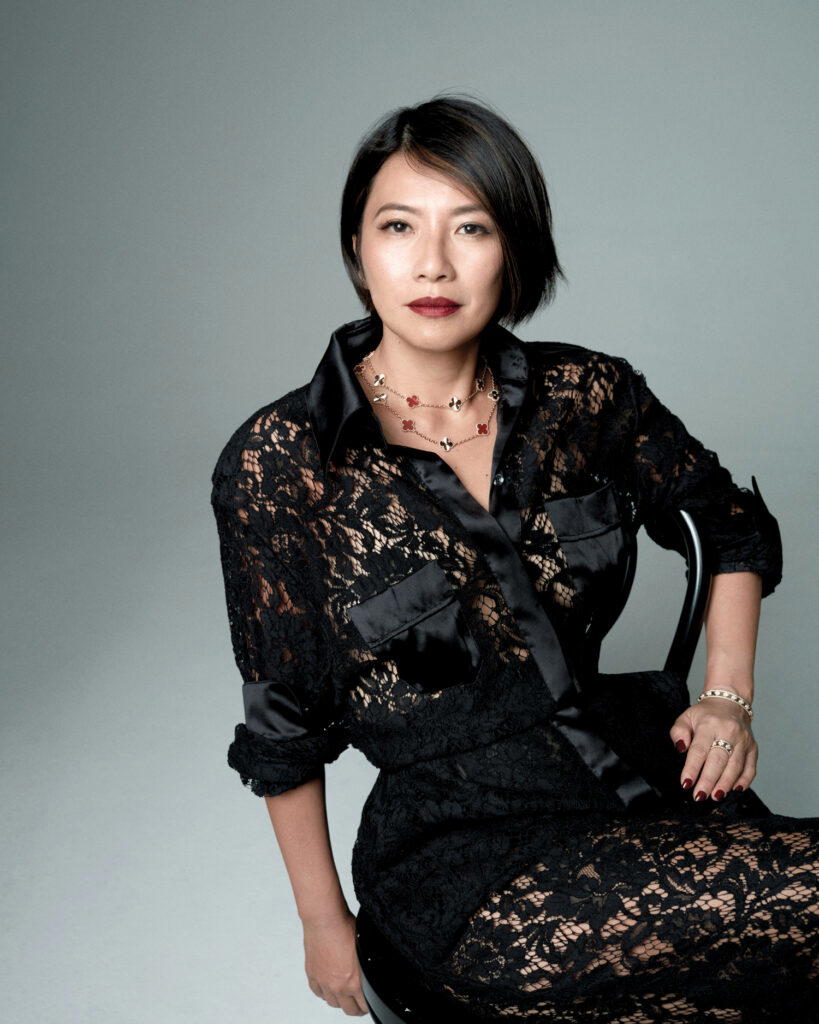
Cheah should have been happy. She had a successful career in finance, a lovely home in Singapore, and a partner to create moments with. There was nothing she lacked. Yet, a gnawing unease began to take hold. It had become too big to ignore. “Why am I unhappy? Why do I have this persistently hollow feeling? Something is wrong with this picture,” she asked herself.
Outsiders would have muttered under their breaths. Then it dawned on her. “It sounds cliche, and very much a first-world problem but I realised that all these things I’ve been accumulating meant nothing if I didn’t have inner happiness.” She constantly chased those temporal moments of joy through material acquisitions, but the black void in her craved for more.
In the same way as the younger Cheah, who committed herself to a life of hard work to reach her goal, this version stood at the crossroads and pursued her version of happiness. “You must work on yourself. It may sound strange, but many people don’t. It’s about going back to the fundamentals, like gratitude and contentment.”
So, she left banking and took a sabbatical. In Buenos Aires, she danced the tango five hours a day for two months. After that, she shredded the slopes for another couple of months. “I was first on the track at 7.30am and learned from an Olympic-level coach. Then, I realised there’s an age limit to these extreme activities. Breaking your bones when you’re 20 and 40 have very different outcomes,” Cheah laughs.
The woman who served 200 balls every time she trained still possessed the same zeal for self-optimisation, several decades later. Along the way, she parted from her then-partner and sold the home. She met someone else not long after. Although short-lived, it wasn’t by choice. Three months into the relationship, he was diagnosed with terminal cancer. This was a defining moment, but abandoning ship never crossed her mind.
He eventually lost the battle to cancer at 56. “When you do your best, you will never regret the decision regardless of the outcome. He was one of my best gifts. He taught me invaluable lessons about life and the beauty of living in the moment.”
After mourning for a while, Cheah picked herself up and embarked on the next chapter of her life. During our many conversations for this story, one theme consistently popped up: disruption. She could have remained an investment banker and been set for life, but she didn’t. She could have silenced the demons and lived in that big house for as long as she wanted, but she wouldn’t. Reinvention was and remains her core tenet.
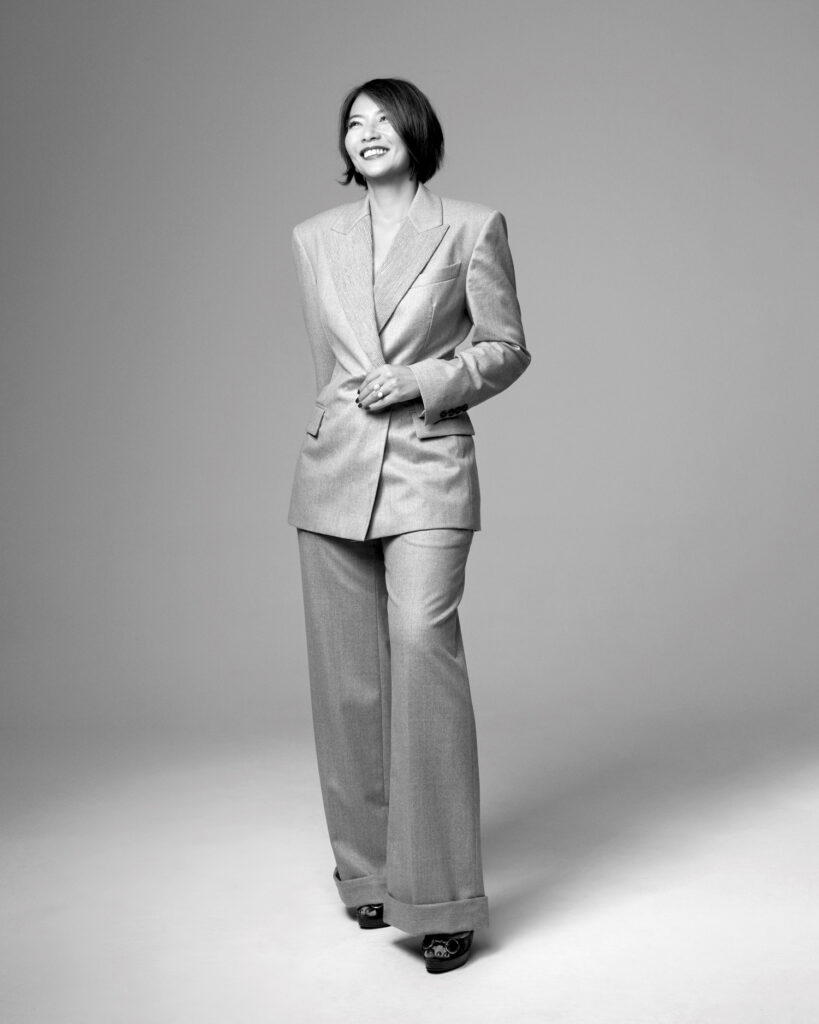
With the world always changing, Cheah says, “Constantly reinventing myself gives me the joy of learning continuously about myself and the world around me,” says Cheah. As part of her third act, she became a board member of several publicly-listed companies in Singapore.
Moreover, after a brief sojourn in Silicon Valley, she realised that rapid developments in different technologies such as quantum computing, robotics, and AI would converge and transform the face of many industries.
She went for a short internship at Twitter to see how she could fit in this new era. While fun, Cheah Sui Ling knew she did not have the makings of a software engineer. However, she could apply her financial skills to the burgeoning venture capital industry in Singapore. So, she became an investor and joined Wavemaker Partners, an early-stage venture capital firm investing in B2B, impact, and deep-tech companies, in 2016. Her role: helping the firm’s start-ups with business development efforts and eventual exits.
Venture capital has been an exhilarating ride. She enjoyed learning about new technologies that had the potential to transform industries.
One Wavemaker start-up she’s particularly passionate about is ecoSpirits, where she also serves as executive chair. The company’s mission is to reduce the usage of single-use glass bottles. It works with spirit brands to eliminate packaging waste in the supply chain using a clever closed-loop distribution system and circular packaging.
“Let’s use Absolut Vodka as an example. It is manufactured and bottled in Sweden, and then transported globally. The cost of shipping heavy glass bottles is high, and the carbon generated in the manufacture of the glass bottles and subsequent transport is significant,” says Cheah. EcoSpirits reduces costs and carbon emissions by transporting the spirits globally in bulk and then filling the spirits with their patent-pending refillable ecoTotes at the destination markets.
The start-up estimates it saves 550g of emissions per bottle with this process. It might seem small, but the numbers add up. In 2020, the world produced around 70 billion glass bottles filled with spirits and wine.
The carbon savings generated are consequential, which is why ecoSpirits has attracted the world’s largest spirits companies like Diageo, Pernod Ricard and Remy Cointreau as customers. The company has scaled to over 25 markets globally, including the US and multiple European nations.
“Advocate Robert Swan says the greatest threat to our planet is the belief that someone else will save it. But we all have a role to play as consumers, capital providers and entrepreneurs. EcoSpirits is just one of many examples of how technology and innovation can be leveraged to deliver positive impact.”
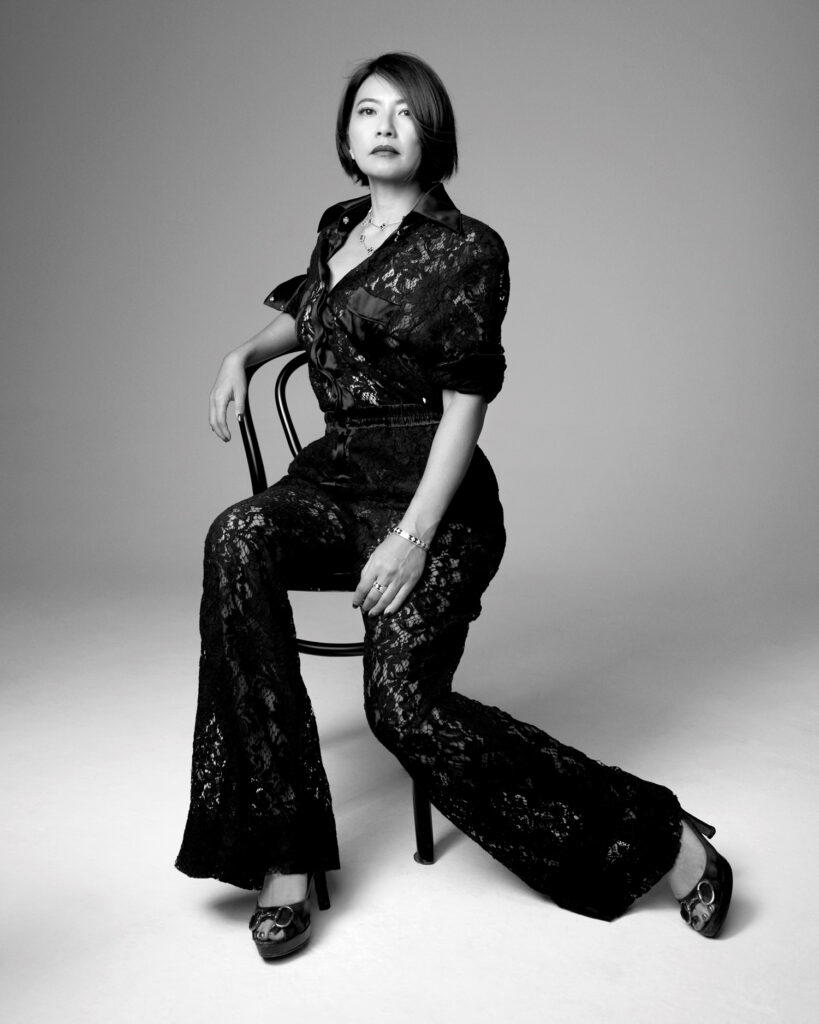
Female empowerment is also close to her heart. In her own capacity, Cheah mentors several women. She connects regularly with her mentees over the phone or in person to provide advice, help, and connections as needed. She fondly recalls a Malaysian single mother and psychologist working long hours in a publicly listed company in KL. Unfortunately, she wasn’t compensated fairly despite her contributions to the organisation.
Cheah encouraged her to take the leap, leave her job, and venture into private practice. Now, the woman has her own clinic and works fewer hours that enable her to spend more time with her child. She makes multiples of what she earned in the public sector.
Stories like these make Cheah happy, knowing that she’s making her own mark on the world. After primarily working in the traditional male dominated domains of banking and technology for most parts of her career, Cheah realises that helping to instil confidence in women and squash their self doubts are enormously rewarding.
Any memorable story arc has three parts: the exposition, which introduces the protagonist; the confrontation, which introduces a problem the character must overcome; and finally, the resolution, which usually comprises the climax and epilogue.
Benjamin Franklin once said that some people die at 25, but are only buried at 75, referring to the death of their hopes, aspirations, and dreams. Cheah is very much thriving and kicking. Several more parts of her story remain to unfold. The end credits are some ways off.
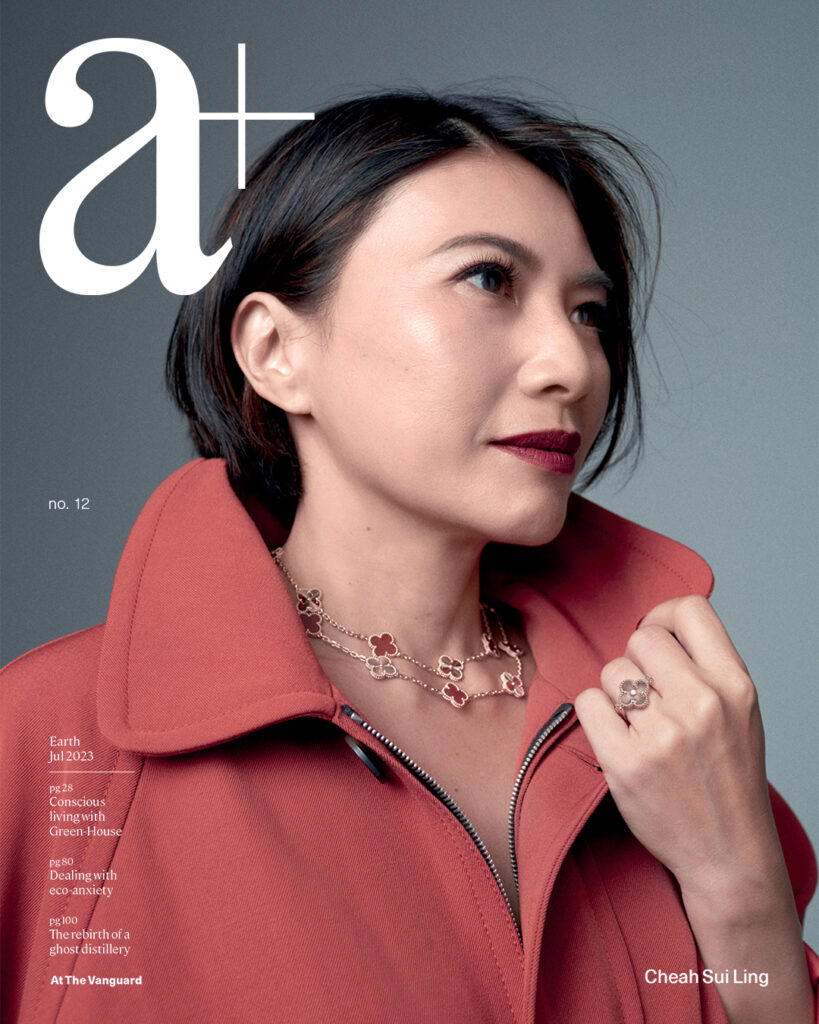
Photography: Joel Low
Fashion and Creative Direction: Chia Wei Choong
Makeup: Keith Bryant Lee, using Tom Ford Beauty
Hair: Aung Apichai, using Kevin.Murphy
Photography Assistant: Eddie Teo