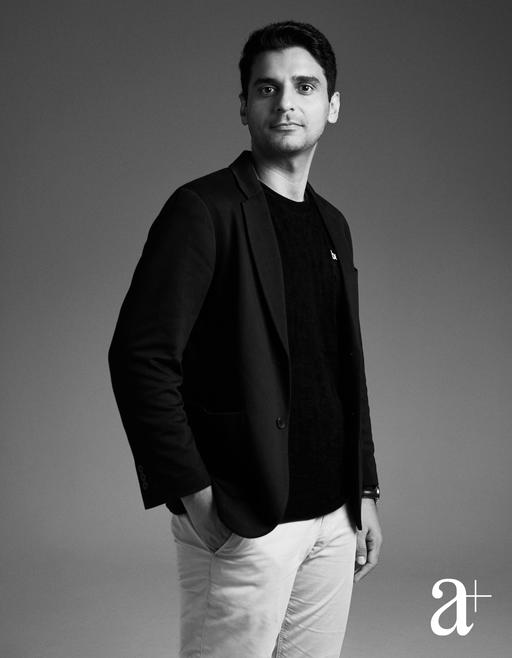
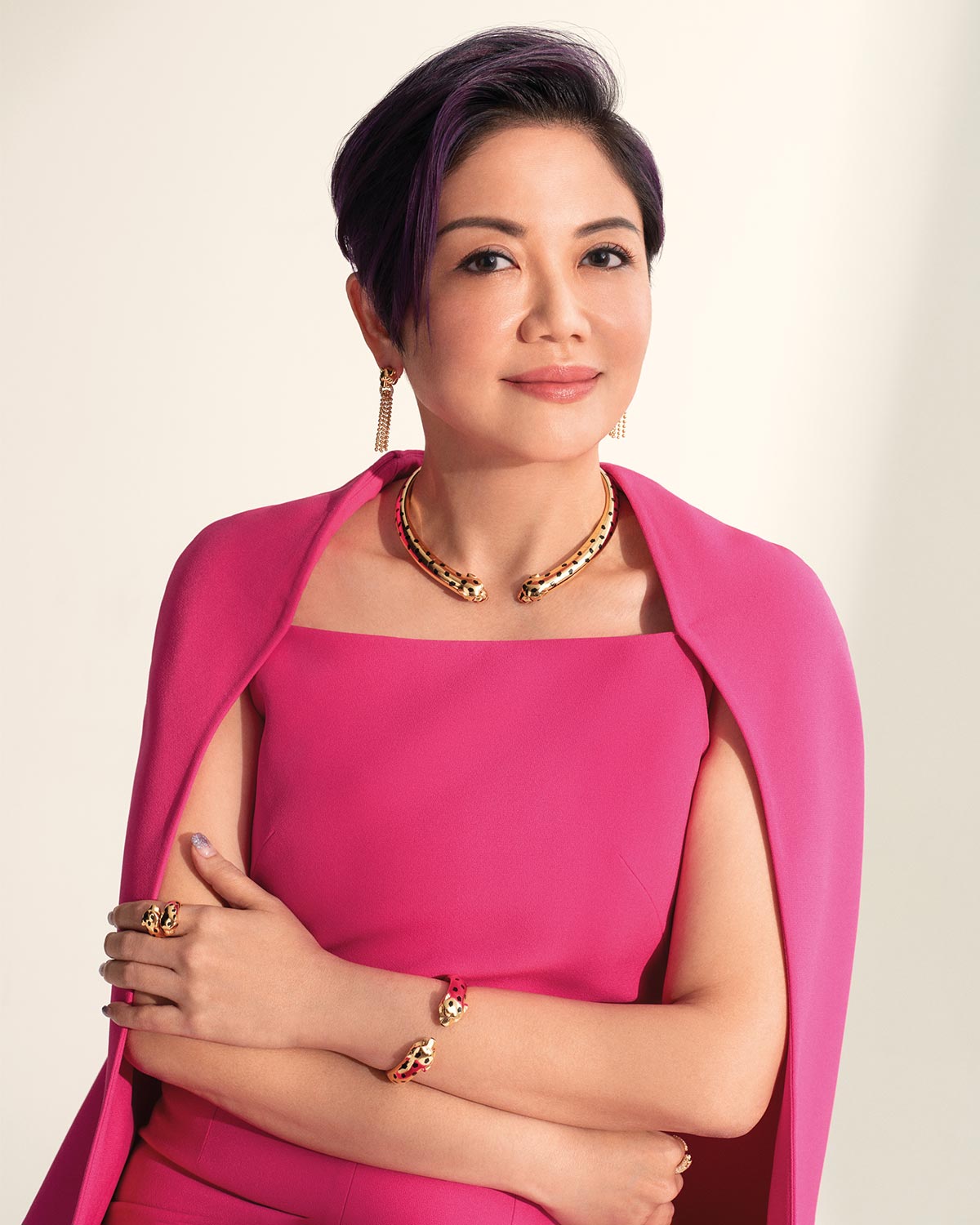
The first thing you will notice about Lee Hui Li is her shockingly bright purple hair. Glistening in the light, it calls out for your attention. However, Microsoft Singapore’s managing director is far from an attention seeker. Since Lee started dyeing her hair purple nearly a decade ago, she occasionally forgets how striking it can be until others remind her. “It’s become part of my identity. A CEO I once met forgot my name, but wanted to call me. She told her assistant to call the purple girl,” Lee laughs.
While Silicon Valley might see coding savants traipsing about in sweats and skateboards, Microsoft Singapore’s office at Frasers Tower is in the heart of the financial district, where buttoned down shirts, black hair and business pants are de rigueur. Lee’s purple hair is a breath of fresh air. The economics major never wanted to work in technology. The glimmering glass buildings and tall towers of the finance and banking world seduced her like sirens beckoning sailors to the rocks since she was young.
But instead of joining a bank after graduation, she went into the public sector in a little-known, now-defunct Singapore Trade Development Board (TDB), a statutory board that focused on developing the country’s attractiveness as a trade hub. It’s now called Enterprise Singapore. “It’s so long ago that it’s not even on my LinkedIn profile!” Lee howls with laughter.
She was initially attracted to TDB because of the travel opportunities, but as she became immersed in the job, she became more fascinated by information technology (IT). She took a segue into consulting for two years before HP Inc. knocked on her door.
Even though she has been in the technology sector for over two decades, Lee still has the same zest she had on her first day at Hewlett-Packard, enamoured by the future of computing. “I’m always asking myself, ‘What can I do next? What can I transform? Where can I make a difference?’”
It’s one reason Lee finally agreed to join Microsoft Singapore in 2021 after turning down several overtures previously. She was impressed with Microsoft CEO Satya Nadella’s vision of the future and the company’s role in it, brilliantly detailed by the man himself in his 2017 book Hit Refresh: The Quest to Rediscover Microsoft’s Soul and Imagine a Better Future for Everyone.
“There is quite a story behind Microsoft’s journey. As a software company, it has grown beyond Windows and Office to encompass cloud, data and AI, security, sustainability, and more. I wanted to be part of a culture that empowers people and organisations to achieve more.”
Lee has an uncanny knack to be prescient, with society now grappling with and debating the recent ground-breaking advancements in AI. Catalysed by Open AI, the tech company unleashed ChatGPT—the latter three letters stand for generative pre-trained transformer, tech speak for a language model trained on large datasets of text to produce human-like speech—to the world at the tail end of 2022.
“One common direction, that’s all that matters. It’s okay if we fall down or take more time to debate the right step, as long as we move together and believe in the destination.”
Lee Hui Li believes in the collective power of humankind
Incidentally, Microsoft has been investing heavily into Open AI since 2016 and recently signalled its commitment with a multi-year, multi-billion dollar investment to accelerate AI breakthroughs for the benefit of the world. The Redmond-based company has also integrated ChatGPT into several of its products, including its search engine Bing.
Lee is unsurprisingly bullish about AI and believes the world is on the precipice of yet another wave of positive change. “I’ve always focused on the question how do we use technology to enhance or enable lives? For AI, can we tap on it to remove manual work so we can be more productive?”
She acknowledges the concerns. Many are worried AI will soon replace humans, leaving them without jobs to support themselves, while some fear AI will be misused by bad actors for nefarious reasons.
Even luminaries such as the late Stephen Hawking and, ironically, Elon Musk, have voiced their reservations about AI. Hawking once said, “Unless we learn how to prepare for, and avoid, the potential risks, AI could be the worst event in the history of our civilisation. It brings dangers, like powerful autonomous weapons, or new ways for the few to oppress the many. It could bring great disruption to our economy.”
In this regard, Lee shares that Microsoft has created two fundamental parameters. Firstly, the company actively screens users and businesses to ensure that AI is being used for good. Secondly, it has put up safeguards and created guidelines for responsible AI use that it shares with governments and organisations. These boundaries are incredibly detailed and touch on the most minute of details, including face recognition.

Photo: Joel Low.
Ultimately, AI is simply a tool. The user acts as the protagonist or antagonist, and Lee and Microsoft are working hard to ensure they are the heroes in the next chapter of this technological story. When used for good, the benefits of AI are staggering.
One of Lee’s favourite initiatives born in Singapore is the Fin Finder, a mobile application created by several private and government entities. It uses AI to identify illegally traded shark and ray species. This is done in seconds. Previously, authorities had to wait up to a week to wait for the DNA results to return from the laboratory.
“The starting point of control is responsible AI,” says Lee, emphasising how Microsoft wants to steer this nascent technology into the right hands.
It’s a community effort, but she is confident in AI’s capabilities to usher in a bright, new dawn for humankind. Incidentally, she is reflecting on her next leadership development as well. She wants to use her position and platform to encourage more women to join the technology sector, especially those who mistakenly believe they need a relevant educational background to join the wave.
“I’m the perfect example of somebody who joined the tech sector without studying it in school,” Lee smiles. With the Asia-Pacific region primed for growth, there is no better time than now to be part of the field, even with the current negativity surrounding the sector, as cost-cutting and job layoffs continue seemingly unabated. Innovation, as Lee explains, cannot be stopped and companies will only continue to pursue diversity.
She has also inculcated this tenet as the bedrock of her leadership. “Innovation and great ideas can only grow and flourish when people are free to share their thoughts. I always tell my team that there are no stupid ideas and to question and challenge constantly.”
It might look like bickering and one-upmanship to those on the outside, but Lee considers it worthwhile if everyone agrees on a shared purpose. “One common direction, that’s all that matters. It’s okay if we fall down or take more time to debate the right step, as long as we move together and believe in the destination.”
Whether you have purple hair or not, Lee welcomes you on board.
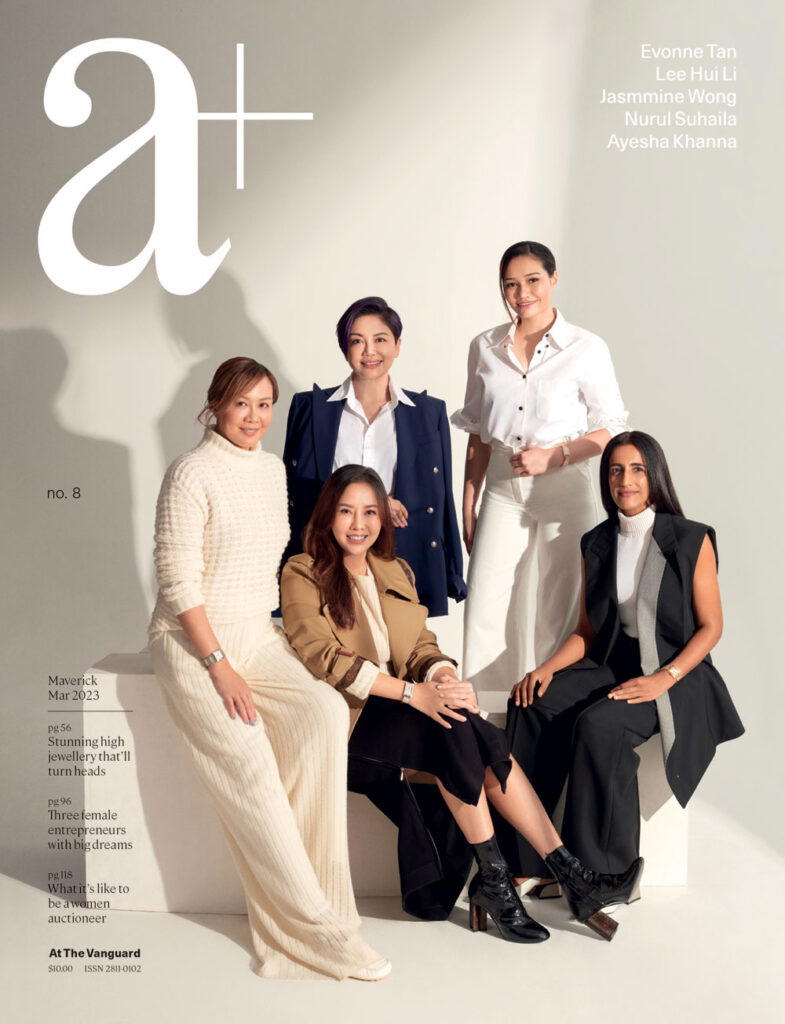
Photography: Joel Low
Styling: Chia Wei Choong
Photography Assistant: Eddie Teo
Styling Assistant: Laura
Hair: Christvian Wu, using Revlon Professional
Makeup: Wee Ming, using Chanel Beauty
Watches and jewellery: Cartier