In the late 19th century, the plumbing industry patented a new manufacturing technique that jewellers soon adopted. The technique, termed Tubogas, or tubo gas—meaning gas pipe, in Italian—involved tightly coiling a metal of choice around a core that is later removed, leaving behind a springy, hollow structure. Jewellers can use this hollowed-out form to further manipulate the piece into the final desired shape.
In 1948, master jeweller Bulgari, with its multiple generations of jewellery making and creative know-how, transformed a Tubogas bracelet into the first iteration of the sinuous object of desire that we know today as the Serpenti.
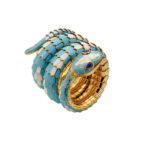
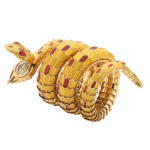
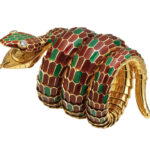
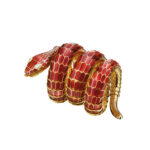
The Roman jeweller, inspired by mythical tales of snakes in countless cultures, launched the first Serpenti with a square gold timepiece for a head attached to a gold Tubogas bracelet that was meant to wrap around the wearer’s wrist like the body of a snake. It didn’t take Bulgari long to realise the potential of the Serpenti, and soon found themselves pushing its creative boundaries. By the 1950s, the initial creation featured a more realistic arrow-shaped head; its body had lifelike scales running from the head to the tail.
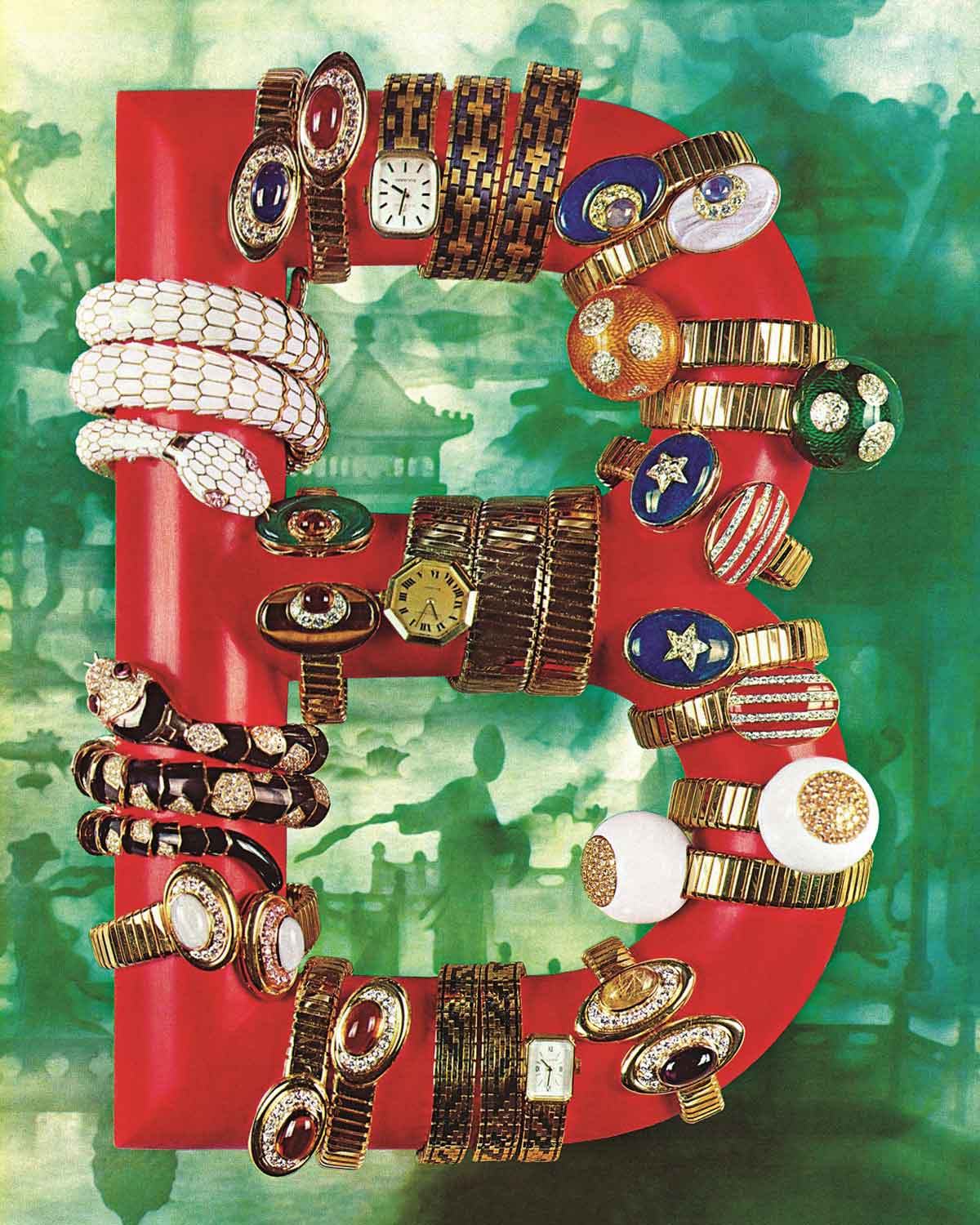
Perhaps no variation of the Serpenti developed during this period is more desirable than the “secret watch,” a three-dimensional bracelet with a hidden watch face in the serpent’s head. These were fitted with manual winding micro movements supplied by Jaeger-LeCoultre, Piaget, and Vacheron Constantin. And it wasn’t just Bulgari that foresaw the allure of the Serpenti. As early as 1962, Elizabeth Taylor, ardent patron of the House, was pictured wearing a gem-set ‘secret’ Serpenti watch while promoting her film, Cleopatra. History has attributed Taylor as the one who made the Serpenti’s notoriety explode into public consciousness.
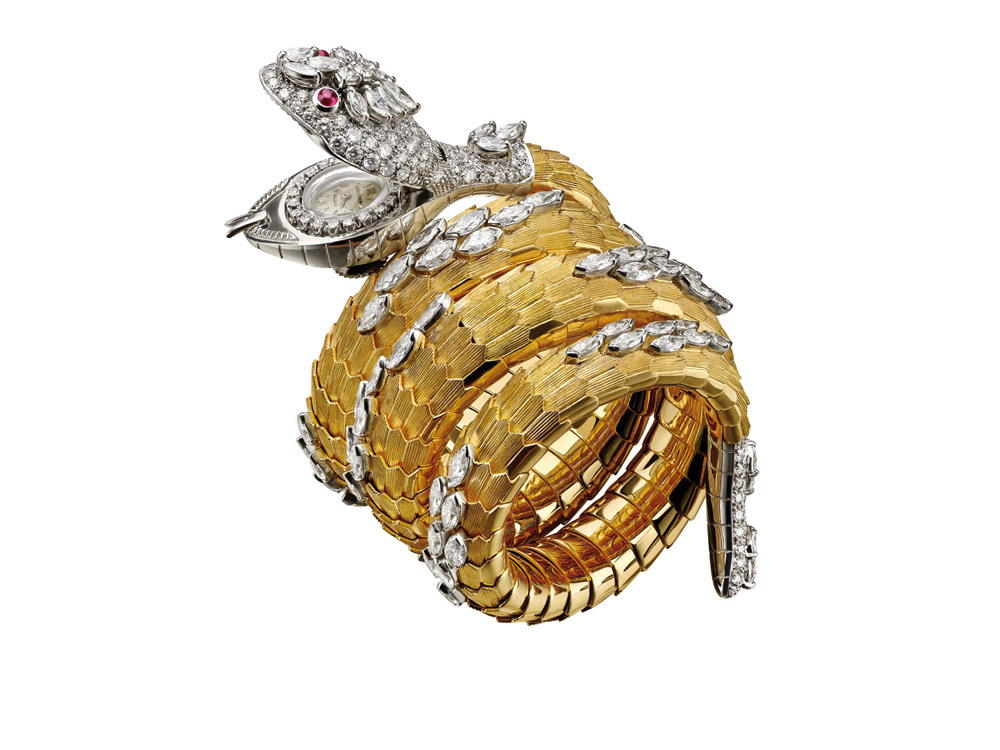
Precisely how and when the Serpenti went through ecdysis to become jewellery isn’t something that can be pinpointed on a timeline. However, through the 1960s, the Serpenti became more than the wristwatch it was born as. The editor-in-chief of Vogue New York at the time, Diana Vreeland, was a Bulgari enthusiast herself. She’s known to have worn a customised Bulgari snake belt, doubled looped across her neck, as a necklace. Late in her tenure, in 1968, she’s reported to have written a memo to her staff, decreeing, “Don’t forget the serpent…the serpent should be on every finger and all wrists and all everywhere.” And so, it was. Everywhere.
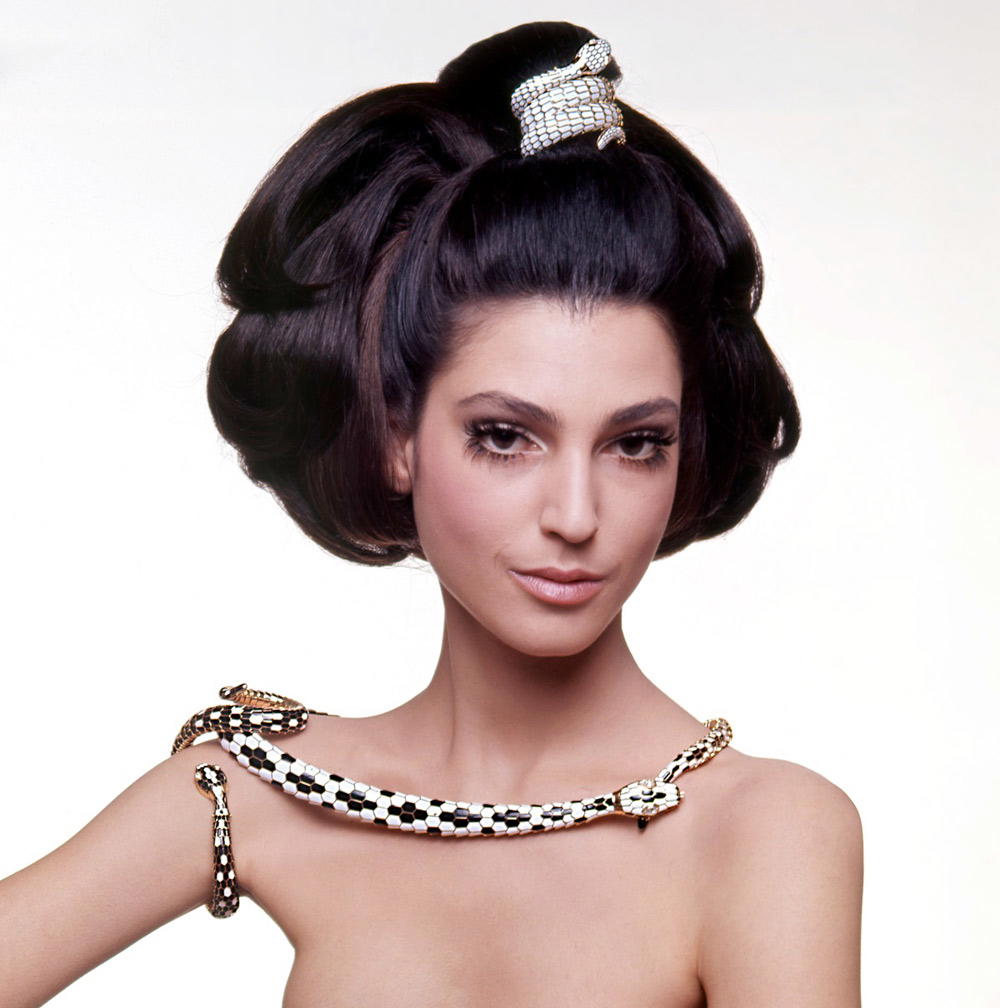
Photo: Bulgari.
An article in the 1968 September issue of Vogue features a photograph of model Benedetta Barzini draped in Bulgari’s Serpenti necklaces and bracelets, photographed by Gian Paolo Barbieri. This picture is credited with catapulting the desirability factor of the Serpenti to a whole new level. Whether it was diamond-encrusted creations worth millions or more modestly priced rings, the Serpenti became the ultimate in luxury.
By the dawn of the 21st century, no other house has been able to reinvent and reanimate one of its prime icons as often as Bulgari. By 2008, it had introduced a collection of small leather goods with the Serpenti motif; eyewear followed in 2009, and in 2011, the House introduced handbags featuring the Serpenti head as a clasp.
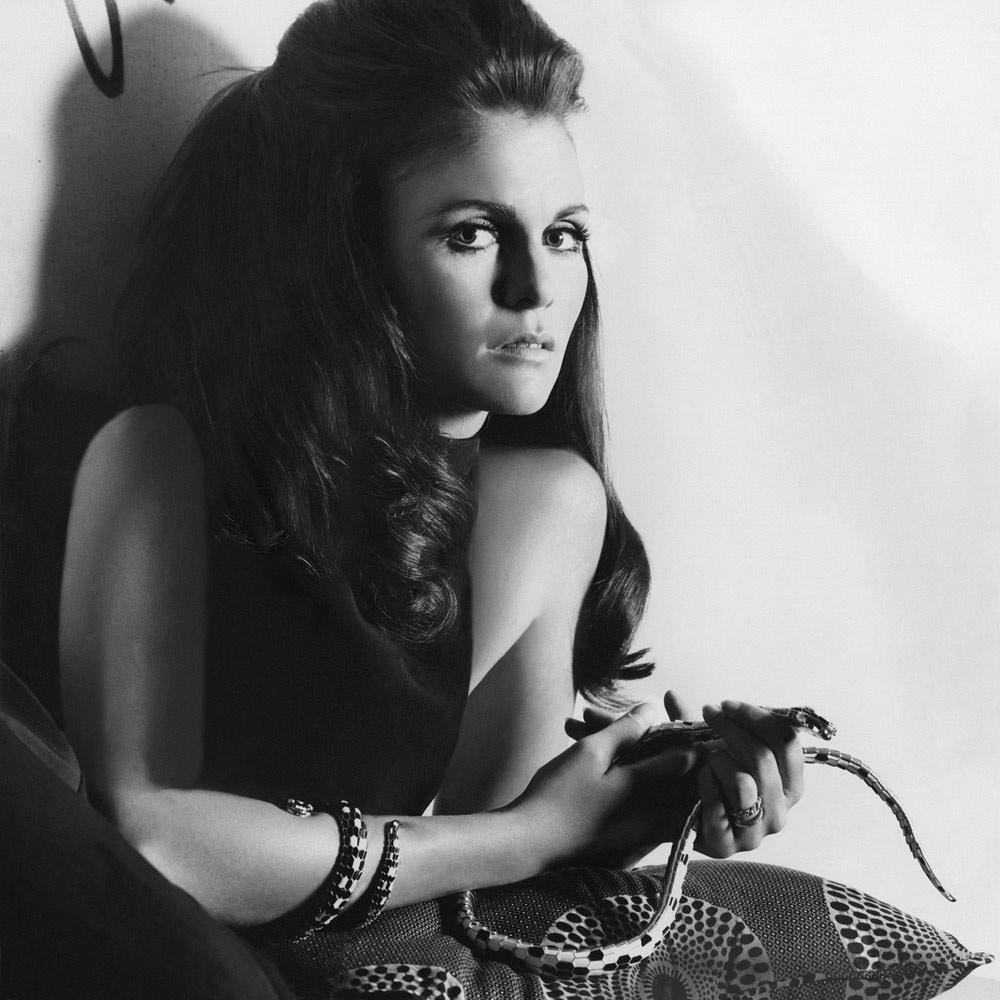
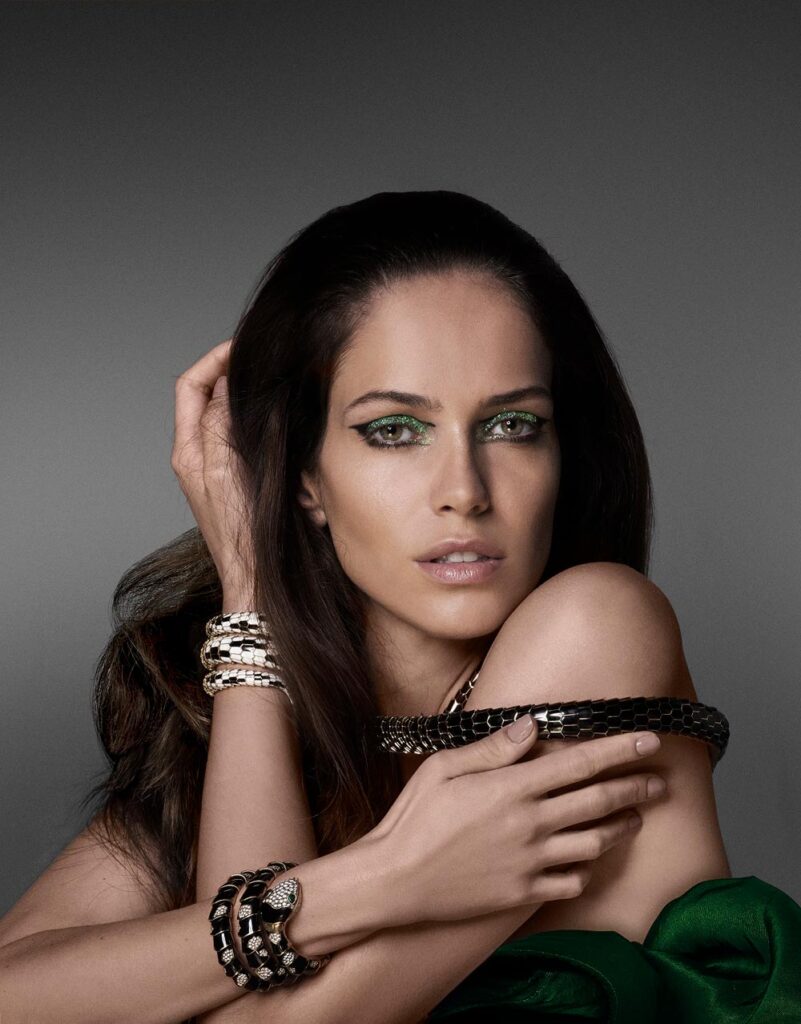

The Serpenti timepiece also evolved and took on a new guise. In 2009, it morphed into the more geometric Serpenti Scaglie, which presented a bracelet and an integrated triangular head bearing the watch face. The year 2010 saw the return of the Serpenti Tubogas, featuring an integrated ovoid case and a more refined adaptation of the Tubogas bracelet. It remains an iconic creation today, with options as a single, double or even 5-coil options rendered in steel, precious metals, mixed metals and even ceramic. In 2023, diamonds appeared on the coiled bracelets for the first time.
Other milestones in the Serpenti’s 75 years include Serpenti Incantati (2016), which features the serpentine form encircling a round watch case on a horizontal plane; Serpenti Twist (2017), featuring striking interchangeable leather straps; and Serpenti Seduttori (2019), where the oval Serpenti watch head is paired with a more traditional wristwatch bracelet.
Of course, at no point through this did Bulgari lose sight of the Serpenti within its jewellery line. From the extravagant Serpenti Mistiori gem-set secret watches to the opulent Serpenti necklaces that drape the necks of some of the world’s most beautiful women, every piece reflects the absolute breadth and depth of Bulgari’s creative know-how.
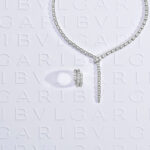
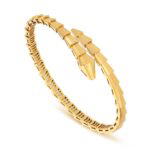
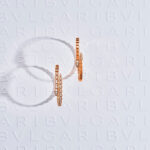
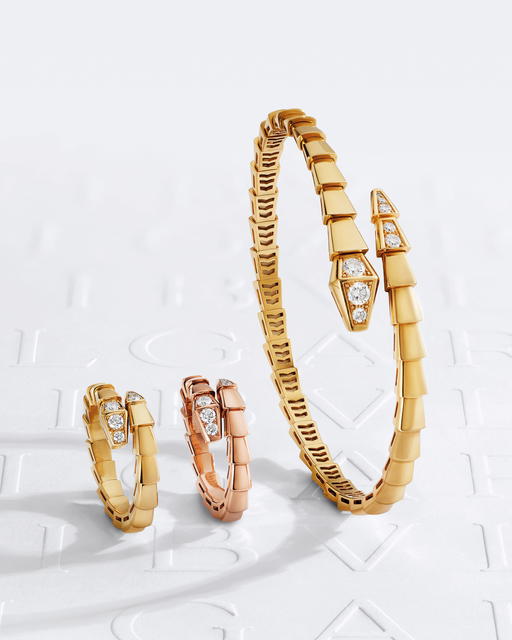
Bulgari’s Serpenti Viper has been another notable addition to Bulgari’s Serpenti collection in recent years. The Viper presents a pared-down, geometric silhouette of the Serpenti. The collection comprises necklaces, earrings, rings and pendants offered in all varieties of gold, with some featuring diamonds.
Although Bulgari has traditionally positioned the Serpenti as an object of desire for women, the Viper has been intentionally designed to be genderless since many pieces in the collection can also be easily worn by men.
Whether on account of changing times, the exquisite tastes of Bulgari’s patrons, or the pursuit of unique creative visions, the ever-evolving tale of the Serpenti has added several lifetimes’ worth of chapters to the house’s long history. And if the last 75 years are anything to measure the successes of an icon by, the world can expect the Serpenti to rule the hearts of many for many more ages yet to come.