
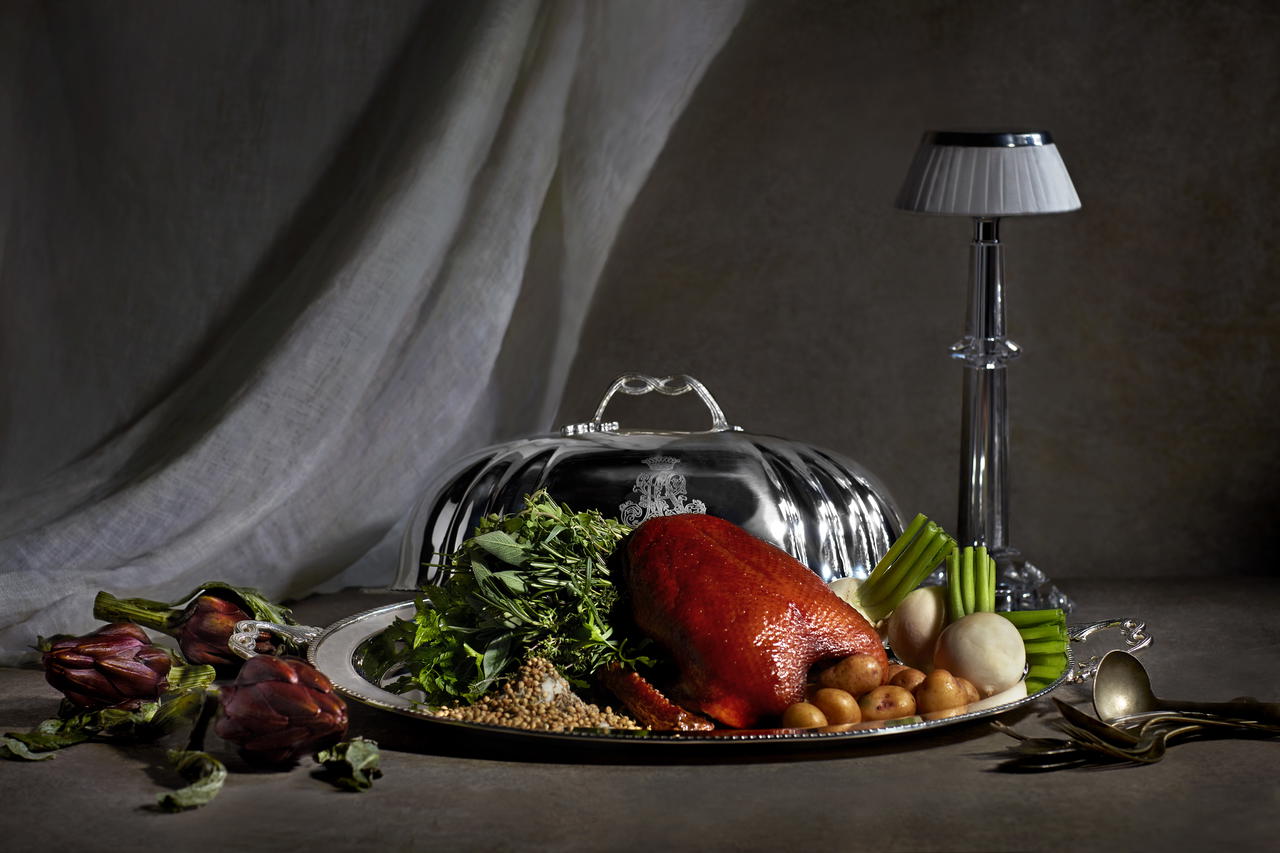
At the storied Raffles Hotel Singapore, history has long been something to be experienced rather than observed. But with 1887 by André, Chef Patron André Chiang transforms the hotel’s layered past into a dining narrative that is as personal as it is archival. Conceived as a “taste of time,” the restaurant is his reinterpretation of what heritage means when filtered through memory.
Within the 42-seat dining room, Chiang builds his vision around a simple premise that no single guest should experience the same story in the same way. “There is no single perfect dish, only the dish that speaks to a particular person at a particular moment,” he says.
That philosophy is reflected in a format that allows diners to choose between à la carte dining or three tasting journeys, where dishes such as Boeuf aux Sept Poivres 1887, the reimagined “Turtle Soup” from 1887, Raffles Laksa Paella, and Black Truffle Pain Perdu become entry points into different layers of memory.
Singapore’s culinary heritage is also woven through the menu, with dishes such as Hae Bae Hiam, Banquette de ‘Bak Kut The’, Crispy Rice-Crusted Chicken Wing, My Best Chicken Rice, Raffles Laksa Paella and Lobster Heh Mee “Al Ajillo”, each reimagining familiar flavours through contemporary French lens.
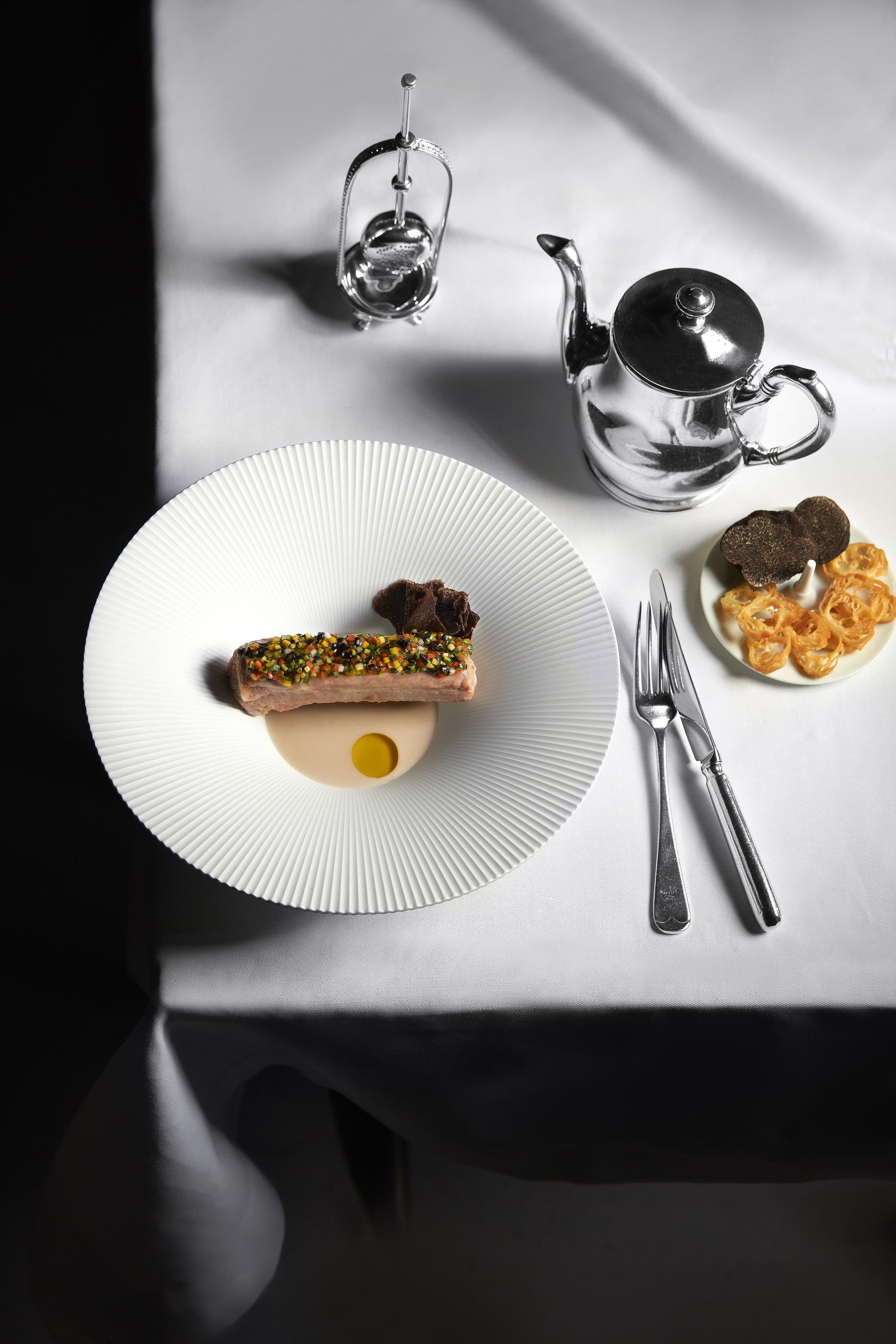
These plates are fragments of a larger narrative, one that moves between Singapore’s multicultural food heritage, French culinary structure, and the living archive of Raffles itself. From a wartime silver beef trolley revived for tableside service, to a century-old soup recipe reinterpreted for the present day, each dish carries a different register of time.
It is in this spirit that Chef André Chiang reflects on the deeply personal nature of 1887 by André, the memories that continue to shape his return to Singapore.
1887 by André” is described as a love letter to Singapore; can you elaborate on the personal stories or memories that inspired specific dishes?
Singapore has shaped a very important chapter of my life, so 1887 by André is deeply personal to me. The emotional foundation of the restaurant comes from relationships, shared memories, and the feeling of continuity I felt when I returned to Raffles Hotel Singapore during my culinary residency and writer’s residency for Fragments of Time in 2024.
Reconnecting with long-time guests and friends who had followed my journey through Restaurant André and RAW felt less like returning to a city and more like reconnecting with a part of my life that had always stayed with me.
Even as a child, I was influenced by the way my mother cooked different dishes for each member of the family, which taught me that there is no single perfect dish, only the dish that speaks to a particular person at a particular moment. In many ways, that spirit carries through to 1887 by André. I want guests to find something on the menu that allows them to connect with Singapore, with Raffles, or with a memory of their own.
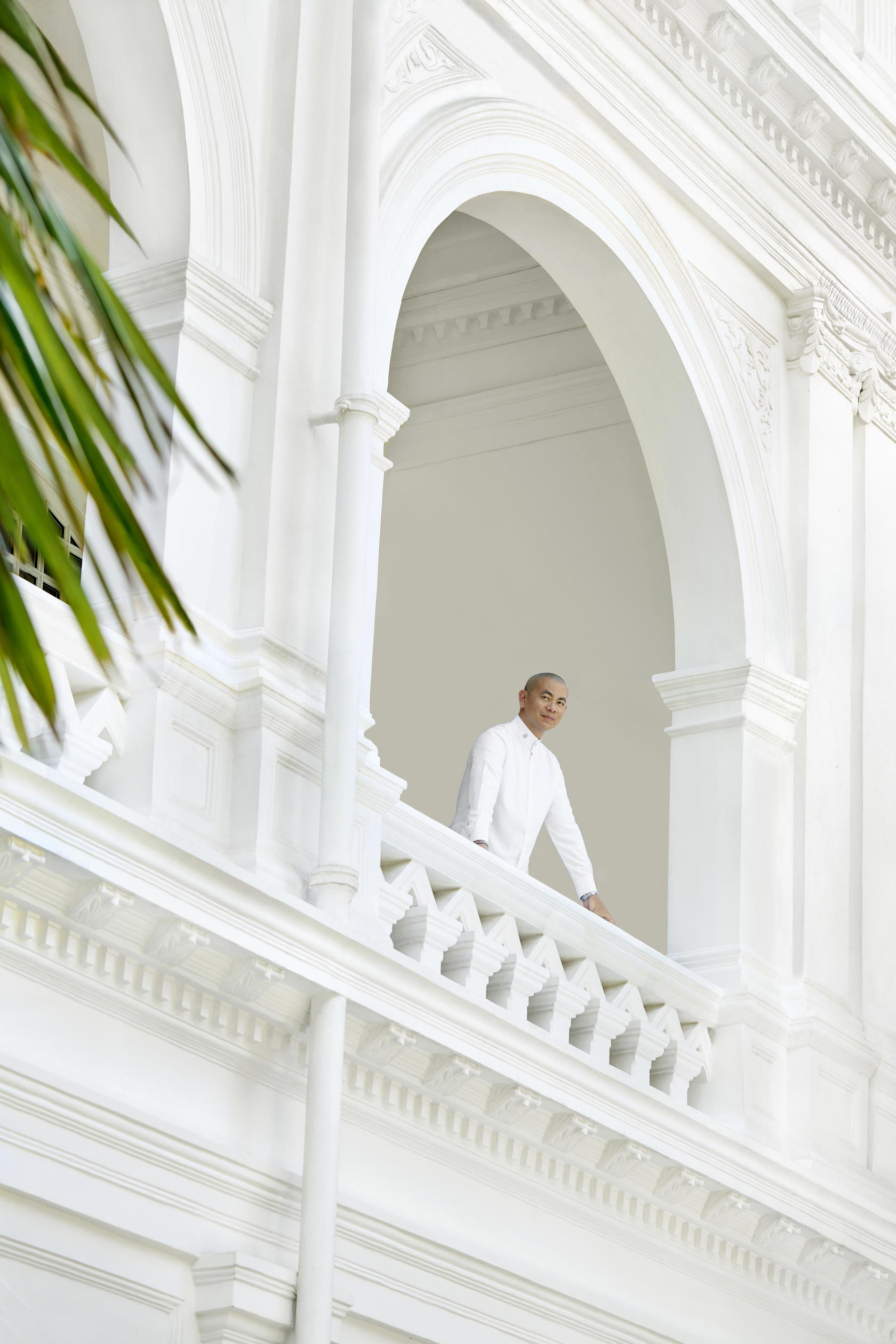
The restaurant incorporates original silverware and the WWII silver trolley. How important are physical artifacts in telling Singapore’s culinary story?
Being in such a historic setting that is Raffles Hotel Singapore is a privilege, and we wanted to bring back the elegance of the Victorian era in a tangible way. This includes dishes preserved in Raffles’ archives for more than a century, as well as dining rituals from its early dining rooms.
Guests can expect elements such as the original hundred-year-old silver beef wagon, beautifully crafted antique silverware from the period, a glamorous dining hall, and a timeless à la carte menu. Together, these details help make the heritage of Raffles Hotel Singapore visible and tangible within the dining experience.
How closely did you work with Bill Bensley on the design, and did the interior influence menu creation, or vice versa?
Bill Bensley is a close friend, and we worked in very close dialogue from the outset because it was important that the interiors and the cuisine were shaped as part of the same story. From the beginning, there was a shared understanding that the space should express time, memory, and heritage without feeling static or overly referential.
Every element was considered as part of the storytelling, from the overall layout to details such as traveller’s palm and tropical garden motifs, punkah fans, and antique pieces drawn from Raffles Hotel Singapore’s archives, which also reference the area’s historic plantation past. More than anything, I wanted the restaurant to feel immersive, so that guests experience the setting and the cuisine as one narrative.
How do you decide which historic dishes to reinterpret and which to leave untouched?
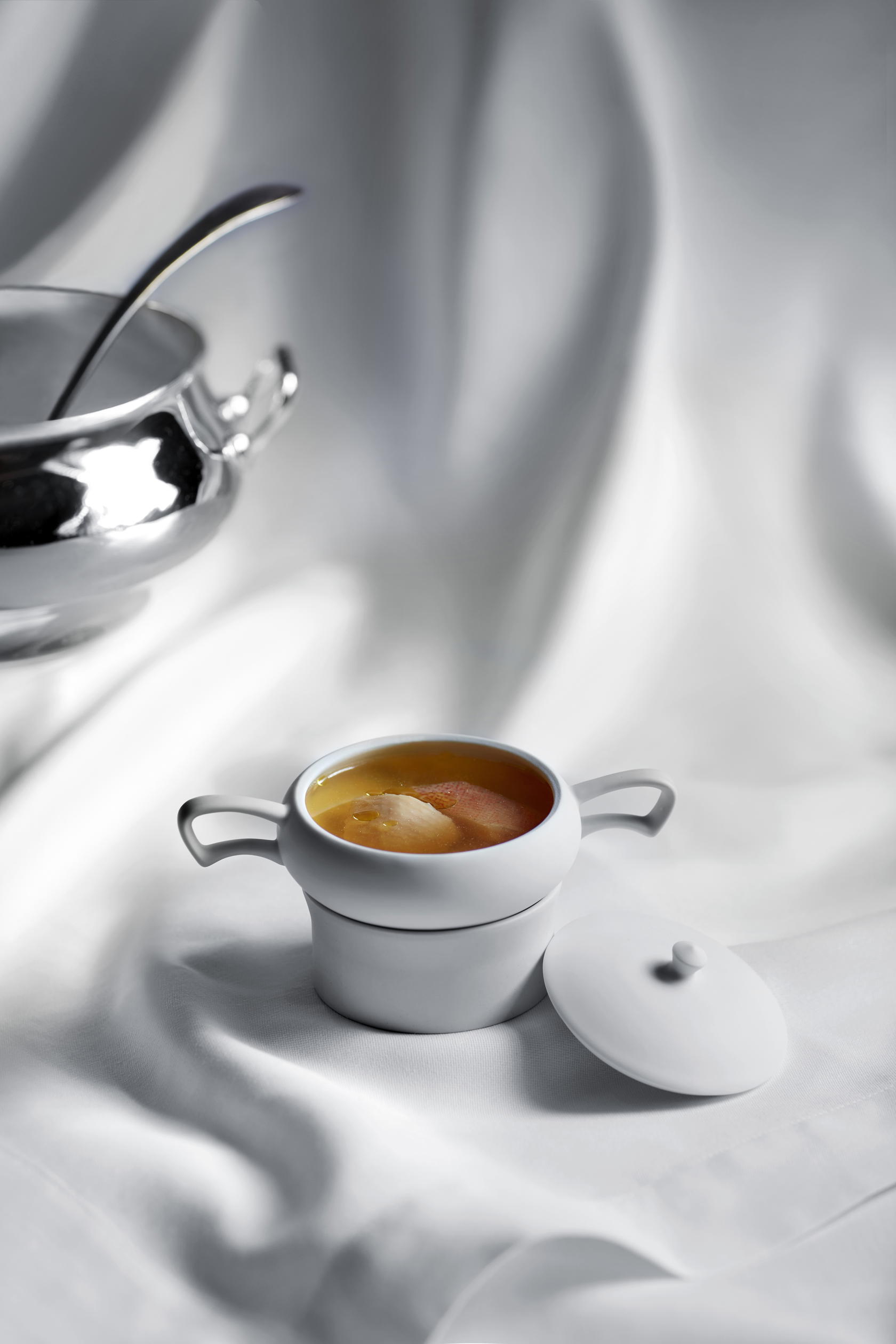
For me, the goal is not to recreate the past literally, but to reinterpret it in a way that still feels meaningful today. With “Turtle Soup” from 1887, what interested me was not only the recipe itself, but also what it reveals about the history of dining at Raffles Hotel Singapore and the connection it can create for guests in the present.
My version recreates the gelatinous taste, texture, and flavour without using actual turtle, so it allows us to bring that story forward in a form that feels tangible and relevant today. More broadly, I look for dishes where the memory and history can still be preserved, even as the expression evolves for the way we dine now.