
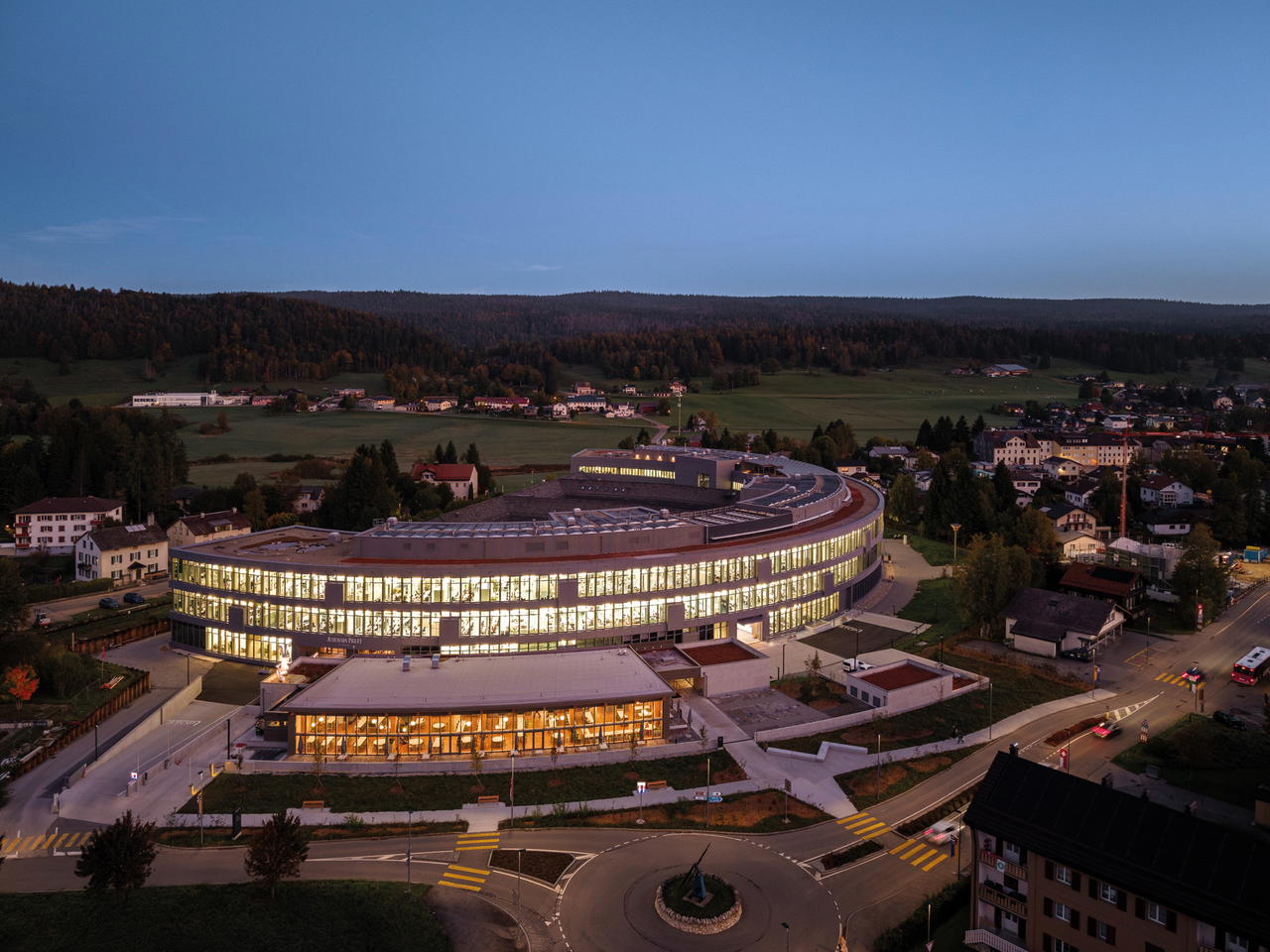
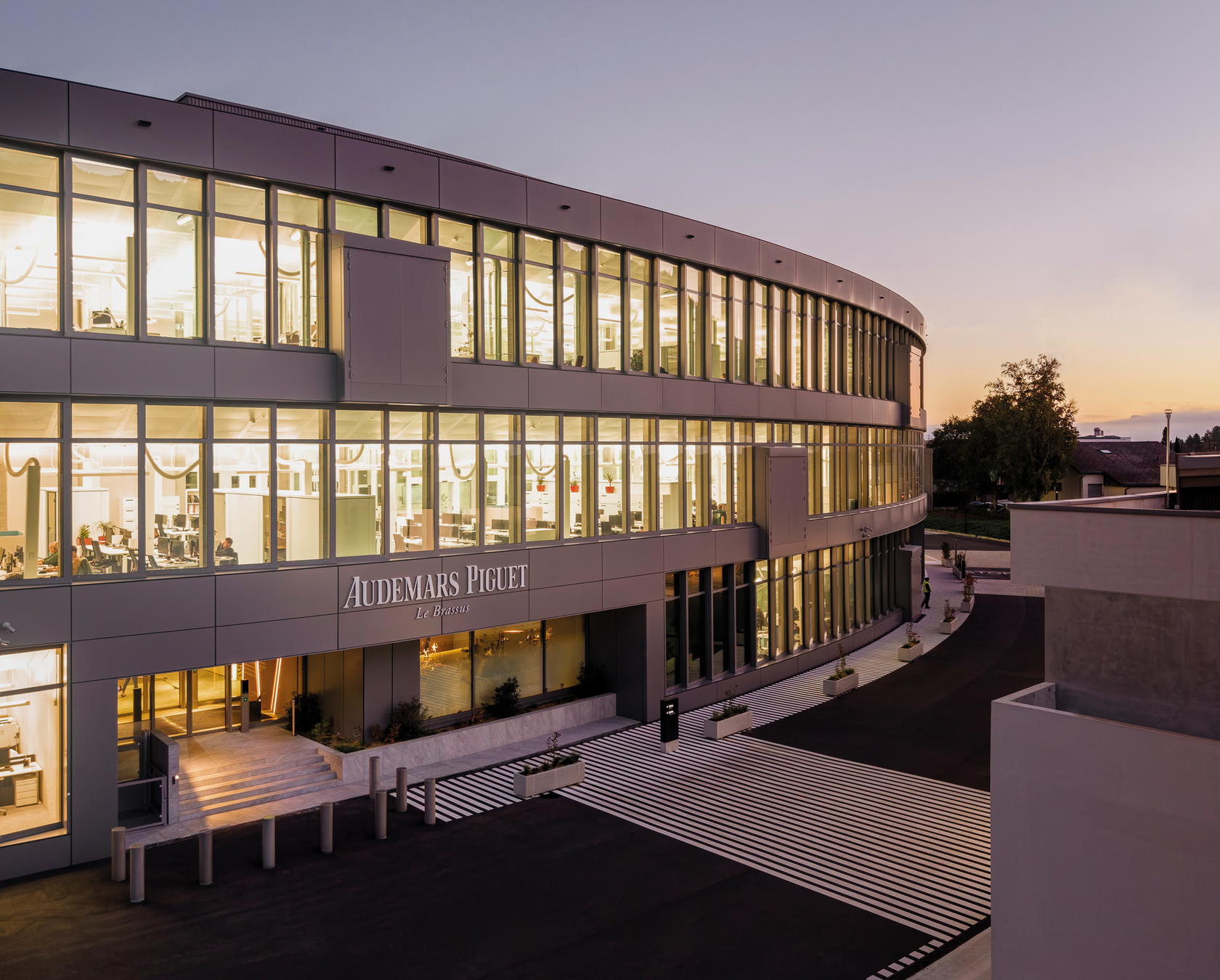
There is a version of this story that writes itself: Swiss watchmaker opens vast new factory; army of robots handles manual labour; production targets climb. The Arc, Audemars Piguet‘s newly inaugurated manufacture in Le Brassus, has everything to fit that narrative: 255,104 sq ft of production space, 700 employees under one roof, and a 15-m-high automated storage system operated by 66 robots capable of 350 movements per hour. By 2030, that number is expected to reach 1,200.
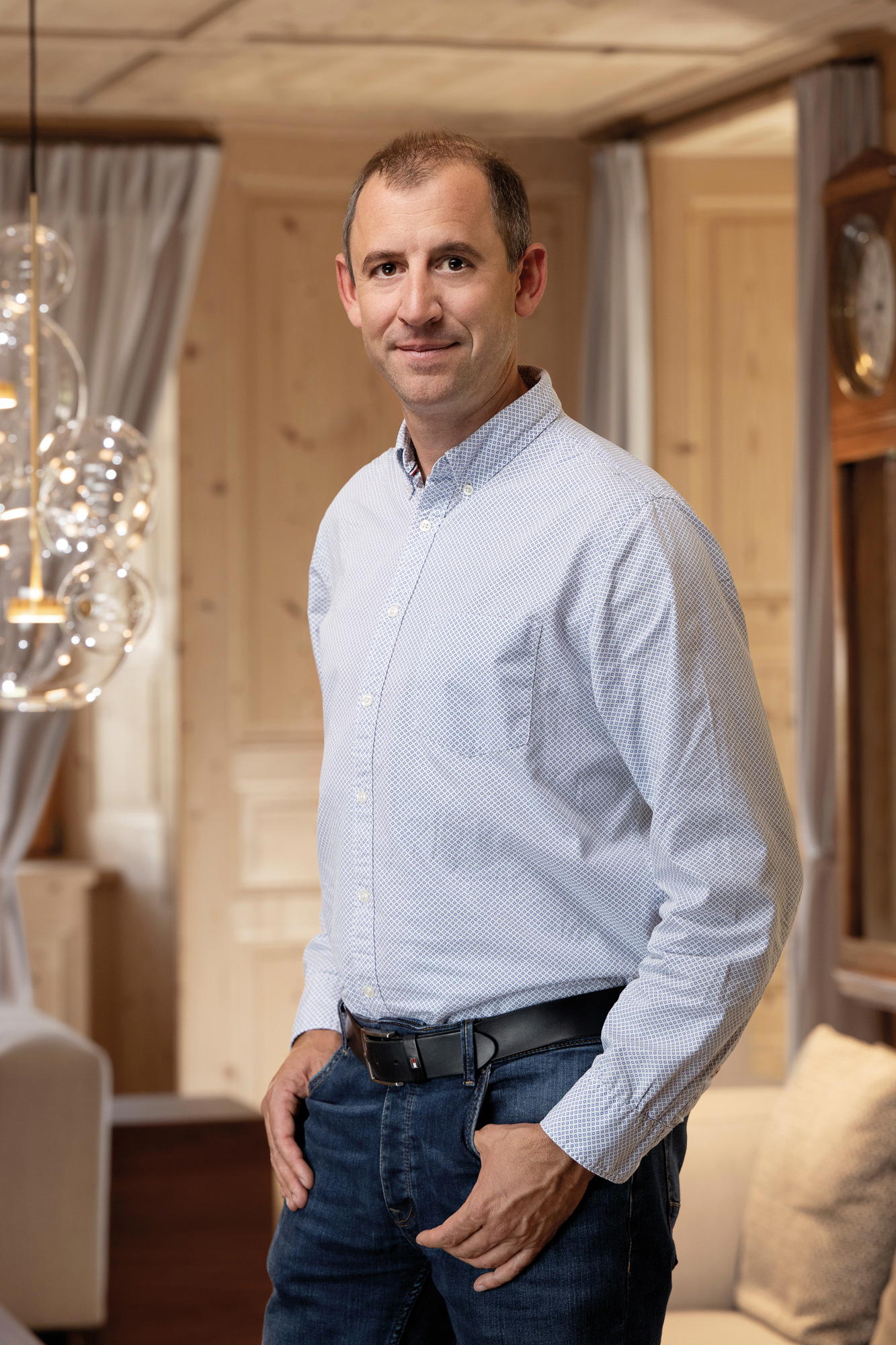
However, that isn’t the story AP’s Chief Industrial Officer, Lucas Raggi wants to tell. Asked directly whether The Arc was mainly intended to increase output, his answer was a flat “No”.
“The primary objective,” he says, “was to bring people together and facilitate flow, to foster innovation, to promote the exchange of ideas between different teams.” Sustainable growth would follow, but it was never the driver.
For generations, AP operated according to the Vallée de Joux’s etablissage tradition of a network of specialist ateliers, each dedicated to a specific craft, spread across the valley—its home since 1875. However, geography eventually posed challenges, as teams working across multiple sites lost time, efficiency, and the informal interactions that often resolve problems. “We worked to address the negative effects caused by the distance separating the ateliers,” Raggi says, “such as wasting time, reducing efficiency, and losing information.”
Consequently, The Arc was conceived as a consolidation of some 90 percent of the Vallée de Joux know-how into a single building designed by Geneva firm de Giuli & Portier and completed within three years of the building permit being issued.
What Raggi did not fully anticipate—even though he suspected it—was how quickly informal dynamics would take hold. As some of the most productive conversations happen not in meeting rooms but around coffee machines, The Arc’s design supports this inclination with open-plan workshops, transparent partitions, and shared spaces that encourage interaction, alongside quiet offices for work that demands concentration. As a result, its logic aligns with natural human behaviour rather than how an organisational chart suggests employees should behave.
Among The Arc’s most visually impressive and most easily misunderstood features is the Goods-to-Person (GTP) system. This state-of-the-art automated storage system stands at 15m tall, uses 66 robots to deliver components directly to watchmakers’ benches, and saves roughly 15 seconds per retrieval. However, it is not intended as a substitute for skilled hands. Instead of replacing watchmaker hours, it protects them.
In Raggi’s view, finding skilled employees capable of working at AP’s level is the true constraint on production. Applying technology to repetitive low-value tasks allows those hands to focus on work that cannot be delegated to a machine.
The Arc reflects the same environmental discipline as AP’s sites in Le Locle and Meyrin. It holds Minergie-ECO certification—Switzerland’s highest construction standard—and reuses excavated soil from an adjacent station site for other projects. It also recovers heat from its own machinery, draws supplementary energy from a nearby wood-fired heating plant, and exceeds regulatory requirements with its photovoltaic panels.
Furthermore, the green roof provides a panoramic view of the valley, as well as a natural habitat for insects and birds. A crenelated facade measuring 321m reduces bird collisions and glare, while an 80-cm flood wall diverts water to a natural drainage channel without disturbing the terrain.
The Arc also sits beside Le Brassus station, with 502 parking spaces open to the community at weekends, electric vehicle charging throughout, and carpooling incentives for staff. These are all deliberate actions taken by a brand committed to its relationship with the landscape and community.
As the discussion shifts to where the greatest opportunity for improvement exists across the entire operation, Raggi’s response echoes what CEO Ilaria Resta has always maintained. Continuing to surprise clients is the priority, and the path to achieving this lies in complications and new developments that have yet to be explored.
That answer is particularly revealing for a manufacturer that has just unveiled one of Switzerland’s most technologically advanced watchmaking facilities. Rather than being about volume, it emphasises that The Arc is a vital investment in the conditions that lead to exceptional watchmaking—a choice rooted in 150 years of expertise.