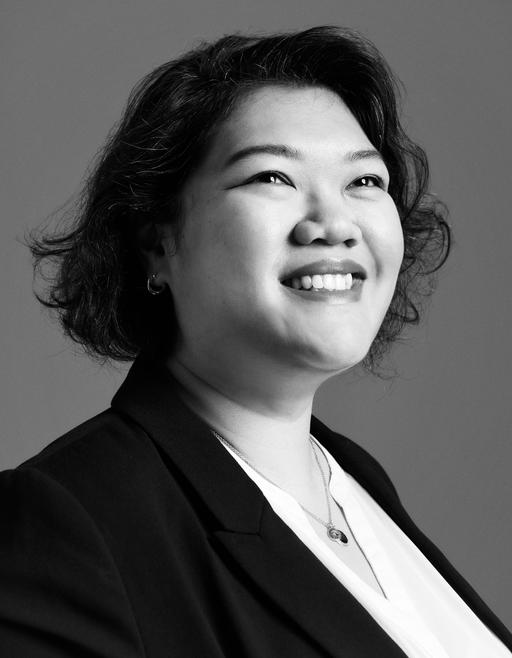
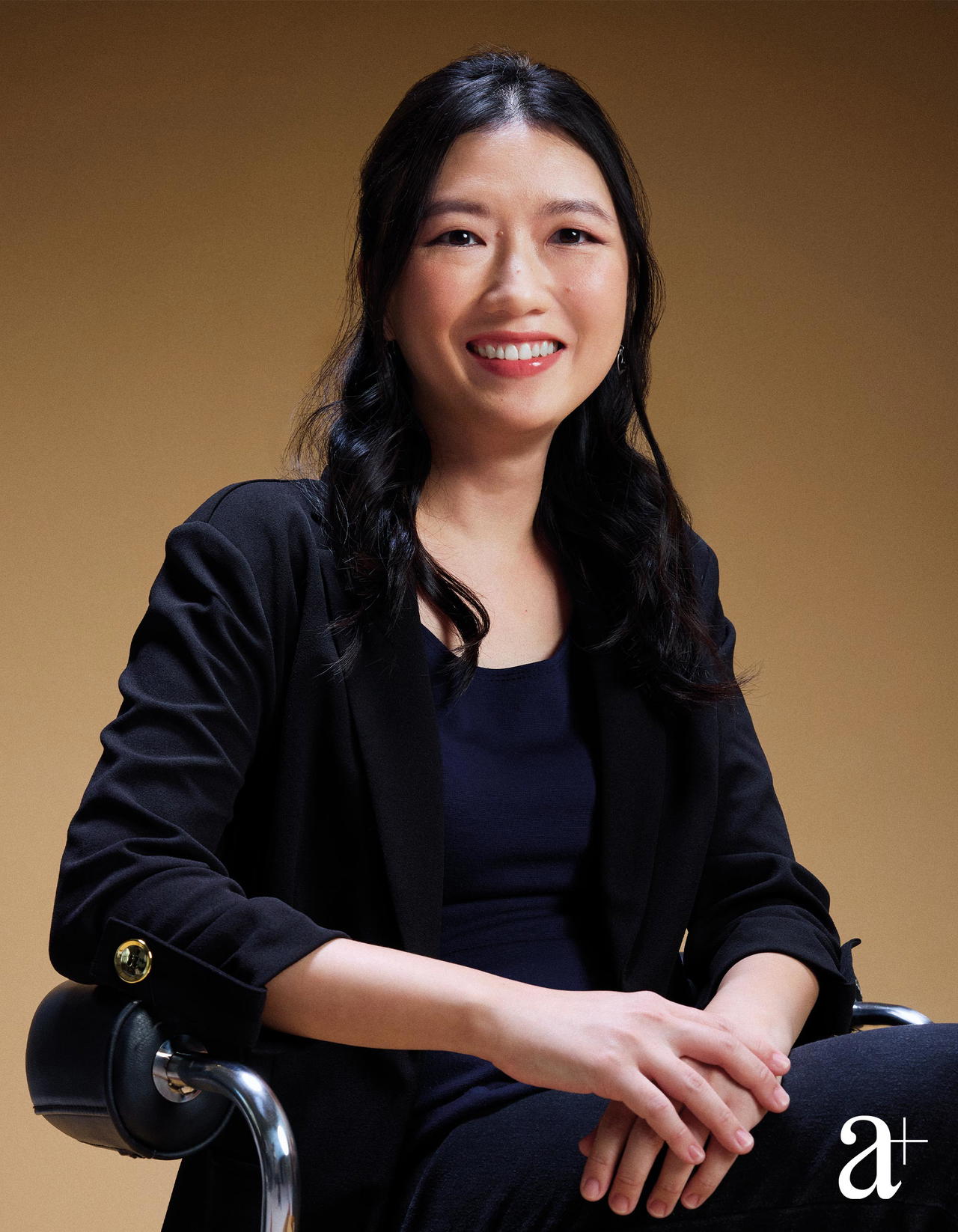
Semiconductor manufacturing is similar to baking, says Dr Doreen Yong. It requires a precise recipe, the right ingredients, accurate measurements, and careful timing, but instead of baking a cake, it creates structures that enable chips to process information.
As a chemist at Applied Materials, she works at the intersection of materials science and semiconductor engineering, where atomic-level precision influences the performances of AI systems worldwide. “In simple terms, I help to build the tiny materials that allow computer chips to function better.”
Yong earned her PhD in chemistry at the National University of Singapore before joining Applied Materials in 2019. Her work requires testing different chemicals to determine how they behave, so she designs experiments, runs tests, and studies the results to see what approaches will work for future chip designs.
What surprises people about her job, she continues, is the level of precision and scale involved. As there can be tens of billions of transistors in modern chips, the structures she manipulates can be as small as a few nanometres. Even atomic-level differences are crucial at that scale.
Given that her work takes place at the earliest stages of semiconductor research and development, she focuses not on speed or scale, but rather on whether a material, chemical, or process works. However, operating at this early stage does not mean the work is any less important. As it stands, chemistry plays a pivotal role in reducing the environmental impact of semiconductor manufacturing.
The selective etching technique, for instance, removes material only where it is needed, improving both performance and yield. Also, at Applied Materials, researchers develop chemistries and process technologies that make manufacturing cleaner and more efficient. The company also utilises digital tools that monitor and optimise energy and material use.
Yong emphasises that these innovations drive the industry to explore new possibilities as devices become smaller, more complex, and more energy-intensive to manufacture.
“They support a shift towards semiconductor manufacturing that is not only more advanced, but more sustainable.”
Dr Doreen Yong on environmental stewardship through chemistry
As a woman in STEM, she is dedicated to making semiconductor careers more accessible to students who are curious about science but unsure where it will lead. She does this by participating in mentorship and outreach at institutions such as Hwa Chong Institution, NUS High School of Mathematics and Science, and the National University of Singapore.
“I share what the work really entails, including the less visible aspects such as decisions, trade-offs, and adjustments along the way. Because many students are not familiar with the semiconductor industry, I also explain how chemistry relates to everyday technologies they use,” she says.
“Since this work occurs years before products reach the market, it can seem invisible but those early decisions shape what technologies are possible and will ultimately influence how people experience technology in their daily lives.”
As the results of her work underpin technologies used worldwide, Yong feels a strong responsibility to remain rigorous and objective. Because early chemistry decisions can shape years of downstream development, she believes it is essential to balance innovation with realism at the feasibility stage of the process.
She is particularly enthusiastic about the growing role of machine learning in accelerating the development of materials and processes as this will allow researchers to navigate complex chemical spaces more efficiently. The need for sound scientific judgement is more critical than ever in a fast-paced environment where decisions are often made on the basis of limited data, she avers.
“As traditional scaling becomes more constrained, progress increasingly depends on precise, well-understood chemical processes. In that sense, chemistry plays a key role in defining next-generation semiconductor technologies.”
Photography Mun Kong
Art direction Ed Harland & Anna Espino Lim
Hair Sarah Tan using Goldwell
Makeup Rina Sim using Bobbi Brown
Photography assistant Hizuan Zailani