
At 270, Vacheron Constantin—the oldest watchmaker in continuous operation—has moved forward by doing, revising, and doing again in the spirit of François Constantin’s 1819 quote: “Do better if possible, and that is always possible.”
The pay-off is breadth and a living workshop: grand complications, tourbillons, astronomical displays, chiming watches, openworked and ultra-thin calibres, and the decorative arts of guilloche, enamelling, engraving, and gem-setting. As its reach widened, it absorbed advancing aesthetics and techniques without losing its signature. It also refined the mechanics for precision and clean integration of complications. Often out in front with world firsts, it is a house working at the top of its game.
MASTER OF COMPLICATIONS
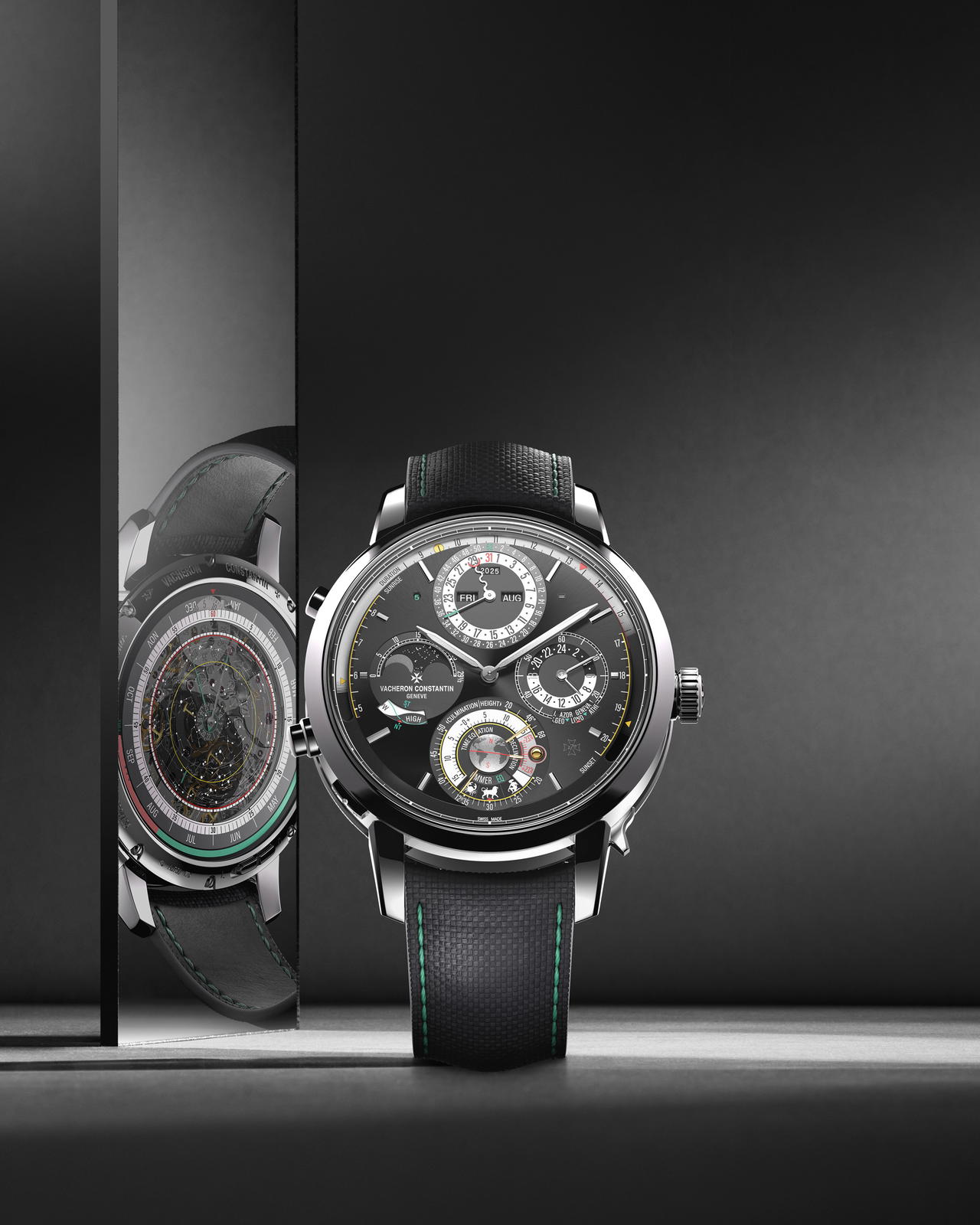
Following last year’s Berkley Grand Complication pocket watch, which features 63 functions, Vacheron Constantin sets a new world record with the Les Cabinotiers Solaria Ultra Grand Complication, a unique creation boasting 41 functions. Developed over eight years and protected by 13 patents, it contains 1,521 components housed in a white gold case measuring 45mm by 14.99mm.
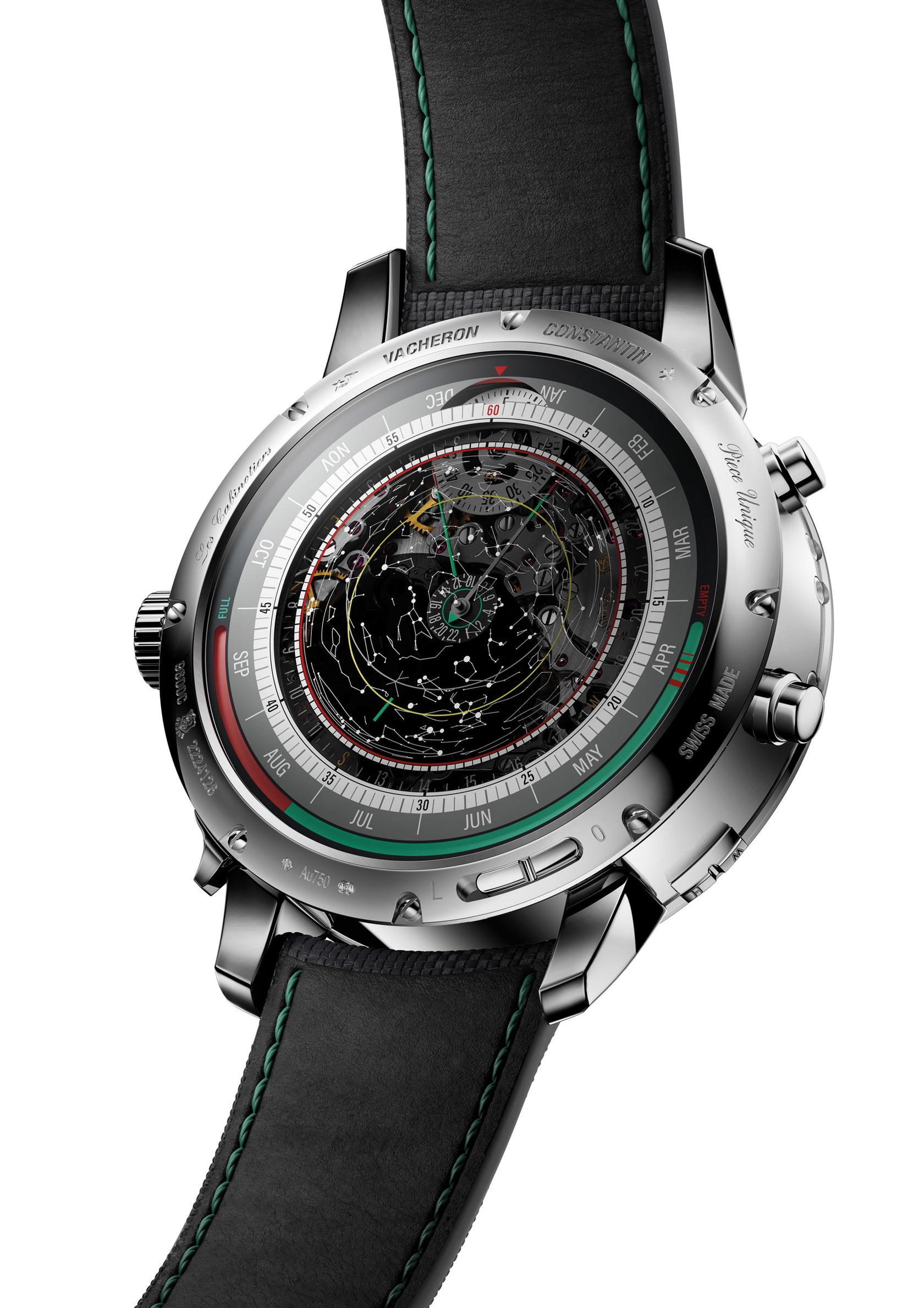
This double-sided watch represents the latest achievement in the maison’s lineage of grand complications and reflects a long-standing fascination with the solar system. A unique feature of the calibre 3655 is its display of civil, solar, and sidereal time simultaneously, each with a dedicated gear train.
On the front, civil time is prominently presented in hours, minutes, world time, and a second time zone. On the back, a rotating star chart shows sidereal time. The watch tracks solar time through the equation of time with a counter at 6 o’clock.
Additionally, it showcases five rare astronomical features. Four relate to the apparent path of the sun. In a world’s first, the fifth uses a split-seconds chronograph to measure the time remaining until a star reaches its zenith. On the caseback, timing scales overlay a rotating celestial chart surrounded by a month ring. Users can align the map with the appropriate season by setting the current month.
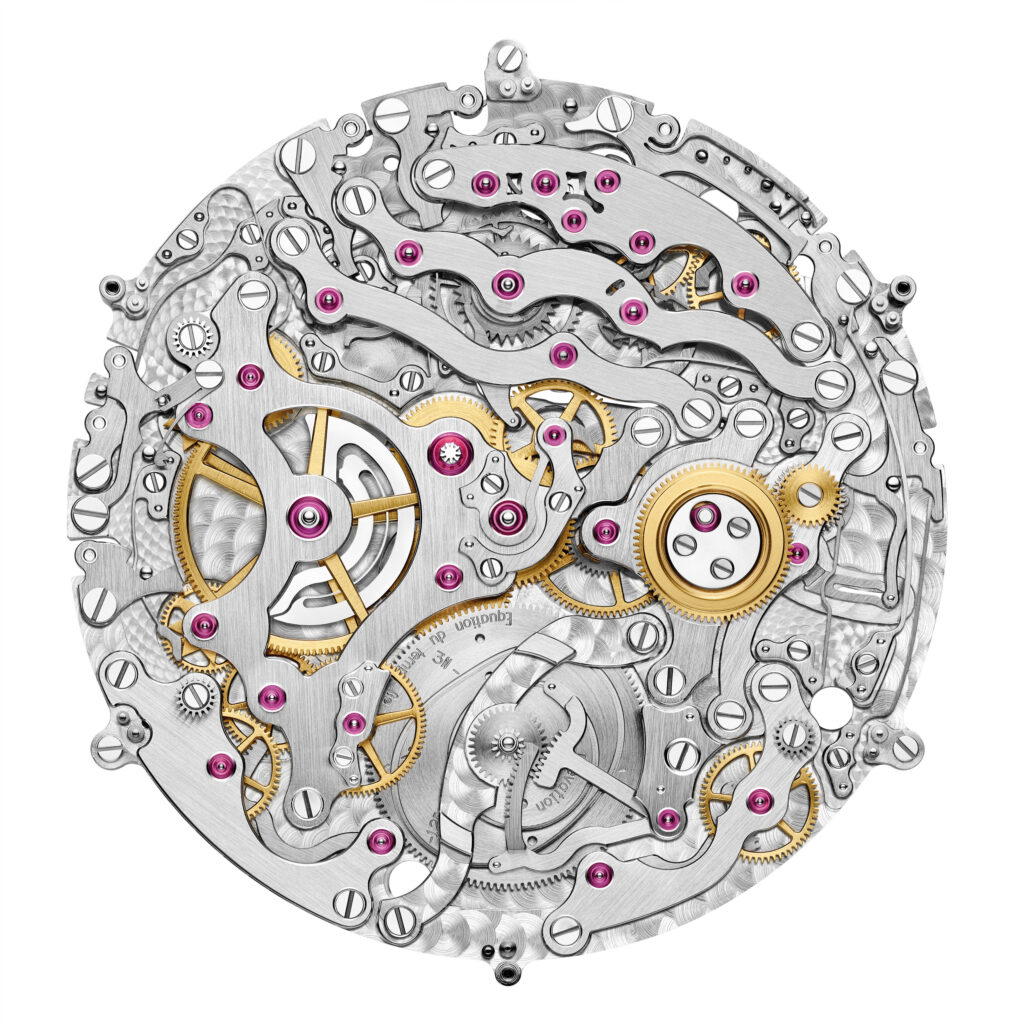
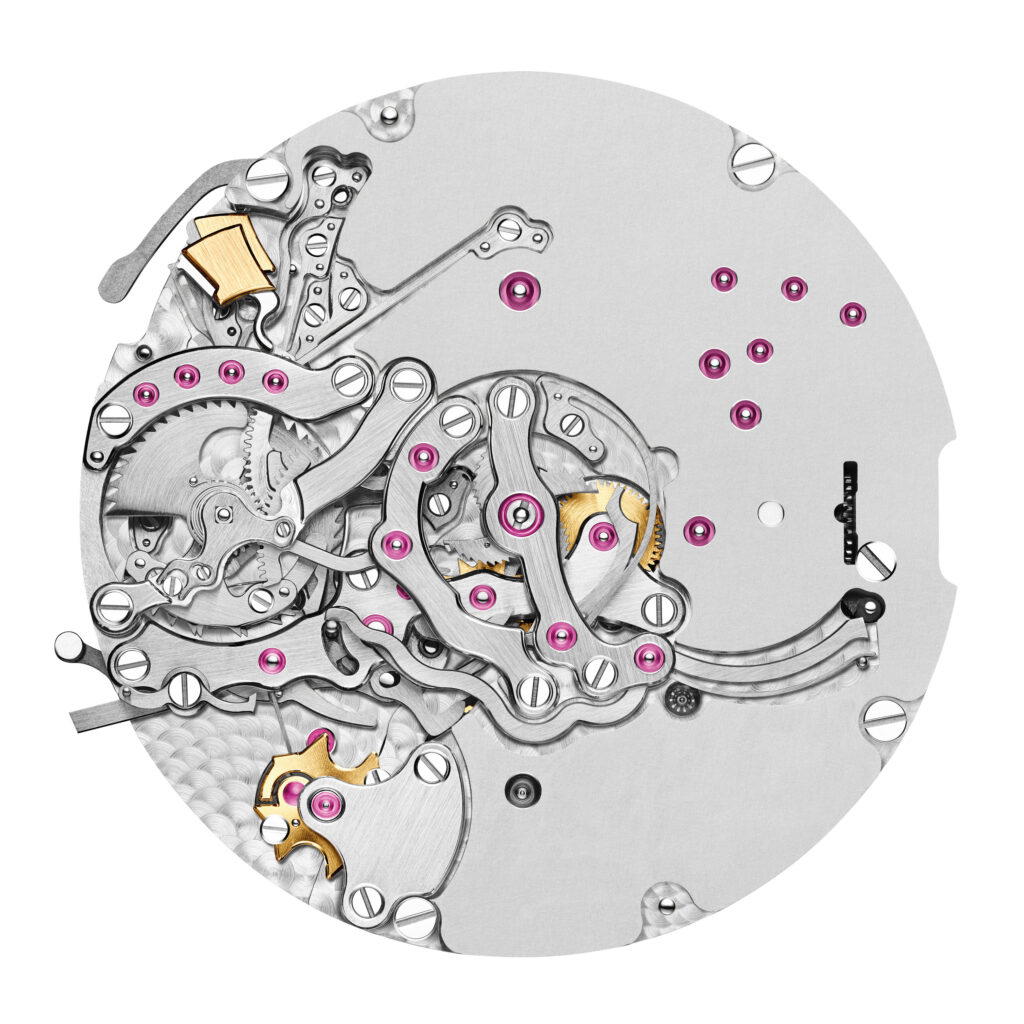
This function operates intuitively: start the timer, select a star, then stop the first hand at the green reference marker. Next, stop the second hand when it aligns with the star’s current position. In the small central disc, a green triangle will indicate the wait time in hours. A patented mechanism minimises shocks when stopping one hand, maintaining precision.
Its build is driven by miniaturisation. The astronomical functions are housed in a dedicated module about 2.8mm thick and connected to the base movement via a precise modular interface. This makes servicing easier.
There is also a Westminster minute repeater with four gongs and four hammers (several patents address acoustics and control), a perpetual calendar, a moon phase accurate to 122 years, tide data, GMT, and world time, essentially making it an observatory on the wrist.

The same discipline appears beyond the grand complications. The Traditionnelle Tourbillon Perpetual Calendar in platinum debuts the self-winding calibre 2162 QP/270, a movement measuring 6.55mm that combines a tourbillon regulator with a full perpetual calendar. A peripheral rotor keeps this piece slim.
With just 127 pieces available, it features a solid-gold dial with a hand-guilloche signature motif that distinguishes Vacheron Constantin’s 270th anniversary limited editions. Conceived by the maison’s guilloche artist, it is based on the Maltese cross emblem (in use since 1880) and recalls ref 6068 from the 1955 bicentennial.
The peripheral rotor also clears the view of the movement, which has a discreet 270th- anniversary engraving and a special cote unique finish on the bridges. This revived wave-like motif—rediscovered in 2021 during work on the Historiques American 1921—combines controlled machining and hand finishing to form a single flowing line across bridges. More than 500 hours were spent regaining mastery, and its use across the anniversary pieces illustrates a commitment to preserving and transmitting savoir-faire.
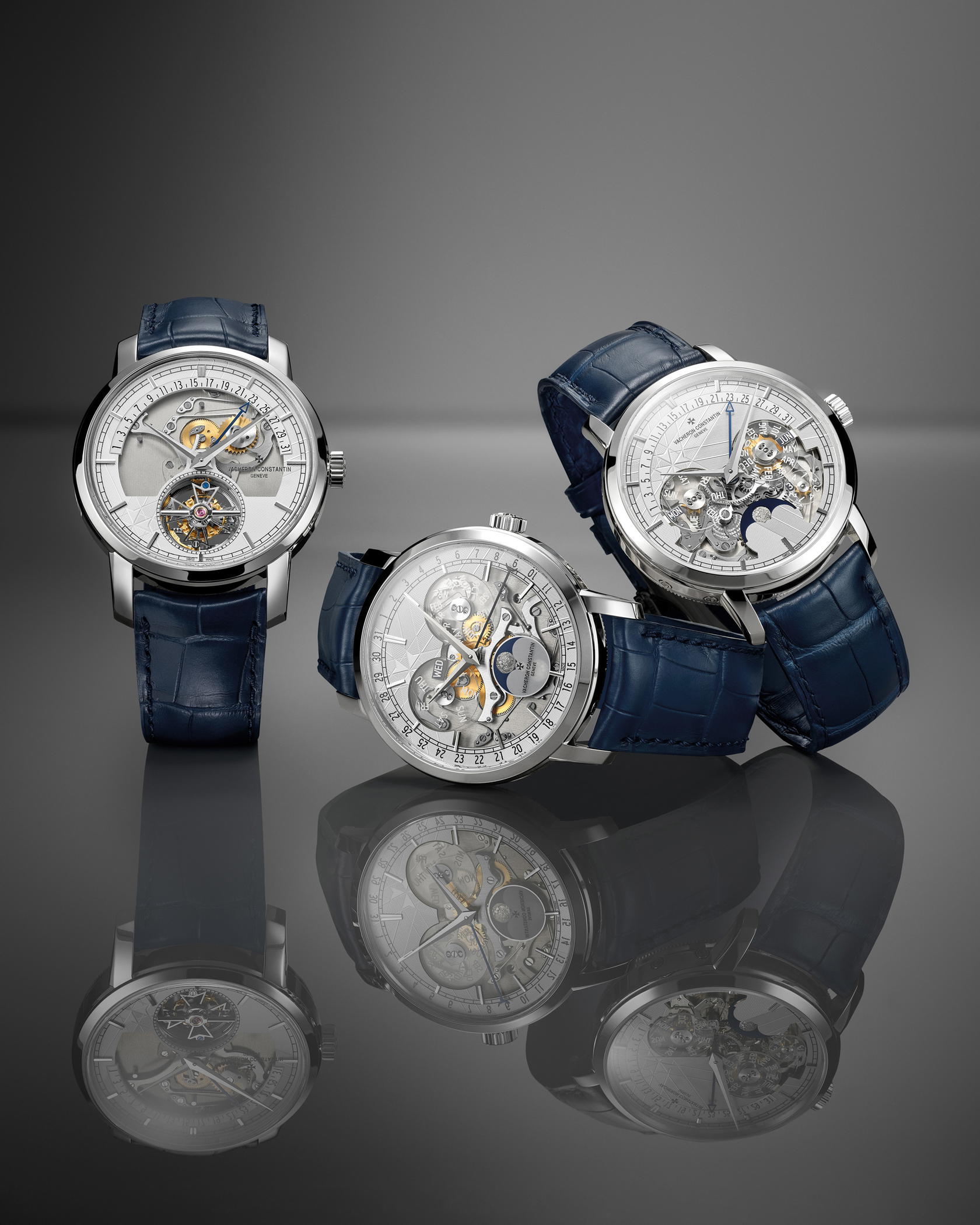
Lastly, three platinum models revisit two house signatures: retrograde displays and openworked dials. Vacheron Constantin produced its first partially openworked dial in 1918 and its first wristwatch with a retrograde date nicknamed Don Pancho in 1940. The anniversary trio—Traditionnelle Perpetual Calendar Retrograde Date Openface, Traditionnelle Tourbillon Retrograde Date Openface, and Traditionnelle Complete Calendar Openface—updates that lineage with contemporary architecture and clear, legible retrograde layouts.
EVOLVING LEGACY
Launched at the beginning of the year, the Historiques 222 in stainless steel, a revival of Jörg Hysek’s 1977 design, was the first watch to kick off Vacheron Constantin’s anniversary celebrations. It retains the slim 37-mm case, integrated bracelet, and the Maltese cross at 5 o’clock on the case. To preserve the minute track, the date is pulled inboard on its matte blue dial.

The watch also retains period cues, like the automatic script, off-white lume on the hands, and markers that glow lime at night, so the watch reads like a faithful revival. Inside, the rotor features a discreet 270th-year signature and the bracelet now closes with a triple-blade clasp with concealed pins for a cleaner fit.
From the Historiques 222, the story moves to eight limited-edition timepieces from the maison’s flagship lines: Traditionnelle and Patrimony. The former draws from classical Geneva codes, with stepped lugs, fluted casebacks, and sharp dauphine hands. In contrast, the latter, with its domed dials and ultra-slim profiles, is softer and more modern. With the new anniversary dial motif and cote unique across the bridges, these emblematic collections are recast in a contemporary light.
GUARDIAN OF THE ARTS
Les Cabinotiers Tribute to the Tour de L’ile closes the anniversary arc—for now—with a trio of unique watches that salute Geneva and the tower that once housed Vacheron Constantin’s ateliers.
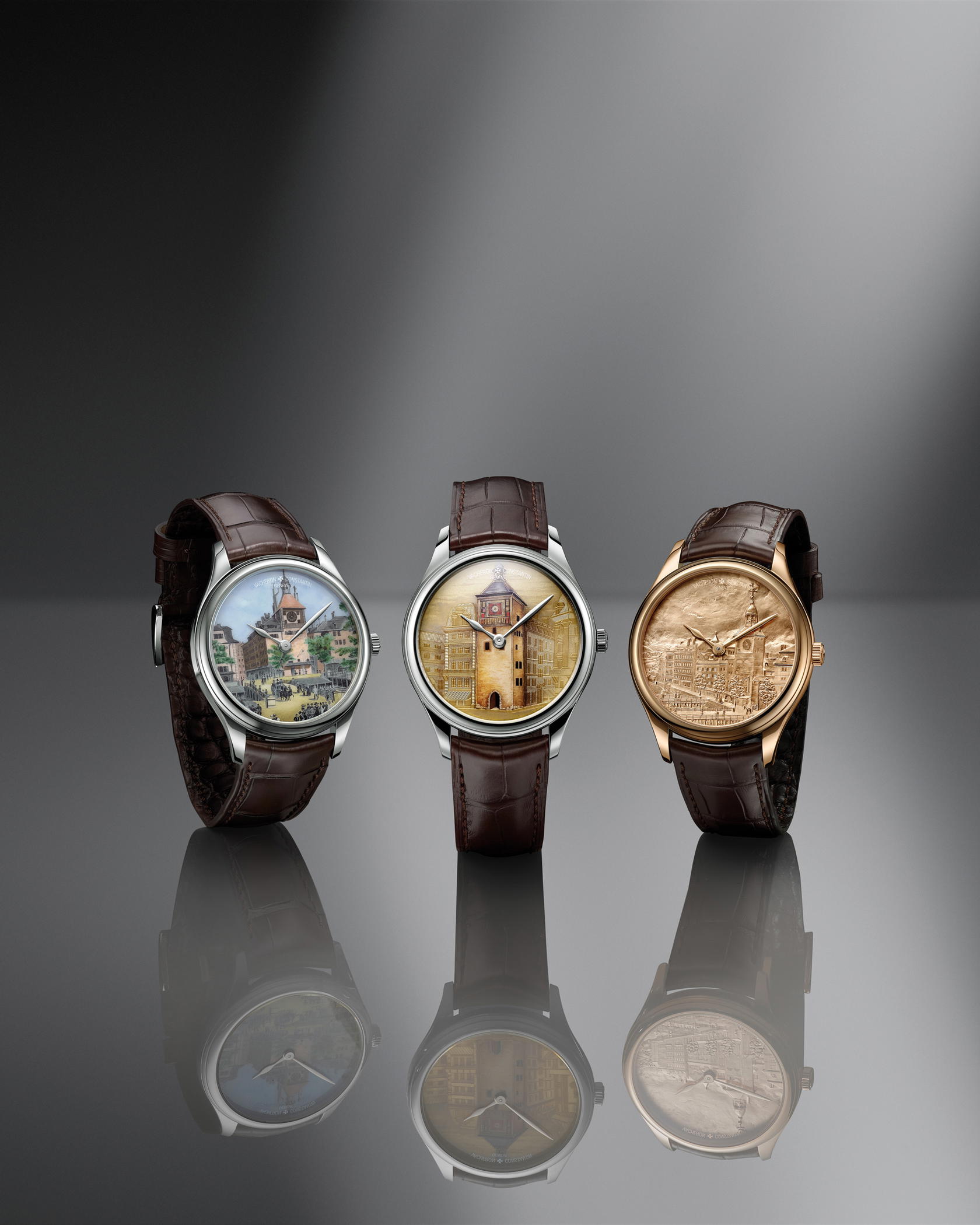
The first watch is crafted in platinum and features a miniature enamel dial that reinterprets a historic lithograph in softly modulated pastels. Artisans begin with a white fondant ground for smoothness. Using an ultra-fine brush, they layer colours, then apply translucent enamel to seal, deepen, and enliven the image. To avoid bubbles, cracks, or colour shifts, the dial is fired nine times at over 800 deg C.
In the second, engine-turning is transformed into picturemaking. Developed in-house, its figurative guilloche uses two hand-operated machines—one for straight lines, one for curves—to draw fine black linework on a sandblasted yellow gold plate. The uneven surface raises the difficulty level and demands exceptional precision. At the centre, a tower painted in grand feu enamel anchors the composition and heightens the texture play.
The third watch is crafted from pink gold and features a bas-relief translation of a 1822 Pierre Escuyer engraving. On a dial barely 1mm thick, the engraver draws the scene, then carves away the ground to reveal facades, bridges, and the bell-tower dome. Trompe-l’oeil depth is created through the manipulation of light and shadow, yielding a dynamic, architectural look that emphasises manual craftsmanship.
Each 40-mm piece features a straightforward hours-and-minutes display, allowing the metiers d’art to take centre stage. The officer-back cases carry Geneva’s motto, “Post Tenebras Lux”, while a self-winding calibre 2460 bears the Geneva hallmark finished to the maison’s highest standard.
Seen alongside the year’s revivals and limited editions, these one-offs illustrate the significance of continuity. They return the narrative to Geneva—the river, the crossing, the tower—and to the crafts that shaped the maison’s identity, now renewed for its 270th year.