
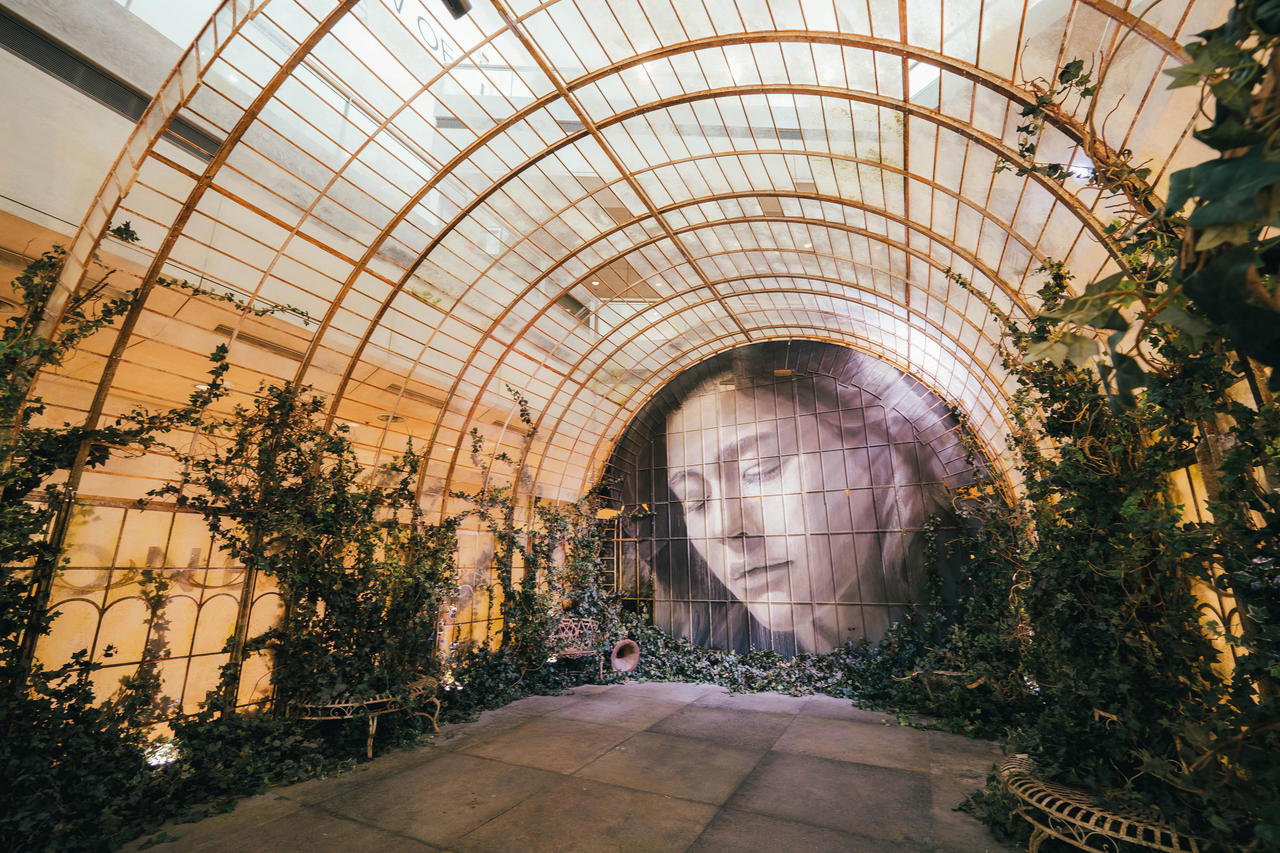
Tyrone Wright, better known as Rone, is fascinated by forgotten spaces like the dozen mid-century chambers in “Time.Rone”, his exhibition at the Art Gallery of Western Australia (AGWA) in Perth.
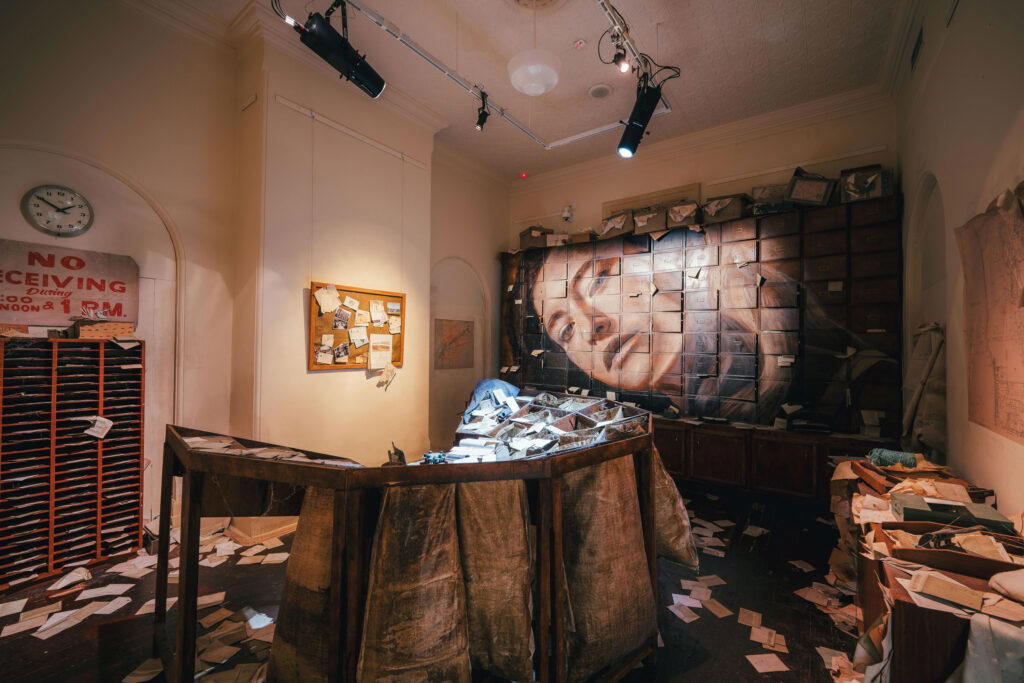
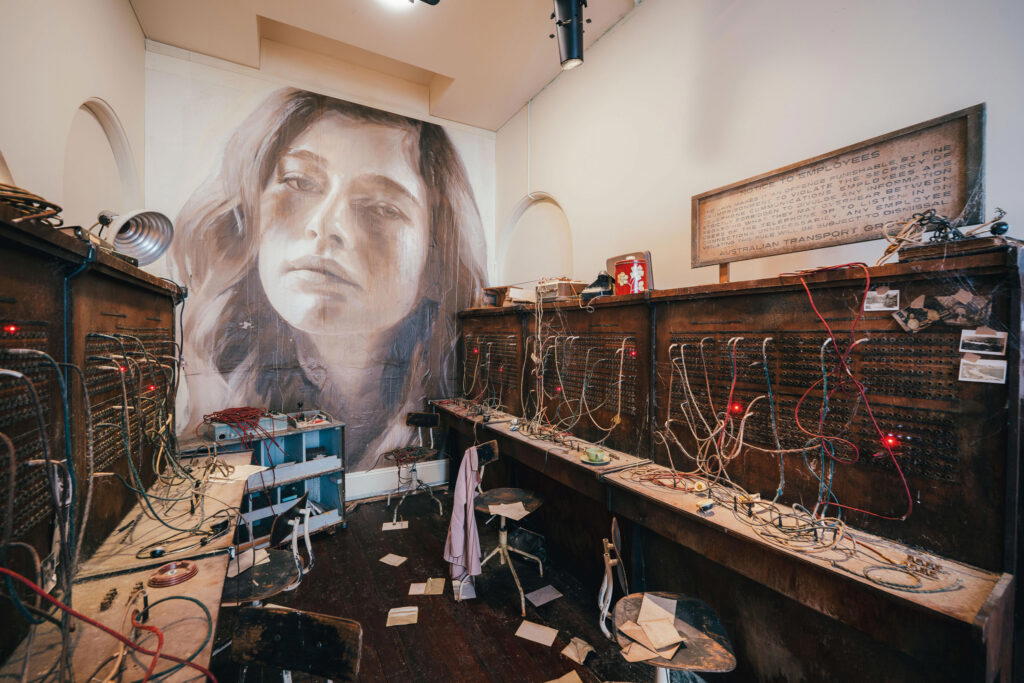
In an empty mailroom with dusty crevices, the chaos of faded photographs, typewriters covered in cobwebs, and half-written letters convey desolation and loss. As orchestral music plays in the background, an evocative, large-scale portrait looms over the mise-en-scène. There’s an uncanny feeling that we’re being watched by the ghosts of yesteryear.
Although many lament the artefacts left behind, they are not important. Instead, Rone reminds us, they exist to tell the stories of people who were there. “The message,” he shares, “lies in the longing for relationships and the people in the community. It’s about cherishing those around you and looking after the things that are so fragile.”
Time.Rone, which debuted at Melbourne’s Flinders Street Station in October 2022, is especially significant for AGWA. In nearly 20 years, this will be the first exhibition held at Perth’s now fully open Centenary Galleries.
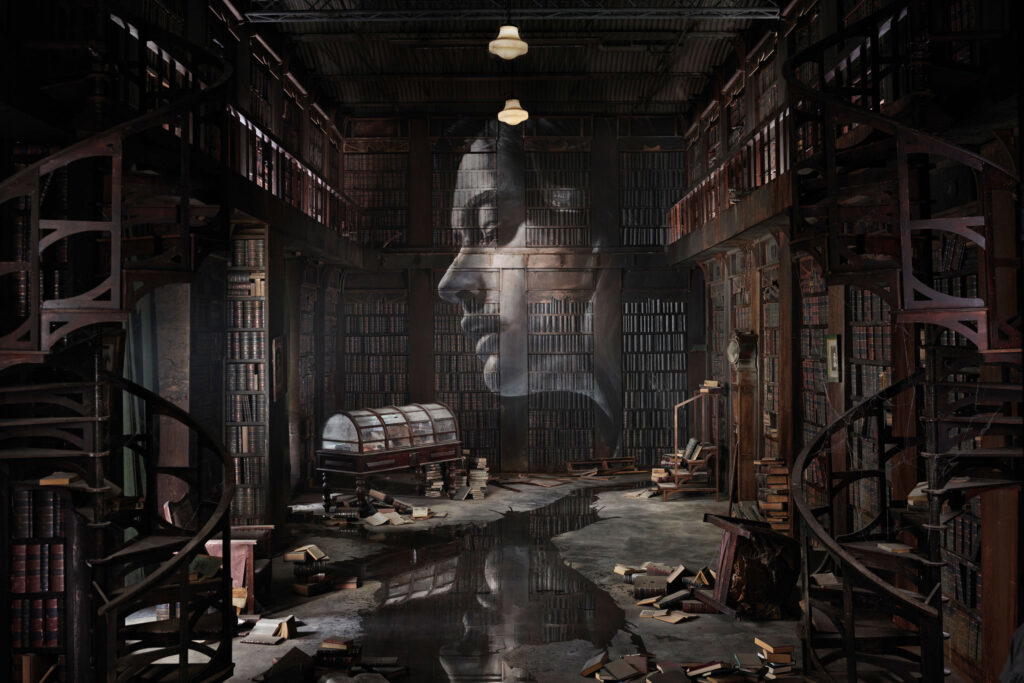
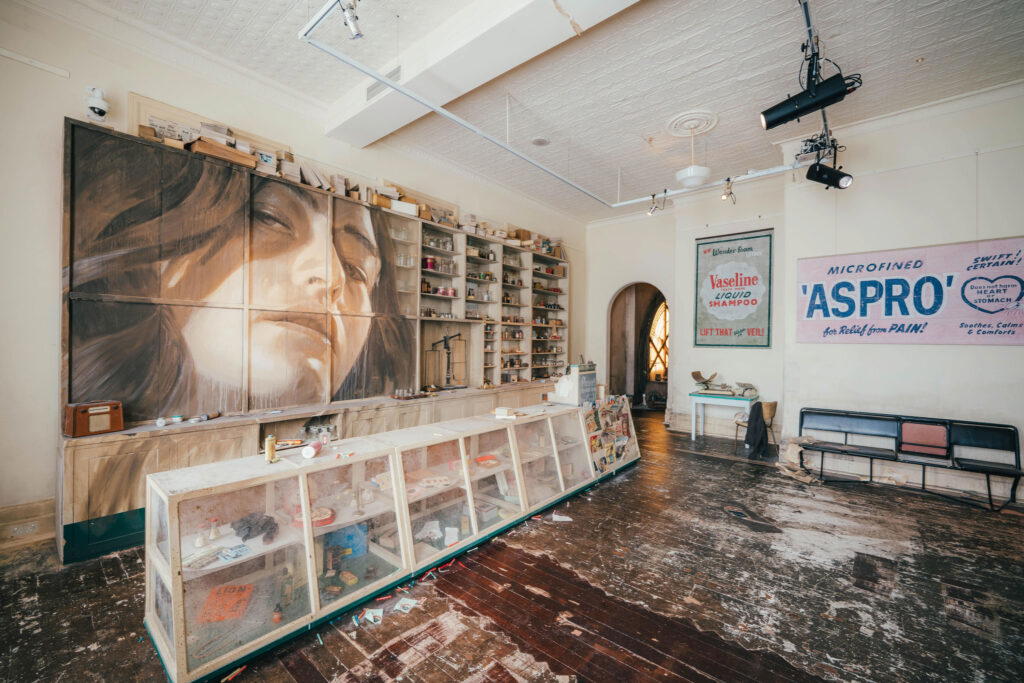
Through 12 rooms, Rone transports us back to post-WWII Melbourne, an era when European migrants fuelled the city’s booming manufacturing industries. Each has been decorated to look like a movie set, like ‘The Work Room’, the first one we visited.
As if seamstresses had disappeared at the snap of Thanos’ fingers decades ago, rows of sewing machines sit in disarray, frozen in time. In one corner, racks of nurses’ uniforms hang lifelessly, as if mourning for warm bodies to inhabit them.
A Perth-exclusive room is ‘The Backstage’, where visitors can step into the spotlight on a stage with a single standing microphone. As the dim background gradually brightens, candlelit tables and a hauntingly beautiful portrait of a woman appear.
As the story goes
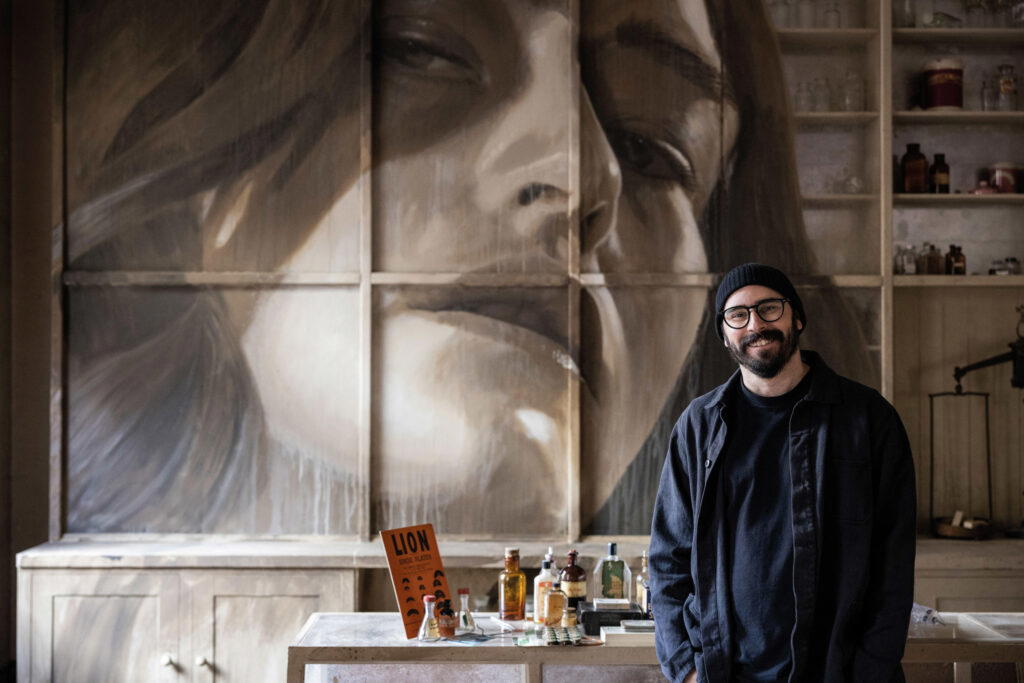
Crucial to Rone’s storytelling is his attention to detail. His creative process begins with studying a floor plan, photographs, or a space in its raw form. It allows him to instinctively know where to locate a door or corridor.
He explains, “If there’s a typing pool in this room, maybe there’s a reception office next to it. Then maybe there’s the head office down the other end. Or there’s a switchboard next to it, making it ‘The Mailroom’. They play off each other in that kind of way and start taking form.”
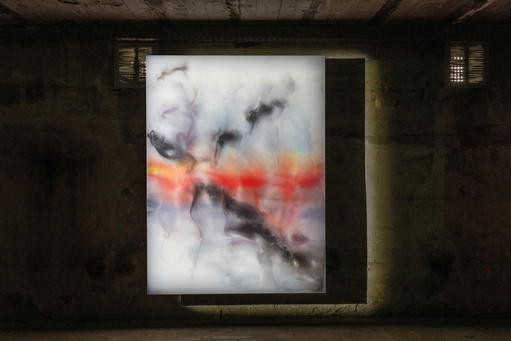
Rone’s signature large-scale portraits give life to each room by contrasting with the emptiness of the space. Using dramatic lighting wasn’t just aesthetically driven, he adds. It also allowed him to paint with lower-contrast colours as subtle tones don’t stand out against flat lighting.
“I’ve been experimenting with painting subtler works that seem to blend into the background. Technically, they’re harder to paint because the paint often dries lighter than when you first applied it. As such, you need to check the lighting and adjust accordingly,” he quips.
Even so, Rone still has a special place in his heart for relic-like and forgotten spaces. He describes the best exhibition he had ever seen as “an empty show”: “Pre-Facebook, someone would find an abandoned building and gather a dozen or more artists to paint something there during the week.
“Soon, 300 to 400 people would show up and it would turn into an exhibition that lasted until the police arrived. That was it. It was completely illegal, and it was just so much fun. No rules, no curator. It just happened.”
Working in such spaces made him realise that storytelling is determined not just by his paintings, but also through the context and environment. “My portraits play on the melancholy loss of these spaces, which are sort of forgotten,” he says. It felt relevant to try to create the emotion that sat there, throwing it into that fragile state, exaggerating it with lighting and music, and little details.”
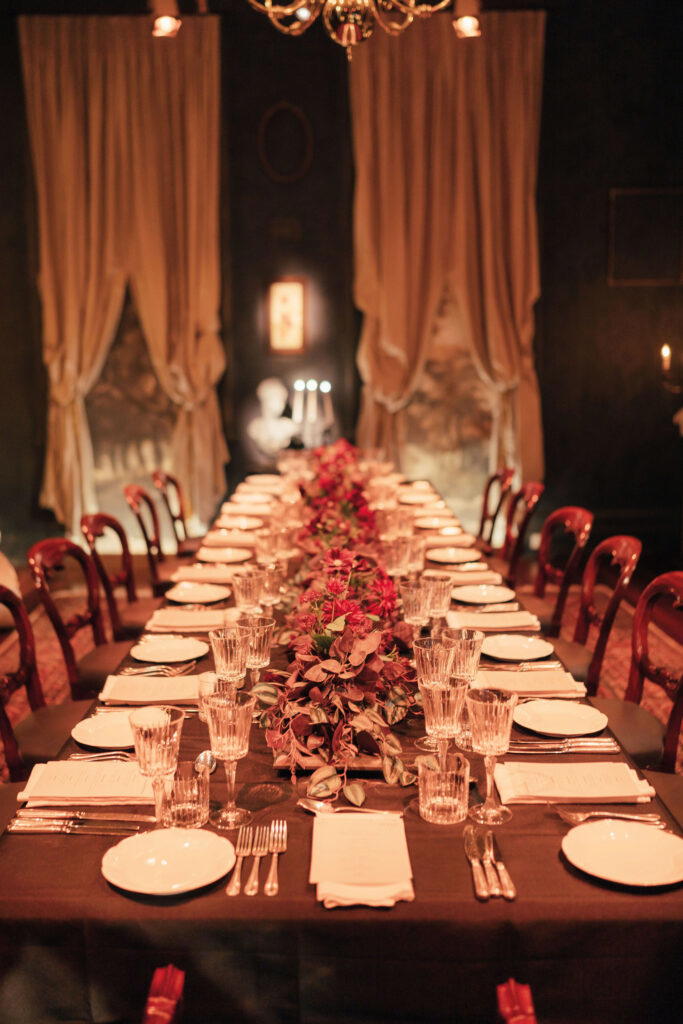
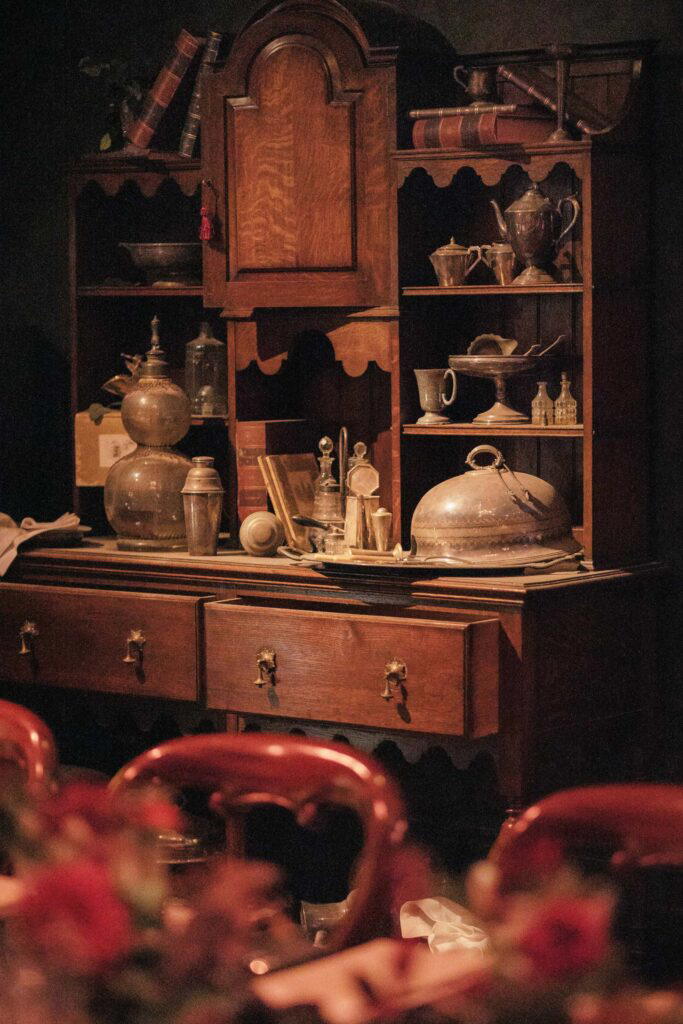
Those interested in Time.Rone can purchase a ticket for the exhibition alone or one that includes a four-course dining experience from A$362 (S$318) by celebrity chef Guy Grossi of award-winning Roman Italian restaurant Garum, the exhibition, and access to the bar after hours.
With highlights such as Vitello Tonnato, a Piedmontese classic consisting of cold veal slices in a creamy sauce, it aims to convey a sense of time passing as a sonic expression of gastronomy.
Of course, it is unusual for galleries to build elements such as dining into an exhibition, concedes Colin Walker, Director of AGWA, but he hopes such unique experiences will encourage a fresh spin on our relationship with art and culture.
It is anything but ordinary, just like Rone’s artistic career. From decorating skateboards and skateparks to showing in some of the world’s most prestigious galleries, he’s come
a long way.
As he acknowledges, street art and graffiti weren’t viable career choices when he was starting out. It was only after he switched from painting murals to creating “walk-through” installations that he successfully established himself as an artist renowned for his captivating narratives.
“My work has gone from something as simple as a moniker—an icon on my tag—to being completely immersive. Connecting with people of a wide demographic is lovely. I am seeing older people come in with children and share stories between generations,” he says proudly.
“Time.Rone” runs until February 2025.
TWO other sites to visit in Western Australia
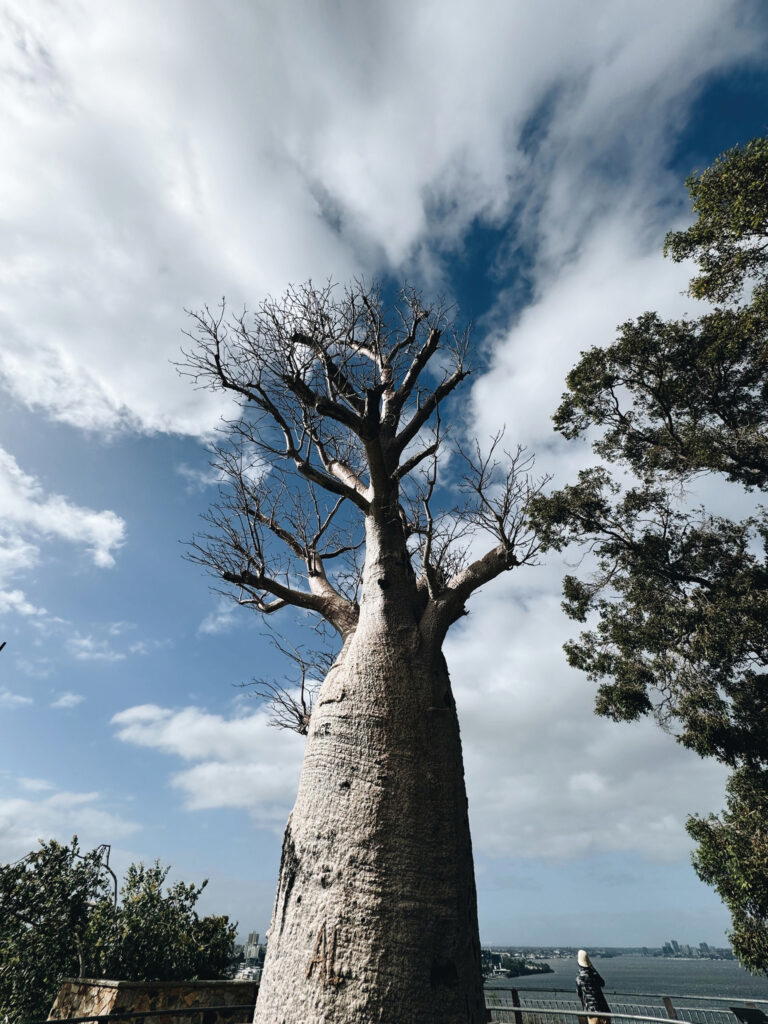
Kings Park and Botanic Garden
Located 10 minutes by car from The Art Gallery of Western Australia, Steven Jacobs, Director and a guide at Culture Tours, shares insights into Aboriginal culture and the rich history of the Whadjuk Noongar community. He conducts a multi-sensory walking tour of the inner-city park through bushland trails. Visitors can check out bush tucker or native plants traditionally used as medicine, and listen to dreamtime stories passed down for generations.
Swan Valley
Buffer time for a trip to Western Australia’s oldest wine region just 30 minutes from Perth’s CBD. A day out with Swan Valley Tours is packed with wine, cheese, and chocolate. The highlights include a mead tasting (The House of Honey), a gin and whisky tasting (Limeburners and Giniversity), and award-winning wines paired with modern Australian cuisine (Sandalford Restaurant).