
Picture an unnervingly composed Rumi shimmying and snaking her limber figure into Olympic-worthy poses before a live audience, in spotless synchronisation with a stuntman donning a motion-capture suit in the background. There won’t be any post-performance gaffes committed by this fey influencer. Her narrative is tightly manipulated by a murmur of brand executives, leaving no room for cultural cancellations triggered by capricious whims (to name Youtuber Logan Paul’s disastrous downfall as one example).
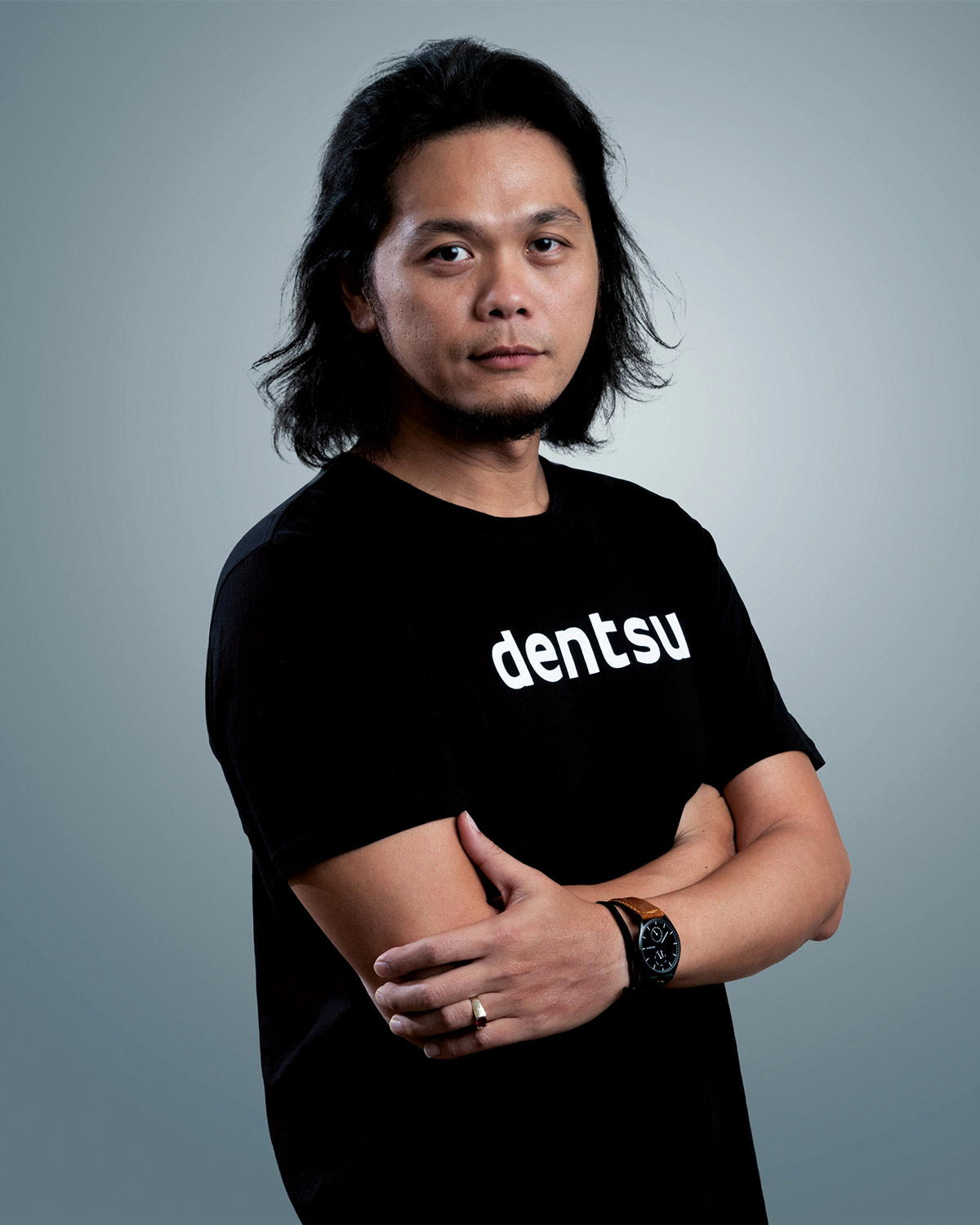
Behold the world of virtual identities tailored for brands, a honeypot of sponsorship deals that Dentsu has stuck its fingers into, under its recently launched Dentsu VI. Helming the outfit that conceived the interactive Rumi is Dentsu Singapore’s chief creative officer Stan Lim, who says these relatively uncharted territories come with self-doubt.
“We started creating virtual humans several years back and people didn’t take them quite seriously, though we saw endless potential in putting up these rich interactions or delivering mind-bending performances. A lot of people just saw them as cartoon characters or mascots.”
The younger generation that tends to gravitate towards the metaverse no longer hides behind their virtual avatars, because they view their virtual identities as an extension of their real ones.
Stan Lim
Virtual influencers like Rumi may be changing the marketing landscape by allowing brands to have conversations with consumers beyond chatbots, but they’ve also sparked concerns over identity theft, damaging perceptions of beauty and disinformation. You only need to watch the viral deepfake video of Barrack Obama cussing out Donald Trump to glimpse the potential ramifications here.
But Lim argues that those issues are hardly new. “I believe that our fundamental human decency shouldn’t be different just because we are in the metaverse; that’s the surest guide for brands.” And the 42-year-old holds out a measure of good faith in Gen Z’s collective digital conscience.
“Something interesting we’ve observed is that the younger generation that tends to gravitate towards the metaverse no longer hides behind their virtual avatars, because they view their virtual identities as an extension of their real ones. They call out toxic behaviour faster than anyone and this will guide brands’ decisions.”
While Meta’s announcement of its intention to release a set of ethical guidelines for virtual influencers was lampooned by critics raising an obvious conflict of interest – given that such avatars are hosted by the platform – Lim says that they may be jumping the gun. “This has shone a light on how important it is to continuously re-evaluate our approach regarding the use of virtual humans. Whether or not you agree with their guidelines when they are released, there are certainly are going to be more ethical debates and that’s a good step forward.
The mild-mannered creative has pitched his share of unconventional concepts, including a digital token-run “Miniqlo” store just for kids that might have been a forerunner for Amazon Go, had it not fallen through.
In a dystopian metaverse, he’d pick a hermit as his avatar. “I’m slightly more introverted by nature; I enjoy a conversation now and then but most of the time if you leave it up to me, I’m just going to be in some corner doing my thing.”