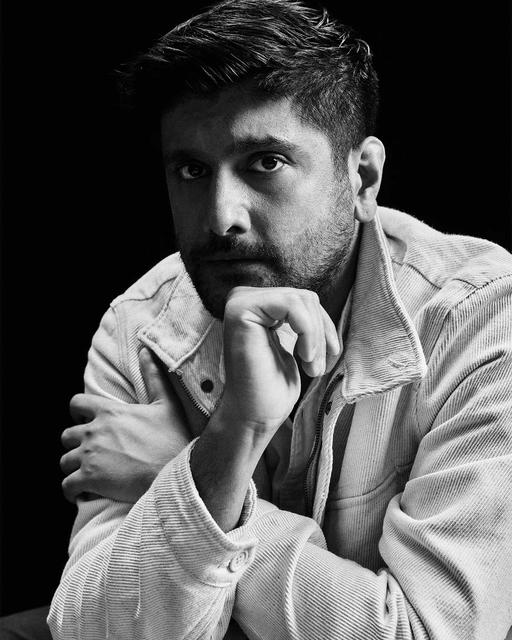

At 14, Matthew Zeng found himself in a sitch when caught pilfering food from a supermarket by an incognito policeman. He was let off with a knuckle rap, his particulars ignominiously stamped onto a blacklist of shoplifters.
Far from stumbling through a puerile transgression, he says he stole out of necessity, while awaiting a pay cheque from his part-time gig at Sweet Talk. “I come from a poor background and had to find my own way at a young age. Being resourceful, I would have done anything to survive,” he explains.
Platitudes about the immorality of theft aside, he says the episode revealed his own canny nature, which he would later capitalise on as a communications maven. “The whole incident made me realise that I actually understood human psyche well; back then I saw that everybody around me — especially Singaporeans — would just mind their own business, so no one will question you if you take something convincingly and confidently.”
Today, the 29-year-old has clawed a career out of disseminating stodgy government messages in a relatable manner — a sharp departure from his law-flouting adolescence. In his marketing agency DSTNCT’s impossibly youthful office occupying a former fire station, the Forbes 30 under 30 Asia 2022 laureate shows me a wall garbed with violently coloured campaign posters.
Snappy and ruminative at turns, their chorus of digital content spans arts and culture, sustainability and the environment as well as policy and youth engagement. Among them is Dear Covid-19, a meditative exercise that chronicled Singapore’s collective lockdown experience through soul-baring letters and intimate photographs snapped over Facetime.
Commissioned by National Youth Council as a one-off memory project curating 100 individual stories, the initiative blazed into a viral social media trend, prompting Prime Minister Lee Hsien Loong to post about it.
Such rousing endeavours hold especial piquancy to Zeng, who claims to be drawn to a bigger purpose. “Government agencies help solve societal problems by implementing policies that will affect every Singaporeans’ lives.” he suggests.


In that regard, DSTNCT is the savvy conduit of the policy wonks, to prevent messaging from getting muddled within a clunky public sector apparatus. “CPF is the biggest example of that. It is meant to be an insurance policy but because certain things weren’t communicated properly, people misunderstood and thought that the government wanted to hold onto their money; that’s why we have so much negativity towards this initiative,” reasons the rising star, whose growing firm boasts close to 50 employees and posted S$5 million in revenue last year.
Success was preceded by a gut-wrenching lesson to the near-death knell of more than half a million dollars, embezzled by a former finance manager who was indebted to loan sharks. It teetered the company to the brink of bankruptcy and resulted in more than half of their staff resigning. “We now ensure we are in the know about every single transaction within the business operations, which now have control measures so we don’t make the same mistake,” divulges Zeng.
Though they are unlikely to recover funds siphoned from the now-incarcerated former employee, the young CEO maintains that they decided against scuttling their venture as they had yet to fulfil their purpose.
DSTNCT was started in 2014 as an answer to the flash and frippery of network agencies. “As a whole, there tends to be a Mad Men mindset and the people in advertising tend to romanticise it too much, especially the big boys like your Ogilvys and DDBs.”
Fresh-faced and whip smart, the unassuming marketer studied tourism and ventured to China at 19 to mine its vast import-export sector. This was pre-Alibaba dominion. Zeng himself seems to lack the superciliousness you may expect from a bright spark in the creative sector. For one, he clearly isn’t too high-browed to launch into a keen exposition on the merits of WWE — one of his enduring passions that his colleagues can attest to.
“What’s amazing about WWE is that they’ve created a whole universe with different characters that resonate with people; it’s a lot to do with ring and audience psychology. They do many things that are intentional in creating a certain emotion or driving a storyline, which people tend to overlook.” The diligent fan, who names brash American-Canadian wrestler Chris Jericho as his alter-ego, is ever-ready to extrapolate the psychology of sports entertainment to advertising. “There’s something to learn in terms of how you create content that will stick.”
It’s the same bracing perspective that he brings to the business of touting ideas and products. “We wanted to bring back communications as it was. How do we help clients solve problems rather than create fanciful and gimmicky campaigns in the name of creativity?” he muses.
To slice through a cacophony of digital noise and unearth core messages that capture the public’s fleeting attention, Zeng “digs deep into how campaigns relate to people.” For his ongoing project with the National Environmental Agency addressing Singapore’s waste problem for instance, his team discovered that Singaporeans don’t perceive a waste problem due to the efficiency with which refuse is cleared. “That’s how we approach every campaign, by asking: why is this a persistent problem? How do we drive people to action? In this case of trash being out of sight and mind, how do we create shock value so people can remember?”
Such insights are derived through research into wide demographics. “The biggest common pitfall that marketers or policymakers encounter is to fall into an echo chamber,” points out the purposefully inked entrepreneur, whose tattoo inspired by George Orwell’s 1984 pronounces his penchant for dystopian literature in bold.
“It means a lot in terms of how you compare it to today’s media propaganda — don’t always buy into what they say as there are always two sides of the story at the end of the day.”
Speaking of carefully manufactured narratives, what does he make of governments increasingly mobilising influencers to peddle ideologies? “If you are using a thought leader who really feels strongly for a cause then that’s fine because it is a collaboration. But if you are force-feeding someone a certain message then to me it’s wrong and ineffective, as it could be tone-deaf and create a backlash,” he weighs in, citing the example of the Ministry of Finance’s off-key Budget 2018 micro influencer campaign that sparked a dogpile for its lack of substance.
Clearly, nailing Gen-Z’s irreverent patois isn’t tantamount to striking a chord with the majority. Neither can the salient digital trends of the day be assumed. “There’s a misconception that cryptocurrency and NFTs are a young person’s thing. We’ve been doing a lot of studies into the whole metaverse and realised that most youths aren’t into it,” he asserts. “For those who do, they see it as a viable investment path when it is all just speculation in my opinion,” expresses Zeng.
The digital native is more inclined to focus his attention on emerging social media platforms as a font of opportunity. “Bytedance as a whole is coming up with new apps for more people to express themselves beyond the video format. I would say with each new digital or social entrant our behavioural habits are going to change rapidly.”
And how would he dissect this phenomenon for the benefit of a boomer? “I would tell them that at the end of the day if they want to remain in the know of current affairs then the most effective way would be through TikTok or Instagram, as news actually filters through Tik Tok faster than on traditional media.”