As they stare down the barrel of growing trade protectionism and nationalism, uncertainty may be the overriding sentiment for some business leaders in 2025. In part, this can be attriuted to a tense geopolitical climate that has countries on edge as they anticipate the fallout of a second Trump term.
A recent report by market intelligence firm S&P Global projected the trend of conditional globalisation, in which governments increasingly dictate trade flows through tariffs and export restrictions. However, despite the brow-furrowing conjecture, Singaporeans are going out on a limb to address social problems and create an impact overseas through startups as well as non-profit ventures.
Singapore University of Social Sciences’ (SUSS) Entrepreneurship department executive Meng Yi-Ju notes that several impact startups within the SUSS ecosystem are exploring overseas expansion opportunities. The goal is to reach larger markets to increase profitability and scale social impact.
Singaporeans are known for their propensity to bring about meaningful change to countries with unmet needs. “Singapore’s strengths lie in its advanced knowledge and technological capabilities,” he suggests. “Social entrepreneurs often focus on techdriven solutions to address pressing issues such as an ageing population, food security and climate change—problems that are also relevant locally.”
ADDRESSING UNMET NEEDS
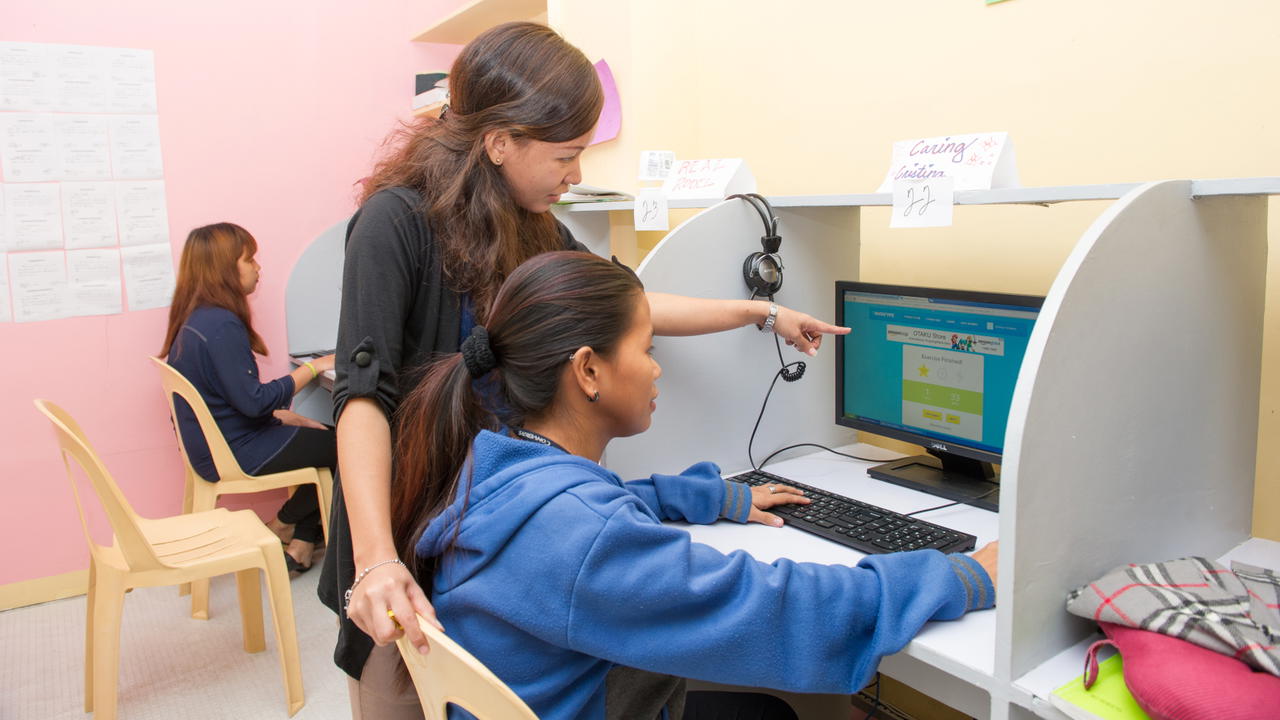
More than a decade ago, National University of Singapore (NUS) undergraduate Zhihan Lee witnessed the transformative power of business during an NUS Overseas Colleges stint in India. His work in a rural community culminated in illiterate youth finding work in remote data entry as a result of training they received from a Singapore-based social enterprise.
“I saw how technology and the Internet would change the world, and how education had failed many young people in developing countries. Innovative models are needed to create jobs for people.”
Zhihan Lee on being inspired
The experience gave rise to Bagosphere, his Philippines-based firm that provides training to frontline workers to “build character, growth mindset and leadership skills”. Founded in 2010, in the shadow of the bruising 2008 financial crisis, it aimed to alleviate poverty among underemployed youths from rural communities. The company is headquartered in Bacolod City.
Lee, an engineering graduate, remains sanguine in the face of global headwinds. “Despite the financial crisis of the late 2000s, the forces of globalisation were still at play. Business process outsourcing is a perfect example of this, since US companies outsource their labour to countries like India and the Philippines,” says Lee, who adds that he is not spooked by the prevailing global trade tensions and tenor of jingoism. “At the end of the day, companies are made of people. As such, we support their needs to be seen as a human being, to collaborate, and to relate to one another to solve problems.”
HOW TO WIN OVER A CROWD
However, while aspiring entrepreneurs may have rosy visions of changing the world, they may be misled by the realities on the ground, which include gaining the trust of locals and learning their folkways. This is especially critical in a culture that is sceptical of foreigners.
Marcus Lim learnt from the start that good intentions don’t necessarily translate to a receptive audience. His social enterprise Ecosoftt provides water management and sanitation solutions to marginalised rural communities around the globe.
“We went to a village in India and said, ‘We are going to build toilets for you and you can contribute a bit of money, mostly towards their maintenance’. But people were suspicious and questioned how it could be done,” he recalls.
In a country with an entrenched caste system, villagers deemed inferior had a difficult time cooperating with those deemed superior. Remarkably, the project was successfully completed under the aegis of a village committee of both men and women, despite traditionally patriarchal gender norms.
Lim stresses the importance of having a local with bone-deep understanding of cultural nuances to spearhead such overtures, and help obtain buy-in. His Indian national co-founder Stanley Samuel went door-todoor canvassing villagers’ support.
Interestingly, the pair of former management consultants applied corporate concepts such as change management— which involves helping companies transition smoothly when they implement new systems, processes or strategies—to secure the cooperation of the agrarian community.
“It’s about understanding who holds the power and finding ways to influence their thinking, such as by starting a pilot project to demonstrate early success. With sufficient desired goals, they can then mobilise people to work together,” explains Lim, whose feted social enterprise bagged the 2019 Zayed Sustainability Prize.
Another Singapore social entrepreneur who overcame cultural barriers to contribute meaningfully to international communities is Vanessa Paranjothy, the founder of feminine hygiene product firm Freedom Cups. Her team maximises its impact by working with local organisations and non-profits, including a Kenyan organisation that teaches impoverished and differently abled slumdwellers to play chess.
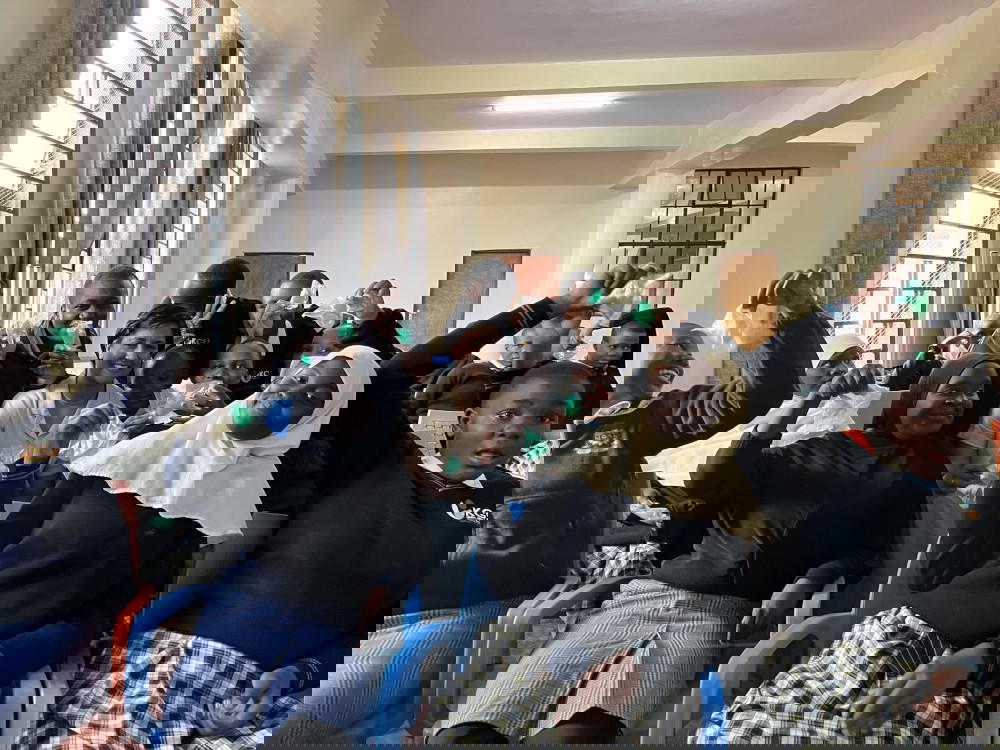
Freedom Cups provides the reusable menstrual products and educational materials and trains its local partners, thereby allowing them to engage with beneficiaries. “I am a big believer that local members of the community are best poised to develop the solutions they face on a daily basis, with us playing a facilitative role where possible,” says Paranjothy.
THINK LIKE A LOCAL
Gaining a foothold in an unfamiliar environment wasn’t too complicated for Rachel Lin. The Singaporean jumped onboard as business partner to Filipino Mitzi Uy, who employs women in Manila’s low-income urban communities to craft accessories such as pursebooks and bags under the Mori label.
The pair, who were initially acquainted through Lin’s proposition to sell Uy’s products on her now defunct e-commerce platform, established mutual trust while participating in a social enterprise accelerator competition in the Philippines.
While they had laid the groundwork for a sound working relationship—with Uy overseeing operations and Lin, marketing— Lin subsequently struggled with adjusting to a different working paradigm. Going through a gauntlet of financial struggles in her formative years had helped forge her relentless work ethic, which did not exactly mesh with her Filippino employees’ more laidback nature.

“I was always impatient because it’s all about efficiency in Singapore. I’d often find the product quality did not meet my standards,” Lin confesses.
Thankfully, Uy served as a sounding board to help square her expectations with the realities faced by their craftswomen, many of whom couldn’t execute her more fiddly designs. Some expressed that they felt demoralised.
“Mitzi advised me to be realistic and factor for a 50 percent defect rate, as well as invest in training the community,” recounts Lin. “I now pull myself back from assuming that being less efficient means being lazy. There are times where delays in production are due to bad weather including typhoons, which cuts off the ladies’ electricity supply so they can’t work.”
Over time, she’s found workarounds such as bundling defective goods with other items and offering discounts, rather than writing them off as losses. By the same token, a “saviour complex”, where she may have previously been overzealous in her attempts to help improve employees’ circumstances.
Contextual differences may also stymie Singaporeans’ ability to engender change overseas, according to Meng. “Singapore deals with issues of relative poverty due to wealth inequality, whereas many nearby countries face absolute poverty. This disparity can limit the applicability of Singaporean entrepreneurs’ solutions in regional contexts.”
PLAY TO YOUR STRENGTHS
Nonetheless, that doesn’t negate the considerable advantages wielded by Singaporeans operating overseas. Janine Teo, whose ed-tech firm Solve! Education is registered as a non-profit entity in Indonesia, singles out positive experiences with MNC partners that help fund and support its digital education programmes. Through these programmes, students acquire literacy, numeracy and financial literacy skills.
“The MNCs understand Singapore’s legal and business structure, so it’s very clear. Our accounts are audited, and everything passes due diligence,” she shares.
According to Teo, Solve! Education’s flagship digital game-based educational platform Dawn of Civilization has reached nearly two million learners across the globe. Among them, several serve as youth ambassadors who help promulgate the programme among peers.
Besides wearing a sheen of legitimacy thanks to its reputed trustworthiness, Singapore also counts as currency its status as an innovation hub. Ecosoftt’s Lim shares that securing innovation grants from the Singapore government—which recognised its strides in sustainability including developing a local building-level sewage recycling plant—has, in turn, helped the firm burnish its credibility and snag contracts abroad.
“It’s much better if you’ve actually done projects in Singapore,” says the erstwhile vice president of Singapore Water Association. “I’ve shared about the Singapore water sector at international forums, and we’ve received good feedback, especially when people look at Singapore’s own water story.”
Riding on the current swell of sustainable technology holding world leaders rapt, Lim—who also chairs the Industrial Advisory Board of Nanyang Technological University’s Nanyang Water & Environment Research Institute (NEWRI)—highlights the potential to export Singapore’s water solutions, including desalination, to regions such as the Middle East. Internationalisation has been pivotal to the company’s growth strategy from the outset.
“Stanley and I think about what products would be helpful for each market, and adapt them accordingly,” he says.
But while globalisation is well-baked into the DNA of these Singapore companies, some have hit snags due to the insular attitudes of prospective clients. Mori’s Lin, for example, admits that she faces difficulty hashing out corporate deals in Singapore, as companies prefer locally made products. In the same vein, queries about a perceived lack of support for local communities are par for the course. In response, she points them to her work with marginalised families in Singapore.
Likewise, Teo’s non-profit has raised brows in Indonesia, where some take a dim view of supporting foreign non-profits over the glut of local ones. On a more scurrilous note, some question whether her organisation functions as a government apparatus.
But both Singaporeans take the carping in their stride, resolute in their respective missions of engendering positive change. Teo recently developed a web-based chatbot to promote interactive learning, while Lin is working towards helping more women gain financial independence by improving Mori’s margins. As Teo asserts, “We need to emphasise all the time that we’re here to help, without any gimmicks or hidden agenda.”