
There are some things we only experience on the ground. To make sense of the ways in which the Shinta Mani Foundation has been supporting its beneficiaries, I visited several rural villages an hour away from the heart of Siem Reap, Cambodia, late last year.
My first stop was a rustic shack where several women were weaving rattan bags, a skill they honed through the foundation. They receive US$100 (S$129) a month in exchange for their labour, the sum of which even though paltry by our standards, is still US$100 more than they had before.
“In the past, they’d just hang around all day and wait for their husbands to return from their construction jobs,” Shinta Mani Foundation assistant executive director Chunnin Neat, the chaperone on my tour, explained. Construction workers in this part of the world earn about US$5 a day, so these bagmakers make about as much as their spouses.
Our next stop was the home of small-scale pig farmers who had used an interest-free micro-loan from the foundation to purchase pigs at US$400 each. They now earn a steady income through a breeding programme, with each sow producing at least 10 piglets per litter and each piglet sold at US$40 each. Cash flow is managed through a planned roster.
We then visited Bostatra Primary School, a modest five-classroom, single-storey building that cost US$70,000 to construct because the materials imported from Thailand, Neat explained. Beyond building the school, the foundation also provided uniforms, textbooks, stationery and bicycles to over 200 students.
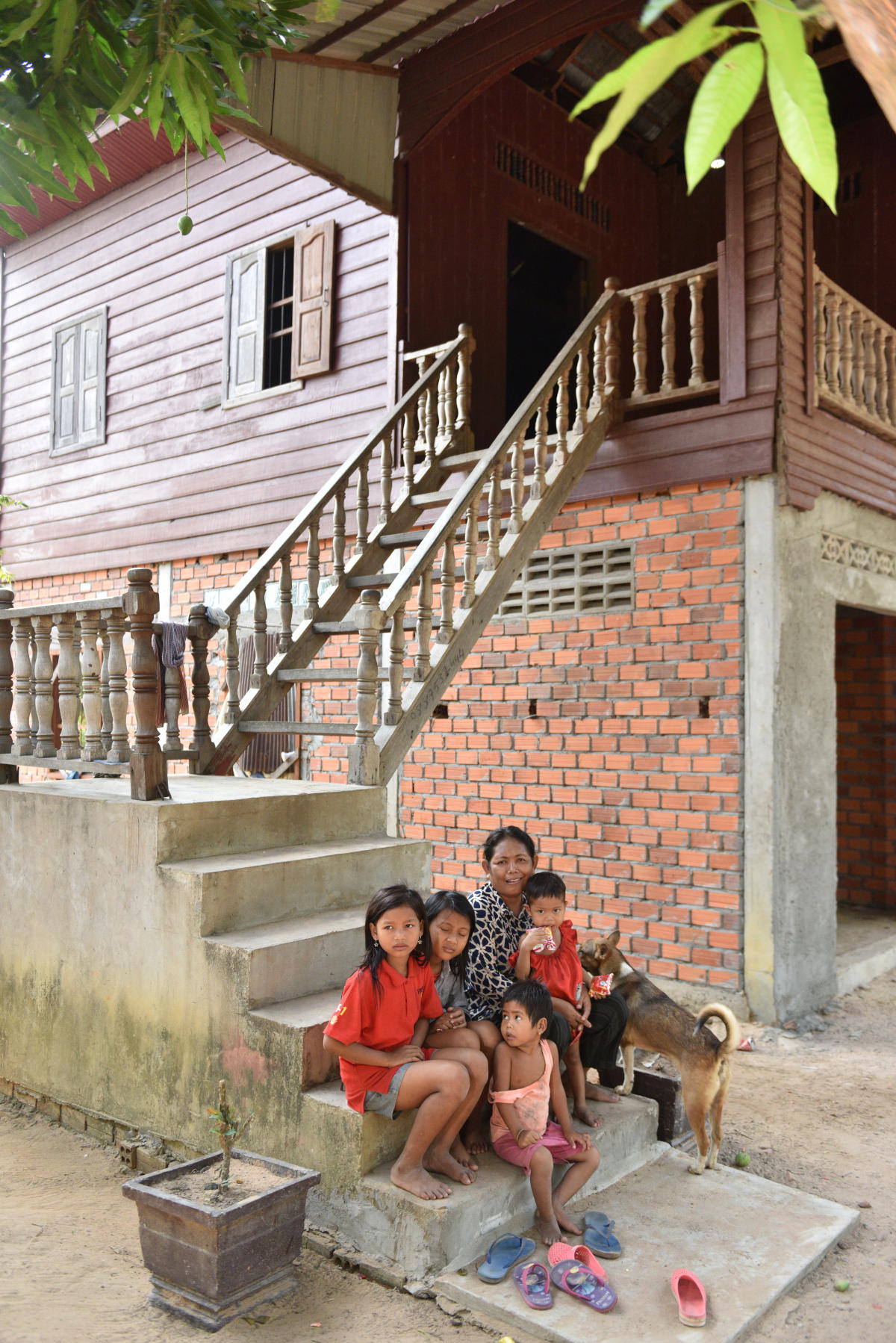
The last visit was to a young mother who was given a house equipped with a toilet, which means she no longer has to relieve herself in the fields the way most villagers do, Neat noted matter-of-factly. In her own time, the woman weaves small baskets using palm leaves and receives US$0.10 for each piece. Due to the material used, her monthly earnings vary largely depending on the weather, but on average amount to US$40.
I found myself imbued with a range of emotions towards the end. Firstly, melancholy. It’s always disheartening to realise how disparate lives on the same planet can be.
Secondly, awe, both at the villagers’ ease of contentment and at the foundation’s generosity. After all, it is one thing to hear about change and another to observe its impact.
Finally, curiosity. Running a foundation is no picnic. What drives Bill Bensley and Sokoun Chanpreda, co-owners of the Shinta Mani brand, to channel their resources and revenue into improving the lives of impoverished Cambodians? What other programmes do they offer that help the locals turn their lives around? More importantly, how can you and I contribute to this cause?
COMMUNITY & CONSERVATION
Bensley is an acclaimed American architect, landscape architect, and interior designer that has designed more than 200 resorts, hotels, and private residences in over 30 countries. Hospitality brands he has worked with include Four Seasons, Rosewood, and JW Marriott, and his avant-garde design inclinations have earned him the “Willy Wonka of hotel design” moniker.
While his charitable efforts in Cambodia began in the 1990s, it was only after meeting the Cambodian businessman Chanpreda that “things really took shape”, Bensley recounts.
It all started in 2003, when Chanpreda founded Shinta Mani Angkor, now an upscale boutique hotel in Siem Reap, which at the outset was a modest guesthouse. In 2004, he established Shinta Mani Foundation to empower local communities through education and healthcare, among other initiatives. He met Bensley after engaging his services, and the duo decided to join forces on Shinta Mani after recognising a shared vision for social responsibility.
Today, Shinta Mani has three properties under its belt. Apart from Shinta Mani Angkor, there is also Shinta Mani Wild, which opened in 2018 in the Cardamom Mountains two hours from Phnom Penh; and Shinta Mani Mustang, which opened in Jomsom, Nepal, in 2023.
The purpose of expansion has been clear from day one, Bensley says. “For me, the thrill isn’t in fluffing pillows or creating another pretty hotel. It’s in knowing that hospitality can be a tool to conserve wildlife, protect nature, and give communities a hand up, not a handout.
“At this stage in my life, I don’t just want to design unique hotels—I want them to do good, to have meaning, to leave the world better than we found it.”
In addition to clean water projects, medical outreach, and micro-loans for small businesses, the Shinta Mani Foundation is also deeply involved in wildlife conservation. Shinta Mani Wild, for instance, sits on a 350-ha tract once earmarked for logging and mining, which Bensley and Chanpreda acquired to prevent further devastation.
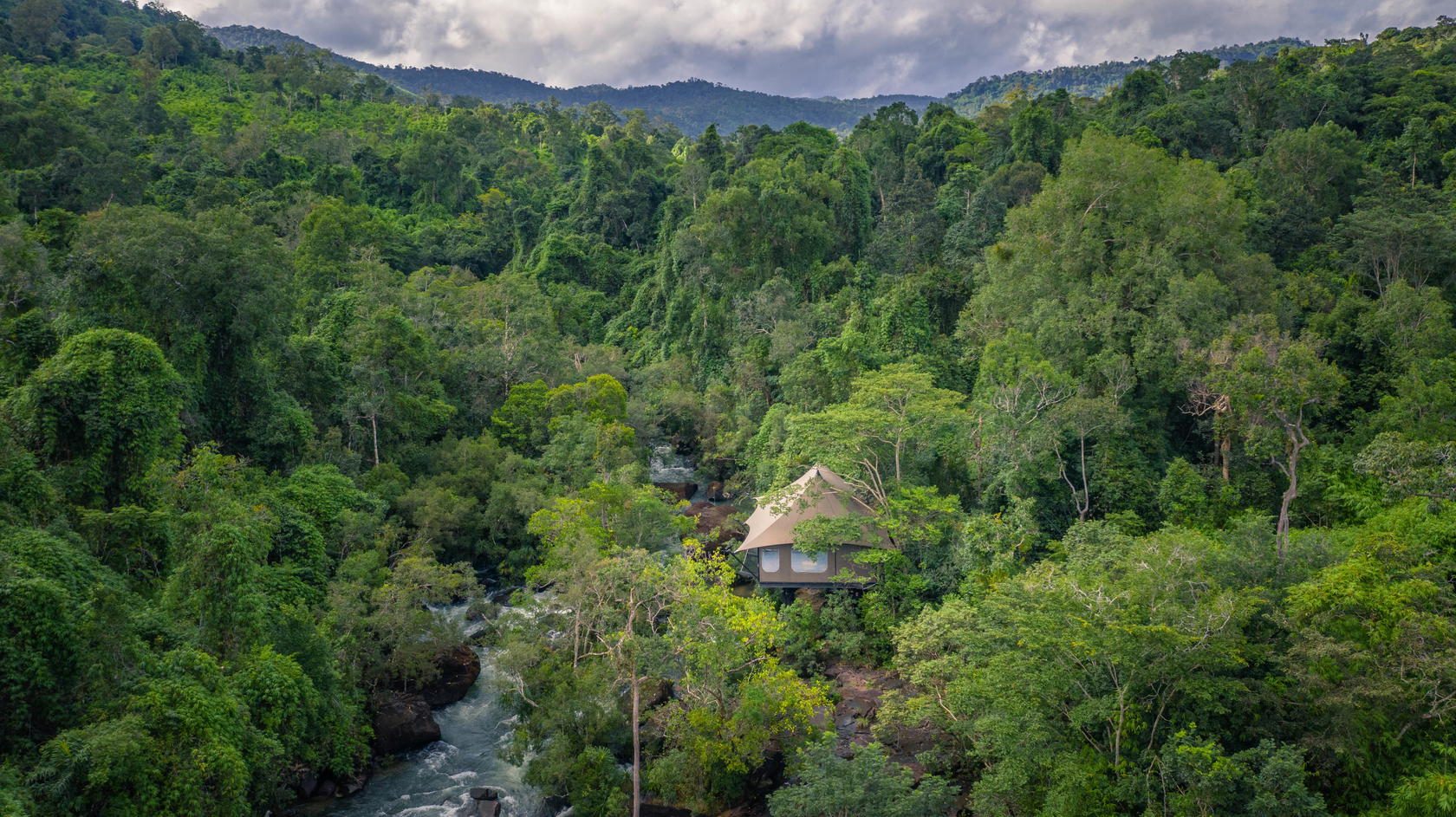
The foundation also supports the NGO Wildlife Alliance, enabling its representatives to continue guarding the area against poachers and illegal loggers.
As many communities in the Cardamom Mountains have long relied on poaching to survive, Shinta Mani Wild offers an alternative through employment on the property. Locals are trained in hospitality, wildlife tracking and rangering, and stable jobs give them a stake in something larger than themselves.
“When people see that their livelihoods, their families’ futures, and the health of their forest are all intertwined, incentives naturally shift. Education, opportunity, and pride in protecting their own environment are far more powerful than punishment or coercion,” Bensley makes plain.
“It is profoundly moving to witness former poachers becoming protectors, guides, and conservation ambassadors. That truly is the soul of Shinta Mani Wild.”
The Shinta Mani Foundation also runs a hospitality school that awards scholarships to underprivileged Cambodian youth. While it receives some 110 to 150 applications every year, only 35 applicants are selected to join the programme.
Those admitted receive comprehensive support, including accommodation, uniforms, study materials and life insurance, as well as rice allowances, bicycles and a modest monthly stipend to support their families
In addition, students may choose from six specialisations—front office services, food and beverage, maintenance, spa therapy, culinary arts and housekeeping—and are guaranteed employment upon graduation, either with Shinta Mani or at leading hotels across Cambodia. Some graduates have even gone on to pursue careers overseas.
Although based in Bangkok, Bensley has never missed a graduation. “My heart swells with pride to see these young adults graduate and be able to support themselves and their families,” he says. “This is a part of the vision to use hospitality as a force for social good.”
A MAJOR FUNDRAISER
While Bensley’s role as co-owner and director of Shinta Mani spans vision and oversight—from creative direction and operational strategy to community engagement and sustainability initiatives—he also contributes in very tangible ways. A good portion of Shinta Mani Foundation’s funds are raised through the sale of his paintings.
Smaller pieces can sell for a few thousand dollars while larger, more intricate pieces can command six figures, collectively raising between US$400,000 and US$500,000 for the foundation each year.
Apart from the Bangkok Bensley Studio, they are also currently available at Bensley Shinta Mani Angkor, Four Seasons Koh Samui, and InterContinental Danang. The Bensley Outsider Gallery’s website also features a curated selection.
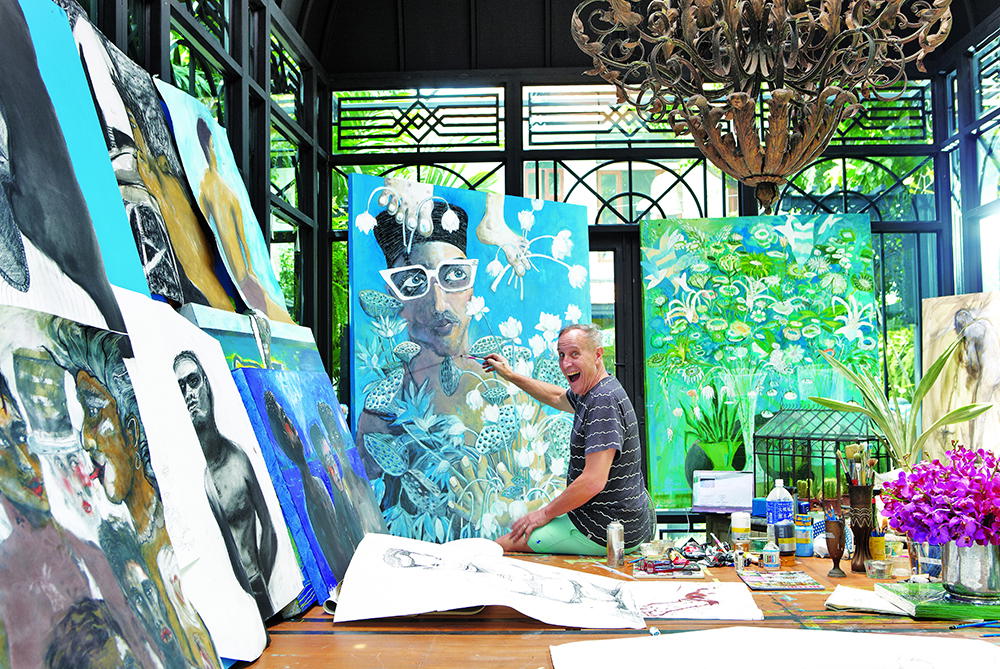
Last year alone, Bensley staged three separate exhibitions at Four Seasons Bangkok’s Art Space by MOCA. The first funded scholarships for hospitality school students; the second supported initiatives providing milk for infants, clean water, sanitation and housing; and the third focused on conservation and wildlife protection.
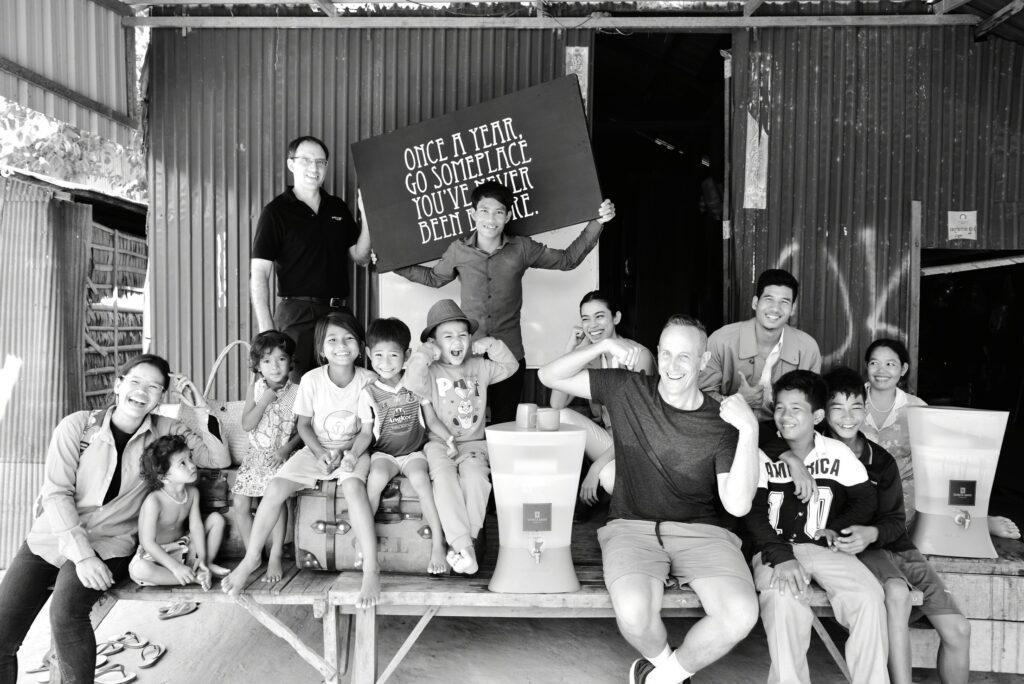
At a previous exhibition held at River City Bangkok, each piece of art sold could fund a house for a Cambodian villager. Around 180 families now live in these homes as a result of donations through such events, Bensley says.
“While modest, these homes are not merely structures; they are safe, bright spaces where families can live with dignity and children can flourish. I often think of each brushstroke as a tiny brick, and my studio as a small engine for real change—one painting at a time.”
In his experience, a common misconception about foundation work is that it’s all glamour and handshakes. The truth, however, is that it’s a gruelling endeavour. “People sometimes imagine that writing a checque or funding a project instantly transforms lives.
“Although donations are vital to getting the work moving, real impact requires painstaking, intimate work. It’s about relationships, trust, and tuning into the rhythm of the community you’re serving. You can’t parachute in and expect change overnight.”
The belief that aid in Cambodia just involves money is also misguided. In his opinion, what Cambodians need most, and what Shinta Mani Foundation aims to provide, is empowerment.
“It’s about skills, opportunities, dignity, and sustainable improvements, not handouts. Too often, outsiders overlook how resilient, resourceful, and proud Cambodians are. They’re not passive recipients, they’re collaborators.”
Bill Bensley on lending a hand
There are several ways to support Shinta Mani’s cause beyond staying at the hotels. Donations help the foundation continue building homes, schools and community facilities, while partnerships with artists, businesses and travellers who are willing to contribute their time, skills or creativity also play a vital role. Purchasing Bensley’s artwork, engaging with the foundation’s initiatives and raising awareness are small but meaningful gestures that collectively make a real difference.
Although now 66, Bensley shows no signs of slowing down, professionally or philanthropically. “I feel restless whenever I’m not sketching, designing, or exploring a new corner of the world. My work keeps me alive. It’s never about deadlines or accolades, but about curiosity—seeing a space, landscape, or a concept and asking, ‘What if…?’”
While the Foundation has plans in the pipeline to extend sustainable livelihoods for the local communities, strengthen wildlife protection, and expand educational programmes, the focus is not on rapid expansion, but on thoughtful growth that respects the land, the culture, and the people, he stresses.
Even so, he continues to believe in goodwill, at a time when the world feels increasingly suspicious. “Altruism—true generosity—creates trust, builds resilience, and enables a society to thrive. The joy of giving, empowering others, watching someone’s life genuinely improve because of your efforts—that is timeless.
“It makes all the challenges worthwhile, and it’s the right thing to do!” This is what keeps me building, designing, and dreaming.”