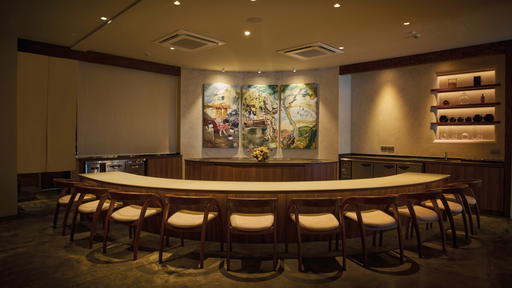

Between sips of warm shiso tea, I relax into bliss at Zeniya Singapore, the only international outpost of two-Michelin-starred Zeniya Kanazawa. The kaiseki restaurant at Shangri-La Singapore is on the 24th floor. It’s a picture of zen with tactile wood furnishings and a single, poetically placed vase of seasonal blooms just behind the chef’s counter.
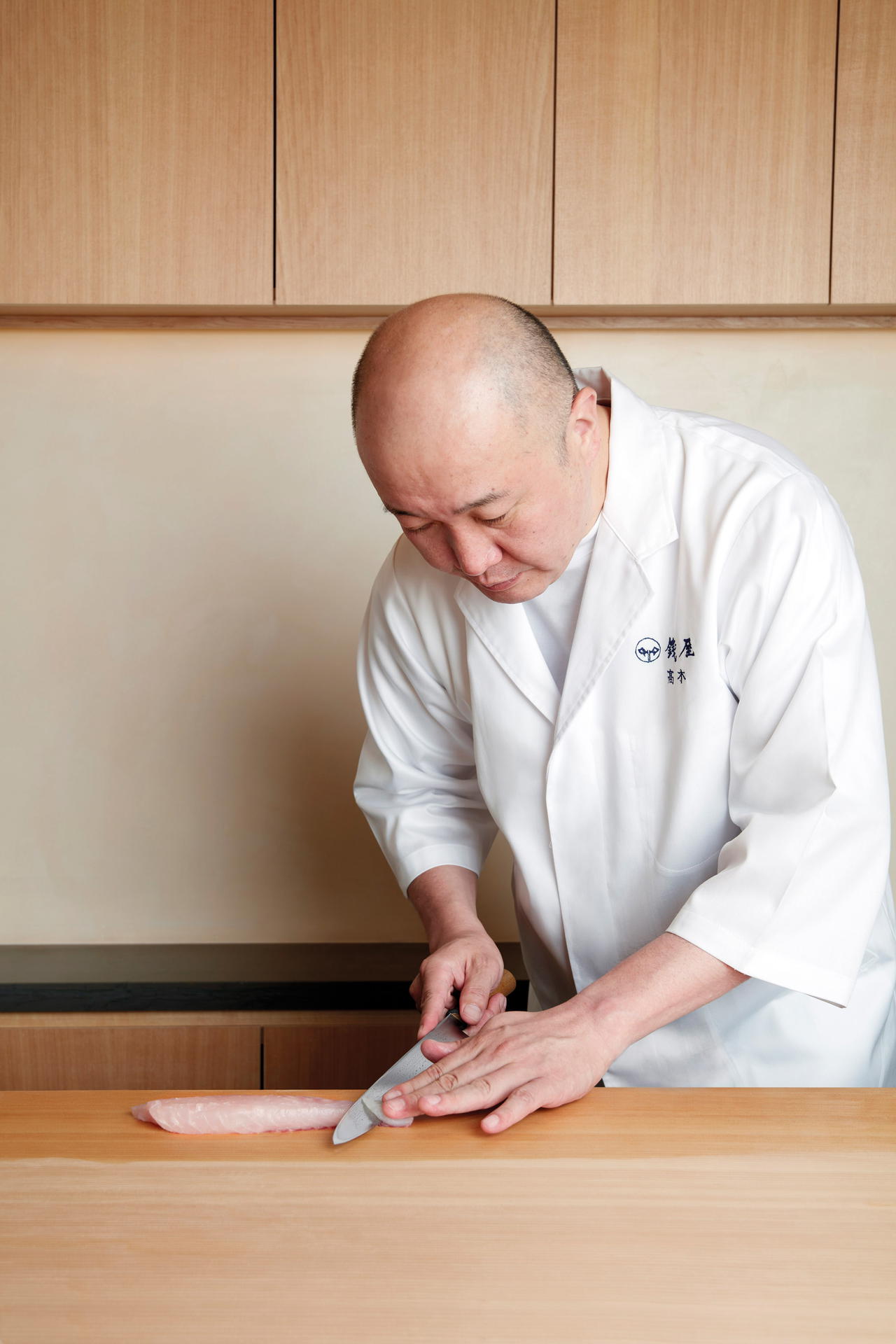
Seasonality and sense of place are key tenets of kaiseki dining. While the restaurant is rooted in the ethos of Kaga cuisine, chef-owner Shinichiro Takagi explains that it’s also about honouring its long-standing history. Besides cuisine, hospitality, tradition, artistry, and culture are also important.
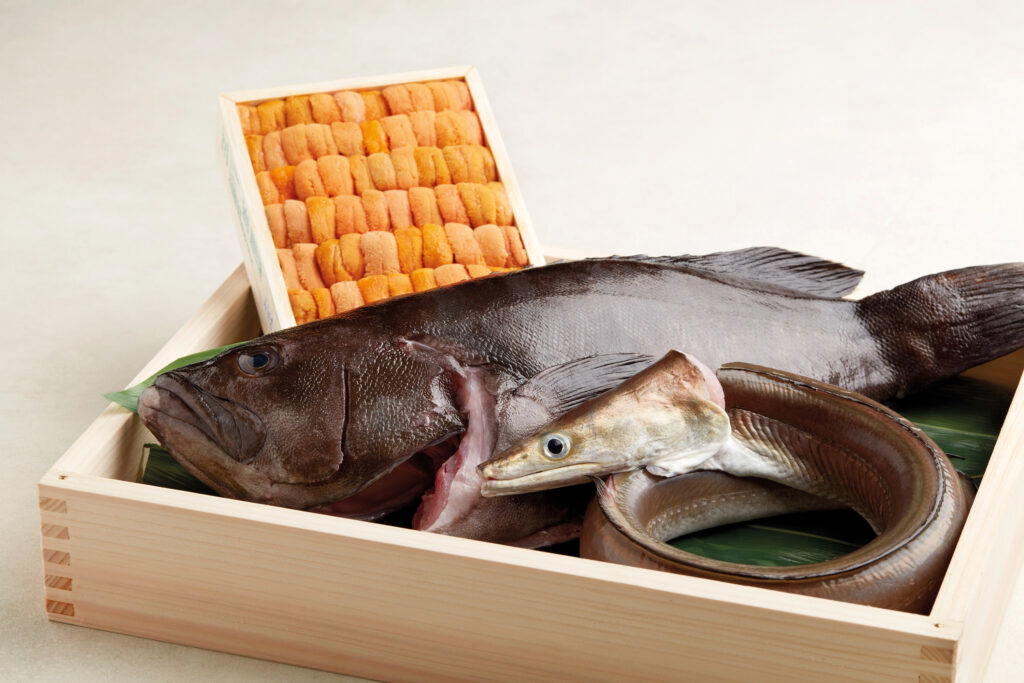
Whenever possible, Takagi sources produce from Kanazawa, the capital of Ishikawa prefecture, itself. Surrounded by green pastures, scenic mountains, and abundant rivers and sea, Kanazawa is blessed with a bounty of fresh produce.
Dining at Zeniya is an education in the region’s prized produce. Before my meal, I’d never heard of kuchiko or sea cucumber ovaries—a rare delicacy from Noto Peninsula, about a 90-minute train ride from Kanazawa. Tempura-style, the creamy kuchiko has a briny flavour that doesn’t need seasoning.
An outdoor garden pays homage to the design of its sister restaurant in Kanazawa, and Takagi handpicks the heritage tableware used here. “We carefully present dishes on plates that enhance both their appearance and the seasonal theme. So, every meal is different.”
Guests who expect the same dining experience as its Kanazawa restaurant will be in for a surprise, says Takagi. He wants Zeniya Singapore to stand on its own.
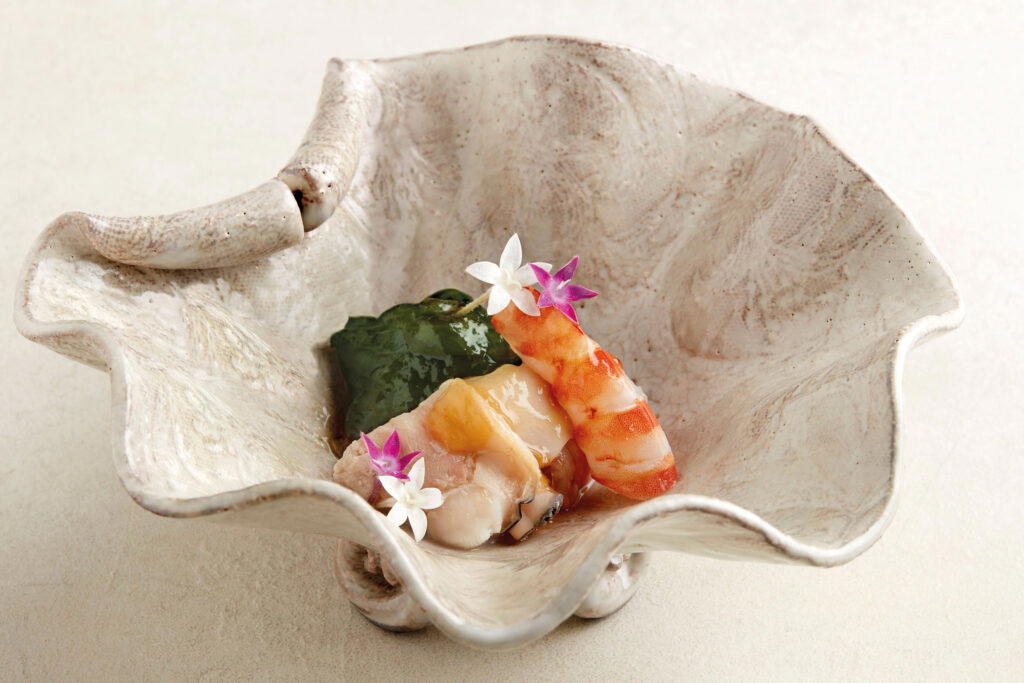
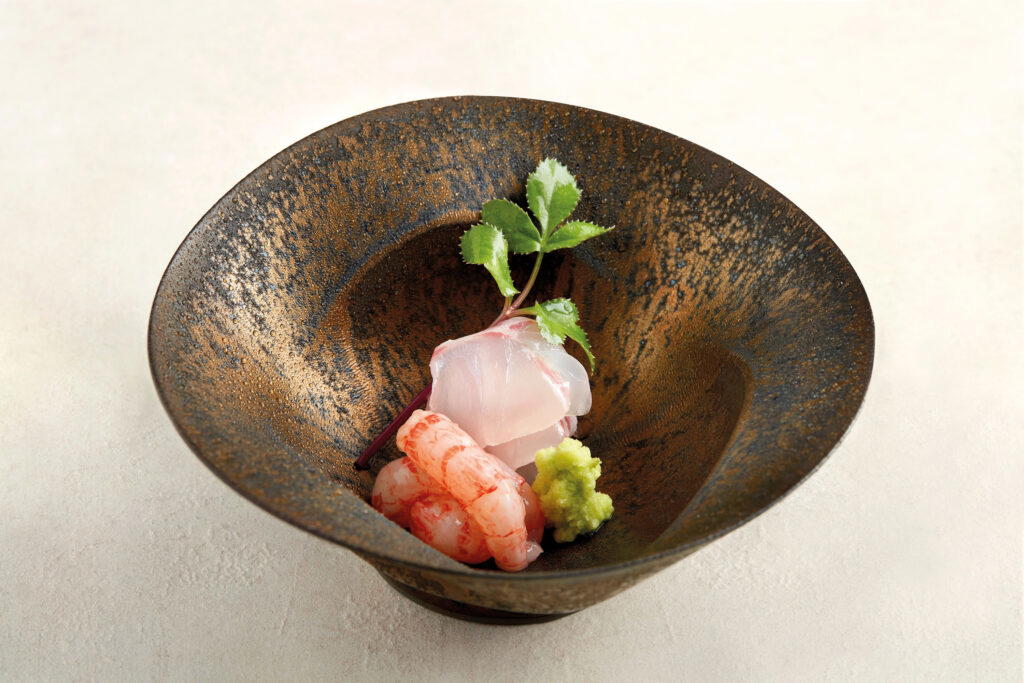
The first course, sakizuke, features a medley of vegetables and seafood. The sweet and juicy Japanese tiger prawns pair wonderfully with the grassy and nutty kinjiso, one of the 15 official Kaga vegetables.
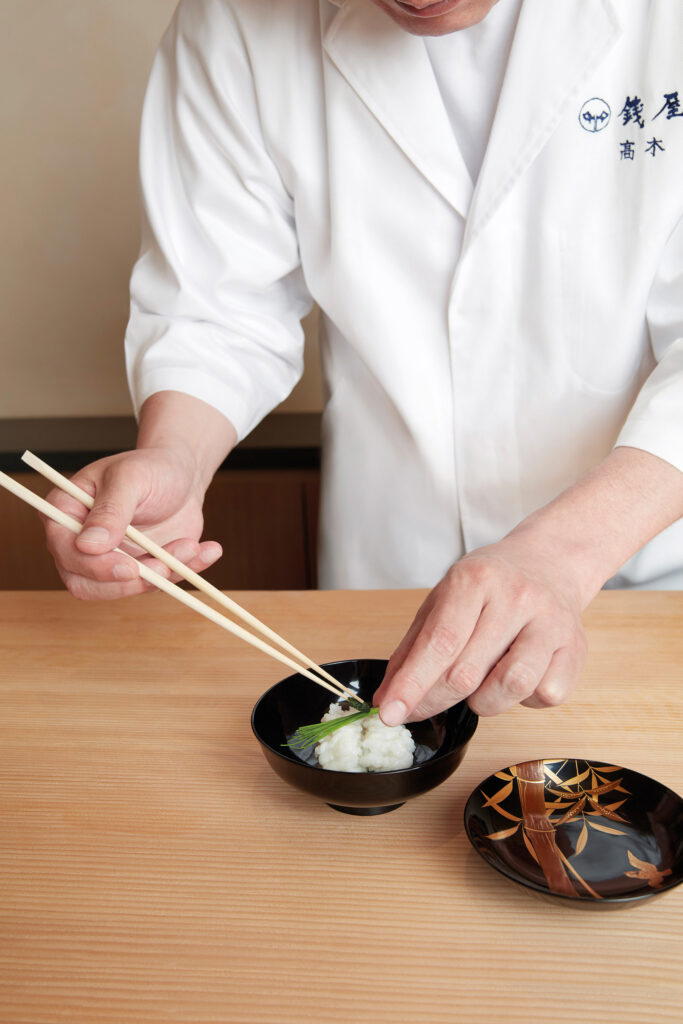
While savouring the sheer variety of the summer menu, I couldn’t help but admire the exquisite vessels holding the dishes. The second course, hamo or conger eel soup, arrrives in a simple black lacquer bowl that reveals an intricate bamboo pattern etched in gold as the lid is lifted. These bowls have been in use for over 50 years.
Despite Takagi’s contemporary approach to his cuisine, some of his dishes are enduring favourites from his father’s generation. A wonderful example is the yakimono nodoguru or blackthroat seaperch, which is only available for six months in a year. A naturally fatty fish, the nodoguru is topped with a generous serving of crunchy noodles to mimic crispy skin.
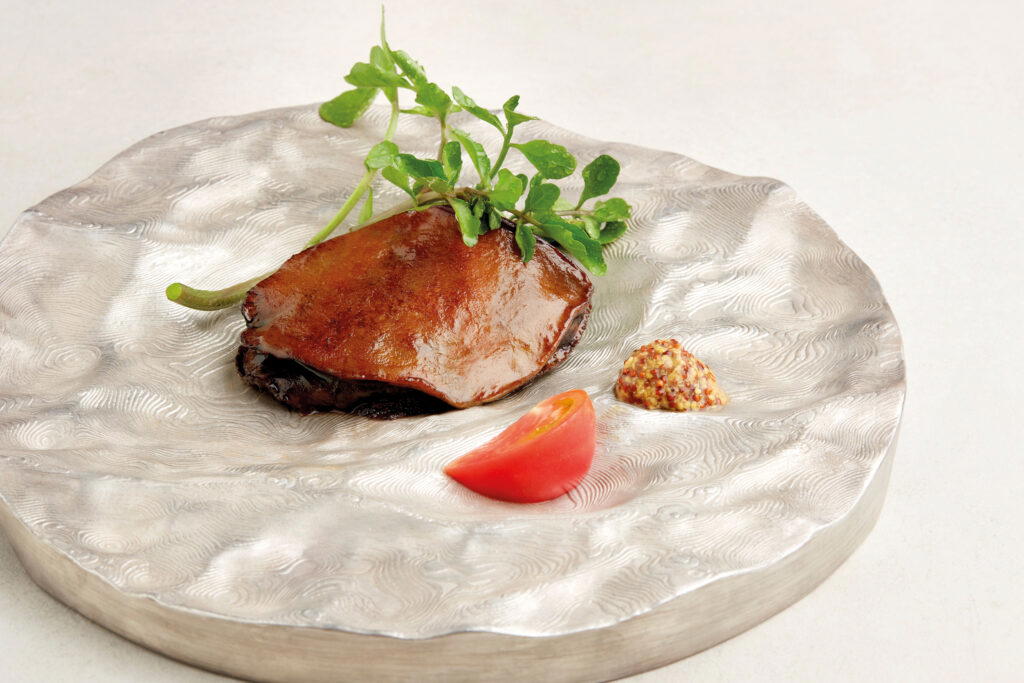
Awabi, also known as wild abalone, is another crowd pleaser. It is gently simmered for at least 15 hours, then steamed, and sautéed. Takagi serves it atop a slice of winter melon garnished with freshly grated old ginger and pink pepper. He then pours the bekkoan sauce over it. Made from dashi, light soya, mirin, and kuzu starch, the sauce symbolises the colour of the Japanese sea turtle and its everlasting life.
Takagi’s decision to expand his work beyond Japan was spurred by a serendipitous event. In 2008, he had the honour of serving his creations at a dinner hosted by the Japanese ambassador in New York.
His food impressed the guests so much that some of the top chefs in attendance invited him and his brother to their restaurants during their stay there. “I noticed a difference in respect for food culture and the social reputation of chefs between Japan and other countries. It was the catalyst for my decision to work outside of Japan.”
From an early age, Takagi was responsible for Zeniya Kanazawa, which helped him discover a love of cooking that was never there before. “I never wanted to be a cook or chef.” Then his father passed on. Despite this, he navigated the steep learning curve of running a kitchen without much experience and eventually found fulfilment as a chef.