
In 1926, Rolex introduced a timepiece that became the blueprint for the modern wristwatch. At the time, pocket watches were the benchmark for precision, while wristwatches had yet to earn full credibility as reliable timekeepers.
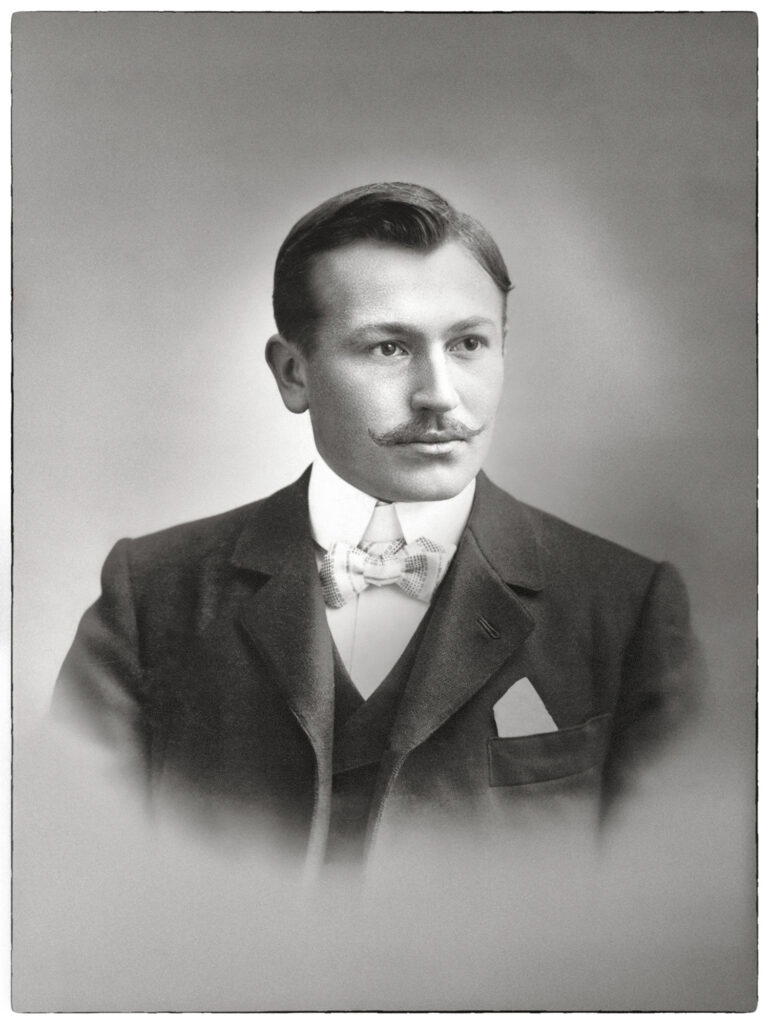
Often dismissed as ornamental, they were considered too small, too exposed, and too fragile for serious daily use. They also had delicate movements that were vulnerable to dust, moisture, and wear. Yet, where others saw limitations, Hans Wilsdorf, Rolex’s founder, foresaw the future.
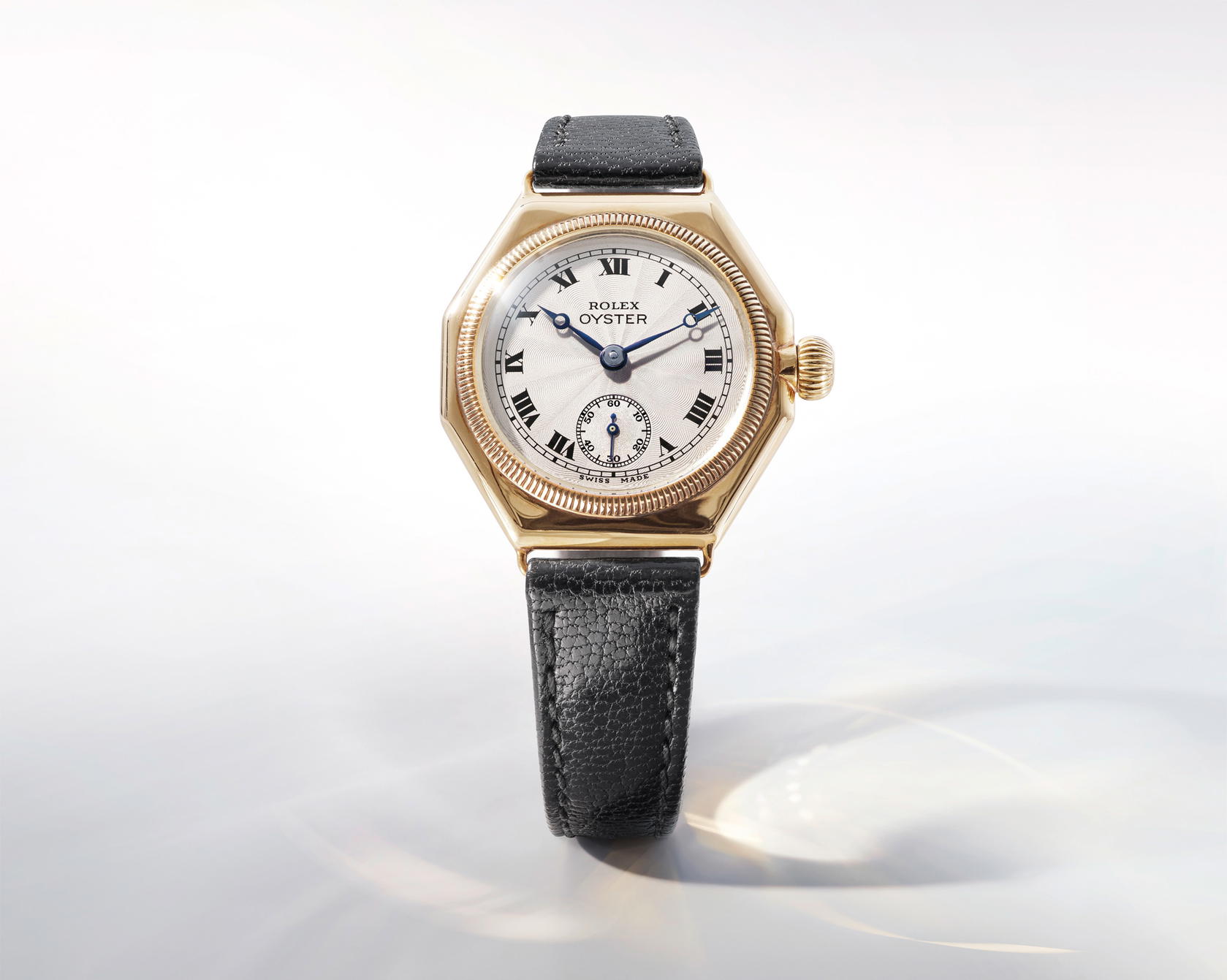
His wristwatch symbolised the modern world: compact, practical and perfect for mobile lives. As the world’s first waterproof wristwatch, the Rolex Oyster was conceived around a revolutionary yet simple notion: a watch that could accompany its wearer anywhere and withstand water, dust, heat, cold, and the demands of everyday life while protecting the precision of its movement.

This principle remains central to Rolex a century later. Even its name captured the concept perfectly. Like an oyster, it could be submerged in water, seal itself against impurities and protect its precious mechanism. The precision of its engineering even matched the poetry of its name.
Wilsdorf achieved waterproofness through a screw-down design—bezel, caseback and winding crown—creating the first hermetically sealed Rolex Oyster. The breakthrough also protected the movement from dust, moisture, and other contaminants, preserving accuracy over time.
A more secure case meant a more reliable watch, and reliability was central to Wilsdorf’s philosophy. To prove his claims, Wilsdorf embraced a philosophy the brand has consistently maintained: proof by trial.
In 1927, British swimmer Mercedes Gleitze swam the English Channel wearing a Rolex Oyster. After more than 10 hours in freezing water, it emerged in perfect working order. The feat captured headlines and proved the Oyster could withstand conditions previously unimaginable for a wristwatch. This landmark moment solidified Hans Wilsdorf’s conviction that excellence is demonstrated in the field, over time and under pressure.
Rolex later entrusted Oyster watches to various explorers, scientists, athletes, pilots, seafarers, mountaineers and divers who put Rolex watches to the test in the living laboratory of our world. Proving the Oyster’s waterproofness was more than a claim, Gleitze is widely regarded as the brand’s pioneer Testimonee—the first in a long line of exceptional ambassadors, whose achievements demonstrate a Rolex watch’s performance beyond the manufacture.
A few years later, the invention of the Perpetual rotor, a self-winding system with a free rotor, patented in 1931, provided the Oyster with an inexhaustible source of energy. The self-winding mechanism harnessed the wearer’s natural wrist movements to wind the mainspring. Although the breakthrough eventually became an industry standard, it represented something far more significant then.
In addition to being waterproof and precise, the Oyster had also become autonomous. Wearers no longer had to wind their watches every day, and the movement benefited from a more consistent energy supply. As a result, the Oyster became the Oyster Perpetual.
This combination of precision, waterproofness, and self-winding would shape the future of mechanical watchmaking. While many of these qualities are now considered basic requirements in a modern wristwatch, they were once unprecedented, and Rolex paved the way for them. From the original Oyster concept emerged an entire family of watches designed for specific purposes. Mountaineering and adventure inspired the Explorer. The Submariner plunged into an ocean’s depths as one of modern watchmaking’s definitive dive watches.
Additionally, the GMT-Master was designed for pilots crossing time zones, while the Cosmograph Daytona channelled motor racing precision and speed. In contrast, the Yacht-Master, embodied the Oyster’s nautical heritage in a more refined, sporting form. Though each model was created for a specific purpose, they all shared the same DNA of robustness, legibility, precision, and reliability.
This is why the Oyster’s 100th anniversary is more than a tribute to a single watch. It celebrates a design language, technical architecture, and a mindset that continues to guide Rolex. The Oyster case also formed the foundation for many of Rolex’s most important models, with its clean lines, hermetically sealed construction, and practical elegance giving the brand an instantly recognisable yet endlessly adaptable form.
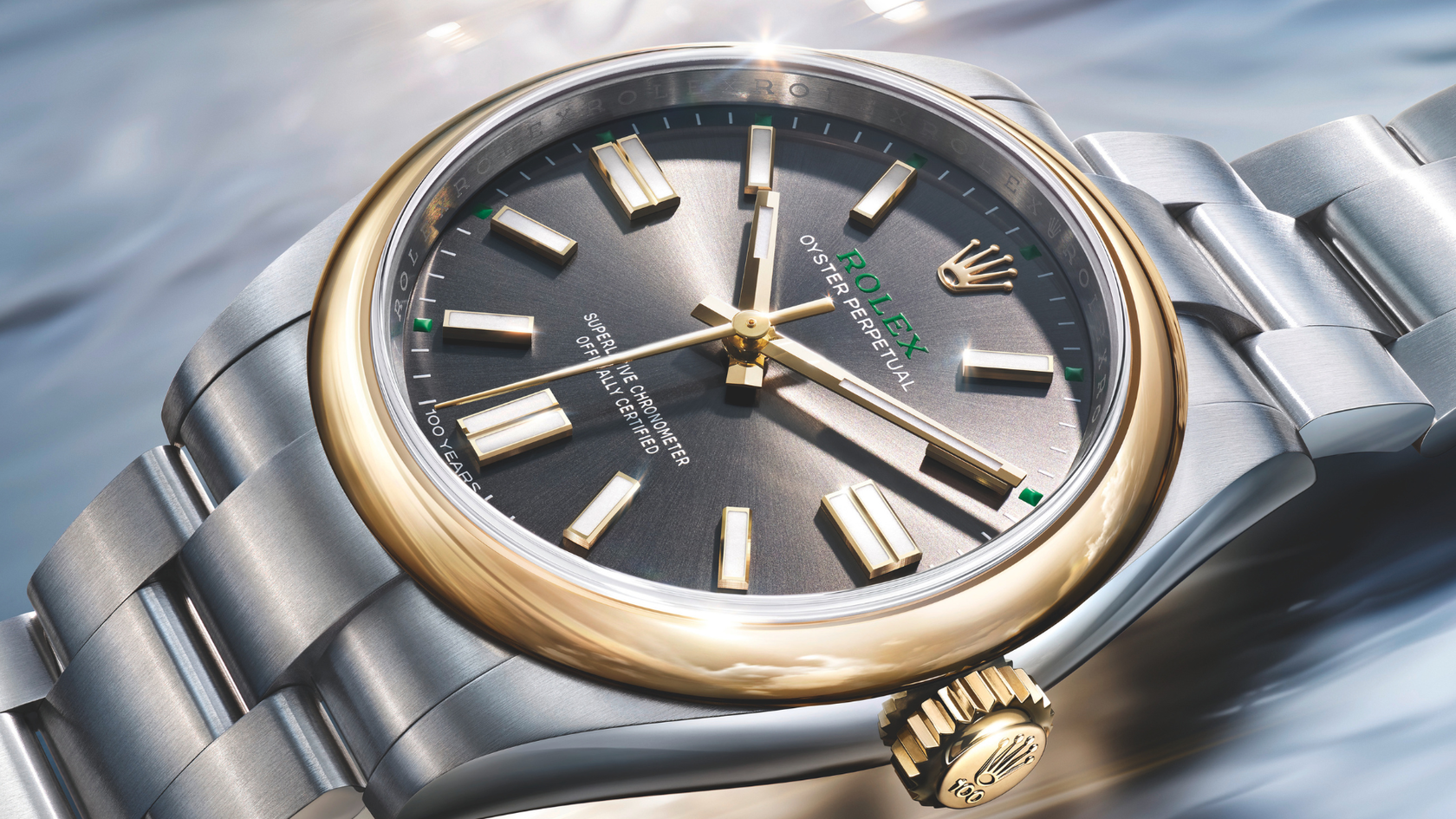
To mark the centenary, Rolex returns to the purest expression of the original idea with the commemorative Oyster Perpetual 41 in yellow Rolesor, featuring a yellow gold bezel and winding crown, an Oystersteel case and bracelet. The slate dial bears the Rolex name and signature green minute-track detailing, with “100 years” at 6 o’clock to replace “Swiss Made”. Even the winding crown marks the milestone with the number 100.
The anniversary also introduces a meaningful evolution of the Superlative Chronometer certification, Rolex’s performance standard for every watch that leaves Geneva. Three new criteria–resistance to magnetism, reliability and sustainability–are now built into the design and manufacturing stages of each timepiece.
They join the four pillars of precision, waterproofness, self-winding and autonomy that have defined the certification since 2015. Validated by independent Swiss entities and marked by the emblematic green seal, the strengthened certification reflects Rolex’s broader definition of excellence today.
That said, the true measure of the Oyster’s significance lies not in its age, but in its relevance. A century on, the challenges that inspired it—accuracy, durability, reliability and practicality—remain the goals every watchmaker pursues. That pursuit has taken the Oyster from the English Channel to the skies, mountains, seas, and beyond—and onto the wrists of generations of wearers.
What began as a waterproof case evolved into something far greater: the foundation of the modern wristwatch. The Oyster didn’t just mark time; it helped define it.