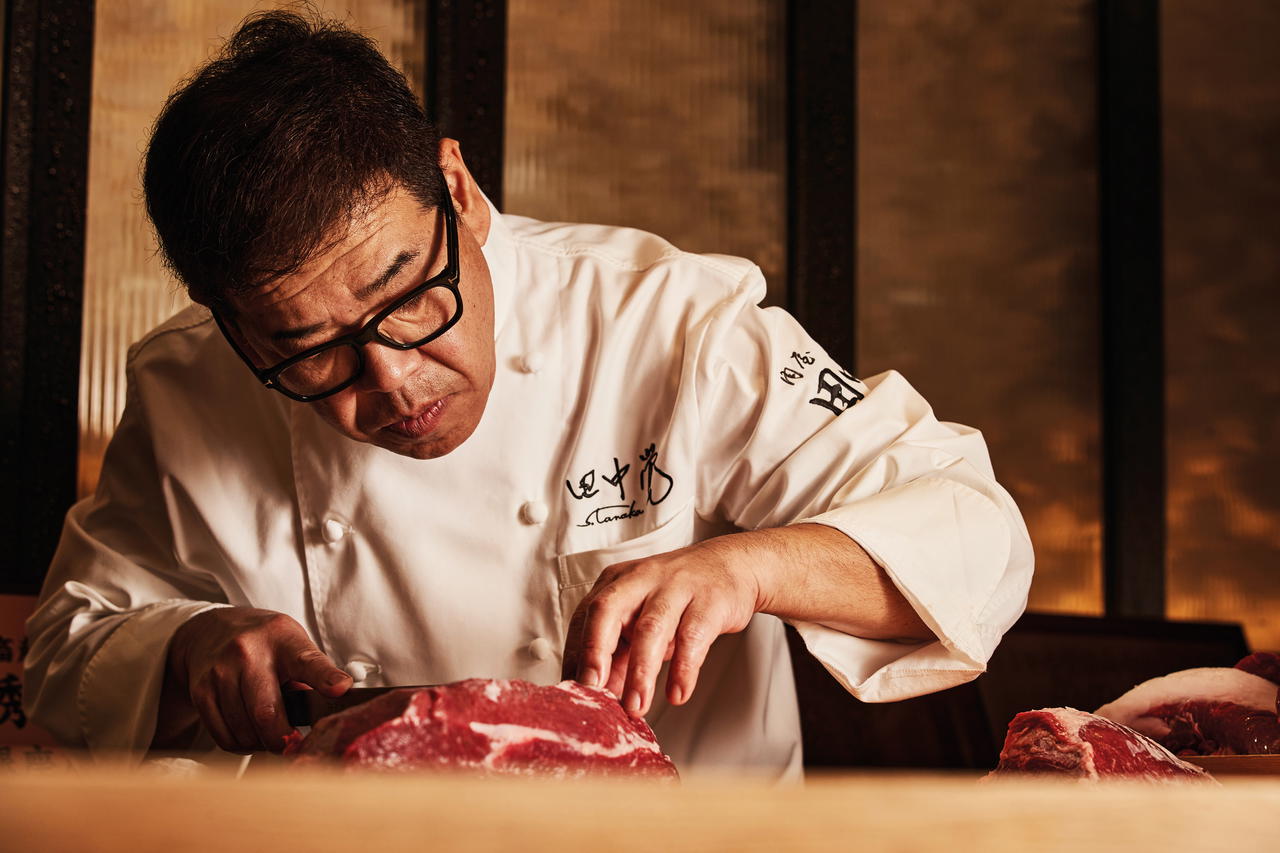
It was 2022, borders had just creaked open after the Covid crisis and, like many others in Singapore, I booked a flight to Tokyo at the earliest opportunity, armed with restaurant reservations for every meal. The last booking, secured through the Mandarin Oriental Tokyo concierge, was Nikuya Tanaka in Ginza—presided over by Satoru “Boss” Tanaka, a third-generation meat master whose kappo discipline is part precision, part spectacle.
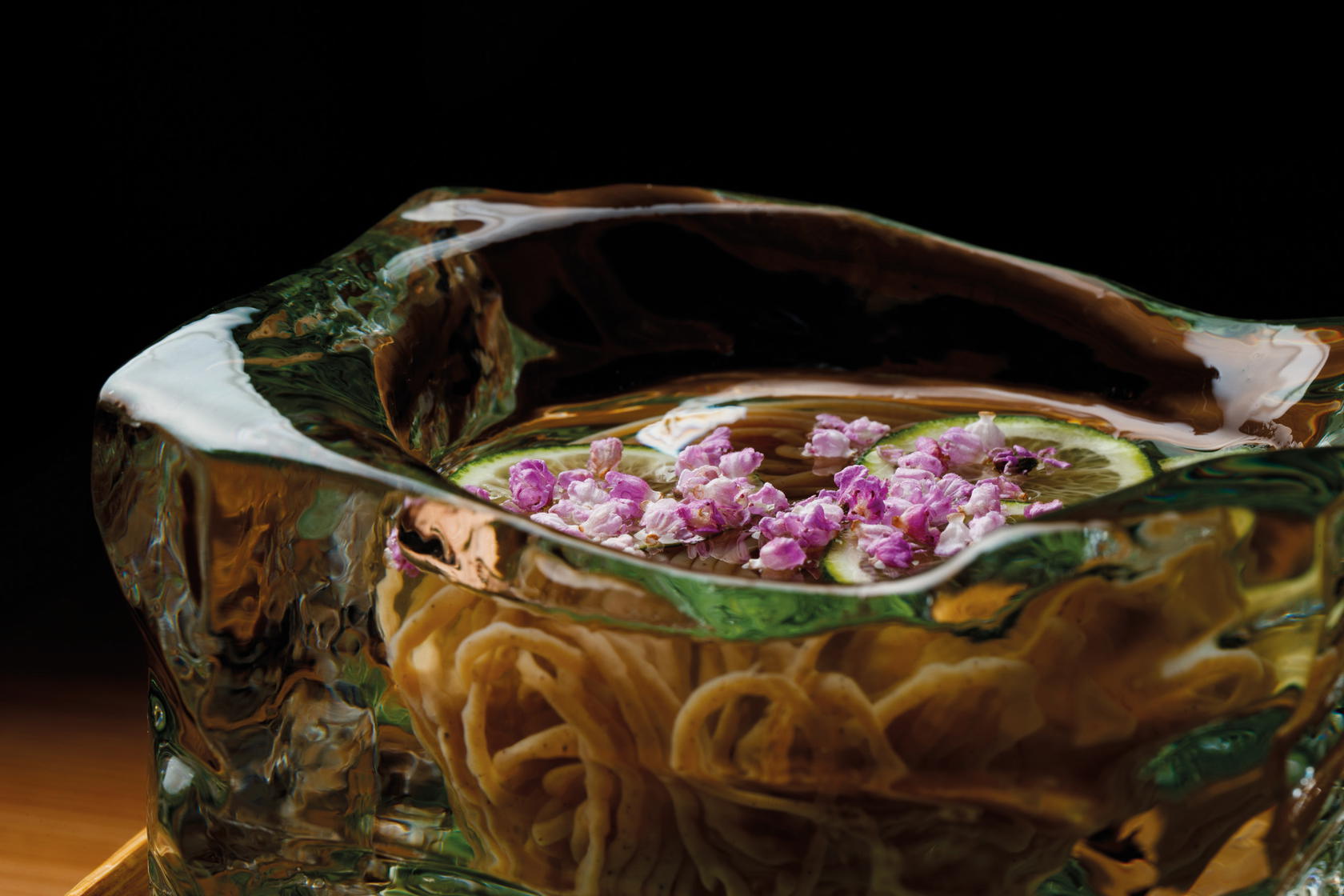
My meal was sublime. Course after course of Kobe beef arrived cooked to exact temperatures. And then there was the dish I still think about—kudzu starch somen served in a hand-carved ice vessel filled with cold bonito dashi infused with sudachi and shiso blossoms.
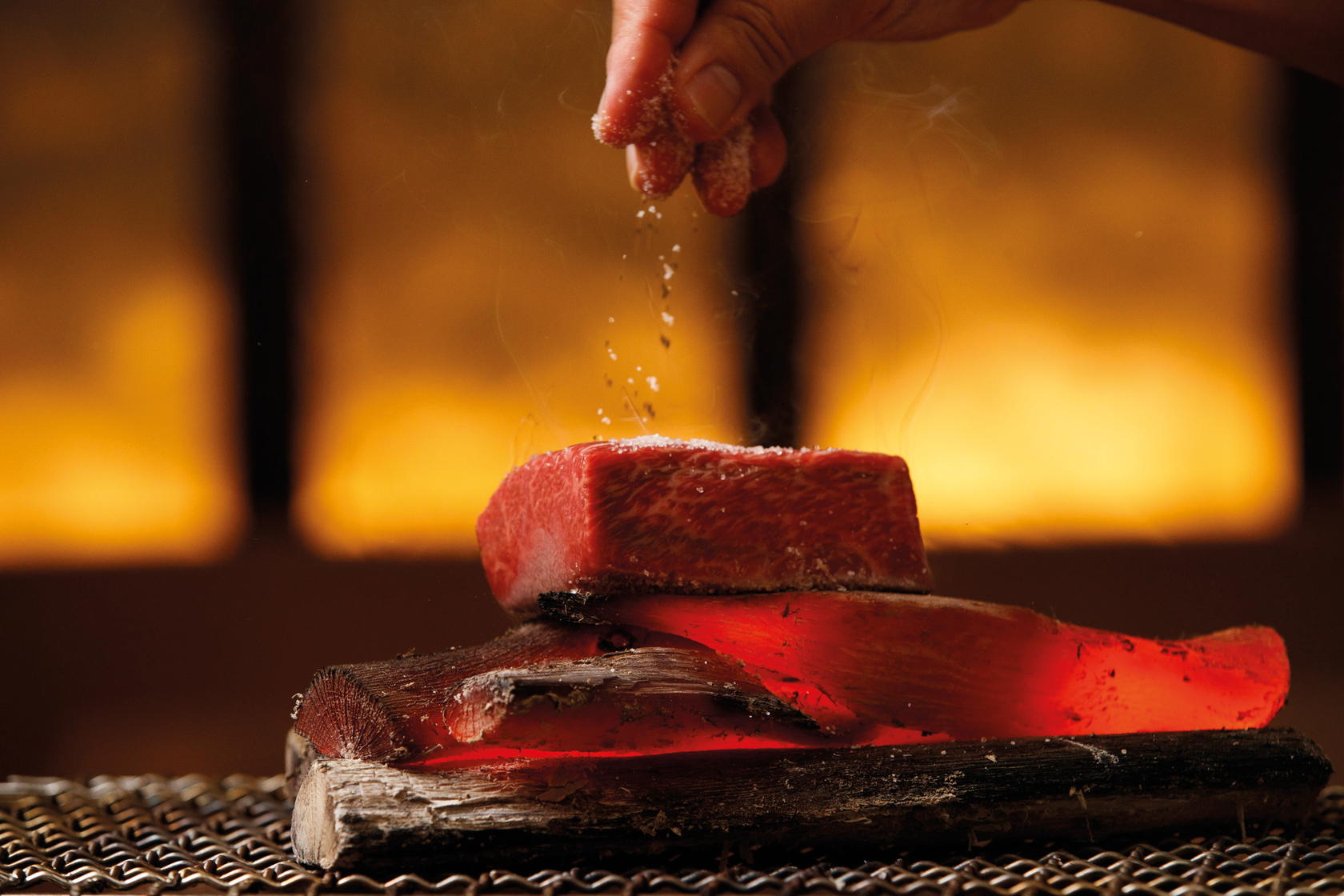
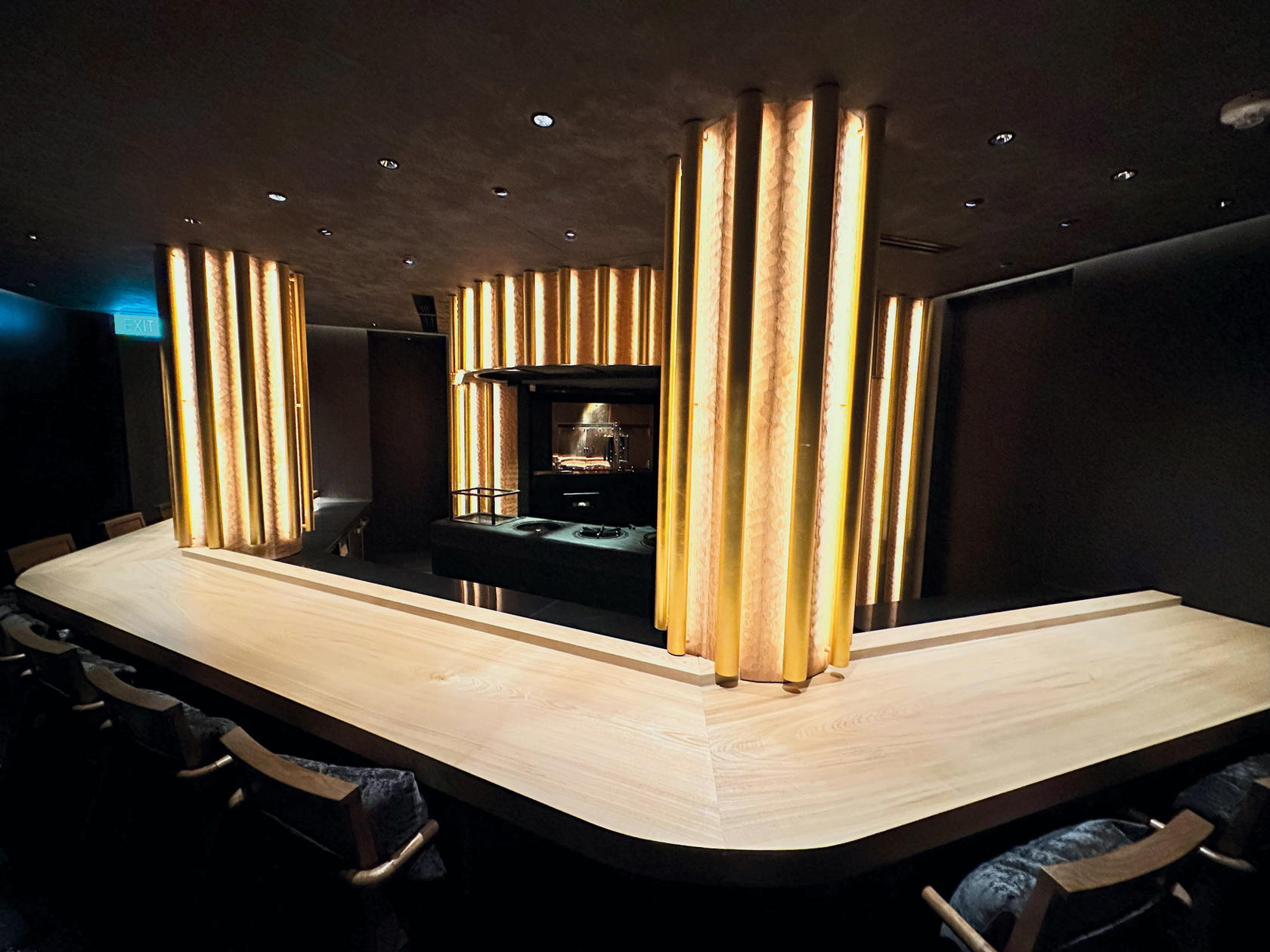
When an invitation to experience his first international outpost in Singapore arrived, I didn’t hesitate. It felt like a chance to test that flawless Tokyo memory against the present. Located on Teck Lim Road, the intimate kappo counter designed by Morita Yasumichi reflects the moody elegance of Ginza: 10 counter seats and a snug five-seat private room draw the eye to the stage—the naguri wood counter under warm light surrounded by threads of binchotan smoke drifting through the space.
It was great to see Tanaka during opening week, still jovial and unhurried, slicing patiently through the Kobe meat and silently directing his sous chefs who will ensure his choreography in Singapore runs smoothly.
What makes Singapore so special? Tanaka says the choice was personal before it was strategic: a Singaporean regular became a friend and then a partner, and urged him to bring the experience here. He obliged, then tailored the logistics to match the cooking.
He does not use frozen beef. Instead, whole meat cattle are flown in fresh from Japan roughly three times a month using a special refrigeration system that never freezes it. Each shipment lasts about a fortnight.
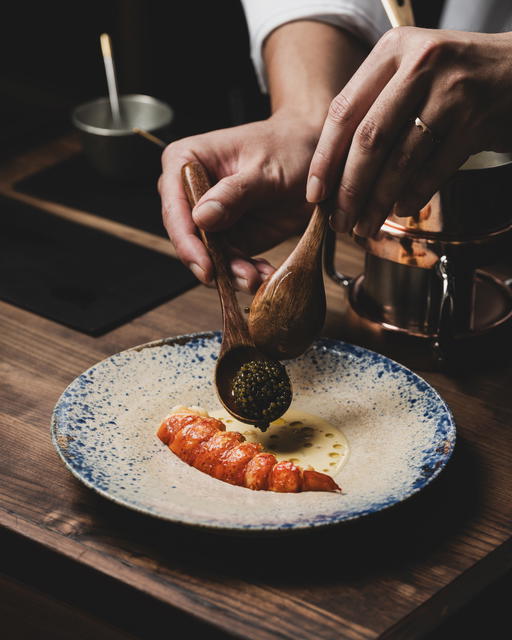
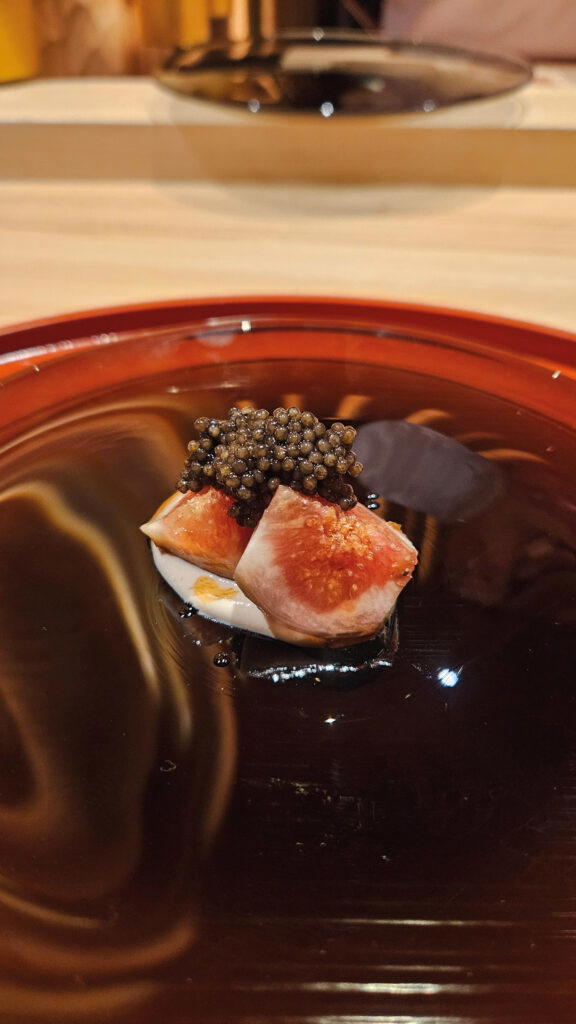
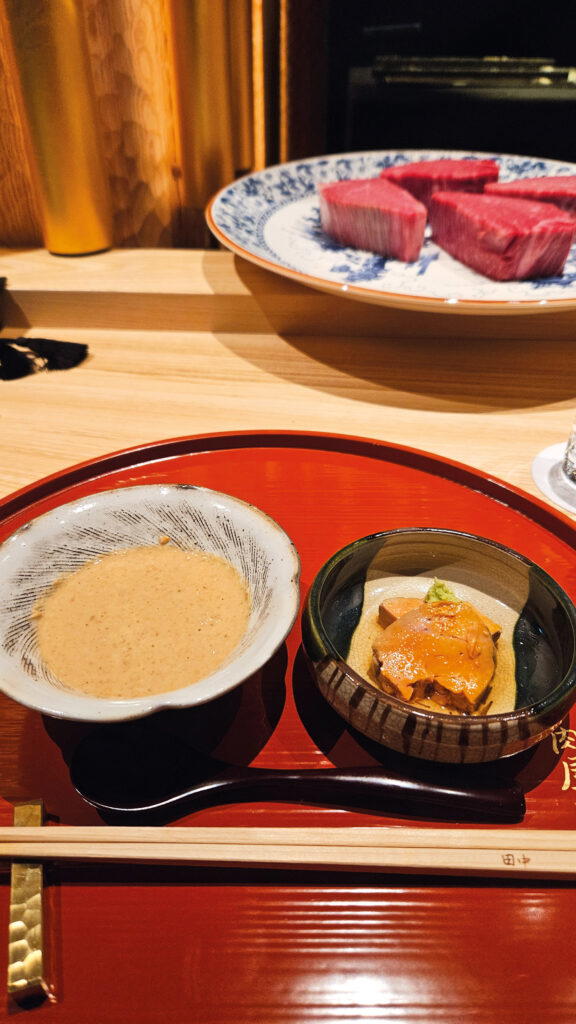
My dinner unfolds like a carefully staged performance. A fig from Aichi arrives glazed with tofu sauce whisked that morning, topped with German oscietra caviar, and brushed with Japanese honey. A gentle opening; sweet, salty, and nutty.
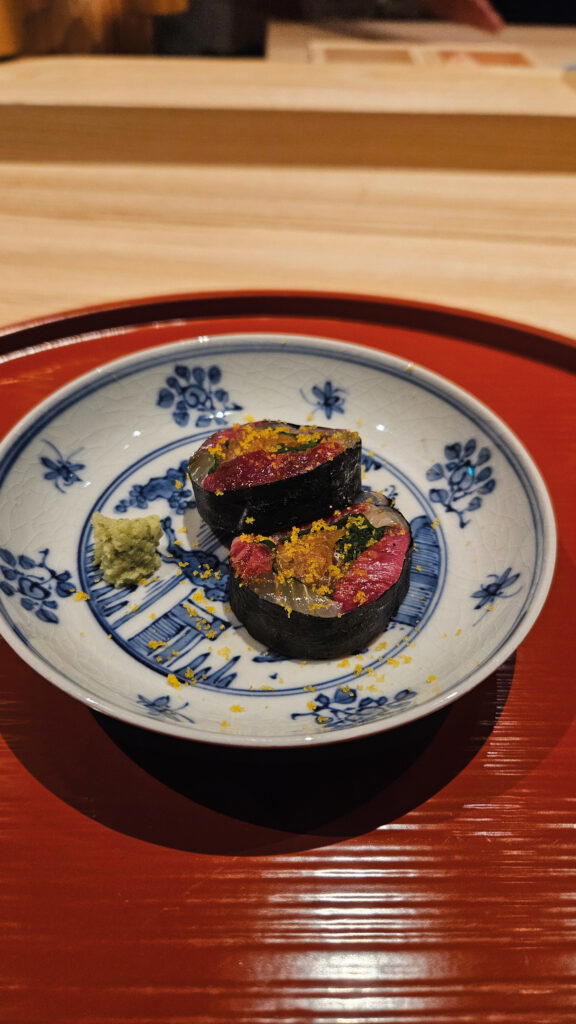
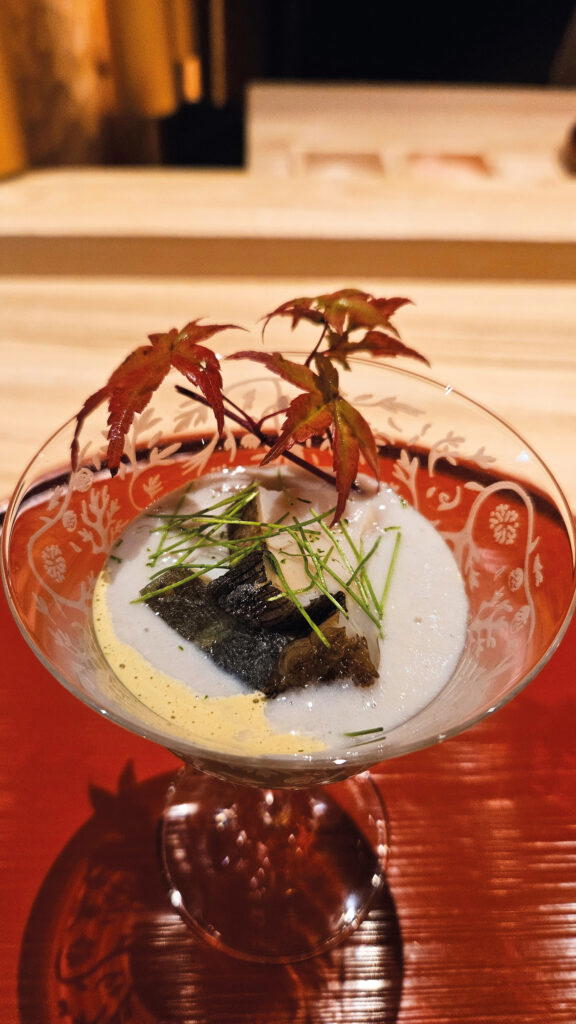
Then his quietly daring version of surf and turf: raw Kobe beef rolled with hirame, dusted with shaved bottarga and framed by a sprig of oba. Next comes Chiba abalone with a silky sauce made from its own milt—creamy, saline, and rounded rather than heavy.
The steak-work, in particular, reflects Tanaka’s heritage. He insists on purebred Tajima cattle, the original source of certified Kobe, and only the females because their fat is silkier and their grain is finer.
In Singapore, his team keeps the whole-animal discipline and lets the cut dictate the methods, including sashimi-style when it’s called for and binchotan when it requires flame, as with his kelp-cured tataki which was seared briefly. Eat it two ways, he says. First with salt and freshly grated wasabi to sharpen the iron and sweetness. Then brushed with soy and a dab of Japanese mustard to boost the umami.
An owan course arrives like an interlude: Hokkaido snow crab served in a clear, almost minimalist broth. The simplicity of this dish is deliberate; Tanaka calls dashi his “soul”. Upon lifting the lid, you inhale steam, sweet crab, and the warm umami of kombu and katsuobushi all at once.
If there’s a highlight, it is the tempura tenderloin. “Remember this?” he asks as he personally hands it to me. I didn’t. I hadn’t tasted it before—and it’s not the sort of dish you’d easily forget. The batter is richer than most for one simple reason: egg yolk, a nod to his childhood.
“Beyond that, there are also a number of secret techniques I’ve refined over the years,” Tanaka says, without elaborating. The result is what matters: a crisp shell that gives way cleanly and meat that yields at the bite, lifted by freshly ground mustard.
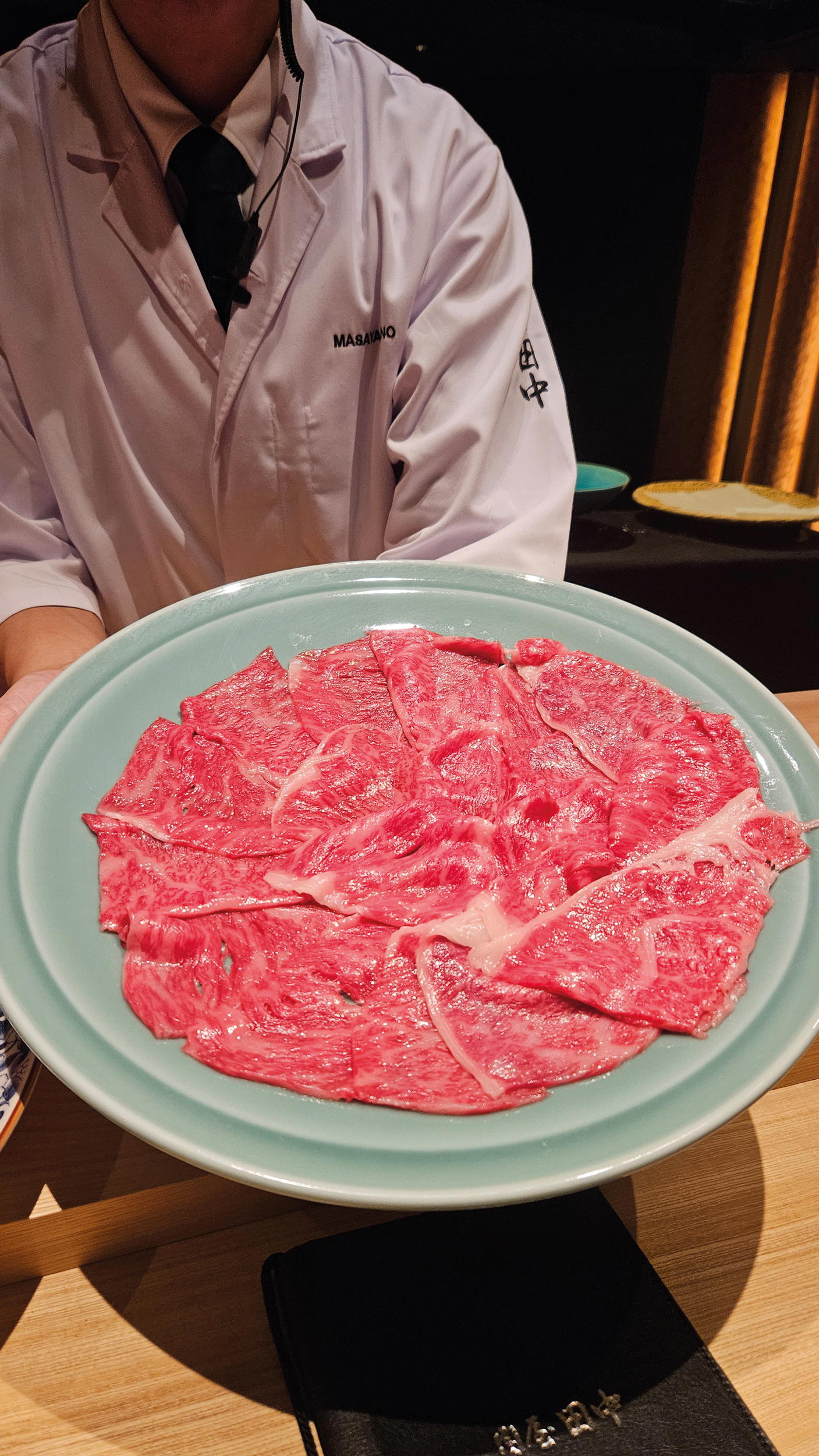
The next course of shabu-shabu boasts thinly sliced sirloin briefly dipped in hot water and paired with Tanaka’s own sesame sauce infused with ankimo (monkfish liver). The unusual pairing adds a foie gras-like richness while the addition of spring onions maintains the fat’s integrity. An additional ankimo side further emphasises this point.
I am reacquainted with the “ice somen” and watch in awe as an ice cube is shaved into a shimmering bowl by hand in under a minute; kudzu noodles slide in, followed by cold bonito dashi topped with sudachi. Photogenic and poised, it feels like a flavourful chime against Singapore’s heat.
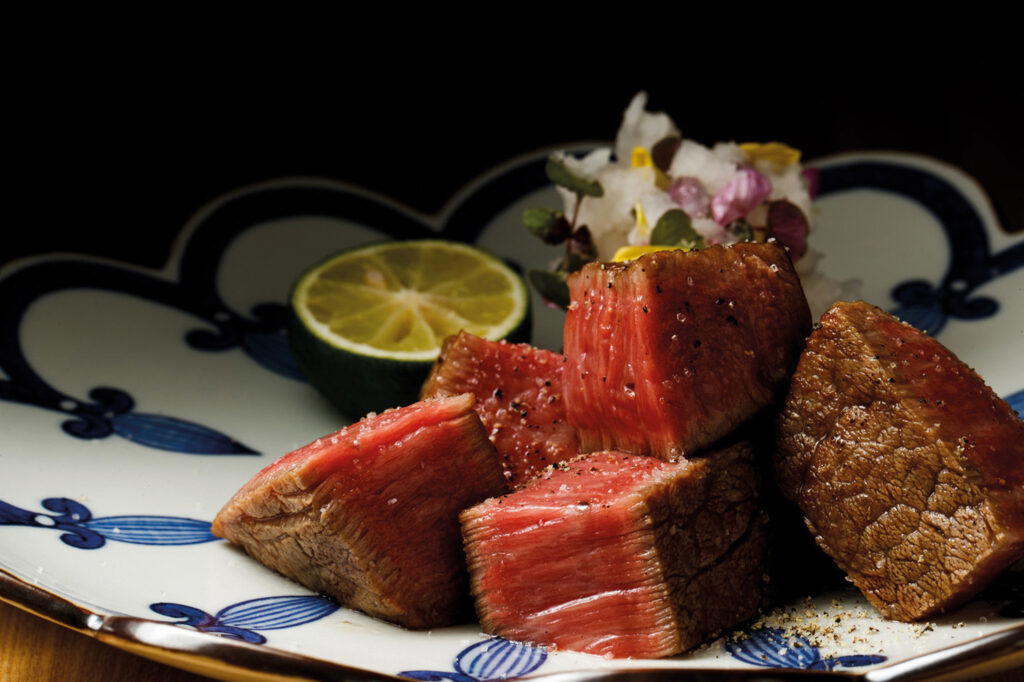
Tanaka’s headliner is his Chateaubriand. Usually too lean to be lovable, Tanaka’s version is spot-on, featuring a fine-grained crust, uniformly pink interior, and a properly tender texture. It’s served with a small radish-and-herb salad brightened by sudachi and shiso flowers, alongside Himalayan salt, garlic chips, and fresh wasabi to enhance each bite.
The rice he uses is something he takes pride in. The rare grains I enjoyed at the Ginza outlet can’t be exported (yet), so Singapore currently uses a premium Niigata variety from Tanaka’s supplier, while he works to bring in that Ginza rice in the future.
In his autumn menu, matsutake from Furano is incorporated into the rice course alongside gyu shigureni, imparting a deep, woody aroma. The meal ends with a translucent warabi mochi (the genuine clear kind, Tanaka notes) and a slice of Shizuoka melon so fragrant it’s almost addictive. A pour of Kyoto sencha resets everything back to zero.
Nikuya Tanaka offers a Tokyo-style approach to hospitality, revolved around one of Japan’s most revered ingredients. Prices are steep, seats are limited, and the margin for error is narrow. But when a slice of Kobe beef catches binchotan charcoal just right and the room falls silent, you will understand why this kind of meal is not just about indulgence. It is about witnessing precision defined by discipline, delivered with old-fashioned grace.