Rising from the serene lawns of the Silver Garden, six monumental bronze sculptures cast striking silhouettes against the tropical greenery of Gardens by the Bay. From ‘Adam and Eve’ (1990) to ‘The Dancers’ (2000), and ‘Horse’ (2006), These larger-than-life figures by Fernando Botero anchor “Garden Grandeur”, a free-admission presentation that’s part of the “Botero in Singapore” exhibition at IMBA Theatre.
IMBA (Immersive Media Based Arts), Singapore’s first dedicated immersive arts venue, opened at the end of February. It includes a 20,000-sq-ft black box theatre with a 12.5-m projection wall, a gallery measuring 12,500 sq ft, and multiple retail and dining spaces.
“Botero in Singapore”, which runs until 18 May, is a tri-format presentation. In addition to “Garden Grandeur”, there is “Heart of Volume”, which showcases 118 works, such as paintings, drawings, and sculptures; and “A Life in Fullness”, a 45-minute audiovisual narration of the artist’s career and craft.
Botero, one of the world’s most admired contemporary artists, is known for his “Boterismo” style, which depicts people and objects in exaggerated volumes and vibrant palettes. By challenging conventional norms of beauty, his works examine such themes as power, political violence, and sensuality.

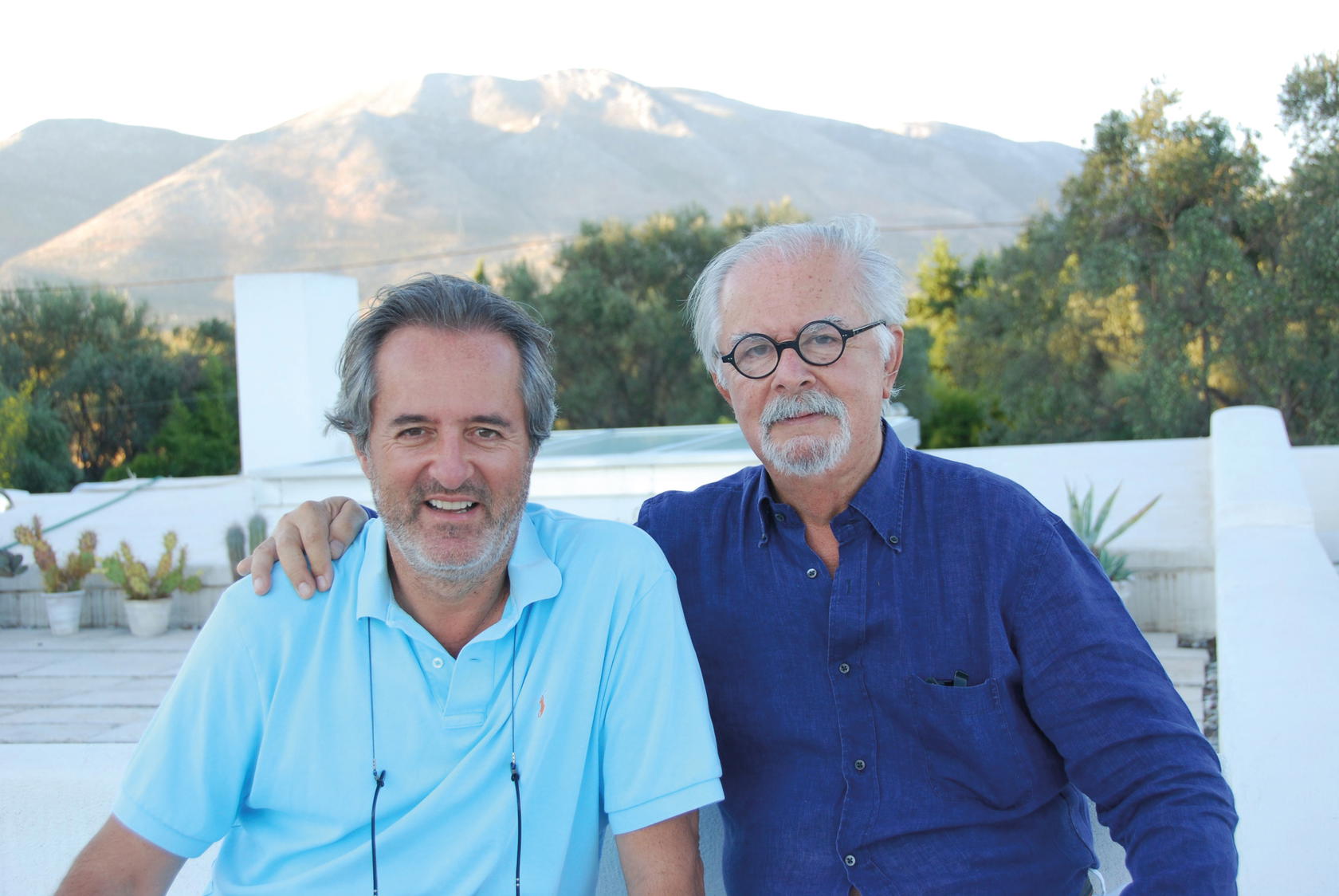
Since his passing at 91 years old in 2023, his eldest son Fernando Botero Zea has preserved his legacy through exhibitions and curatorial support. “What excites me,” says Botero Zea, “is that this is not just an immersive show, it is the first time such an experience is being presented alongside a major exhibition of works by my father.”
Singapore is its first and only stop in Southeast Asia, and “holds a very special place for our family”. He explains, “Some of my father’s sculptures, like ‘Bird’ (1990) and ‘Reclining Woman’ (2004), have become part of Singapore’s urban identity [these are located at UOB Plaza in Raffles Place and St Regis Singapore respectively]. ‘Botero in Singapore’ feels like a meaningful continuation of that long-standing relationship.”
What drew you to partner with IMBA Theatre?
Partnering with IMBA Theatre was a natural step in the evolution of how we present my father’s work. Its dedication to large-scale, media-based art experiences matched our ambition to reach audiences in new, emotionally powerful ways.
Your father’s art often carries deep social and political messages. How do you see “Botero in Singapore” conveying these themes?
My father’s art was shaped by his reflections on early life in Colombia, his admiration for the great Renaissance masters, and his response to war, violence, love, and humour. In Singapore, spectators can enter that world more directly. It’s not about directing interpretation, but about opening emotional and visual pathways so that people feel what he was feeling—whether it’s reverence, satire, or sorrow.


If you had time to focus on only one work in the exhibition, which would it be and why?
‘The President and First Lady’ (1989). It reflects a moment from when my father was about five or six years old. The President of Colombia arrived in his town on horseback, with the First Lady alongside him. That image left a lasting impression on my father, who did several paintings inspired by it. It also appears on a bespoke BMW 735i, as part of an artistic collaboration for “Botero in Singapore”. In my opinion, this is one of the most important works in his career.
What was the best lesson you learnt from your father?
That hard work solves almost every issue in life. It’s important not only for results, but for self-esteem, too. I always tell my children: you can be very well-off financially, but that alone will never give you self-esteem. Money doesn’t produce that feeling. What produces self-esteem is hard work—when you create something, when you contribute, when you feel happy. I remind them that the objective in life is not to make money. It is to work hard and help build a better world.
You mentioned your father felt his children didn’t inherit his talent in art. What about your children?
No talent, no talent [laughs]! My son Fernando loves to paint but, unfortunately, we don’t really have the talent for painting. We love art, though.
In a world dealing with challenges such as mental health and climate change, what relevance does Botero’s work offer?
My father believed the purpose of art was to create pleasure. I think the idea that art should be associated with positive feelings and enjoyment will never disappear. It’s something that will remain relevant for this generation and many others to come.
If you could travel back in time, what is one question you would ask your father?
Why volume? That was his obsession and his style. I’ve always wondered where it came from. Perhaps I can trace it back to when my grandfather died. My father was only four then and running into a courtyard to greet my grandfather, a large man on a large horse, who fell off and died of a heart attack. I believe that moment shaped my father deeply…and [led to] a search for monumentality—power, size, presence. I’d like to hear him share about all this.