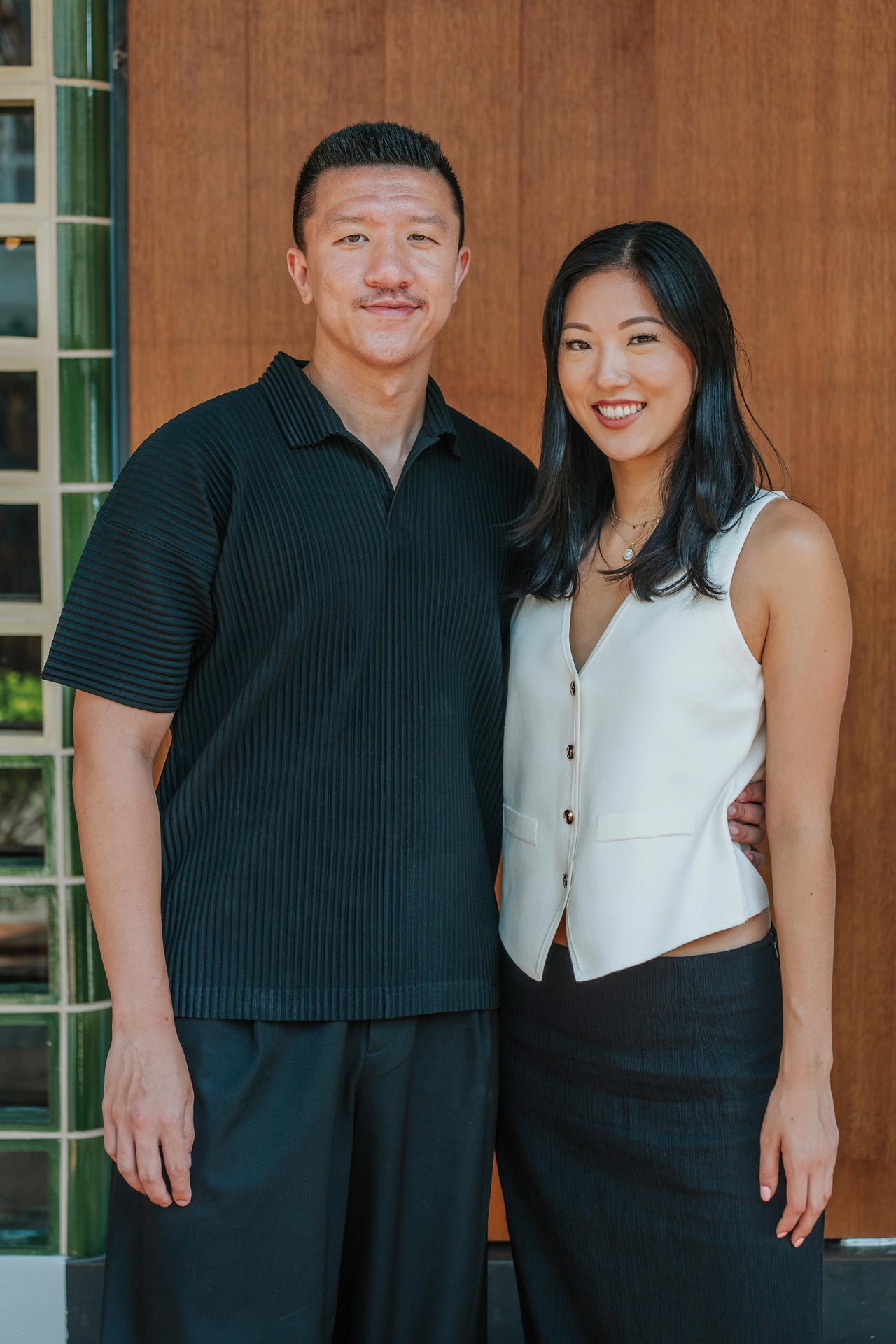
Club Rangoon marks the first Singapore outpost for Common Abode, the Hong Kong-based hospitality group founded by Nelson Htoo and Elin Fu. Launched in 2021, Common Abode’s portfolio of swanky F&B concepts includes Hjem, a quaint Nordic café along Hong Kong’s Hollywood Road.
It also ran Thai eatery Camp Krapao, hip-hop bar and lounge Candour, and Club Rangoon, the original Hong Kong restaurant that shuttered late last year—these ventures closed for various reasons, including Covid-19 restrictions and lease expirations.
The group’s Club Rangoon here represents a homecoming of sorts for Htoo (pronounced “Too”), who lived in Singapore during his teenage years. He conceived the 39-seater restaurant on Duxton Road as a showcase of contemporary Burmese cuisine and culture.
“Burmese food is extremely personal,” Htoo explains. “There are over 130 different states in Myanmar and each household has its own recipe for a dish. At Club Rangoon, our Chef Charrinn Singdaechakarn serves fresh takes on Yangon classics inspired by my family’s recipes and made with authentic Burmese ingredients.”
The menu spotlights essential flavours of Burmese cuisine—chin (sour), ngan (salty), and sat (spicy)—which are apparent in the restaurant’s Mohinga noodle soup and Laphet Thoke tea salad, dishes loved by many Burmese.
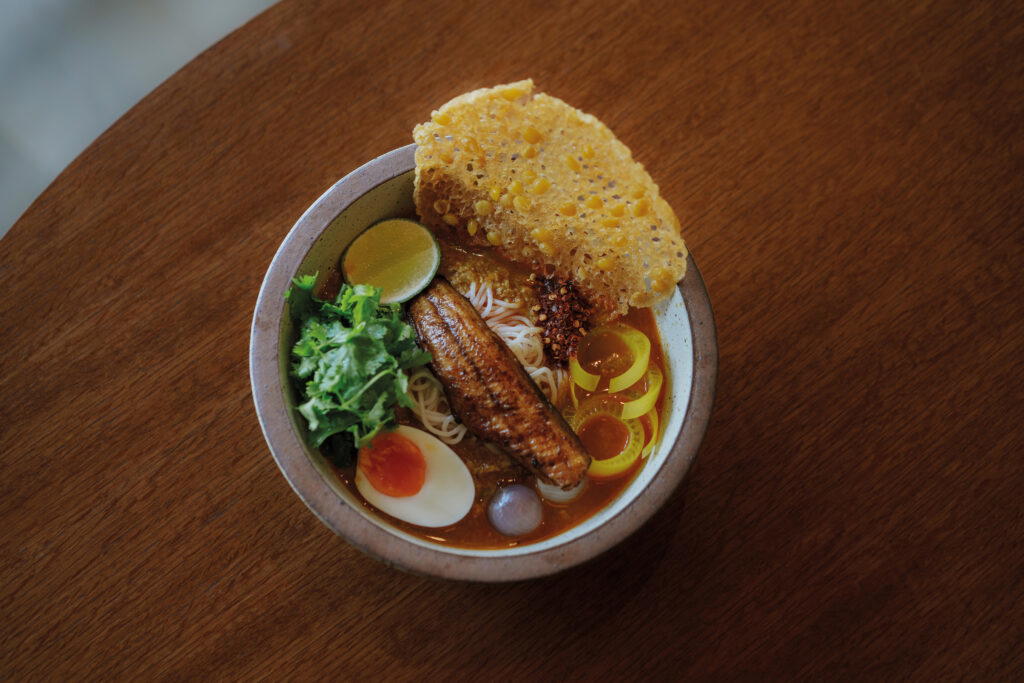
Mohinga, Myanmar’s national dish and one of the most popular Yangon street food dishes, is traditionally eaten for breakfast. It consists of fine round rice noodles served with a lightly spiced catfish and lemongrass broth and topped with tender pearl onions, banana stems, hard-boiled eggs, and chickpea fritters.
It is also Htoo’s favourite on the menu: “Our mohinga is topped with a whole grilled catfish fillet. Our intention is to let every guest try different textures of catfish in one dish.”
Co-founder Fu, who hails from Hamar in Norway, recommends the restaurant’s Laphet Thoke. It features tea leaves from popular Burmese tea brand Sein Palaung, known for their gentle funk. They are tossed with a tangy, refreshing mix of radicchio, cabbage, and tomatoes, along with broad beans, garlic chips, and roasted peanuts for extra crunch.
“Laphet thoke is an integral part of Burmese hospitality,” says Fu. “When you visit someone, they usually offer you a little laphet thoke, just like tea.”
Finding individuality amid diverse influences
Considering the importance of fermentation techniques, fish sauce, and lime in Burmese and Thai cuisine, we ask Htoo if there are any similarities. He replies that Myanmar’s geographical proximity to countries, such as India, Thailand, and China, means influences from these countries are inevitable.
As an example, the Wagyu Beef Cheek Dan Bauk is a Burmese-style biryani made with Indian saffron and a Burmese masala.However, with the milder taste of Burmese cuisine—in comparison to the punchy dishes of other South-east Asian cuisines—umami flavours stand out better. For instance, Myanmar’s answer to China’s soya sauce, Japan’s dashi, and Thailand’s fish sauce, is a fermented catfish paste known as ngapi.
The restaurant’s Ngapi-yay Toh-Zayar features the paste in a savoury, spicy dip made with toasted dried shrimp, chillies, and shallots. Served with fresh greens, such as cucumber, radish, and lettuce, for dipping, it is the perfect counter to richer dishes like the biryani.
THE MILDER TASTE OF BURMESE CUISINE ALLOWS UMAMI FLAVOURS TO STAND OUT BETTER.
With Club Rangoon’s opening in August this year and the encouraging response it has received since, Fu notes that there is an increase in interest in flavours from around South-east Asia, in particular more elusive dishes. As a result, she and Htoo, partners in both business and life, have been spending more time in Singapore.
Finally, we had to ask, what is it like running a business as a couple? With a smile, Htoo says, “We knew it would be challenging, but also rewarding. We have to trust each other and focus on our common goals.”