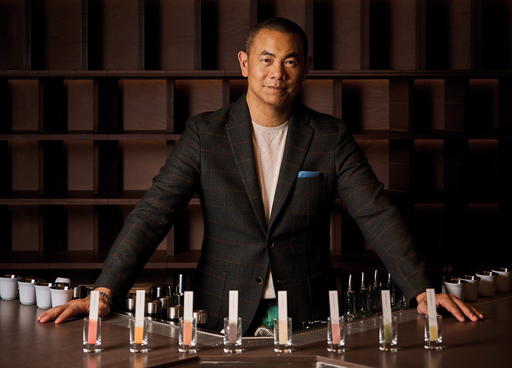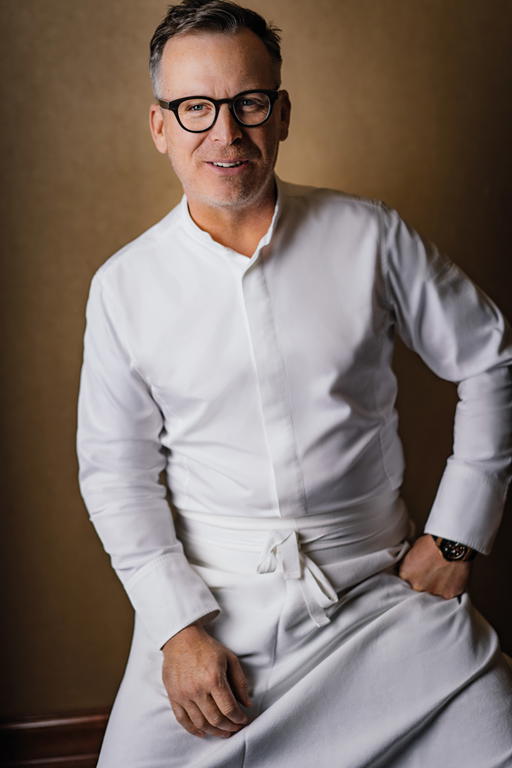
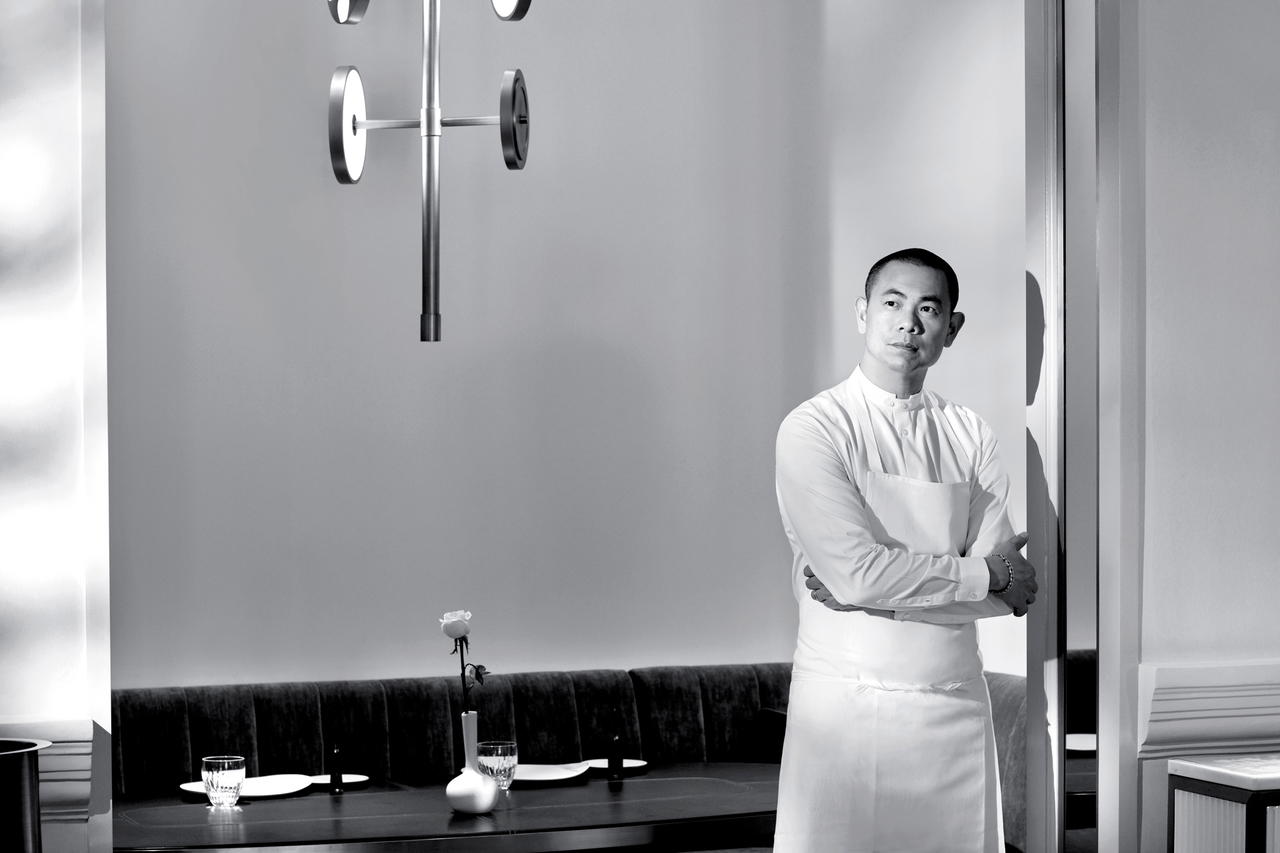
I met André Chiang a day before the start of his 12-day residency at La Dame de Pic, Raffles Singapore, but he was calm and collected amid the frenzy of preparation going on behind him. Six years have passed since he shuttered the doors of the now-defunct two Michelin starred Restaurant André, but the memories of his time here remain ever sentimental both to Chiang and the loyal fans who have booked out the seats of his elusive stint. We catch up with him to find out about life so far.
It’s been six years since you closed Restaurant André in Singapore. How does it feel to have a homecoming?
I’ve been waiting a long time for this day to come because I miss Singapore a lot. But with the pandemic, I couldn’t come back often to visit. Luckily, a lot of my Singaporean friends and fans have visited Raw in Taipei. They keep asking me when I’m coming back, that’s why I thought of doing this homecoming event. Raw will soon mark its 10th anniversary, so that’s the perfect excuse for me to come back. I also wanted to bring the young Raw team to experience Singapore.
What was the planning process like?
The homecoming was always on the back of my mind, and I was waiting for the right moment. Coincidentally, Raffles Singapore was carrying out promotion activities in Taiwan, including a hosted meal for Taiwanese media at Raw. There was talk about when I should come back, and we decided to do it at Raffles Singapore. It’s the perfect venue for us because everyone remembers Restaurant André with the white colonial façade, and its simple and elegant interior. Likewise, the hotel brings people back to a similar ambient. Instead of a short three-day pop up, we decided to close Raw and bring the whole team over for a unique experience.
How was the menu conceptualised?
Our mission is to bring Restaurant André back and introduce Raw. That’s why we designed this menu with half of the former’s classics and half of the latter’s specialties. Three new courses have also been created exclusively for the event. The menu resembles a timeline, and every course has its own date to symbolise a milestone.
Tell us about the three event-exclusive dishes.
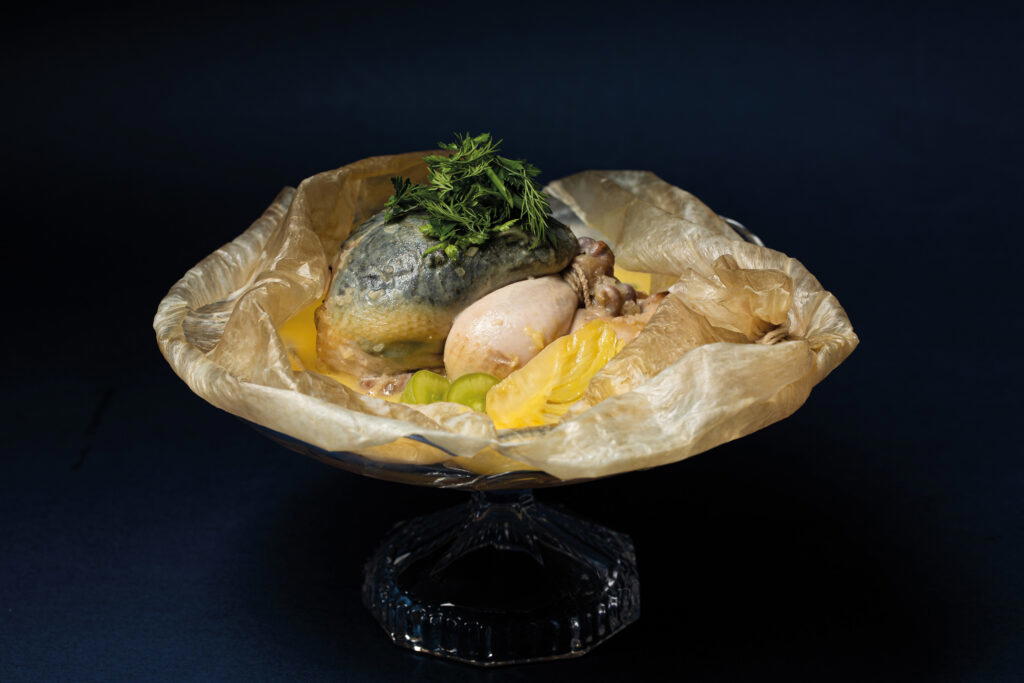
The Surprise Course is the laksa, a local dish that I miss and that I tried to recreate in Taiwan with the ingredients I could find. Next, the Baby Welsh Lamb and Squid Ink. In the dish, we use all things umami to create the sauce, including fungus, kombu, soy sauce, fermented beans, miso, fish sauce, and tomato. The last is Chocolat Epices “Secret Recipe”, which highlights produce like cacao and coffee.
What are some of the places in Singapore that bring back memories?
There’s a fish head hot pot at Tiong Poh Road that I like. The whole stretch is packed with restaurants that sell crab, zichar, and Szechuan cuisine. Along with a bunch of kitchen staff, we used to walk over for supper after closing shift at Restaurant André. There were plenty of memories.
What’s the difference between the cuisine you now serve at Raw and what was once served at Restaurant André?
At Restaurant André, diners see Asia from the world’s perspective. The mindset and understanding are more European but with an Asian twist. Raw is the opposite, where you see the world through an Asian point of view. We use local ingredients, Asian spices, and Asian culinary techniques. All of these is translated into an international language. Restaurant André is more refined and sophisticated but Raw is, as its name suggests, raw and dynamic.
What is the most significant dish in your culinary career?
Memory 1997 is the first ever dish I created in my career. At the beginning, you work under the head chef and basically do whatever he asks you to do. But along the way, you form your own understanding of cuisine, and one day you start to create something you call your own. Because it doesn’t belong to anyone, it’s purely yours. It gave us [Restaurant André] two Michelin stars. I’m incredibly proud of this dish. The dish features foie gras baked in chawanmushi. It’s very André because a French chef would never do it like that.
I always feel that there are two extremes: people either love or hate foie gras. People either love the fatty, oily sensation or find that it’s too heavy on the palate. One spoon of foie gras is akin to one spoonful of butter. In my dish, I keep the textures light, aromatic, and flavourful. Everyone who tried that dish always remembers it. I say, “It’s now become your memory, not mine.”