
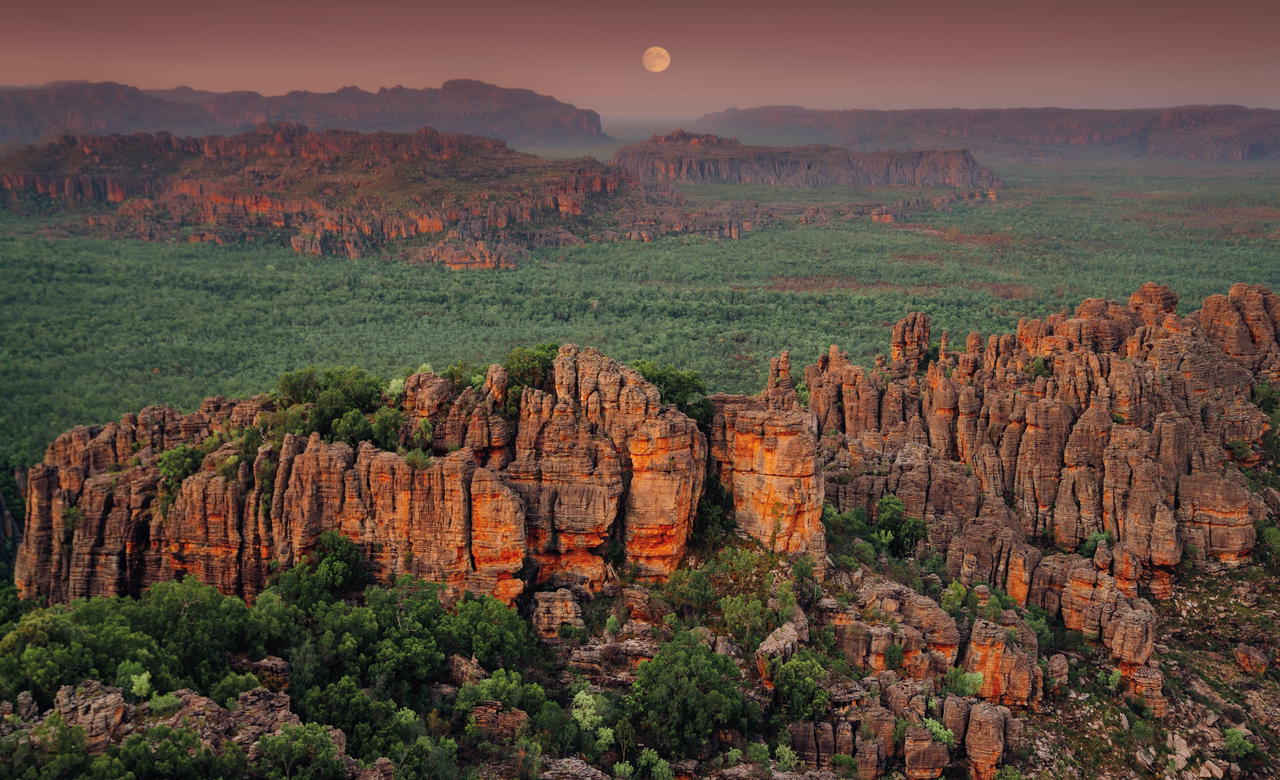
You learn to expect the unexpected in the Top End, like a freshwater keelback snake in your path, or a rare sighting of the red-backed fairy-wren. These exhilarating encounters make the northernmost region of Australia’s Northern Territory a getaway you’ll remember for years to come.
In case you haven’t been to the Top End, its climate is similar to Singapore’s, with distinct wet (November to April) and dry (May to October) periods. During our visit towards the end of March, heavy rain and occasional sunshine left the landscape swollen with vegetation, rivers, and wildlife activity.
A local guide with in-depth knowledge of the history, indigenous culture, and flora and fauna can make the experience even more meaningful for first-timers. Often, they will take you to off-the-beaten-track spots, such as swimming holes, rock art sites, or quiet vantage points.
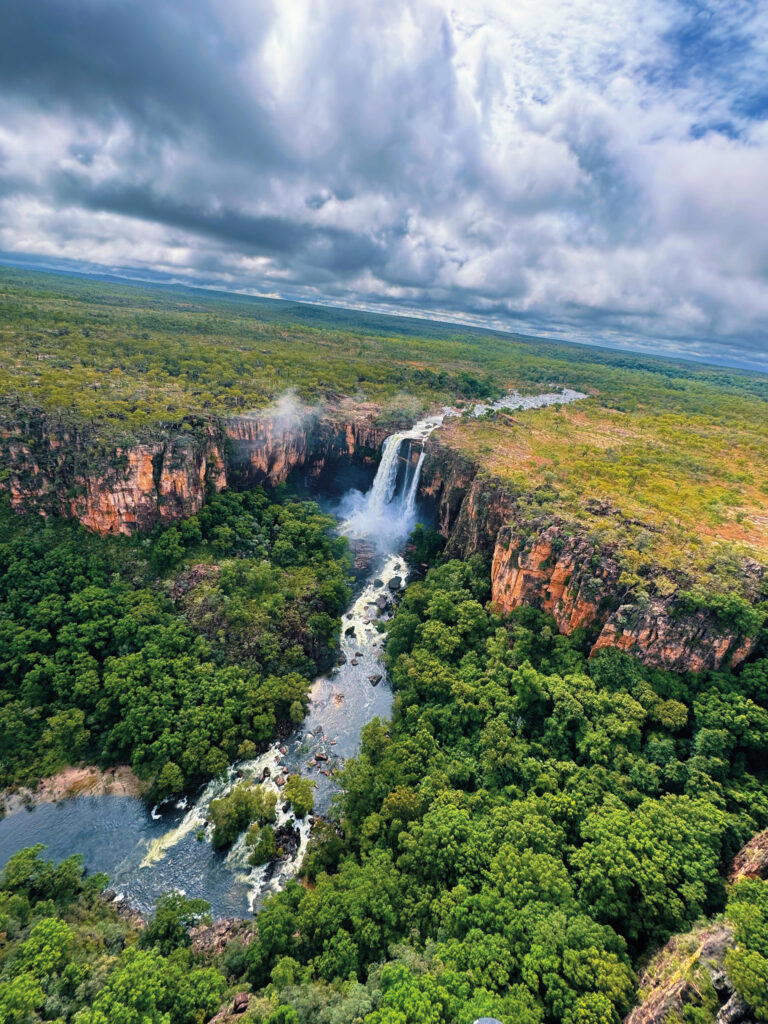
Jack Tanner, the owner of Top End specialist Cyaround Tours, began our tour with a four-wheel drive. We had our first crocodile sighting halfway through our three-and-a-half-hour ride to Kakadu National Park, a Unesco World Heritage Site. Then, at Corroboree Park Tavern on Arnhem Highway in Marrakai, we met Brutus, a “saltie”, and Fred, a “freshie”, named after the saltwater and freshwater they live in.
According to Tanner, the main difference between the two species is their size. A freshie can grow to around two-and-a-half metres in length, while a saltie can reach six metres. The former has a long, skinny snout, while the latter has a broad snout and a big, thick head. The differences end here, at least for the most part.
“Crocs are the most patient predators on the planet,” Tanner pointed out as we departed Corroboree. “They are more likely to ambush around their habitat than they are to actively pursue prey.” And they eat a variety of foods, including fish, snakes, and birds, as well as pigs, buffalo, and cattle.
Neighbours In Nature
The next croc we saw was at Kakaku National Park. With 19,816 sq m of wetlands, rivers, and sandstone escarpments, Australia’s largest national reserve is home to more than 2,000 plant and animal species, including crocodiles, flatback turtles, and birds.
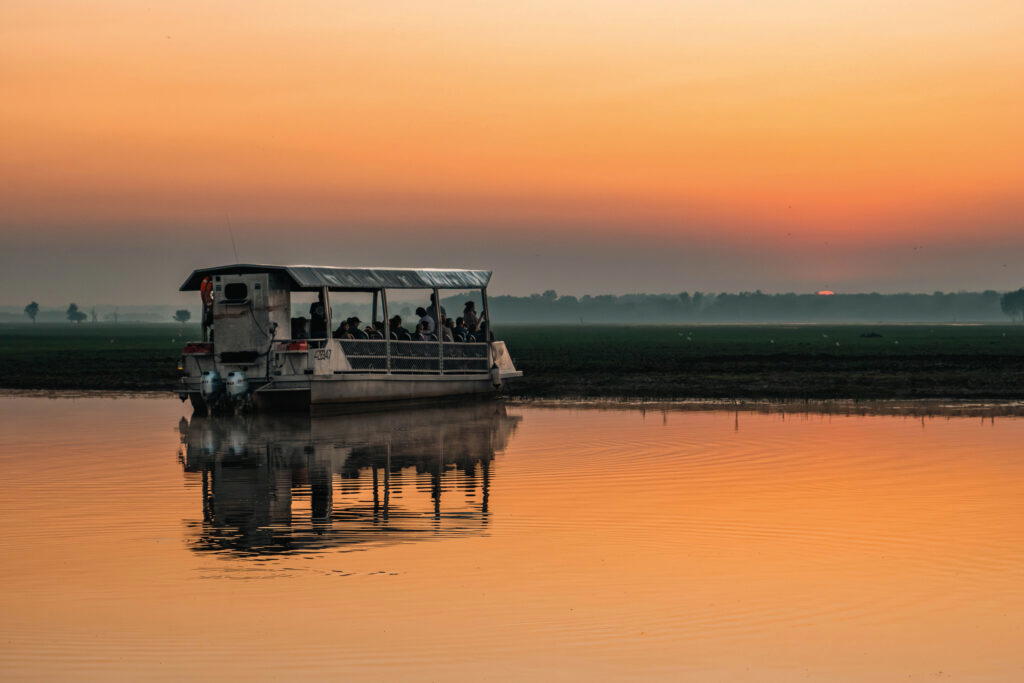
A good place to stay here is Yellow Water Villas in Cooinda Lodge. The luxurious, eco-sensitive property comprises five villas adjacent to the Yellow Water Billabong (or Ngurrungurrudjba to the locals). Its team includes indigenous Bininj, who work as guides and in F&B and grounds maintenance, according to Peter Hook, Kakadu Tourism’s public relations consultant.
Guests at Yellow Water Villas can enjoy a variety of fun activities. For instance, a sunrise Yellow Water Cruises trip revealed a freshie, partially framed by foliage, glistening in the sun. Whipping out our smartphones, everyone snapped away furiously. In response, Dennis Miller, our usually effervescent guide said, “We don’t want to hear your mobile phone ring, not even a ding. We want to hear the birds sing.”
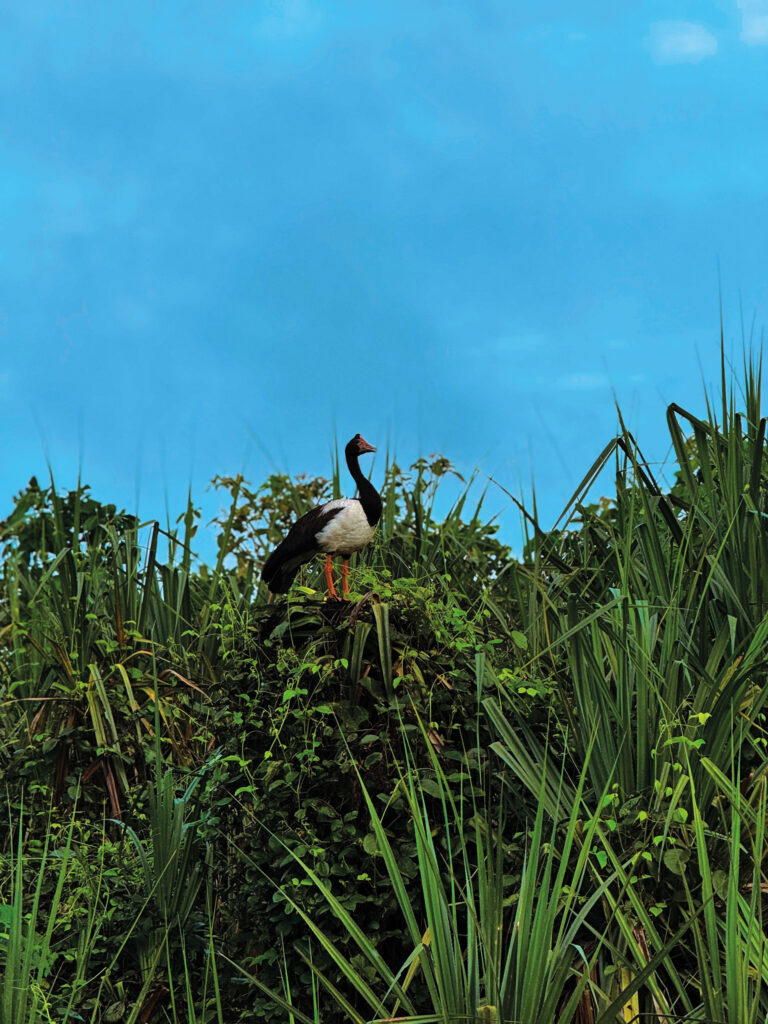
And what an all-star ensemble we were treated to! The djakarna (the indigenous name for black-necked stork), marrawuddi (white-bellied sea eagles), and bamurru (a word specifically from the Gagadju people for large black and white magpie geese) led this mesmerising morning recital.
This is where we confirmed what we had suspected since the trip began: North Territorians love naming their animals. At Finniss River Lodge, part of a 20,234-ha working cattle station owned by third-generation Olivia Venturin, a friendly Brahman cow named Wardy approached our all-terrain vehicle for a pat. Venturin laughed: “He’s affectionate because I hand-fed him as a baby.”
Even among neighbours who rarely interact, naming animals is somewhat indulgent. During an airboat tour of the Finniss River floodplain, we had the pleasure of meeting Carlotta, who was introduced to us by Peter Taylor, a guide at Finniss River Lodge. The female saltie is named after Australia’s first drag queen, whose style of drag was flamboyant and irreverent.
“Her haphazardly constructed nest, which she guards protectively,” Taylor offered, “is a sign that she’s relatively new to motherhood.” There was Jenny too, whose nest was a well-built mould with three different entrances to enable her to quickly emerge to protect her eggs from invaders. As Taylor quipped, “It’s certainly not her first rodeo.”
As we urged him to continue talking about Jen, he yelled: “Look up, the tree on your right! That’s a red-backed fairy-wren. See the pop of red on its back and rump.” And that was our last but not least lesson in the Top End—blink and you might miss too many of Mother Earth’s amazing moments.
Of Beds & Breakfasts
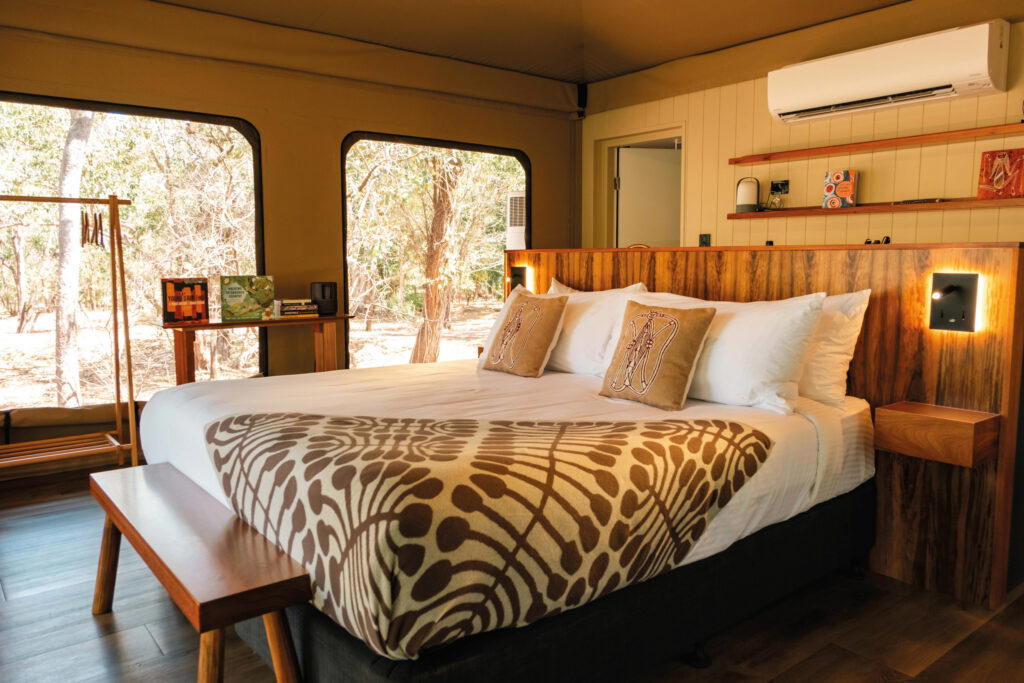
Yellow Water Villas in Cooinda Lodge
A lavish five-villa property located next to the Yellow Water Billabong (or Ngurrungurrudjba), it pays tribute to the local Murumburr community through various features.
Each villa, for example, was named after a native indigenous animal in Kakadu. Ours, “Magpie Goose”, had artworks and decorations by Bininj artists, as well as pieces from the Marrawuddi Art Gallery in Jabiru. Raw materials, from earthen clay and ageing brass woven, plant-dyed grass fibre, aptly encapsulate the natural landscape’s resilient nature and textures.
For soaking in the outdoor bathtub or lounging on the veranda, insect repellent is recommended as the mosquitos here can be vicious. And while calls from the curlews got us up at the crack of dawn, we soon learnt to tune in to the idyllic hum of nature.
Finniss River Lodge
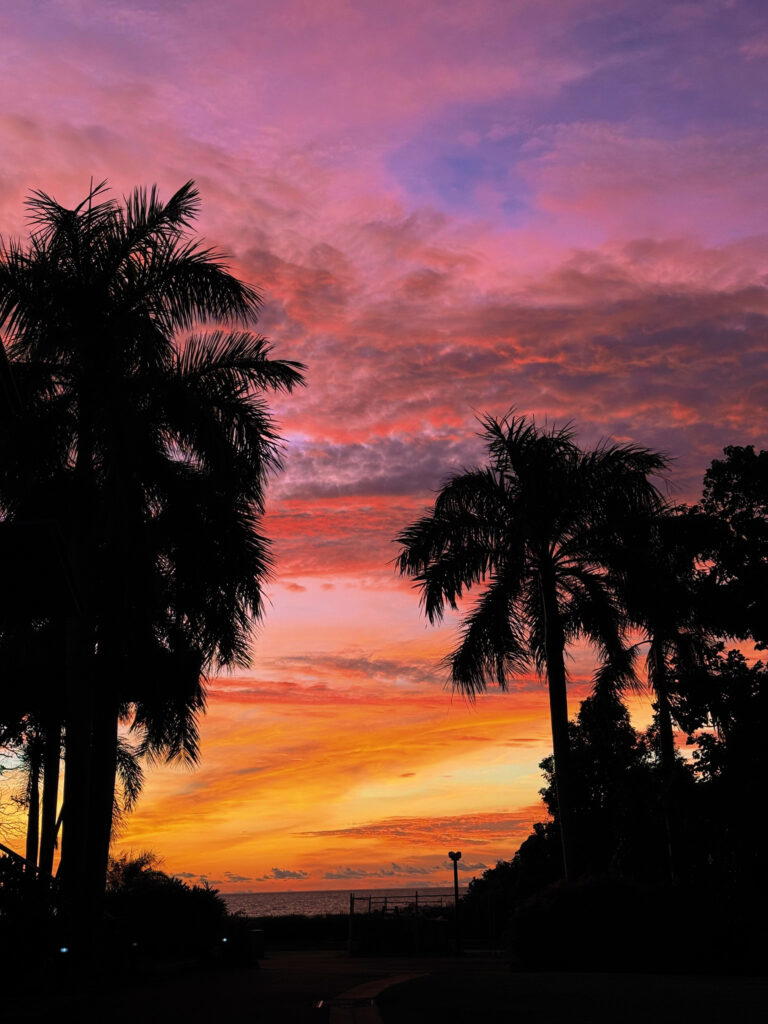
A beckoning lounge area and six well-appointed suites instantly made this feel like home—with cooler views! Its floor-to-ceiling windows offered spectacular views of sunsets and sunrises. As night fell, an infinity pool reflected the shimmering moonlight as it blended into the floodplains.
As early as 6.30am, our guide Peter Taylor almost convinced us we would be foraging bush tucker for breakfast during the Sunrise Surprise and Delight Experience. Thankfully, we were greeted by a beautiful table set-up amidst lush foliage.
Prepared at a live cooking station, our breakfast of poached eggs, guacamole, hash browns, and creamy mushrooms was served against a surreal backdrop of magnetic termite mounds. Its tiny inhabitants built and oriented these sculptural nests according to the sun’s direction, reaching a height of seven metres.
Other Top End To-Dos
Swim in Litchfield National Park
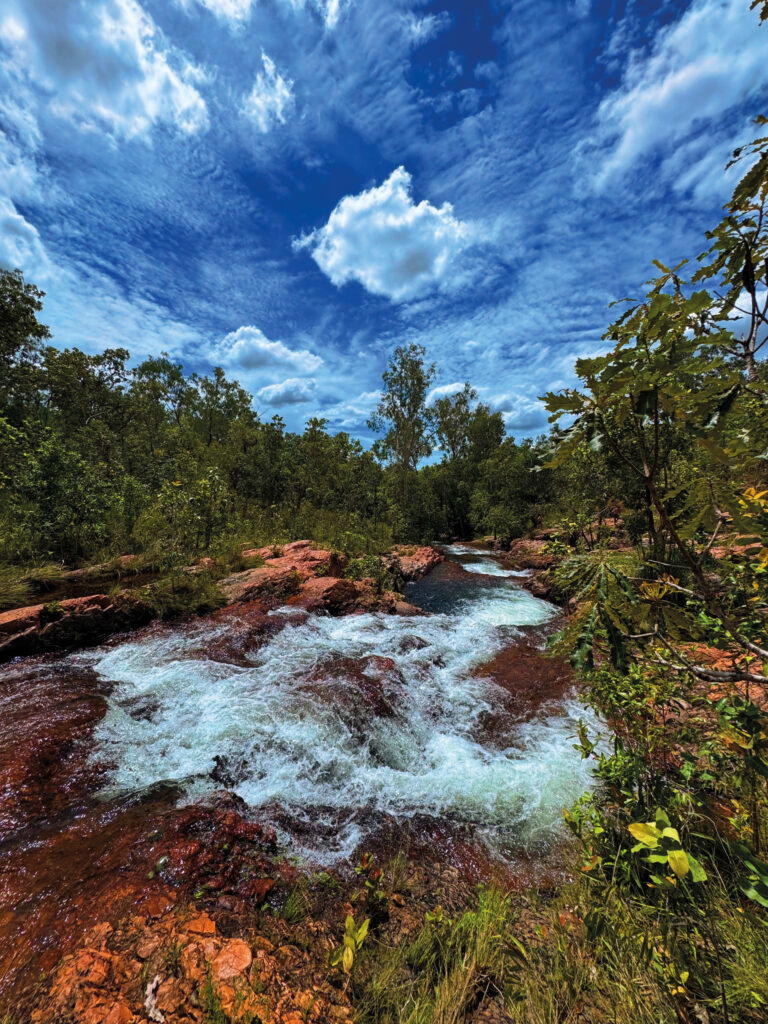
Waterholes like Wangi Falls and Buley Rockhole in Litchfield National Park are both croc-free (seasonally monitored) and safe for swimming—a rare luxury in the Northern Territory. Alternatively, you can soak in the awesome views at Tolmer Falls, which cascades over two high escarpments. Swimming is not allowed.
Go on a rock art tour in Kakadu
Mandy Muir is a descendant of the Murumburr people and Co-founder of the Kakadu Billabong Safari camp. Her hour-long tour offers insights into the Burrungkuy (Nourlangie) rock art site in Kakadu National Park. It also has depictions of the Aboriginal creation ancestor, Lightning Man, which were painted in the early 1960s.
Dine at Ella by Minoli
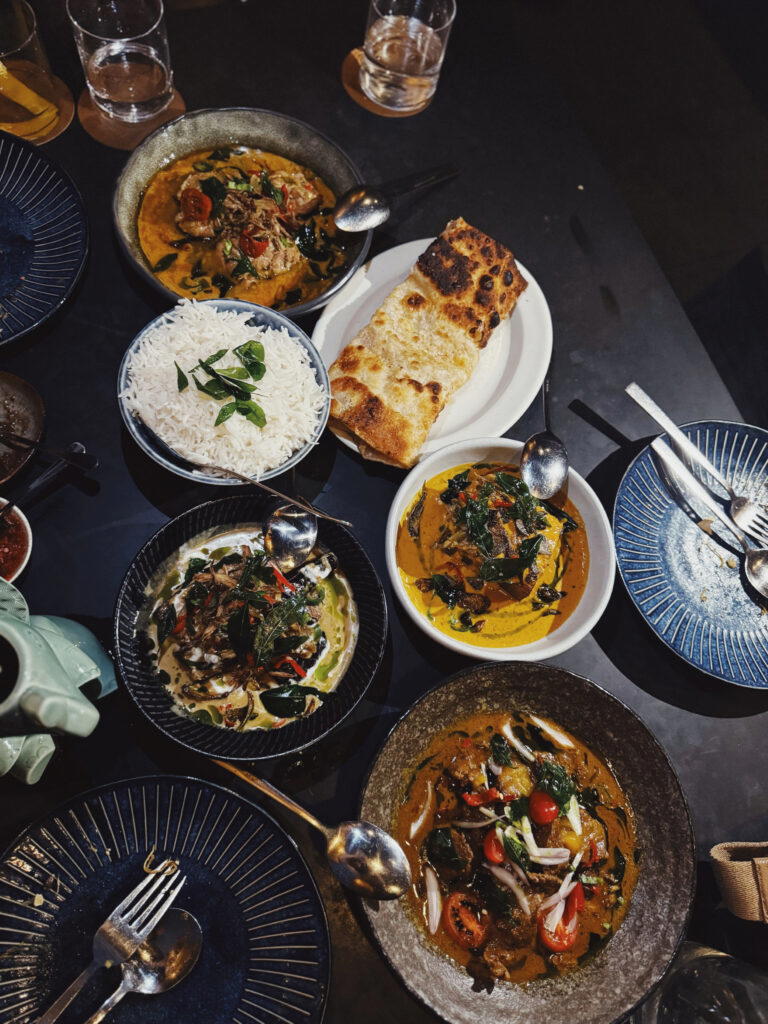
You must leave some time in Darwin for Ella by Minoli. Awarded One Chef’s Hat by the Australian Good Food Guide 2025, this casual dining establishment serves Sri Lankan fare with a Northern Territory twist. Our favourites: Kangaroo Tartare and Jaggery Lamb Curry.
Fly To Darwin In <5 Hours
More than 2,600 Singaporeans visited the Northern Territory in 2024, an 82 percent increase from 2023. This number is expected to grow since Qantas has launched its direct Darwin-Singapore route. With four flights a week, the Boeing 737-800 journey takes just four hours and 50 minutes. Its Business Class features 12 seats in a 2-2 configuration, each with an extendable leg rest and fold-out footrest for a more comfortable flying experience.