
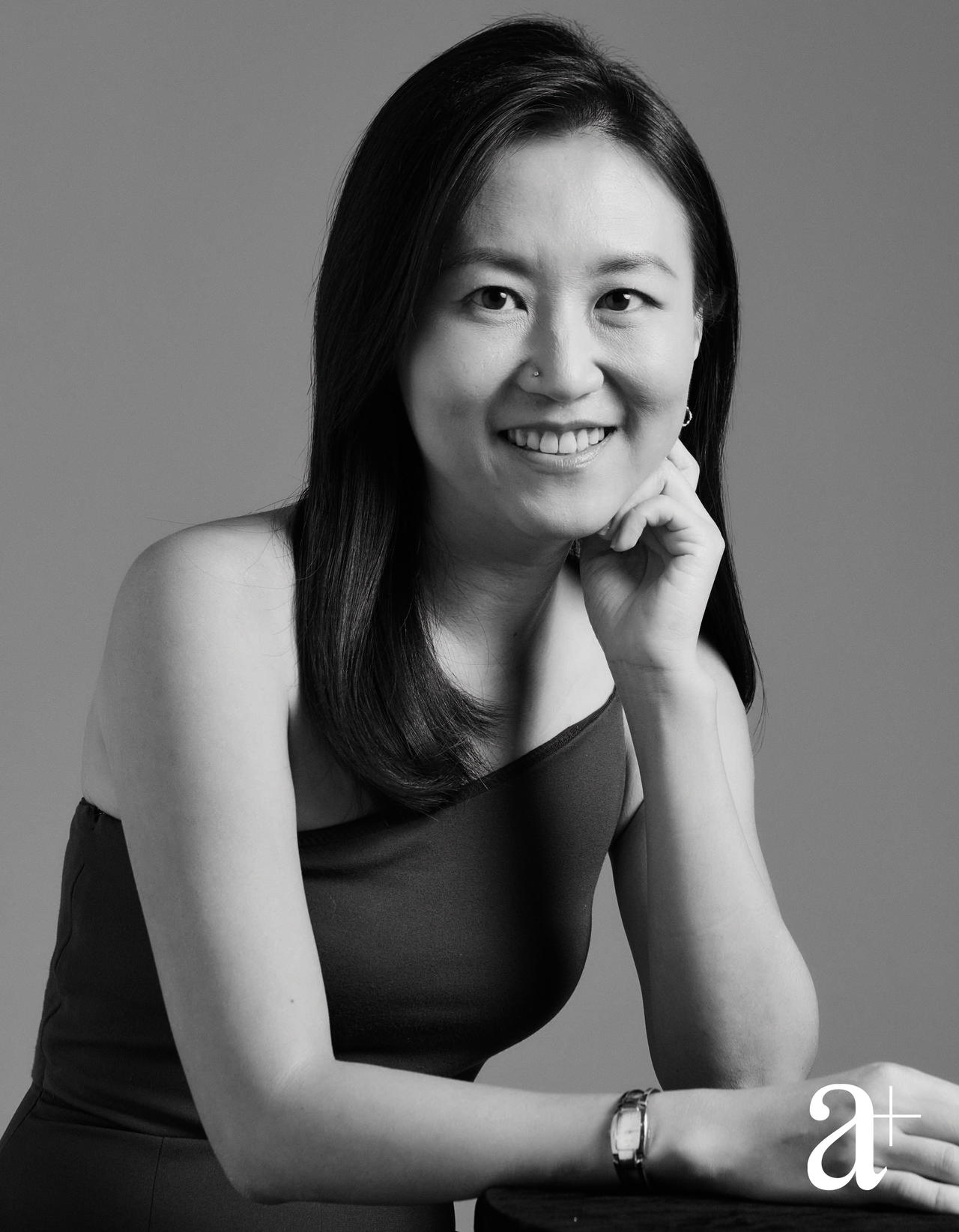
A vervet monkey named Ah Boy was what first ignited Dr Andie Ang’s fascination with primates. She was 10 and he was a wild juvenile monkey from Africa given to her by relatives who were sailors. “I didn’t understand the ethical issues then, but I observed his emotions, complex behaviours, and intelligence. After repatriating him back to Africa, specifically to a rehabilitation sanctuary in Zambia, I realised I wanted to learn more about primates and how I could help them,” she recounts.
Her fervour didn’t waver. She went on to pursue a bachelor’s degree in biological sciences; a master’s in biology, focusing on the ecology of critically endangered Raffles’ banded langurs; and a PhD in biological anthropology, studying leaf-eating monkey conservation in Vietnam.
Now the head of primate conservation and Singapore programmes at Mandai Nature, Ang also volunteers as the President of the Jane Goodall Institute (Singapore). Her other roles include Chairperson of the Raffles’ Banded Langur Working Group, and Deputy Chair of the IUCN SSC Primate Specialist Group.
As a primate conservationist, her work involves fieldwork, research, advocacy, and education to protect primates and their habitats through science, collaboration, and public engagement. Among other things, she works with governments and NGOs to advocate for wildlife corridors and forest conservation, and develops strategies to reduce negative interactions between humans and monkeys through monkey-proof bins and community guidelines.
The threats against Singapore’s primates, she says, are layered and interconnected, and require nuanced solutions. While human-wildlife conflict is a visible challenge, it is just the tip of the iceberg.
Urbanisation, for example, has reduced forest cover, isolating primate populations and making it difficult for individuals to disperse safely. In addition, habitat loss leads to fewer resources, resulting in stress, malnutrition, and genetic bottlenecks. Moreover, besides roadkill and infrastructure risks, genetic decline is also a concern due to the high risk of inbreeding, while climate change is an emerging threat.
There’s more.
“The real challenge is reshaping how we coexist with wildlife in a city that keeps growing. Singapore can be a model if we choose to balance progress with compassion.”
Dr Andie Ang on nipping it in the bud
The good news is that several solutions and mitigation efforts are already in place. They include habitat restoration and connectivity through wildlife bridges like the Eco-Bridge@BKE, forest corridors created by planting native trees, monkey guards to keep macaques away from homes without harming them, and roadkill reduction through rope bridges for safe canopy crossings.
It would also help if we refrain from feeding wildlife, which can harm their health and behaviour; drive carefully near forested roads; volunteer in citizen science wildlife monitoring projects; and advocate for policies that protect green spaces.
In Ang’s experience, Singaporeans have a long way to go in both identifying and understanding our monkeys. “Most recognise long-tailed macaques, but few know about the Raffles’ banded langurs even though they’re critically endangered and unique to this region,” she points out. Only about 75 remain in Singapore. Apart from enduring the risks that come with urban development, they also suffer from low genetic diversity and infertility.
Meanwhile, she takes every opportunity to correct misconceptions. Not all monkeys are aggressive: “Langurs avoid humans while macaque aggression is often learnt from feeding.” Neither are they invading our spaces: “Macaques and langurs were here long before urbanisation.”
Ang takes comfort in seeing positive shifts. Interest in local biodiversity has grown while youth-led initiatives are showing promise. It is why she hopes to venture into education reform and introduce primate ecology in schools.
“Healthy primate populations mean healthy forests, which clean our air, buffer floods, and cool the city. Coexistence also reduces conflicts as there will be fewer macaque raids if food waste is managed responsibly.”
Photography Mun Kong
Art direction Ed Harland
Hair Kenneth Ong using Balmain Paris
Makeup Zhou Aiyi using Make Up For Ever
Photography assistant Melvin Leong