
The perpetual calendar remains a pinnacle, yet this year’s standout releases prove there is still room for meaningful innovation and reinvention.
PATEK PHILIPPE

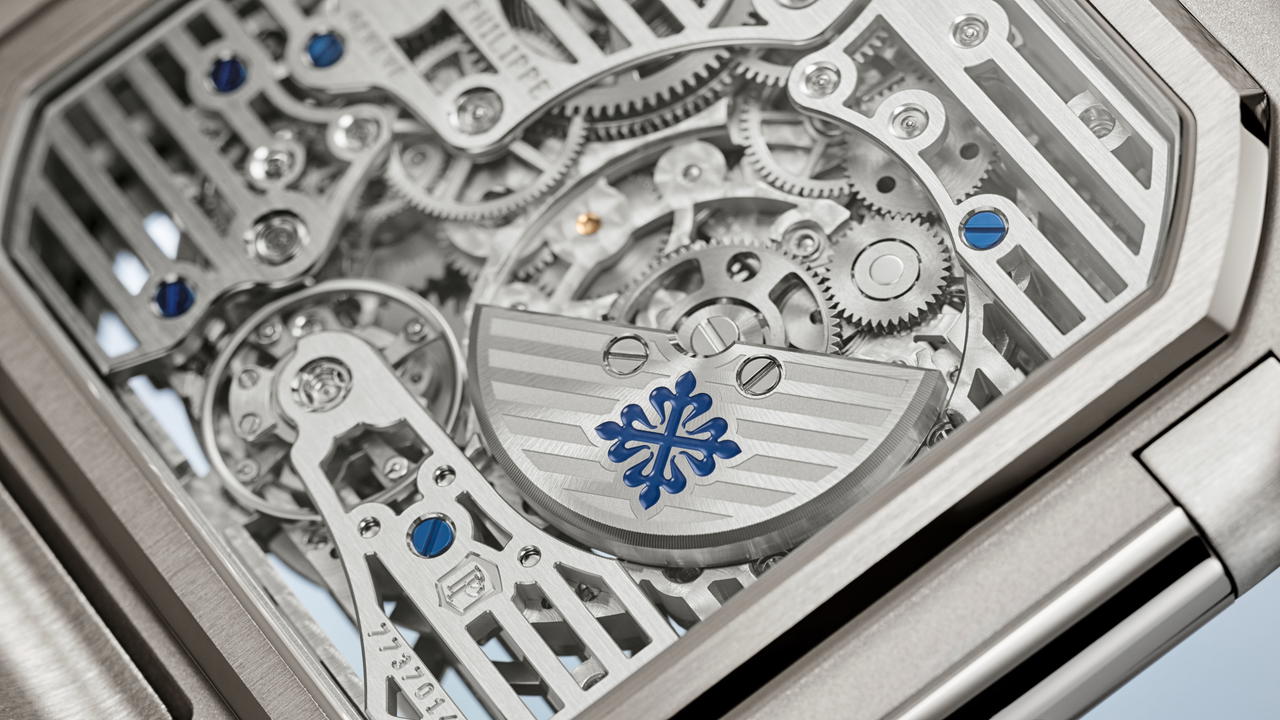
Patek Philippe’s Cubitus Perpetual Calendar Skeleton ref 5840P redefines the calendar with a unique square movement echoing the Cubitus’ silhouette. The calibre 28-28 Q SQU, built on the long-standing 240 Q architecture, has been redesigned into a 28.5-mm square movement with a micro-rotor and 313 components. The brand has even repositioned the bridges, wheels, and jewel settings while preserving the perpetual calendar mechanism and maintaining a slim 10-mm profile.
The moon phase relies on a single rotating lunar disc rather than the traditional two-disc system for a substantially larger, more detailed moon depiction. The finishing is also refined: sapphire jewels replace rubies, bridges feature rounded interiors, and the dial is laser-cut openworked to reflect the iconic ribbed pattern while revealing the movement beneath.
AUDEMARS PIGUET
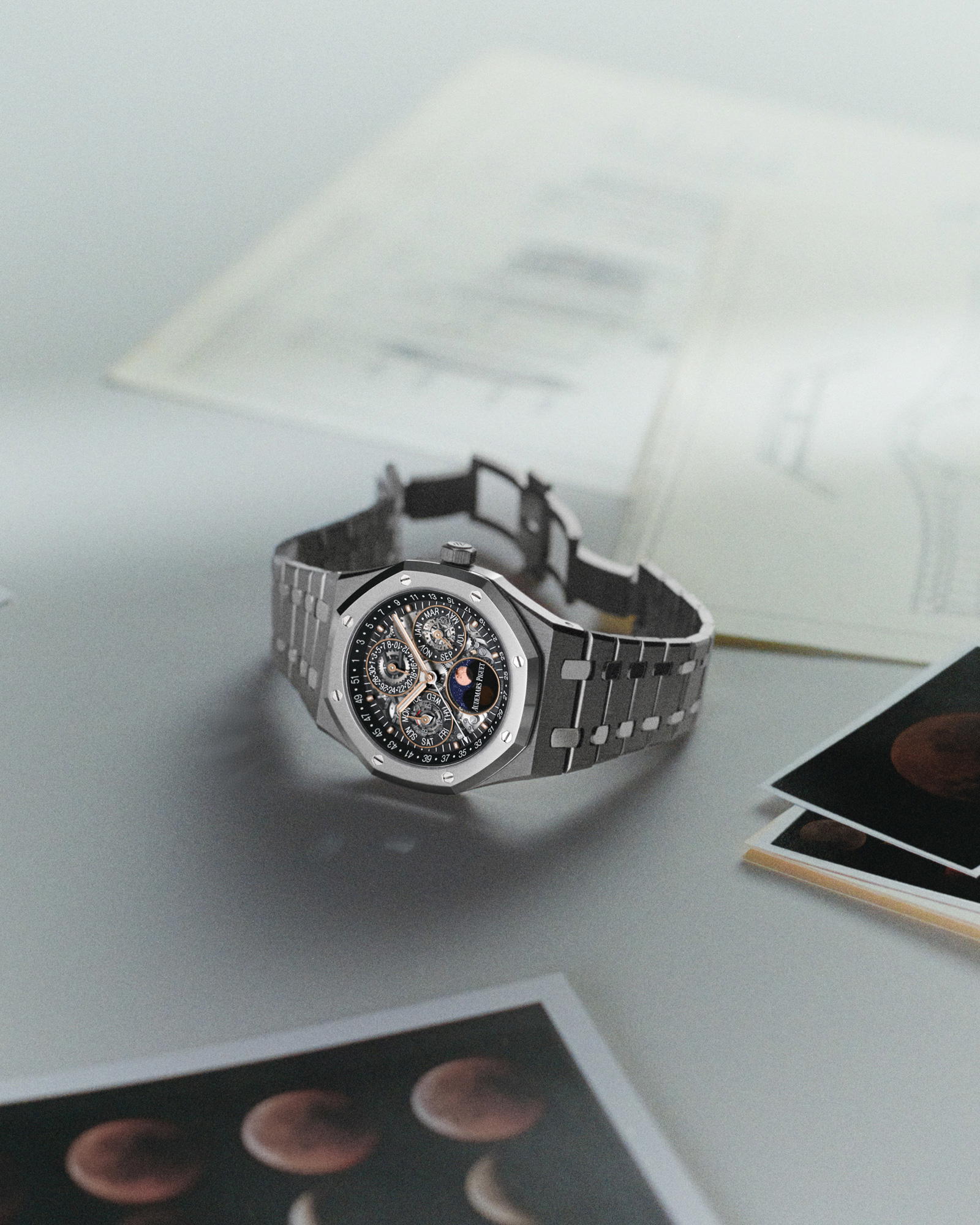
Audemars Piguet’s Code 11.59 Selfwinding Perpetual Calendar Openworked and Royal Oak Selfwinding Perpetual Calendar Openworked debut the calibre 7139, the openworked evolution of last year’s 7138. A patented crown-setting system enables all perpetual calendar functions to be adjusted in either direction.
The skeletonised movement highlights the traditional decorative techniques, with the main plate, bridges, date “wheel, leap year wheel and barrel shaped using electrical discharge machining (EDM) before being hand-finished with polished inward angles, satin brushing, circular graining and chamfering. Openworking has been AP’s hallmark since the 1930s revival, a lineage carried forward by generations of artisans.
A. Lange & Söhne
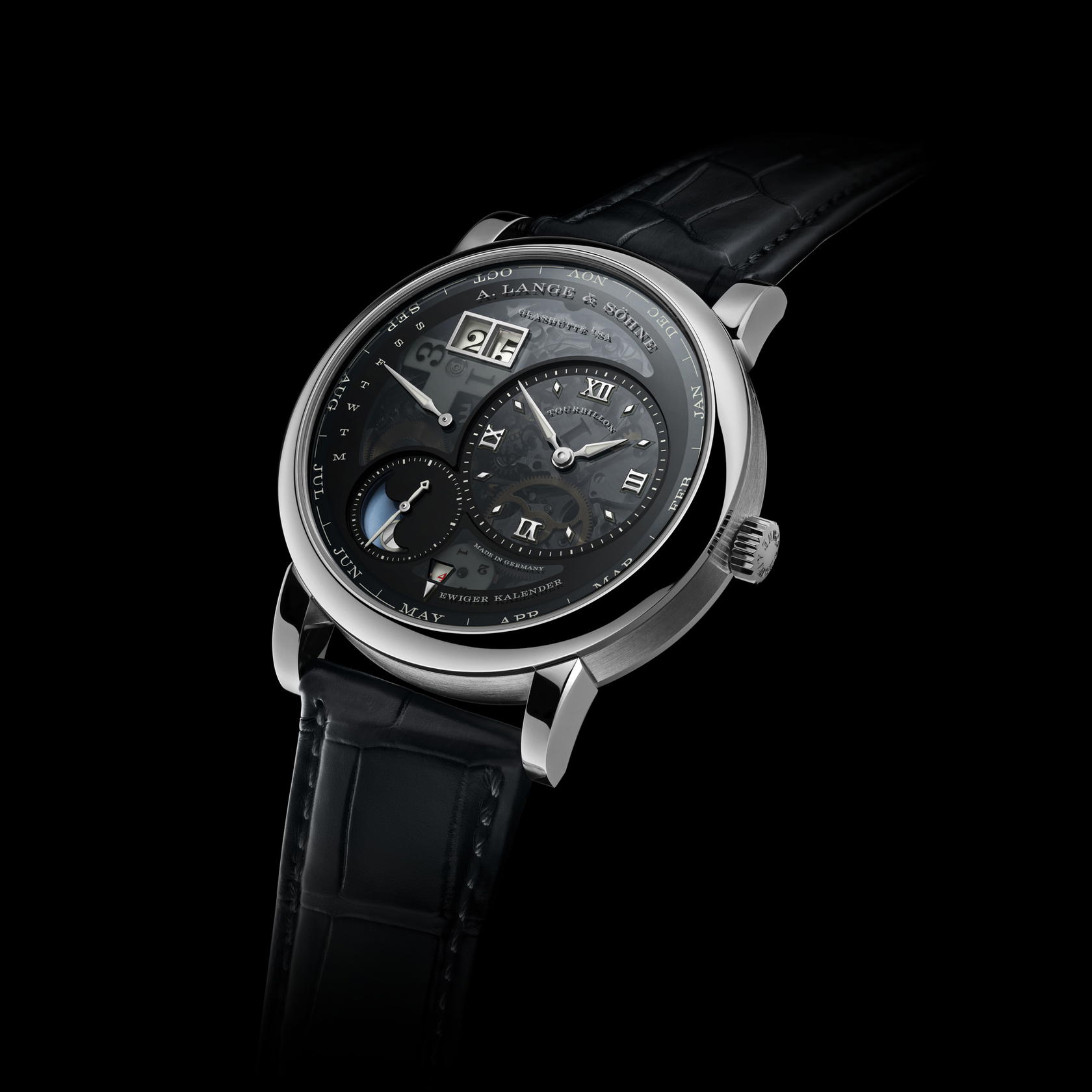
A. Lange & Söhne’s Lange 1 Tourbillon Perpetual Calendar Lumen features a new calibre—the L225.1—that integrates a tourbillon and a perpetual calendar. The dial is semi-transparent sapphire, tinted to block most visible light while allowing ultraviolet light to pass through to charge the luminous compound beneath it.
The watch introduces a moon phase display with an integrated day/night indicator: a celestial disc rotates once every 24 hours as a backdrop to the moon’s orbit, showing a plain sky by day and a luminous starry night sky.
The display deviates from the moon’s true position by one day after 122.6 years. The calendar indications switch instantaneously and are adjusted via recessed correctors on the case, with one corrector advancing all indications at once. There are only 50 platinum watches available.
Roger Dubuis

Roger Dubuis’s Excalibur Biretrograde Perpetual Calendar reimagines a complication patented by the brand’s founder in 1989, with Swiss watch innovator Jean-Marc Wiederrecht, redefining legibility and complexity in watchmaking. The day and date glide along two retrograde arcs that sweep forward and reset to zero. The upgraded calibre RD850 comprises 435 components, 60 hours of power reserve, and a dedicated month corrector.
The moon phase gearing follows the actual orbital period, delivering roughly 122 years of accuracy before correction is needed. Certified with the Poinçon de Genève seal, the movement showcases 16 distinct finishes, while the openworked dial, evoking a starry night sky, reveals nine intricate layers and introduces the new “Astral Blue” colourway that captures the grandeur of the universe.
Jaeger-LeCoultre

Jaeger-LeCoultre’s Master Control Chronometre Perpetual Calendar is the most complicated model in a new integrated bracelet collection. Calibre 868 is an upgraded version of an existing perpetual calendar that displays the month, year, day, date, and moon phase over four sub dials.
All calendar indications advance together via a single corrector rather than the crown, and the mechanism doesn’t require adjusting until 2100, a threshold most contemporary perpetual calendars also reach.
This new collection also introduces a new in-house testing standard, the High Precision Guarantee, which combines COSC chronometer certification with a protocol simulating a week of wear across temperature swings, multidirectional shocks and altitude changes. At 39mm by 9.2mm, this is slimmer than any other watch in this feature.
IWC

IWC’s Big Pilot’s Watch Perpetual Calendar ProSet “Le Petit Prince” breaks the limit set by Kurt Klaus’s 1980s mechanism, which corrected only in one direction. The calibre 82665 uses a gear-based module covered by five patents to allow the calendar to be adjusted both backwards and forwards, eliminating the need for correctors.
Constructed with the LIGA lithography-and-electroplating process, its components are exceptionally precise. The moon phase now achieves a deviation of just one day in 1,040 years, making it the most accurate among the watches discussed. While AP’s calibre 7138, introduced a year earlier, also offered bidirectional, crown-only correction, IWC’s innovation is distinct in its unique mechanical solution to this challenge.