

Women’s watches remain one of watchmaking’s most demanding balancing acts because technical prowess alone is rarely enough. At Watches and Wonders this year, the strongest launches approached the challenge from two directions.
The first began with mechanics, proving that compact dimensions and decorative flourishes need not come at the expense of serious watchmaking. The second treated timekeeping as only one component of a broader object of beauty, with form and jewellery craftsmanship taking precedence.
Both reached the same conclusion: women’s watches aren’t merely scaled down versions of those designed for men. Based on what we saw and admired, we couldn’t agree more.
ENGINEERED ELEGANCE
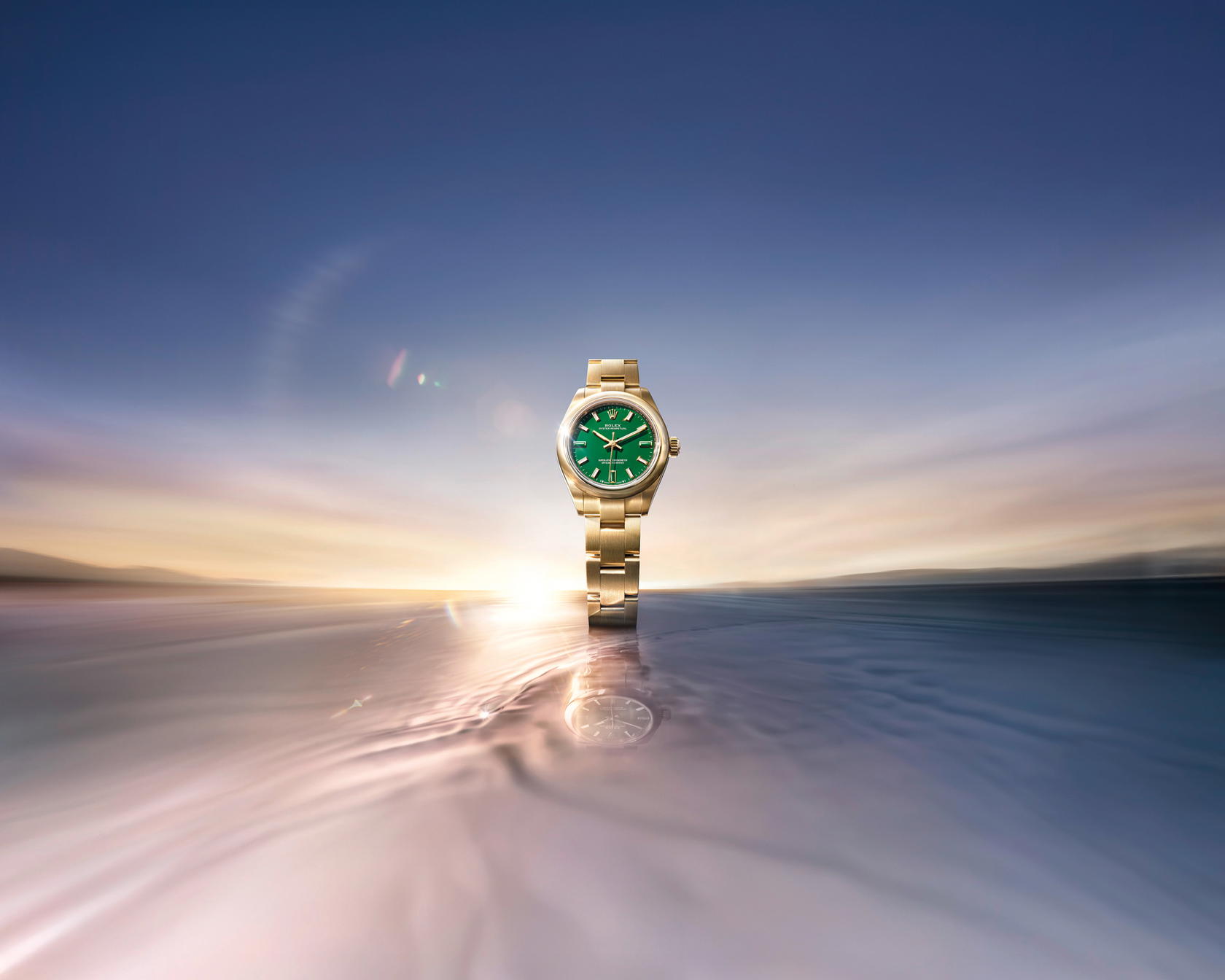
Rolex’s new Oyster Perpetual 28 in yellow gold is its smallest in the current collection and adopts a restrained approach to gem setting. The dial features green stone lacquer and three hour markers made from heliotrope at the 3, 6, and 9 positions. This is also the first time the brand is using natural stone as markers.
The case debuts a satin finish—a first for a Rolex and made entirely of precious metal. Inside lies the calibre 2232, a self-winding movement with the patented Syloxi silicon hairspring and an approximately 55-hour power reserve.
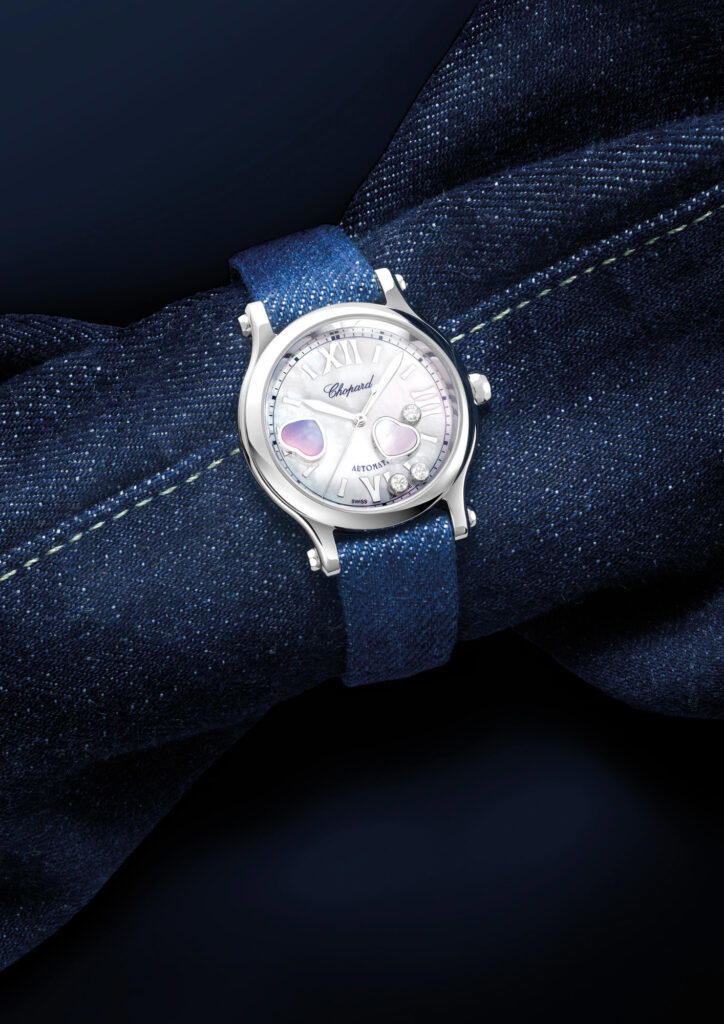
Chopard asserts that jewelled watches can retain full mechanical integrity, as shown in two models. The Happy Sport Happy Hearts features a 33-mm Lucent Steel case with a white mother-of-pearl dial and two mother-of-pearl hearts. Three loose diamonds float freely between the dial and the crystal. It is powered by the in-house calibre 09.01-C automatic movement, compact enough for this size without the need for a quartz movement or a larger case for a different calibre.
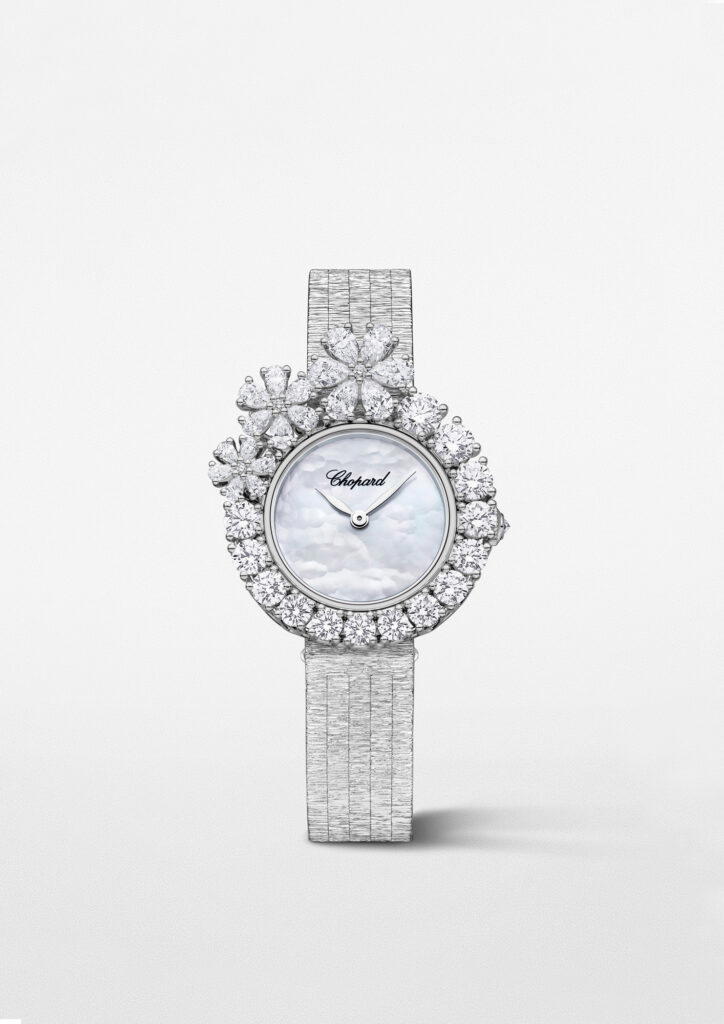
Chopard considers this movement a signature element of its women’s watches. The L’Heure du Diamant embodies the oldest pillar of the family’s heritage. It highlights the jewelled watch that established Karl Scheufele I’s reputation as a master craftsman.
This year, four new models join the collection, all crafted in ethical white gold and marked by the brand’s signature crown-set diamond bezels. The most remarkable piece boasts an asymmetrically bezel-set arrangement of brilliant and pear-shaped diamonds in a floral motif.
This is mounted on a bark-finish gold bracelet created using a 1960s Scheufele workshop goldsmithing technique. Inside, it houses the 10.01-C hand-wound movement measuring 15.7mm in diameter and 2.9mm in thickness that ranks among Chopard’s smallest mechanical movements.
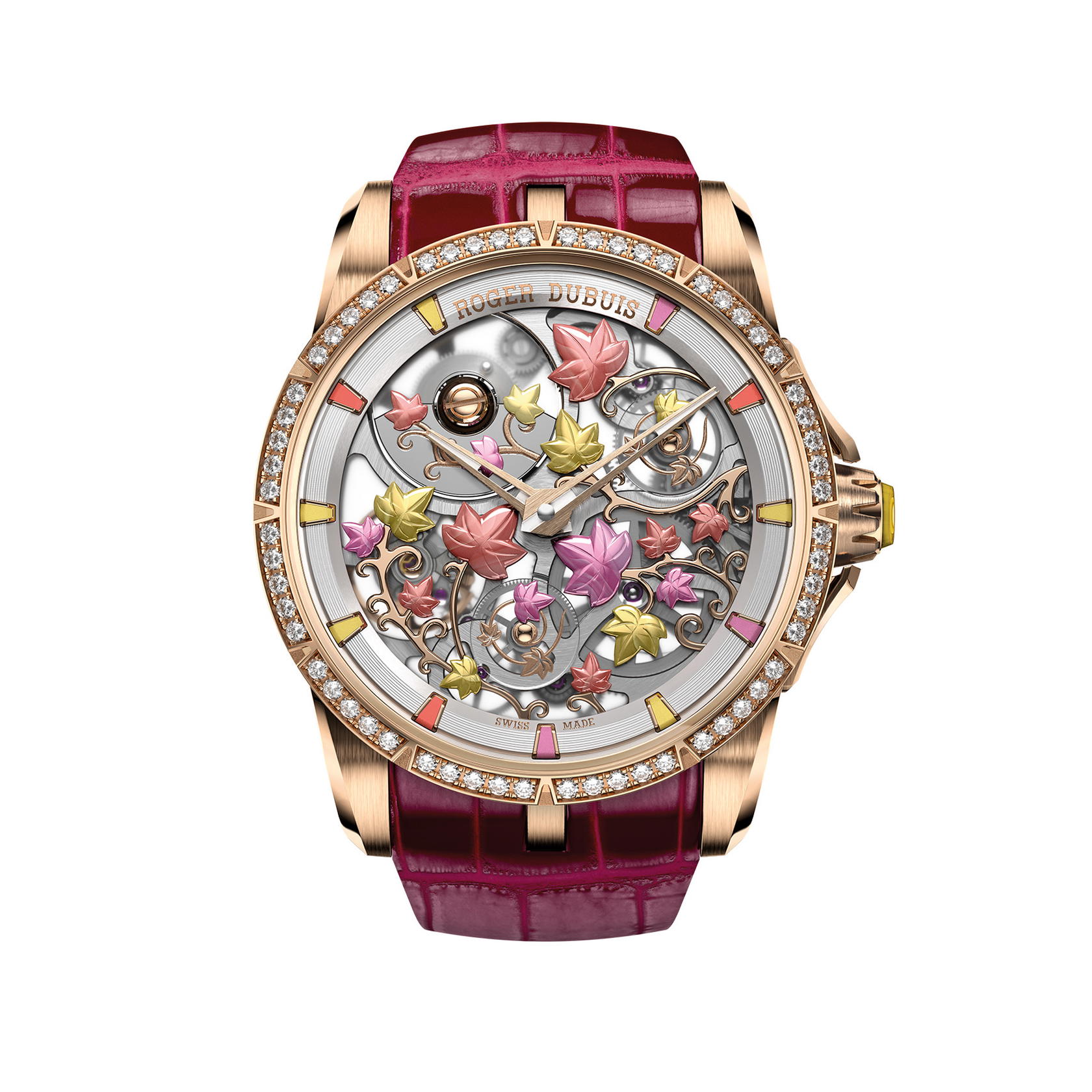
Roger Dubuis is an unexpected name in a women’s timepiece round-up, which makes the Excalibur Brocéliande stand out even more. Inspired by the legendary Forest of Brocéliande, it continues Roger Dubuis’ exploration of Arthurian myth.
Gold vines and mother-of-pearl leaves adorn the sapphire dial, offering a clear view of the RD721SQ movement with bevelled and sandblasted bridges, rimmed wheels, rounded pinions, and rolled pivots. Two small sapphire discs spin freely alongside the micro-rotor, and these three rotating elements collectively mimic the forest’s gentle sway in a breeze. The Twilight Blue and Dawn Rose models are designed with dusk and dawn in mind.
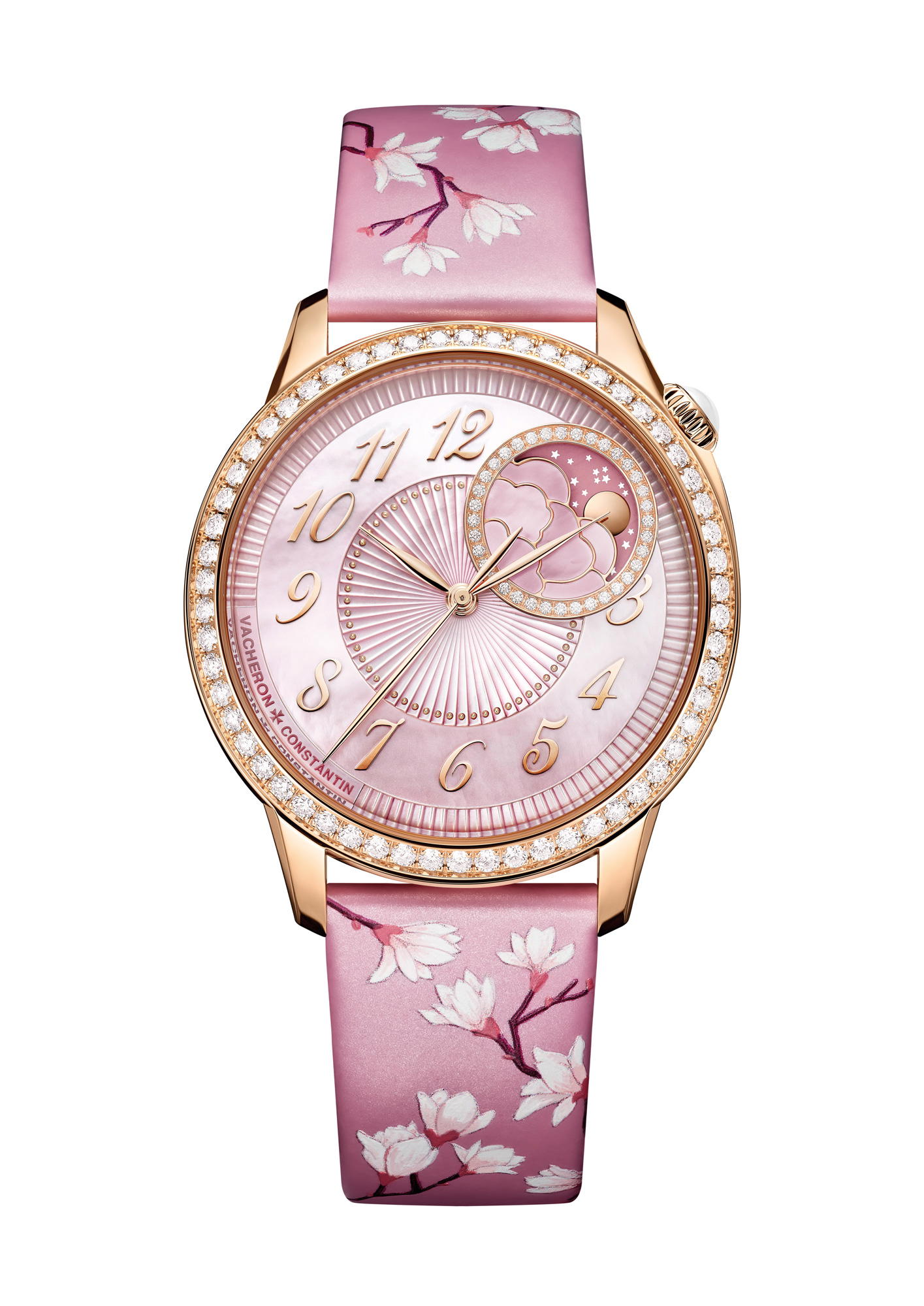
Vacheron Constantin’s Egerie Moon Phase Spring Blossom extends the brand’s two-century tradition of floral-inspired creations. Drawing on the first signs of spring, it features a pink mother-of-pearl dial engraved to resemble the pleated fabric of a skirt. The moon phase indicator, framed by diamonds, sits between 1 and 3 o’clock and is paired with a moonstone-set crown.
Known for its miniature painting on dials, Vacheron Constantin now applies this art to a calfskin strap hand-painted with spring blossoms. Two additional straps—raspberry-pink alligator and blush-pink grosgrain—are included and can be easily exchanged via an integrated, tool-free clip. Each of the 100 pieces is unique due to the hand-painted details and the natural variation in mother-of-pearl.
BEAUTY BY DESIGN
This second approach emphasises design and structure over the movement that powers time. The listed watches are valued primarily as jewellery, with construction, wearability, and the seamless integration of time display into the overall form as the main considerations.
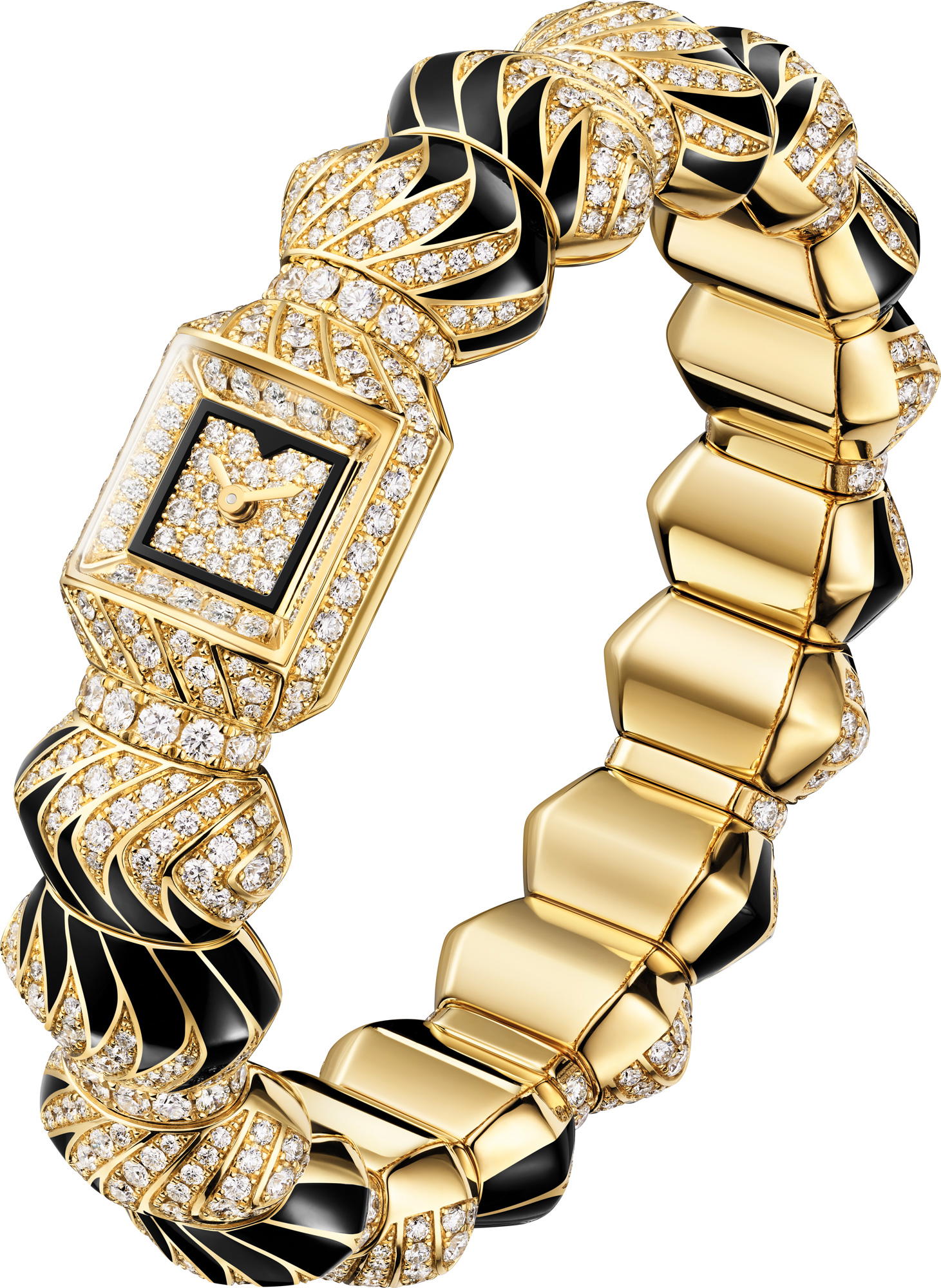
Cartier’s Myst de Cartier showcases a claspless bracelet design. Its sections slide onto a flexible, articulated elastic structure that slips over the wrist without a fastening. The stones are bead-set in varying sizes to build volume, with Cartier noting that around 30 hours of setting go into each watch. Hand-painted black lacquer lines accent a domed crystal and a pave dial with a triangular hour marker framed by an onyx border. A second version uses the same construction with a full diamond setting.
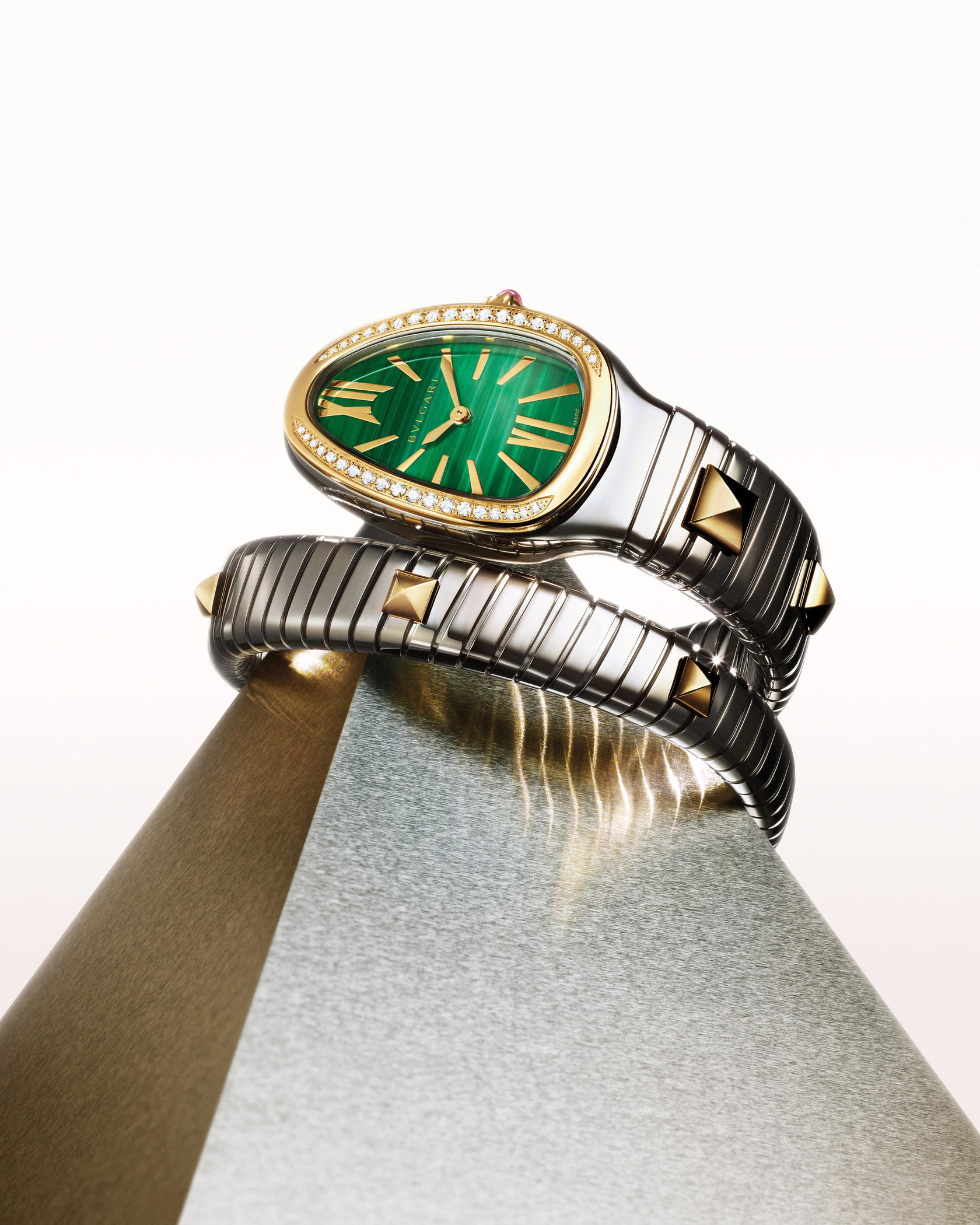
Bvlgari casts the spotlight on its Serpenti Tubogas collection with the Serpenti Tubogas Studs Capsule, pairing precious and industrial materials. Gold studs—the pyramidal clou drawn from Bvlgari’s jewellery—run along a smooth steel Tubogas coil, which wraps around the wrist rather than fastening around it. Among the four editions are one in solid yellow gold and three in a gold-and-steel mix with dials made of carnelian, sodalite, malachite or mother-of-pearl.
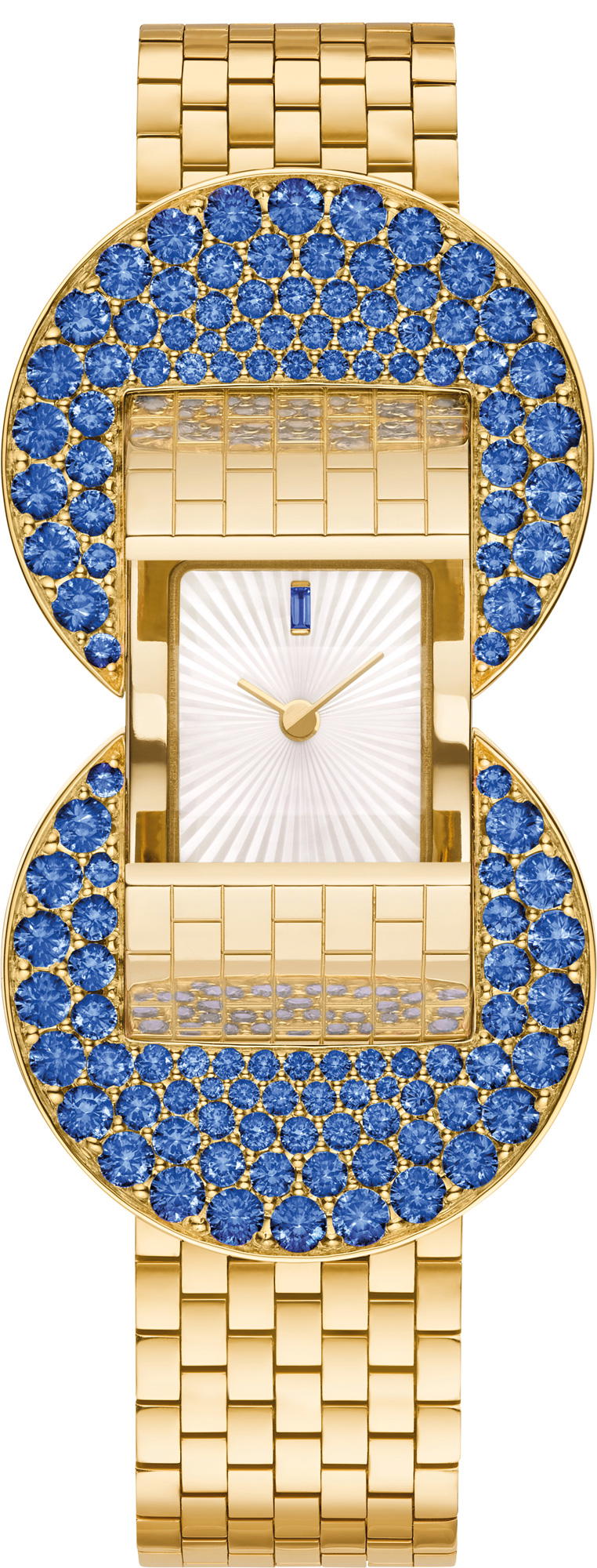
With the Ludo Secret, Van Cleef & Arpels conceals time within jewellery. Reworking a 1949 design built on the 1934 Ludo bracelet, its yellow gold briquette links are polished and hand-assembled into a mesh that moves like fabric.
Pressing both sides of the buckle will reveal a guilloche mother-of-pearl dial topped with a baguette sapphire where the 12 would be. The sapphires along the bracelet are graded by diameter and set in crescents, reflecting the Van Cleef & Arpels practice of treating stones as the essence of the piece.
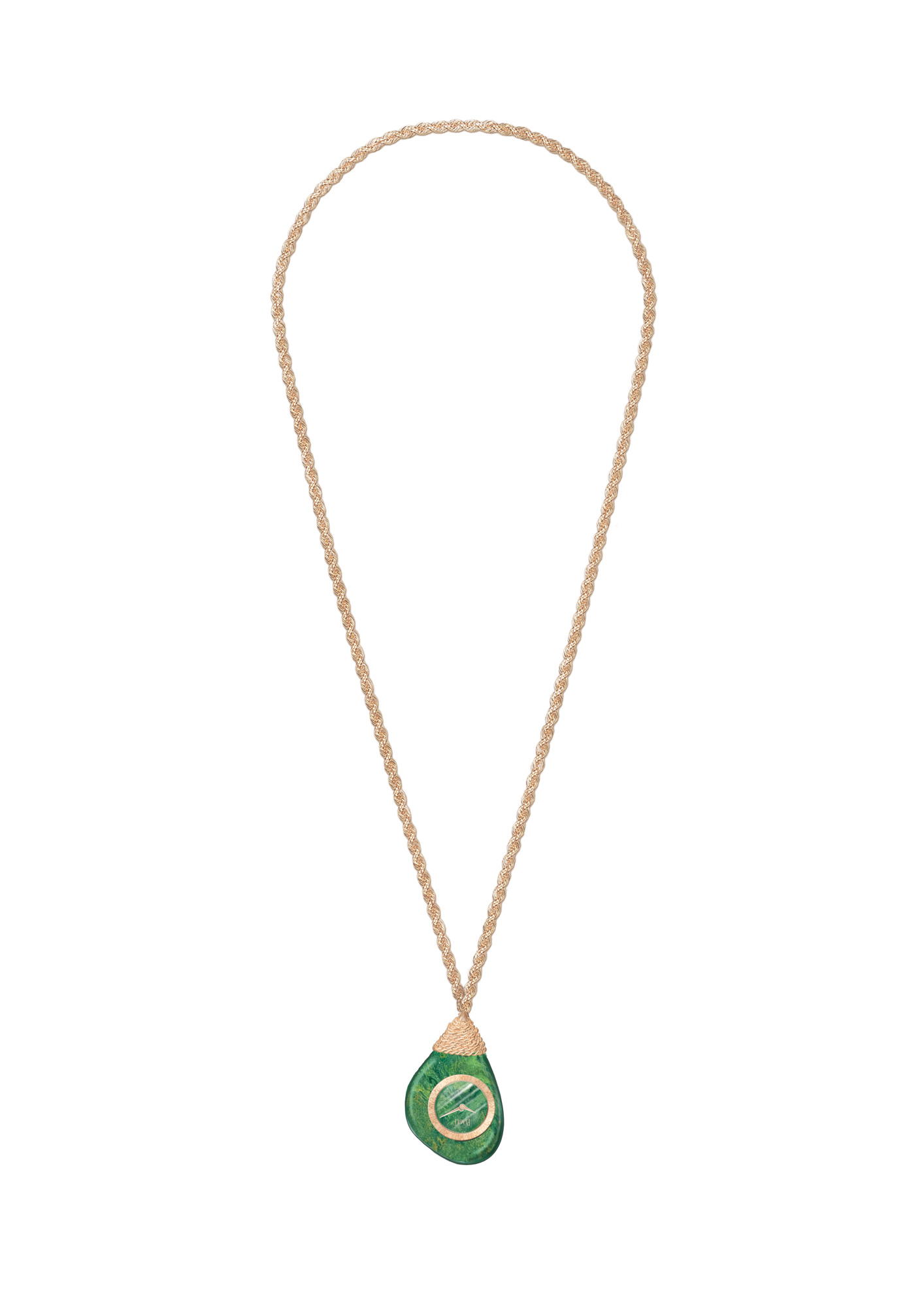
Finally, Piaget reinvents its 1972 Kimono pocket watch as three Swinging Pebbles. Each pebble-shaped timepiece swings on a hand-twisted gold chain and is expertly carved from an ornamental stone such as golden tiger’s eye, green verdite, or pietersite.
The case and dial are fully integrated into the stones, with the latter used as a decorative canvas since the 1960s—an approach boosted by Piaget’s ultra-thin movements, which permitted engraving and hardstone work on the front. With Swinging Pebbles, the concept is elevated: the watch essentially becomes the stone itself, worn around the neck, with timekeeping as a secondary function.
All watches here do more than tell time—they announce a presence and mark an era where technical mastery meets feminine style in personal, tactile treasures. Moving forward, we anticipate bold inventions and reinventions that will reshape women’s watchmaking for years to come.