
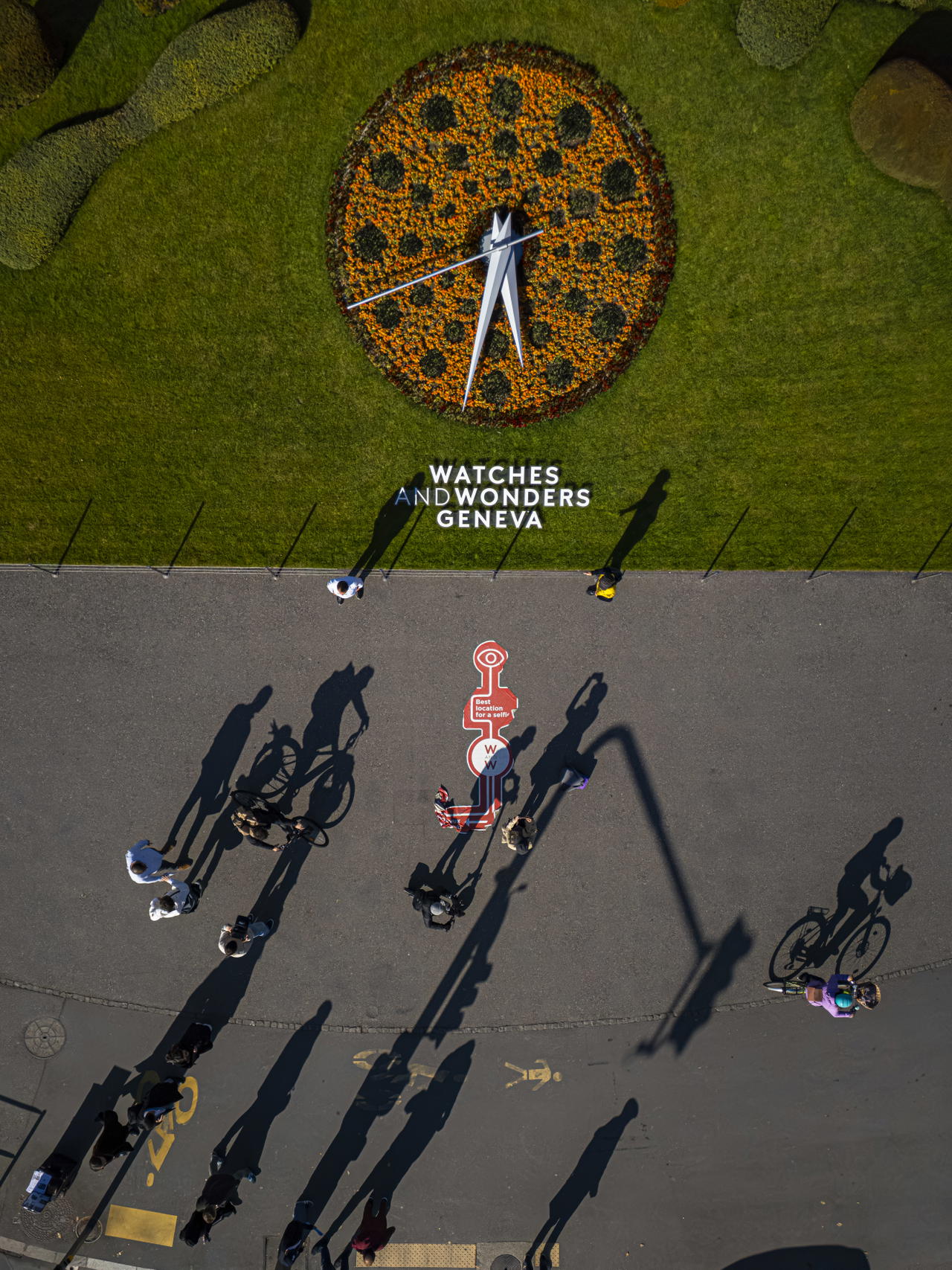
The 2026 edition of Watches and Wonders Geneva at Palexpo set new benchmarks, attracting nearly 60,000 visitors, alongside 1,750 accredited journalists and 6,000 retailers. While anniversaries and milestone releases captured much of the attention, some of the fair’s most compelling developments lay in its technical achievements. Here, a round-up of the most interesting developments that emerged.
PATEK PHILIPPE
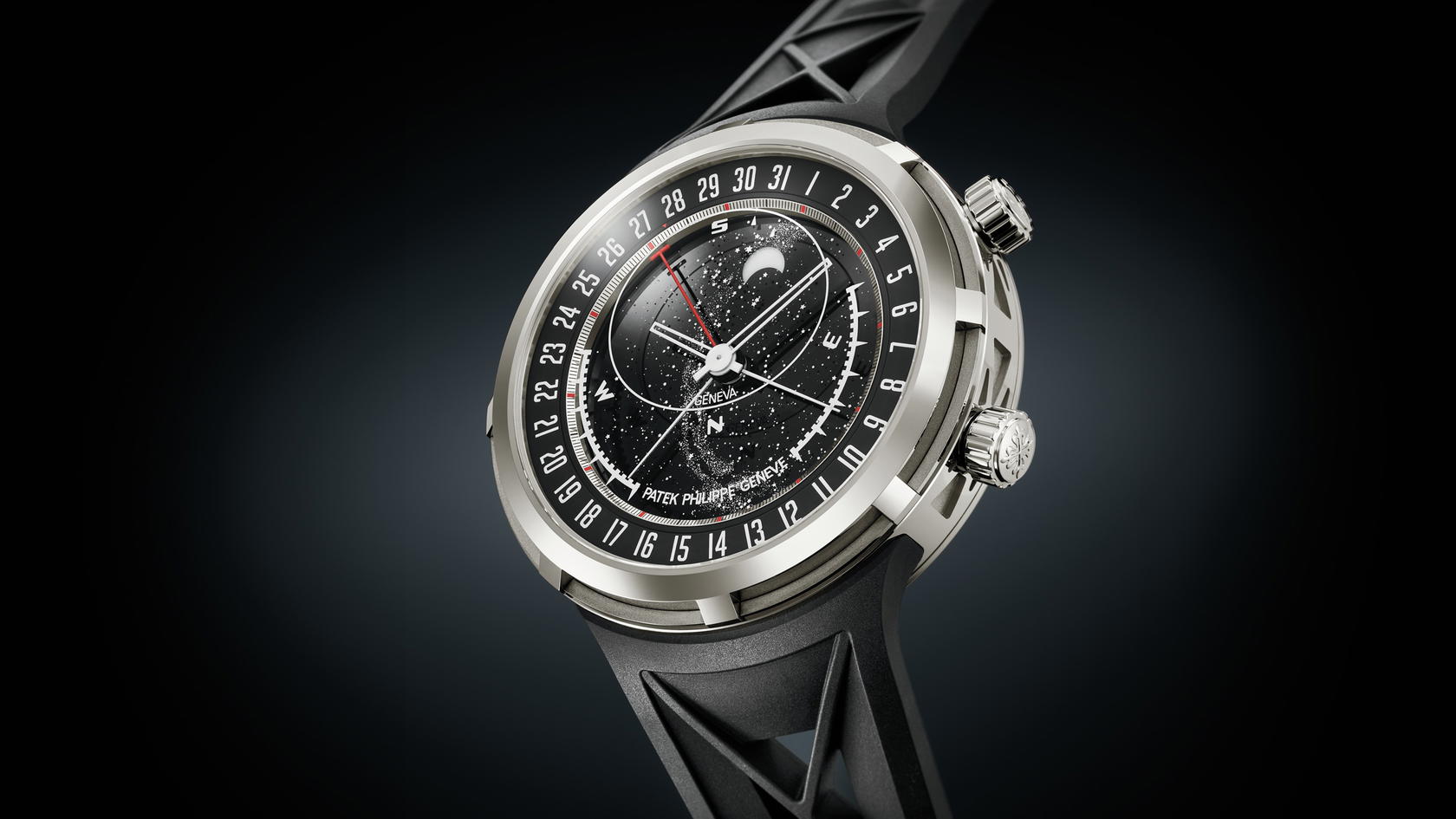
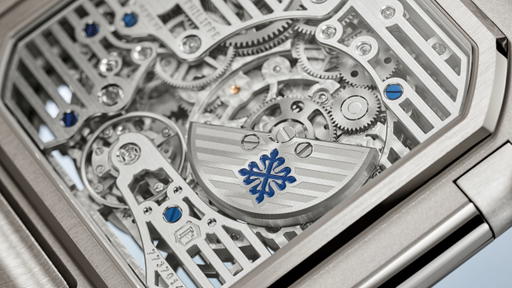
Patek Philippe‘s Ref 6105G-001 is its first wristwatch to display sunrise and sunset times, a feature which has appeared in its pocket watches since 1927 and in the legendary Calibre 89. It took five years to develop and is protected by six patents. In addition to the two ovoid cams that drive the display, a double feeler-spindle just 0.48mm wide reads the changes in the
earth’s axial tilt during the year. In addition, three transparent sapphire and mineral crystal disks simultaneously display the sidereal day, lunar day, and lunar month. The moon phase is precise to one day every 3,000 years.
The DST corrector is a notable engineering achievement, enabling the advancement of time by one hour for summer with a press of the pusher at 9 o’clock, while realigning the sunrise and sunset hands through the date disk, which also functions as the scale for both. The 426-part calibre 240 C LU CL LCSO enhances the design by adding only 1.12mm to the height of its predecessor, despite incorporating additional mechanisms. The 47-mm white gold case with an X-shaped motif in relief across the caseband contributes to the watch’s architecturally bold appearance.
Ulysse Nardin
![Ulysse Nardin’s [Super] Freak is the most complicated time-only wristwatch, and features the calibre UN-252 (Credit: Ulysse Nardin)](https://cache.aplussingapore.com/2026/06/SUPER-FREAK_ULYSSE-NARDIN_2520-500LE-3A-BLUE_3A-1.jpg?class=d1680)
Ulysse Nardin’s [Super] Freak is the most complicated time-only wristwatch. Developed over four years, the calibre UN-252 is built around the world’s first automatic double tourbillon that is also a carousel. It features two inclined tourbillon cages mounted on a flying carousel, powered by the patented Grinder winding system, which uses four ultra-thin levers—each 0.12mm thick—to effectively double the angular winding stroke of a conventional rotor.
In between the two tourbillons lies a vertical differential, 5mm across and composed of 69 components, including ceramic ball bearings with micron tolerances, which average their rates and distribute energy without causing the two regulators to pull against each other.
Through a patented gimbal system adapted from marine compass stabilisers that measures 4.8mm, energy is transmitted from the differential to the seconds display—a first in the Freak line. In addition, 10 silicon components run through the movement, including diamond-coated silicon escapements engineered to withstand over 155 million impacts annually.
Jaeger-LeCoultre
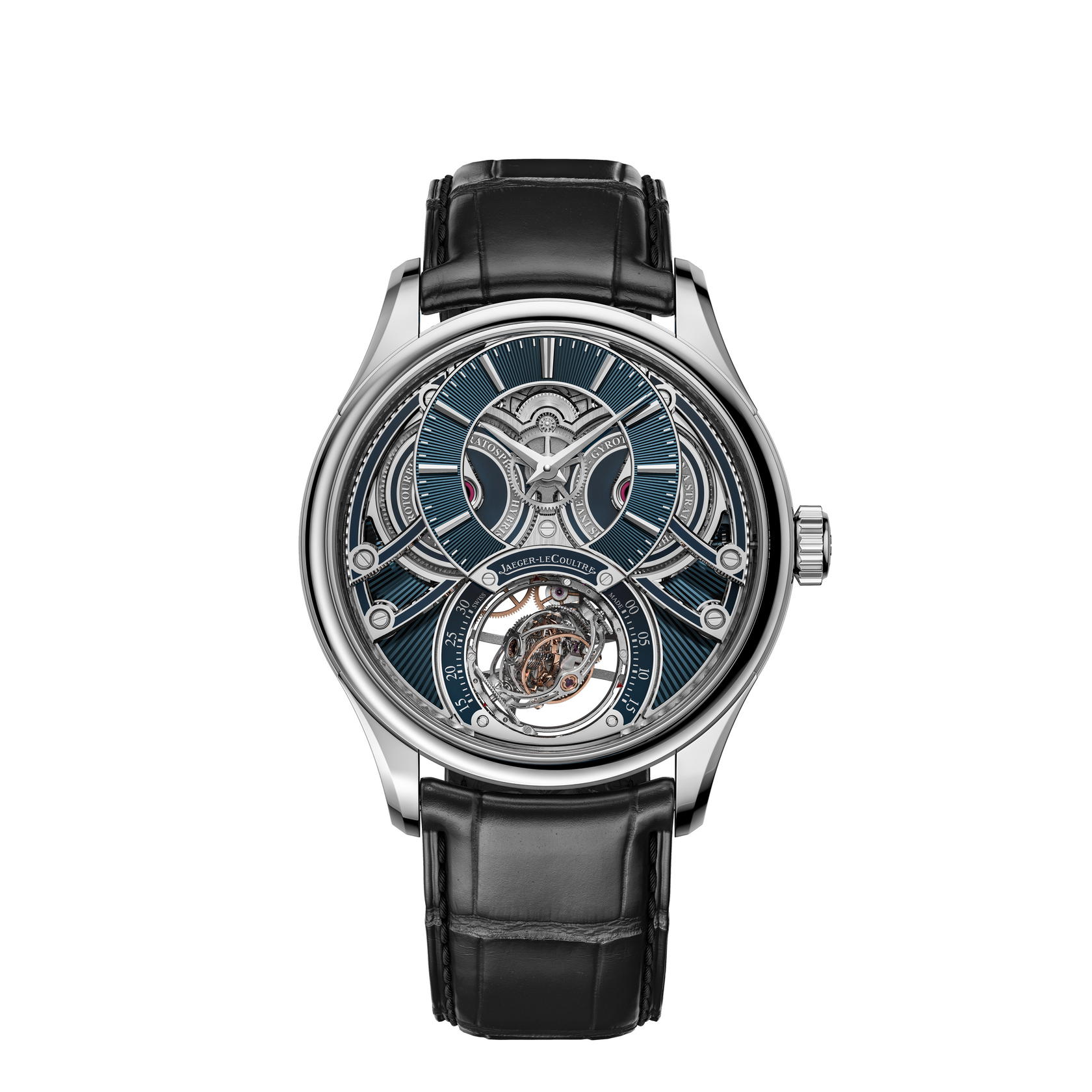
Photo: Jaeger-LeCoultre
Jaeger-LeCoultre‘s Master Hybris Inventiva Gyrotourbillon À Stratosphère is the fifth in the brand’s multi-axis tourbillon series, which began in 2004, and is its most extreme. Three titanium cages spin at different speeds on three axes, increasing positional coverage from 70 percent (original 2004 Gyrotourbillon) to 98 percent. The whole assembly weighs just 0.783g. Additionally, a cylindrical balance spring ensures concentric beats regardless of amplitude, position, or power reserve.
Parmigiani
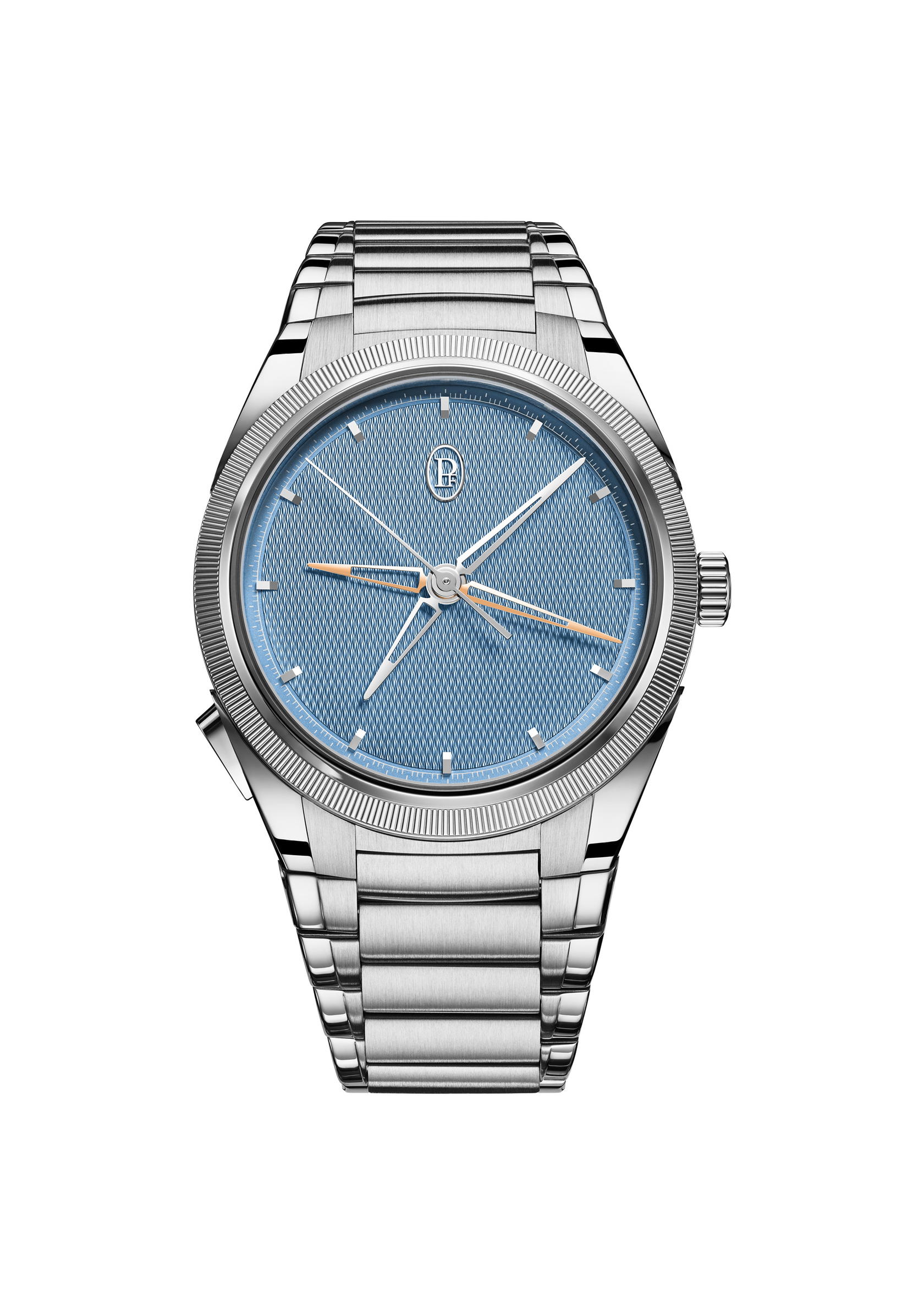
Parmigiani’s Tonda PF Chronographe Mystérieux doesn’t have sub-dials. The watch appears to be a simple three-hand model until the monopusher is pressed at 7:30. Three rhodium-plated hands immediately jump back to 12 o’clock to start timing while the rose-gold civil time hands emerge from behind. Pressing it a second time stops the count. The third retracts the chronograph hands entirely, realigning them with the civil time hands before the seconds hand resumes its normal movement. To manage the instant switching of hand functions, a triple-clutch construction (one vertical and two horizontal) is used.
Tag Heuer
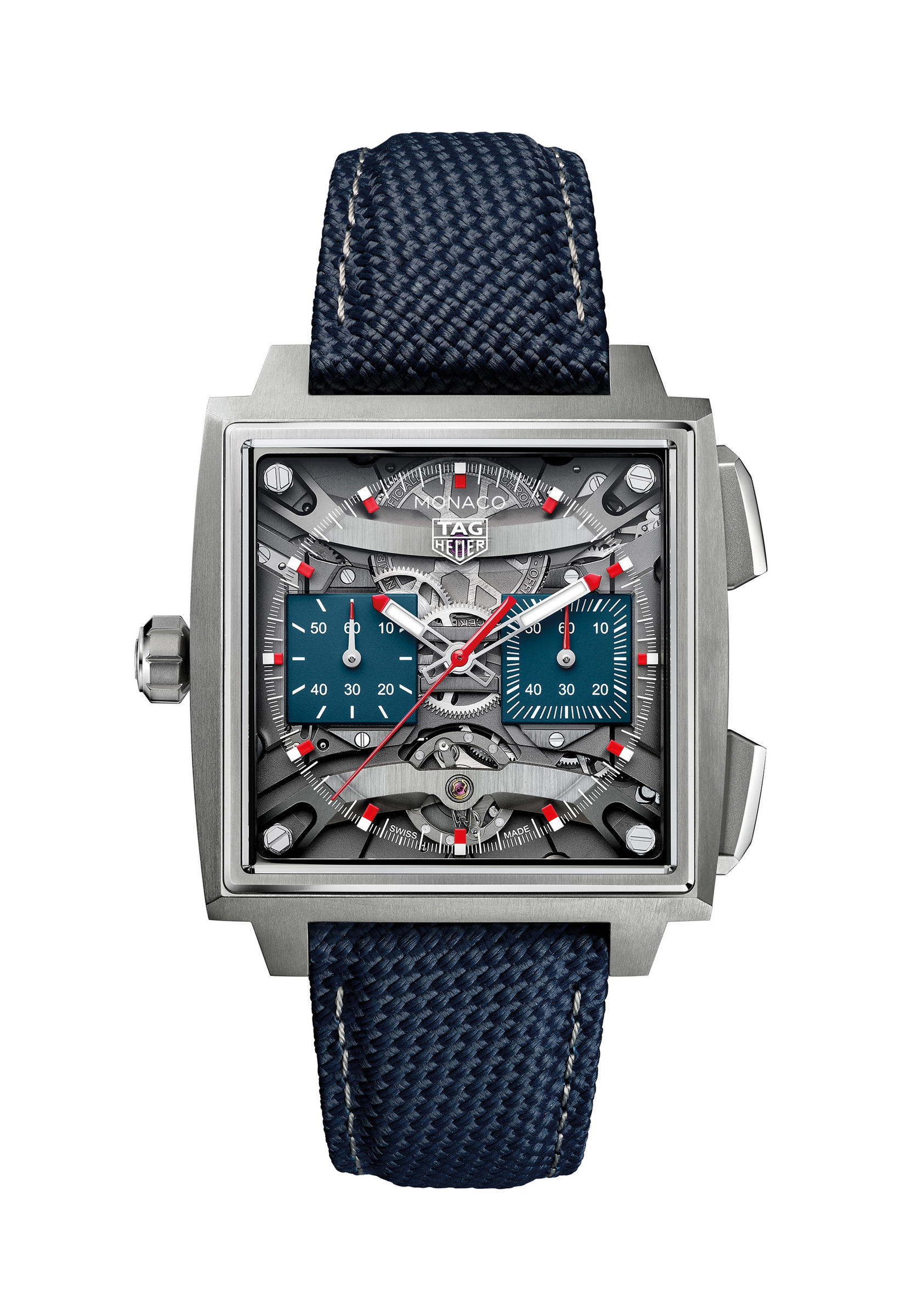
With the Monaco Evergraph, Tag Heuer addresses a fundamental question: does a chronograph really need levers and springs? The COSC-certified calibre TH80-00, developed over five years with Vaucher Manufacture Fleurier, operates at 5 hertz with a 70-hour power reserve and eliminates almost all traditional components. Instead, it features two flexible bistable parts created using LIGA high-precision lithography—one for start/stop and one for reset—without pivots, friction surfaces, or wear points.
Despite thousands of activations, the brand claims the pressure when pressing the pushers remains the same. The movement is inverted, with the barrel, gear train, and TH-Carbonspring oscillator on the dial side, visible through a transparent dial. Also, the 40-mm Grade 5 titanium case echoes the design of the 1969 ref 1133 Monaco, famously worn by Steve McQueen at Le Mans.
Roger Dubuis
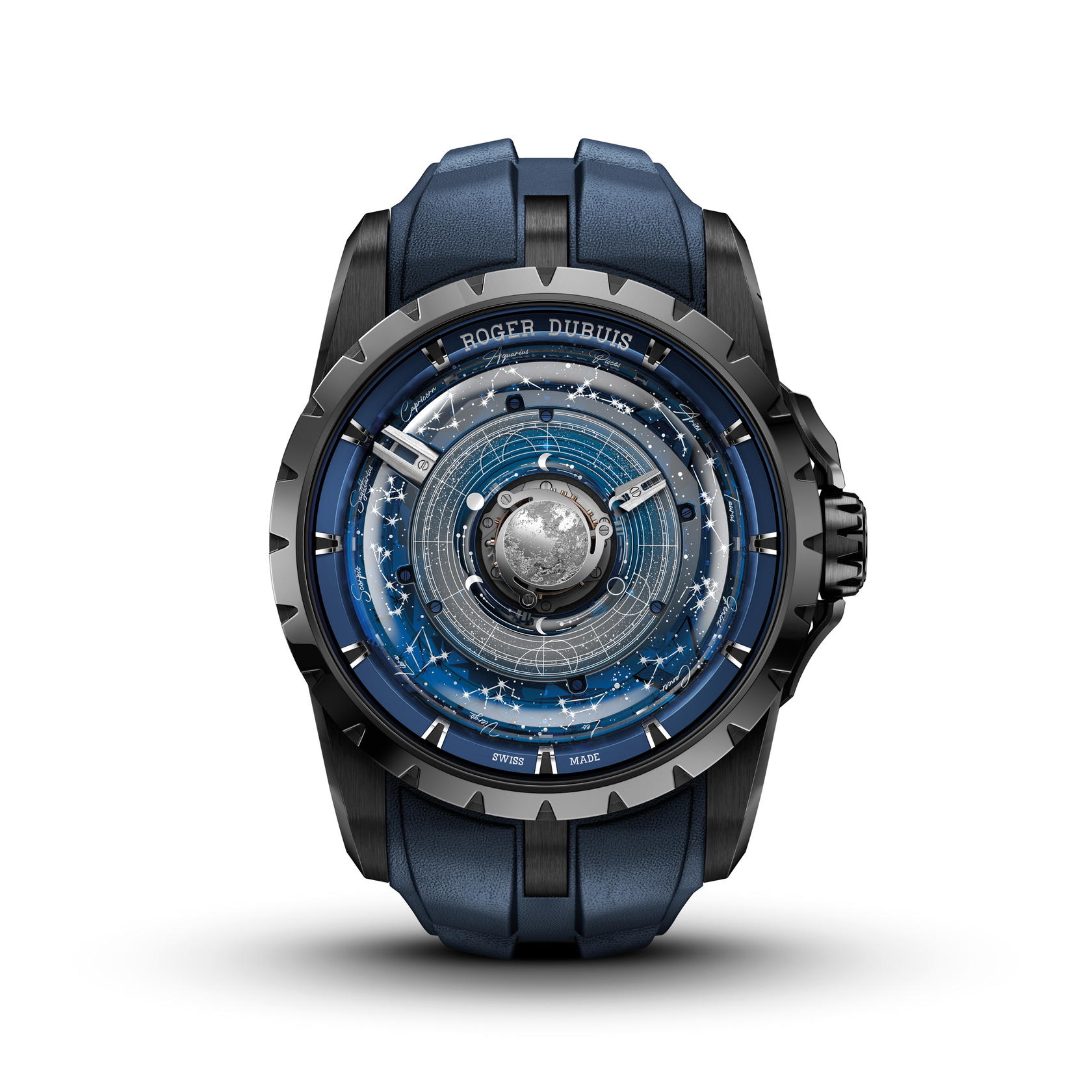
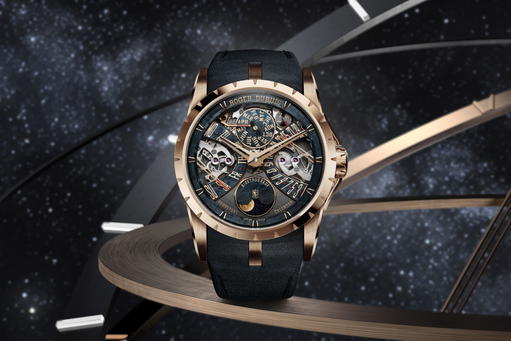
Roger Dubuis used the fair to take its Rarities programme public, with the Excalibur Moonlight as its highlight. The 45-mm black DLC titanium watch is built around the RD115 calibre, a central mono-tourbillon introduced in 2022. Placing the regulating organ at the centre of the movement eliminates the need for conventional hands; instead, the hours and minutes are displayed on two Murano glass discs rotating around the tourbillon.
Two patents were issued for rethinking the gear train to accommodate the arrangement: one for a planetary differential that maintains energy flow to the tourbillon, and another
for a push-button system that disengages the discs during setting. Based on the owner’s birth date, the barrel cover can be personalised with constellations.
H. Moser & Cie.
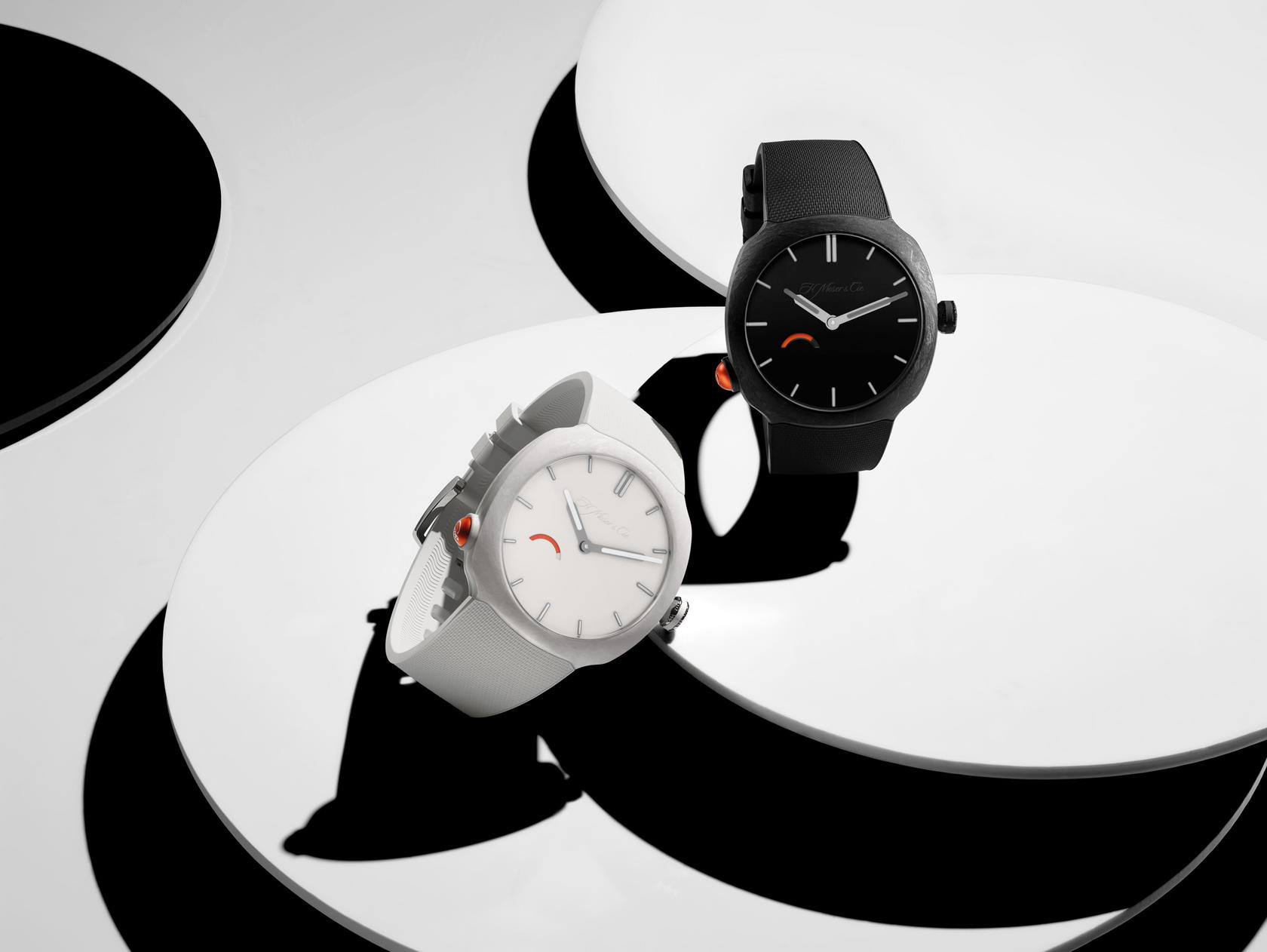
Some of the innovations at the fair were also designed to enchant and amuse, not solve problems. H. Moser & Cie., for instance, created a watch with a button for winding. The Streamliner Pump was created in collaboration with Reebok around the iconic orange pump button from its 1989 trainer. With this button instead of the traditional crown, a single press sends energy to the mainspring and advances the power reserve indicator by about an hour.
The watch’s movement is a re-engineered manual-wind version of the HMC 500, visible through open bridges and a skeletonised rack. Its case is made of forged quartz fibre, a rare material in watchmaking that is UV-resistant, customisable in colour, and characterised by a moire pattern unique to each watch. A titanium shell protects the movement from water and offers water resistance.
Van Cleef & Arpels
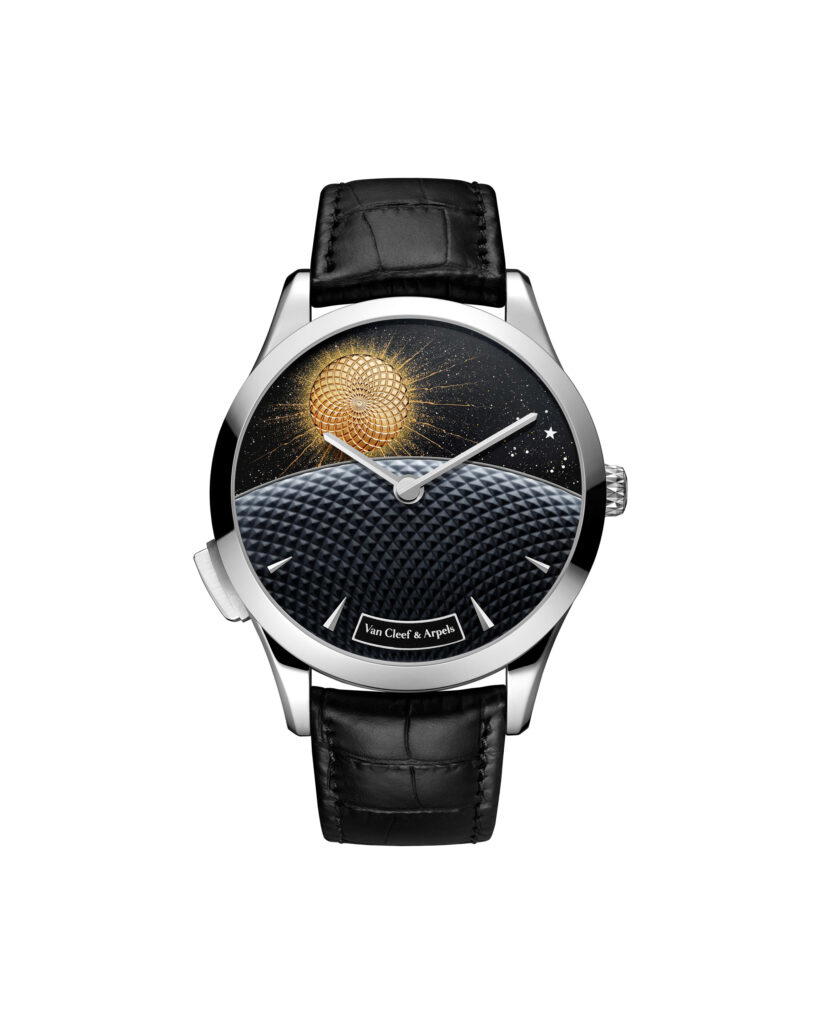
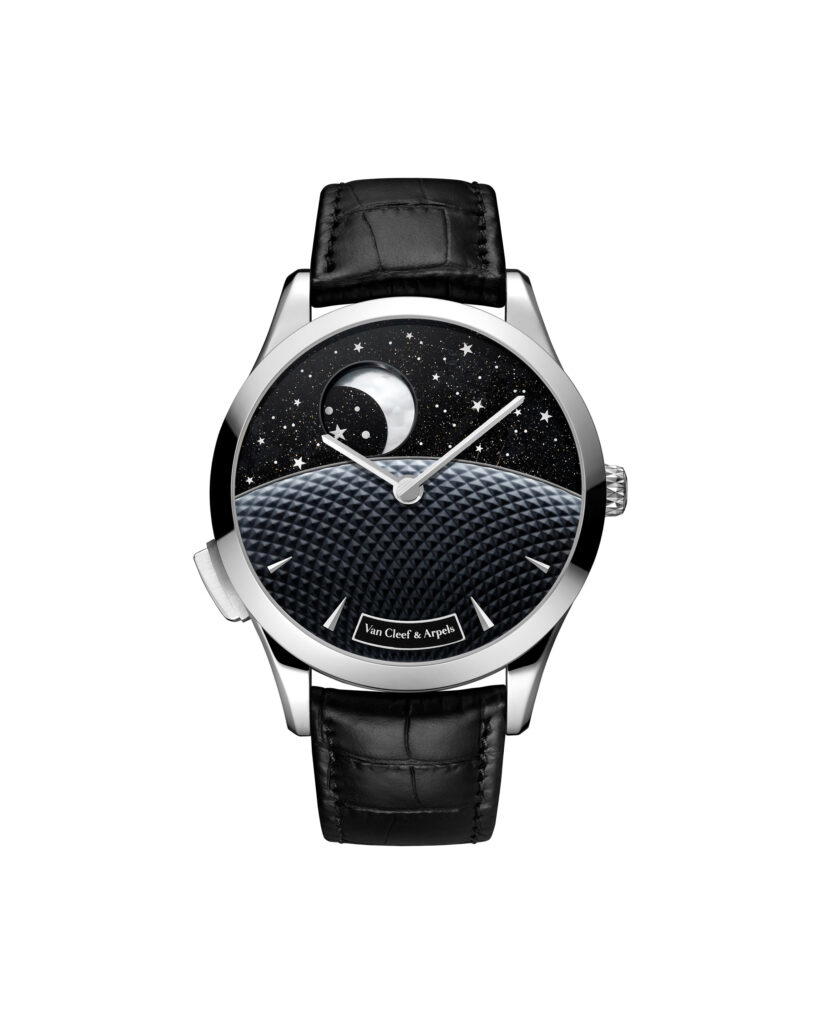
Midnight Jour Nuit Phase de Lune continues Van Cleef & Arpels‘ tradition of treating watches as animated objects rather than instruments. The 42-mm white gold case has a dial in black Murano aventurine glass, produced in-house to achieve a particular density of colour and bronze shimmer.
It has two rotating discs that drive overlapping displays: a 24-hour day-night cycle that alternates between a guilloche sun and a white mother-of-pearl moon behind a gradient horizon shroud, and a moon-phase display that updates continually to mirror the satellite’s actual appearance. Upon demand, the dial rotates a full 360 degrees over 10 seconds to show the current phase. According to Van Cleef & Arpels, the central challenge in four years of development was to engineer this rotation without disrupting phase accuracy.