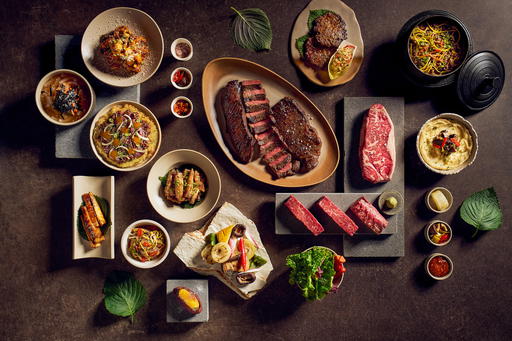

Dining at Ka-Mon is an education in the authentic flavours of Japanese produce cooked using three traditional grilling techniques. As Singapore’s first restaurant to feature genshiyaki, robatayaki, and warayaki dishes on the same menu, Ka-Mon opened in January at Hotel Michael in Resorts World Sentosa.
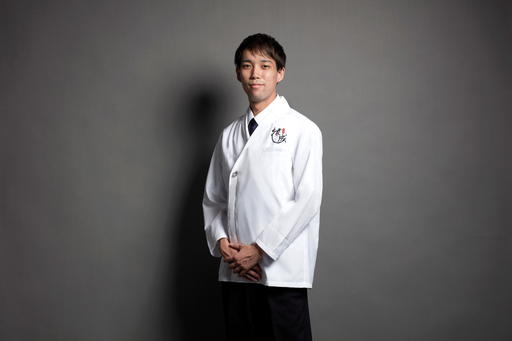
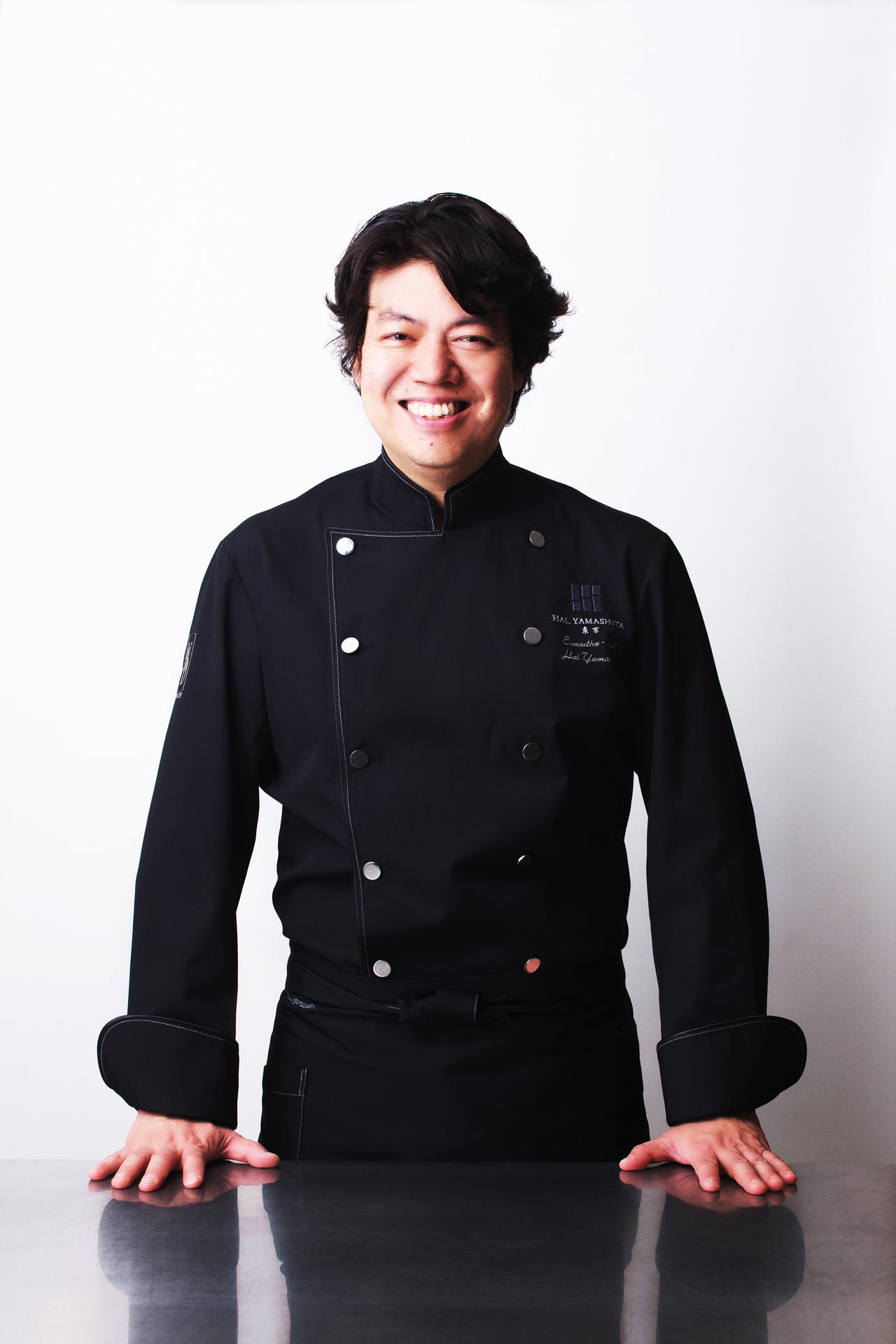
Helmed by master chef-owner Hal Yamashita—named one of the five best chefs in Japan by the Nikkei Restaurant Menu Grand Prix in 2003—Ka-Mon is his second venture in Singapore. Syun, which he opened in 2015, is also located in Hotel Michael.
To provide some background, genshiyaki slow-grills ingredients vertically over binchotan (clean-burning Japanese white charcoal from the indigenous ubame oak tree) in an irori or sunken hearth. In robatayaki, a fireside binchotan and its smoke intensify the umami flavour of meat and vegetables.
With warayaki, ingredients are seared over high-temperature rice straw flames of up to 900 deg C, resulting in melt-in-your-mouth tenderness.
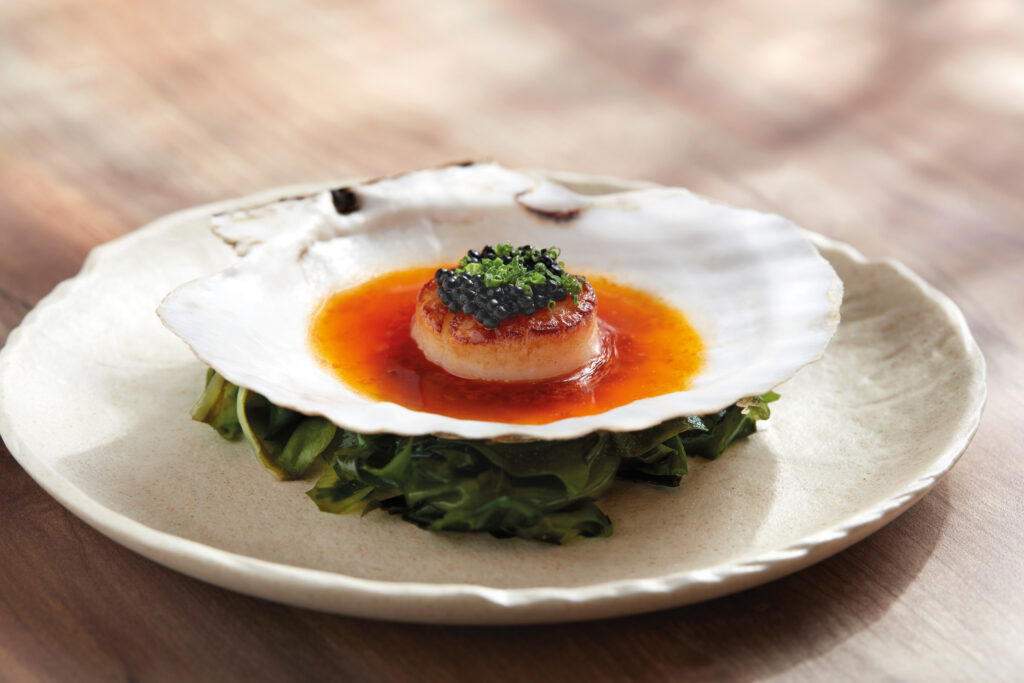
Yamashita’s favourite way to grill is robatayaki. As he explains, the process leaves the meat tender and juicy while creating a crust on the surface. “I enjoy using this technique for A4 Kaogoshima beef striploin, which is known for its exceptional quality, intense flavour, and marbling. To enhance the taste, I sprinkle Maldon sea salt.”
A pioneer in nouvelle Japanese cuisine, Yamashita’s approach integrates global flavours and Japanese cooking techniques.
As a chef, he values vibrant and natural ingredients since they offer superior quality and provide a canvas for creativity. Kobe wagyu beef, for example, profoundly influences the culinary style of Yamashita, who was born in the city in 1969.
STAYING AHEAD OF THE FLAME GAME
Yamashita’s favourite dish at Ka-Mon is the Wagyu Beef Tartare. In this reimagining of yukke, or Japanese-style tartare, finely chopped wagyu beef is seasoned with Korean gochujang paste for a sweet, savoury, and subtly spicy taste. Mix in a quail egg yolk for extra creaminess, scoop with papadam, and enjoy the final crunch.
Wagyu Beef Tartare exemplifies how traditional Japanese techniques can be adapted to elevate global dishes, with the subtle heat of gochujang beautifully complementing the rich wagyu.
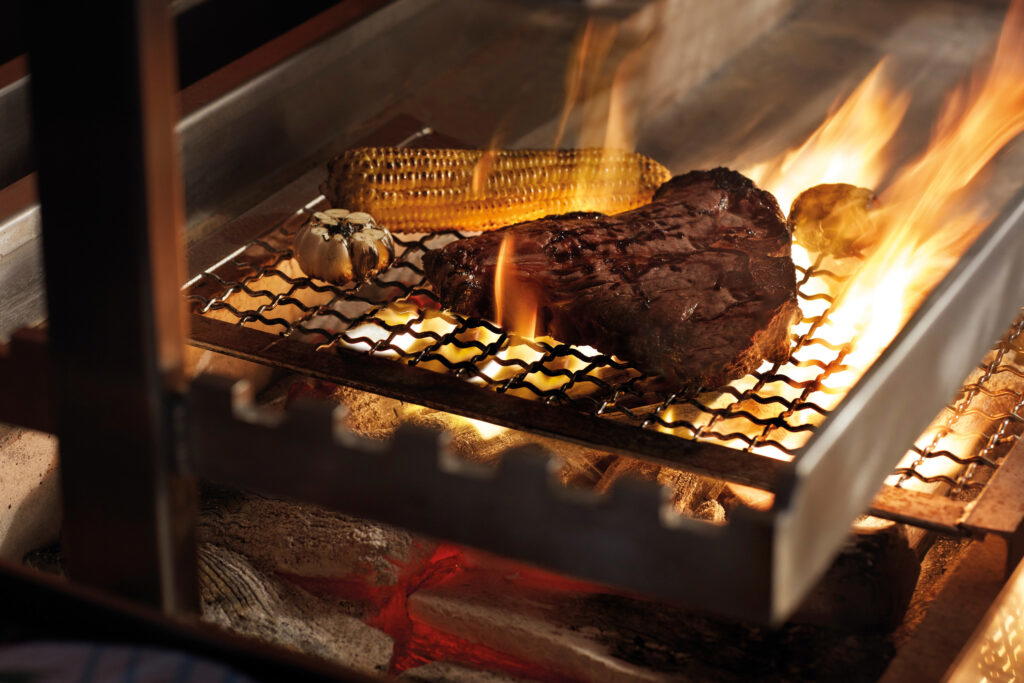
In Irori Grilled Jumbo Tiger Prawn, the locally sourced crustacean is slow-grilled over charcoal to keep its flesh juicy and sweet. A squeeze of lemon and dash of Maldon sea salt add a delicious brightness. Tip: the prawn head is loaded with umami flavour.
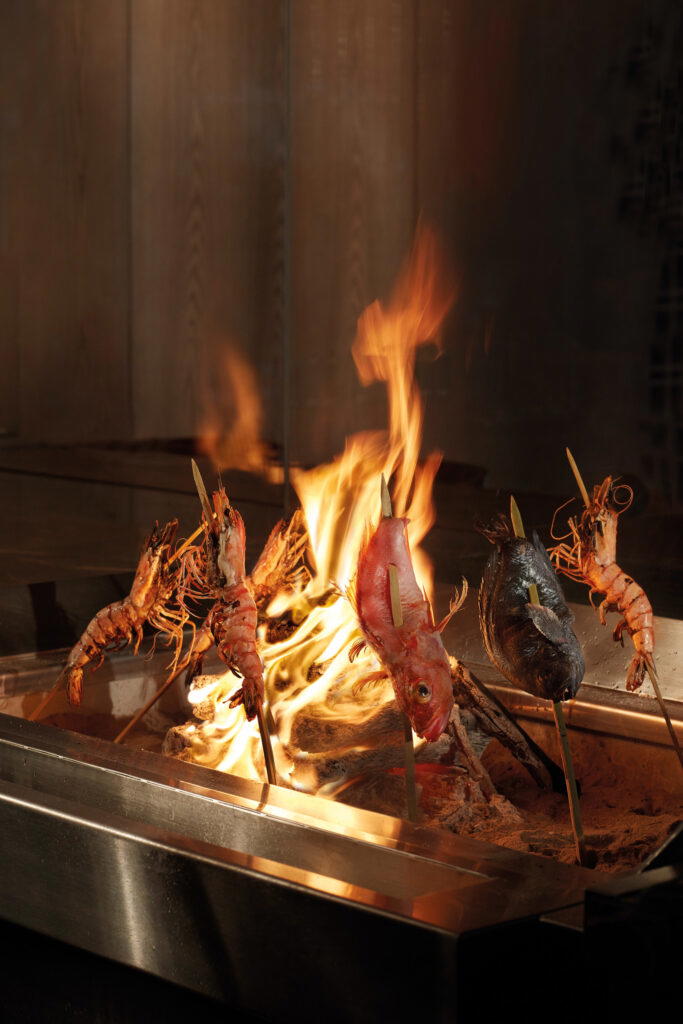
Using sustainably sourced big-eye tuna from Australia’s east coast, Tuna Wara Tataki is grilled over the warayaki. Its high flames lightly char the exterior, leaving the inside buttery-soft and rare.
During our visit, we also had donabe. Usually, seasonal Japanese seafood or other produce is featured in this off-menu clay pot dish. At the time of writing, it was kuromutsu, a deep-sea fish from Kagoshima with a buttery, delicate taste. It is lightly grilled over binchotan and then mixed into niigata rice cooked with roasted fish bone dashi and garnished with fried garlic crumbles, shiso leaves, and ikura. Yamashita’s Grilled Unagi and Foie Gras Donabe is another treat.
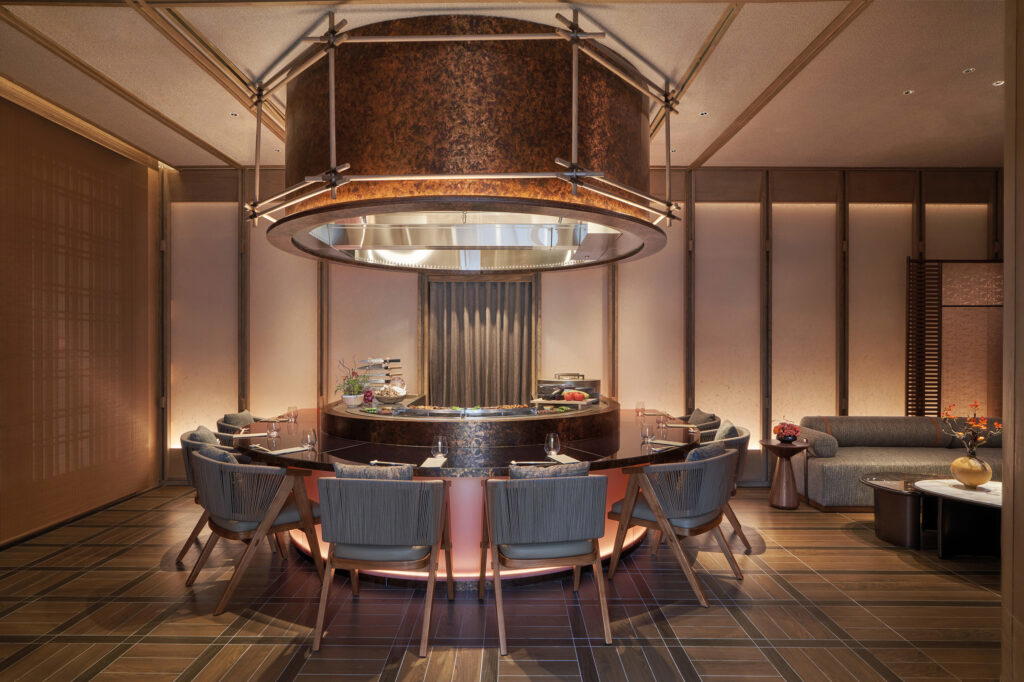
At the end of the meal, we ask Yamashita what his restaurant’s name means. Ka-Mon, which means “come on!”, began as a playful invitation to come and experience the restaurant.
However, there’s also a deeper meaning that ties back to his roots. “Kamon” refers to Japanese family crests. In combining “ka” (family) and “mon” (door), Yamashita hopes to share these cherished culinary traditions.