
Felix Chong likens the process of designing il Giardino’s menu to planting a garden. “You start with strong roots—in this case, Italian traditions—and let it grow in its own way, adding a few unexpected herbs and surprises,” says the Singaporean chef known for his expertise in Italian cuisine and his role as the Culinary Associate Director of Cuisine Development at 1-Group. The homegrown F&B, lifestyle, and hospitality group also runs the restaurants Monti (Italian), Una (Spanish), and Oumi (Japanese).
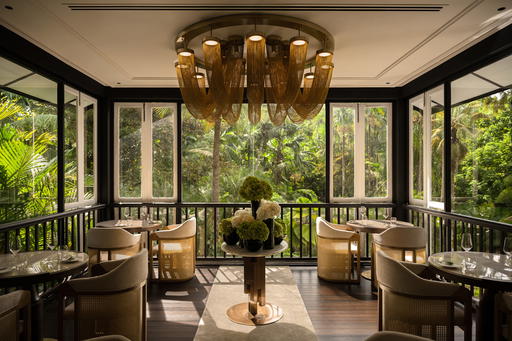
Since July, The Garage at the Singapore Botanic Gardens has been home to il Giardino, located on the second floor. With its lush surroundings, Singapore’s first Unesco World Heritage site provides the perfect backdrop for the Italian restaurant.
As its name means “the garden” in Italian, Chong envisioned il Giardino as a place where food and nature meet. Fresh and seasonal garden vegetables, such as Italian heirloom tomatoes and herbs are abundant on the menu. As a matter of fact, all parts of Italy are represented, including pecorino cheese from central Italy and mustarda di frutta, a condiment made with candied fruit and mustard syrup that comes from Northern Italy.
While il Giardino features authentic techniques and principles of Italian cooking as its foundation, Chong has integrated Singaporean and Asian ingredients to enhance each dish naturally. For instance, kaffir lime gremolata elevates Slow Braised Osso Bucco with its aromatic note.
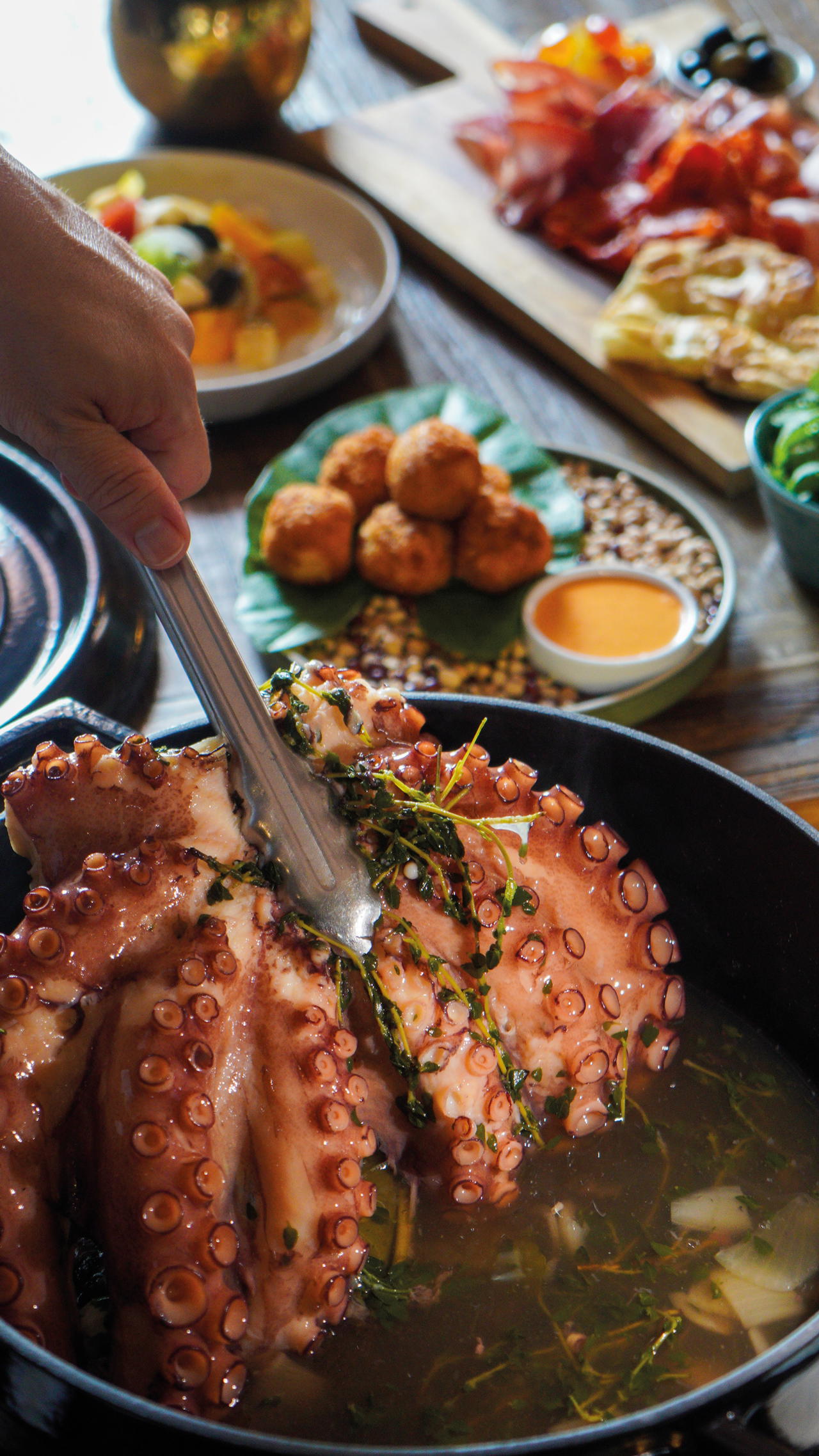
Giardino Slow Cooked Venetian Octopus is one of the restaurant’s signature main dishes. This hearty dish is braised for eight hours until fork-tender and served tableside from a large pot. Lemon, house-made gremolata, ginger flower salsa verde, and a drizzle of robust Laudemio extra virgin olive oil brighten the generous slices of octopus. The lusciousness is mopped up with focaccia bread on the side.
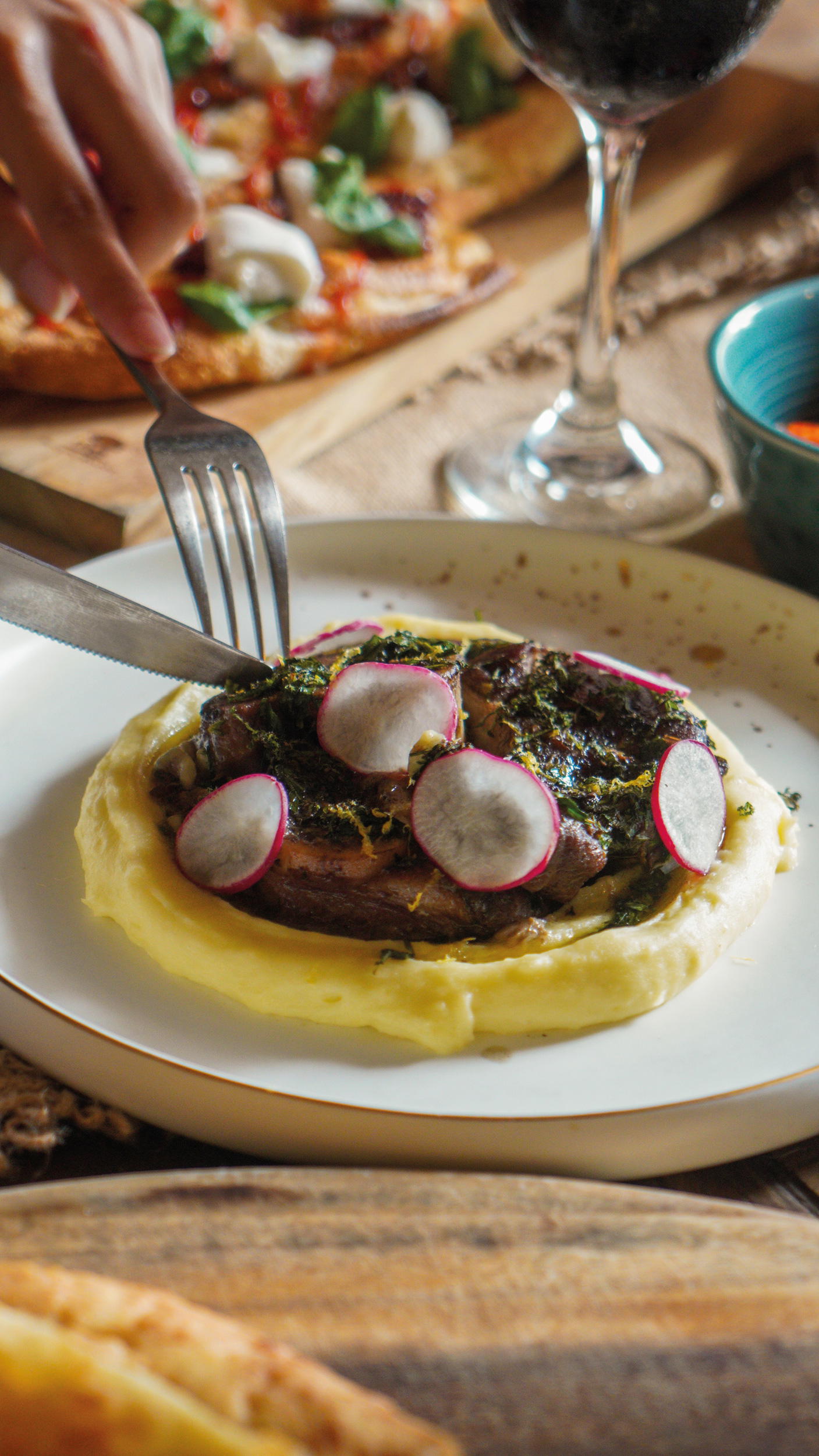
While il Giardino features authentic techniques and principles of Italian cooking as its foundation, Chong has integrated Singaporean and Asian ingredients to enhance each dish naturally. Diners can spot local influences throughout the menu, including the kaffir lime gremolata that elevates the Slow Braised Osso Bucco with an aromatic note, and the kaffir lime crumbs that boost the squid and prawn flavours of Bucatini Pasta.
With its fusion of Italian pasta craftsmanship and the local classic’s rich, complex flavours, Chong’s imaginative East-meets-West approach also shows up in the House-made Tagliatelle with Wagyu Beef Rendang.
In adapting Italian culinary traditions for the local experience at il Giardino, Chong drew on the Venetian bacaro tradition of communal dining, offering dishes made for small or large family plates. “The cicchetti concept of small plates creates a relaxed, communal atmosphere where guests can share and enjoy a variety of flavours,” he says.
A BEAUTIFUL MEAL TASTES AND DOES GOOD
Taking sustainability seriously, the il Giardino team focuses on maintaining a mindful and responsible operation through practices such as minimising food waste.
Panzanella ‘Singapura’, for example, features “ugly but perfectly edible” (and usually discarded) tomatoes, says Chong, who reinterprets the classic Tuscan bread salad with green mangoes, croutons, and cashew nuts, along with a smoked tamarind vinaigrette drizzle. As for Artigiana Stracciatella, the tomatoes are soaked in sour plum juice and served with creamy tomato burrata filling, carrot puree trapanese, mint pesto, and toasted almonds.
Even a dessert such as Pistachio Tiramisu incorporates upcycled coffee grounds that have been processed with almonds and sugar to enhance the flavour. Says Chong, “We believe a beautiful meal is one that tastes good and does good for the planet.”