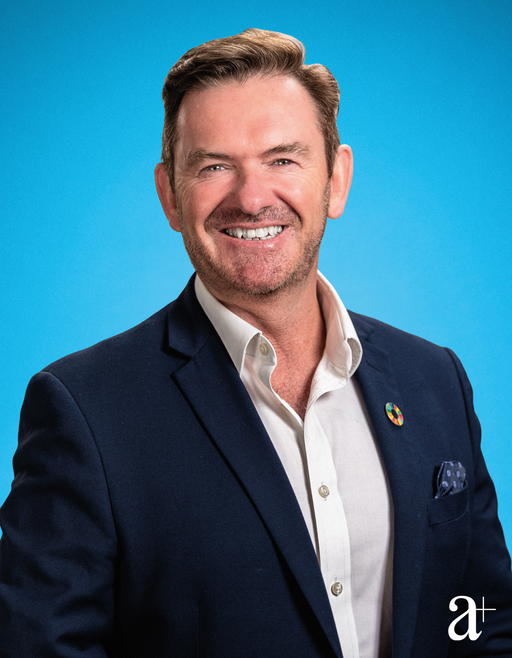

The first seeds Samuell Ang sowed were from a bitter gourd. Through no fault of his own, however, they were denied a chance to germinate. “I was five,” he recounts. “My grandmother believed that one should not grow anything that’d bring bitterness into their life, so she did away with them.”
Today, as CEO of Edible Garden City (EGC), Ang ensures multifarious edible plants are afforded opportunities to thrive in our concrete jungle.
Established in 2012, the urban farming organisation operates an 86,111 sq ft food production facility at Jalan Penjara to create social change through community-centric agriculture. Ang assumed the position in 2019, after years in leadership roles at MOE and MNCs left him wanting to use his professional experience “to do good ”.
The farm grows microgreens (sprouts that grow leaves) and edible flowers, such as kak dam papaya (a dwarf-long variety), Egyptian starcluster, and elderflower, which do not grow naturally in tropical climates. Additionally, there are endemic plants native to specific soil types and climate patterns. They include ulam raja, commonly eaten raw with sambal belacan or used in nasi ulam, a traditional Malay rice salad.
At present, the produce is supplied to Michelin-starred restaurants and hotel restaurants, as well as to home cooks through subscription boxes containing a variety of vegetables, culinary herbs, microgreens, mushrooms, and edible flowers.
To get the wider community on board with growing their food, EGC has helped over 270 restaurants, hotels, schools, and residences transform under-utilised spaces into edible gardens.
Ultimately, food security is part of a comprehensive defence plan. “During the Covid-19 outbreak, we realised the importance of being self-sufficient,” Ang says. His scope includes working with partners, such as DBS Bank, Marina Bay Sands, Symrise, Lam Soon Singapore, 1-Group, Capitaland, and NParks, to expand EGC’s footprint and social impact.
He also sees to it that EGC provides an inclusive environment. The organisation hires employees with autism to support farm production, holds experiential farm tours for the neurodivergent, and supports students at risk of offending behaviours. It is why EGC is expanding its focus on schools.
“After learning that gardening and nurturing plants lend these youths solace and self-confidence, we developed the gardener-in-residence programme for schools. It allows us to guide students in maintaining their gardens while giving them primary ownership.”
Samuell Ang on educating the next generation
Ang oversees collaborations with social service agencies as well. EGC provides residents of halfway houses like HEB-Ashram and Rise Above with training to help them become more employable and ensure that skilled manpower is continuously channelled into the agricultural sector.
It is a common misconception, he underscores, that substantial space and sunlight are needed to grow edible plants. We can take the first step in feeding ourselves by learning to grow microgreens; in addition to being densely packed with nutrients, they require minimal space and are ready for harvesting in two to four weeks.
Don’t know where to start? EGC holds beginner workshops that impart the skill of propagating sweet potato leaves through upcycling 1,500-ml plastic bottles.
But food security is only one piece of the puzzle. “I believe that we are what we eat. As such, we launched The Farm is the Pharmacy workshop to educate the public on the health and therapeutic benefits of various edible plants,” Ang says.
“I advocate eating food as medicine rather than eating medicine as food.”
Art direction: Ed Harland
Photography: Mun Kong
Photography assistant: Melvin Leong
Grooming: Crystal using Goldwell & Wee Ming using Gucci Beauty