
What would Mother Earth think of our pursuit of more? Elia Nurvista and Bagus Pandega’s first joint exhibition explores how relentless extraction, from plantations to electrification, wears out our planet.
Happening until 31 May, “Nafasan Bumi ~ An Endless Harvest” is part of the Material Intelligence series by Singapore Art Museum (SAM). It showcases artistic practices that explore material experimentation.
“Nafasan Bumi” (literally “breath of the earth” in Bahasa Indonesia) recognises breath as a biological need and an indication of planetary strain. According to SAM assistant curator Syaheedah Iskandar, it also underscores the notion that land, plants, and ecological systems are not just inert resources, but living entities that can be depleted as well.
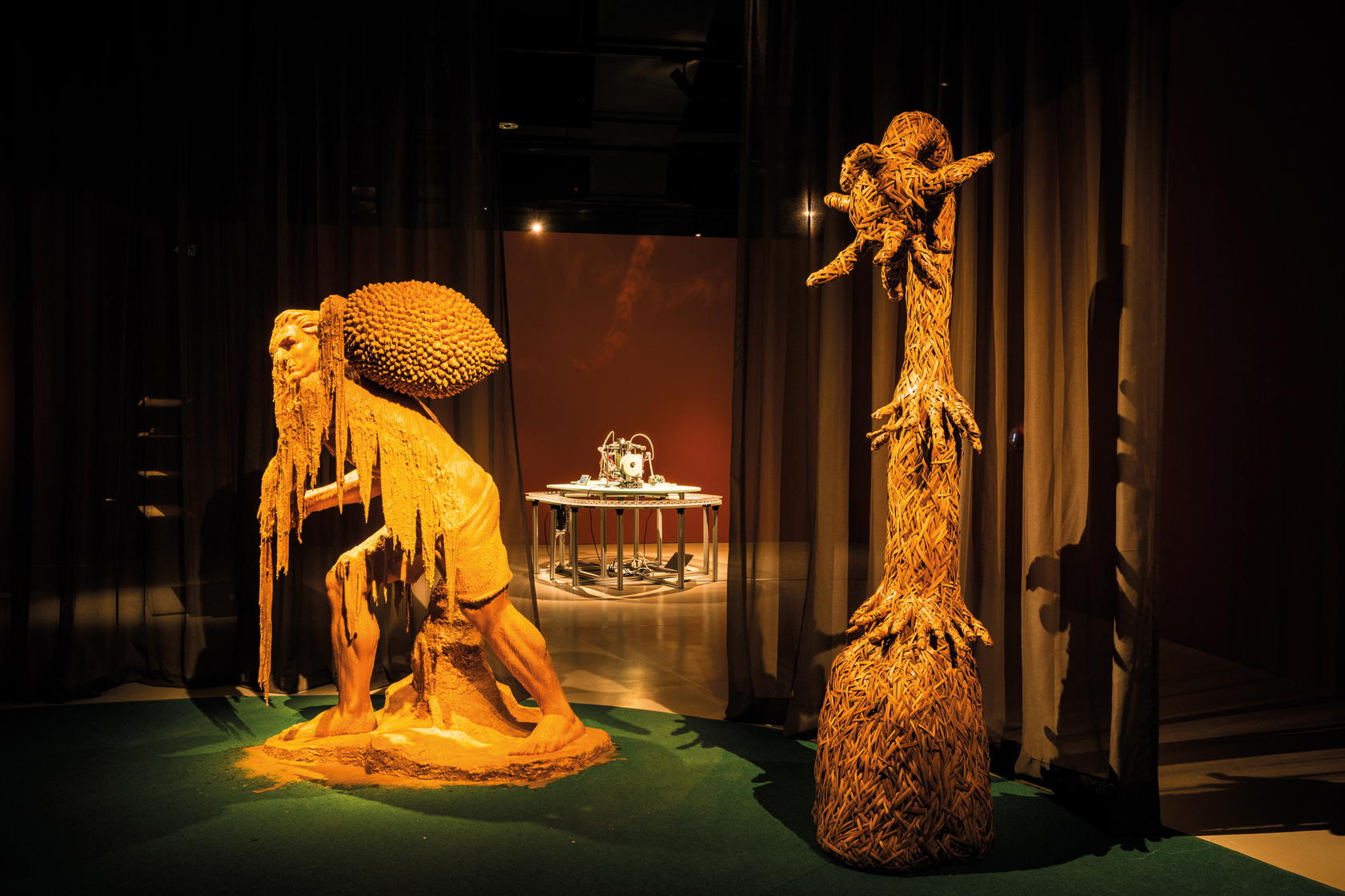
The latter part of the title, “An Endless Harvest”, captures this exhibition’s play on contrasts. Essentially, it illustrates the paradox at the heart of unsustainable economies, where land is expected to give continuously without consequence.
As Syaheedah explains, “The artworks invite us to feel these pressures rather than simply observe them, asking what it means to listen when the earth’s breath becomes laboured.”
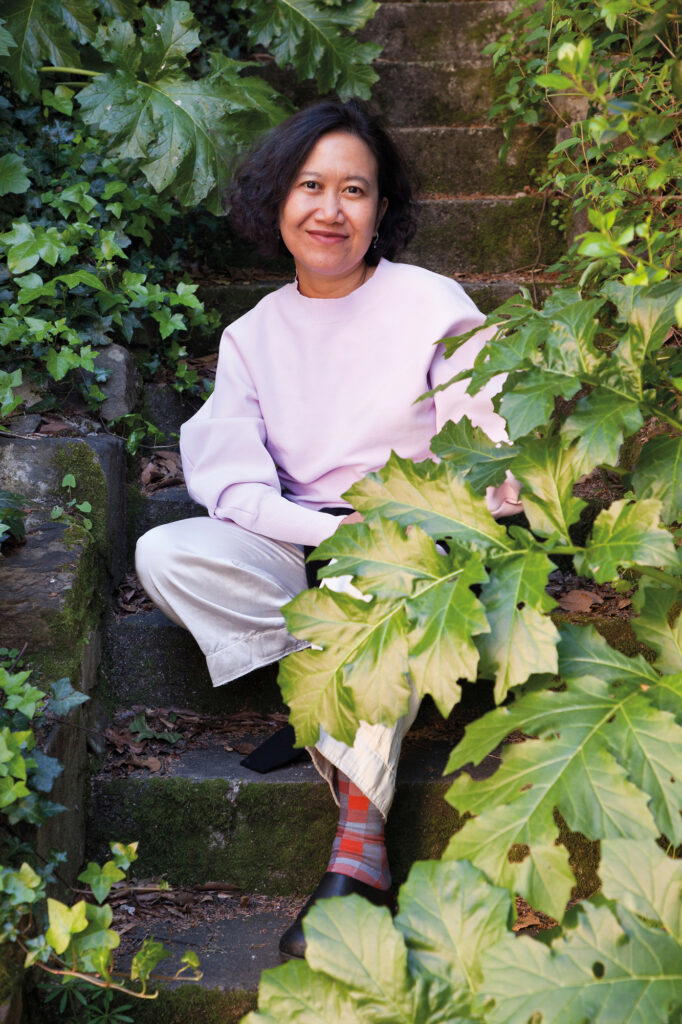
Visitors can look forward to seven new commissions by both artists at this exhibition. Elia, a 2025 Villa Roman Prize winner acclaimed for her multimedia explorations on the politics of food, has exhibited in countries such as Australia and Saudi Arabia.
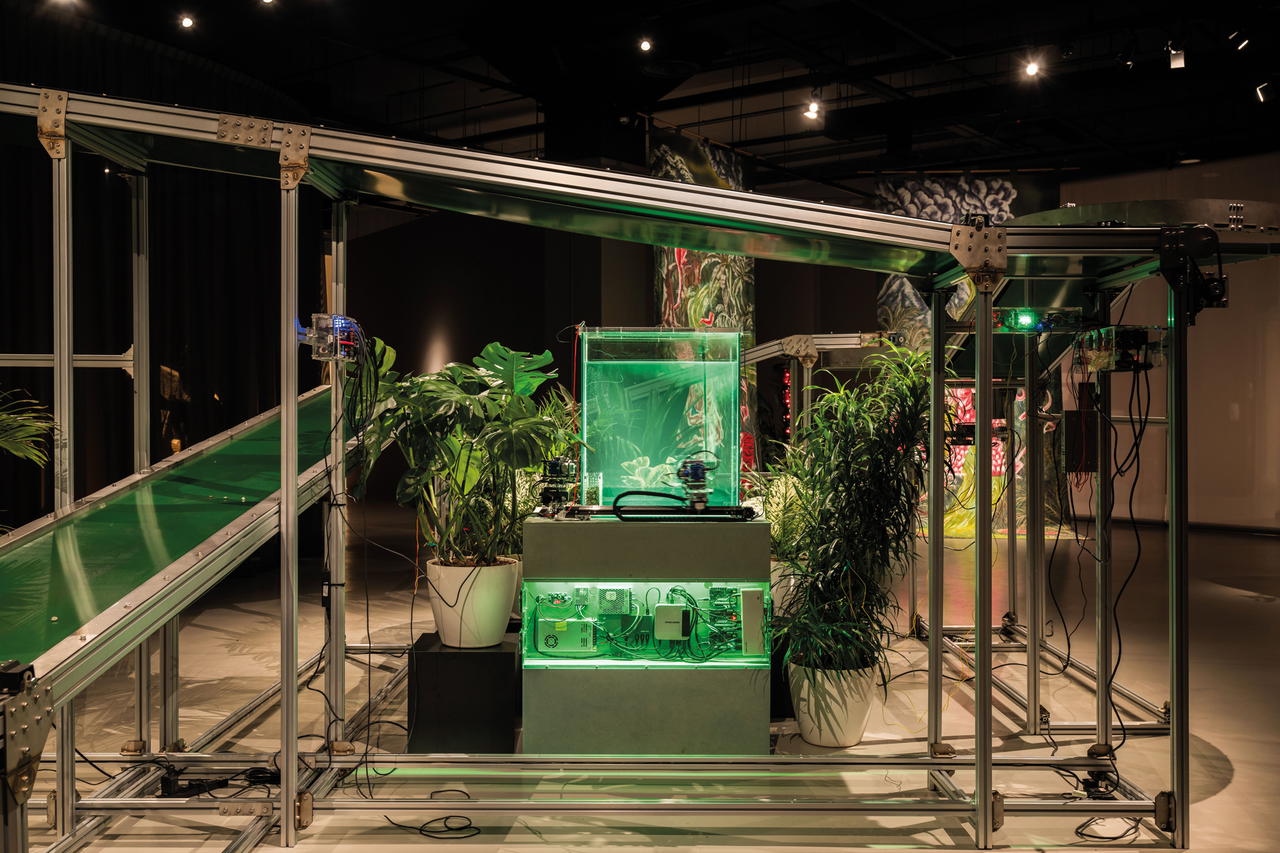
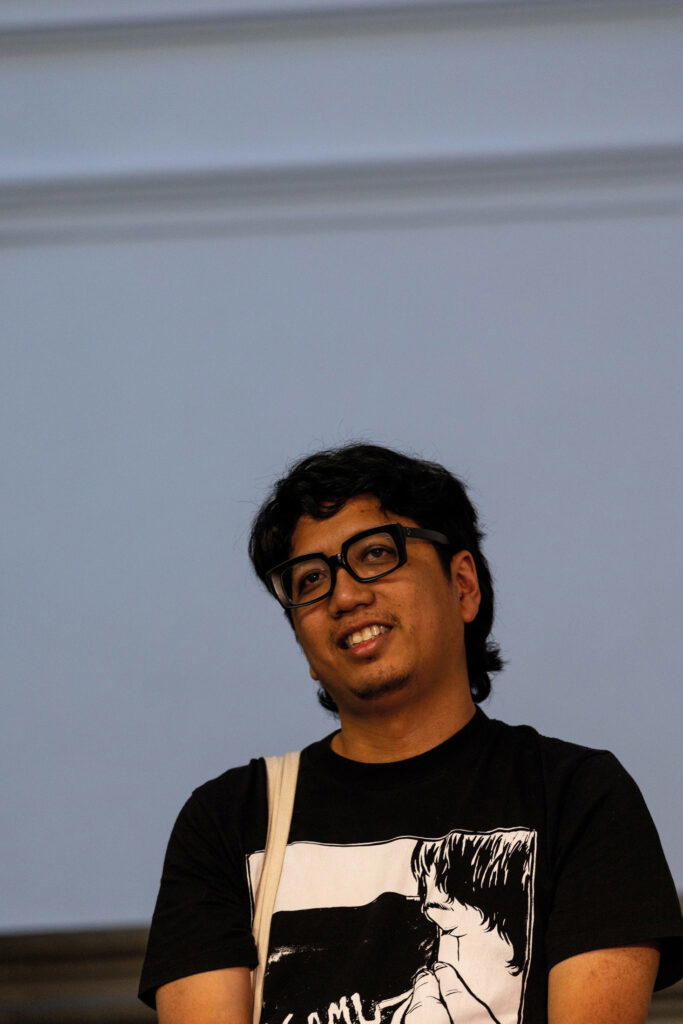
Bagus incorporates kinetics, sound, and plant biofeedback into his immersive installations, which have been exhibited in Switzerland and Japan. He explores the tensions between technological progress, capitalism, industrialisation, and humanity.
What surprised you both most about working together?
Elia Nurvista (EN) and Bagus Pandega (BP): Our practices converge from different perspectives. Although our methods and materials differ, we are concerned with social and environmental systems, and how power is distributed. This is significant since Indonesia is a global palm oil and nickel supplier.
Elias, a central aspect of your practice is the use of food in a political and ecological way. What is its role in this situation?
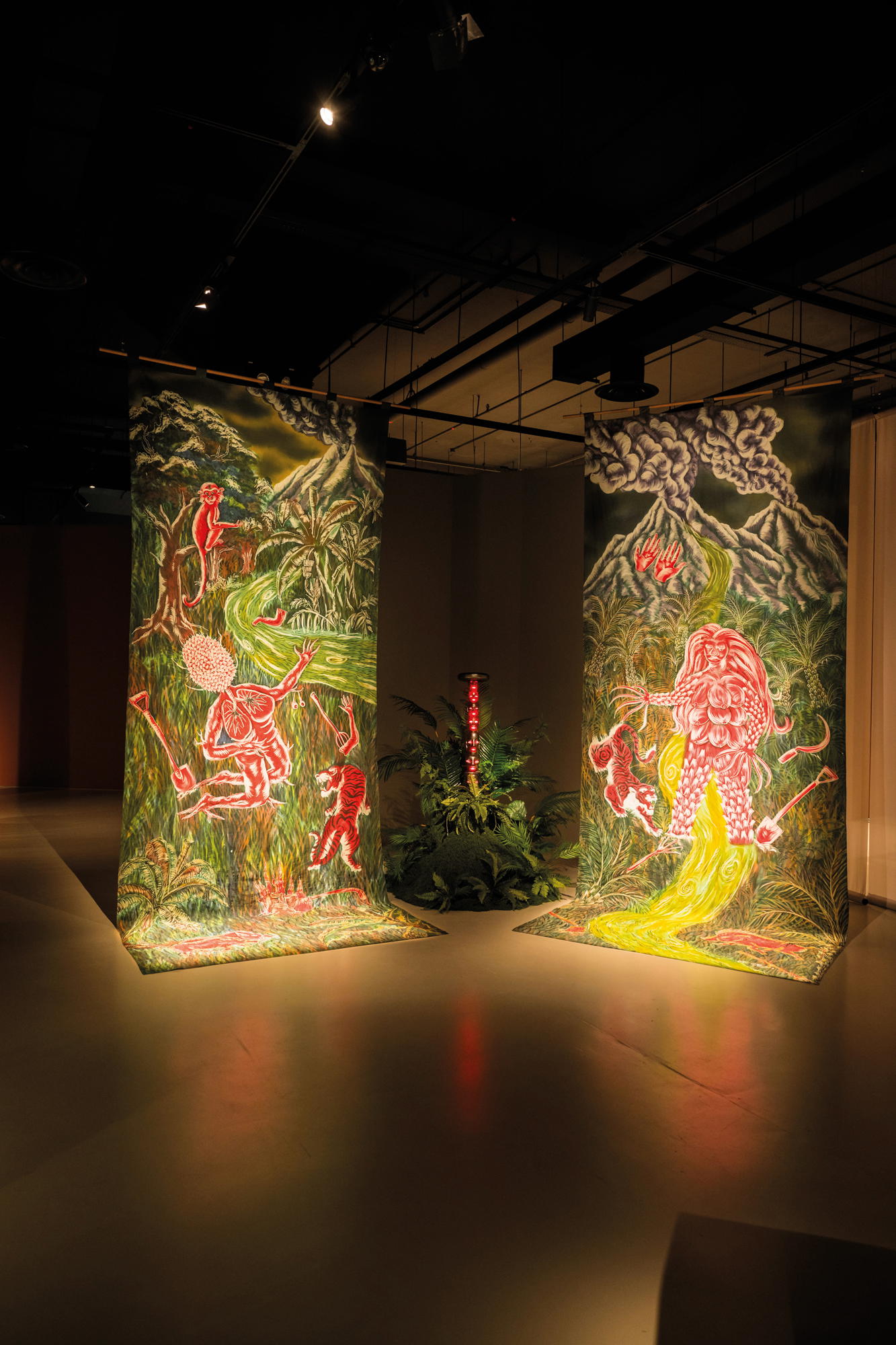
EN: Palm oil, which is highly present in food, serves as both a material and a metaphor in this exhibition. It points to everyday intimacy—the things we consume, share, and depend on. In addition, it exposes the vast systems of extraction, labour, and control involved in such production, including food. Our most basic needs are deeply political because of this dependency.
You mentioned food as an expression of power, gender, and class. Could you please elaborate?
EN: Food is inextricably linked to histories of colonial agriculture, gendered labour, and economic inequality in Southeast Asia. These dynamics are reflected in the way certain people, usually women, farmers, and marginalised groups, are tasked with sustaining social systems that benefit others.
“Nafasan Bumi ~ An Endless Harvest” reveals how food economies perpetuate hierarchies of power while being framed as neutral or inevitable. By highlighting these tensions, we invite viewers to reflect on whose labour is invisible and how consumption is prioritised.
Bagus, you integrate plant biofeedback with industrial materials in your kinetic installations. How do these relate to your inquiry into extraction cycles and environmental disruption?
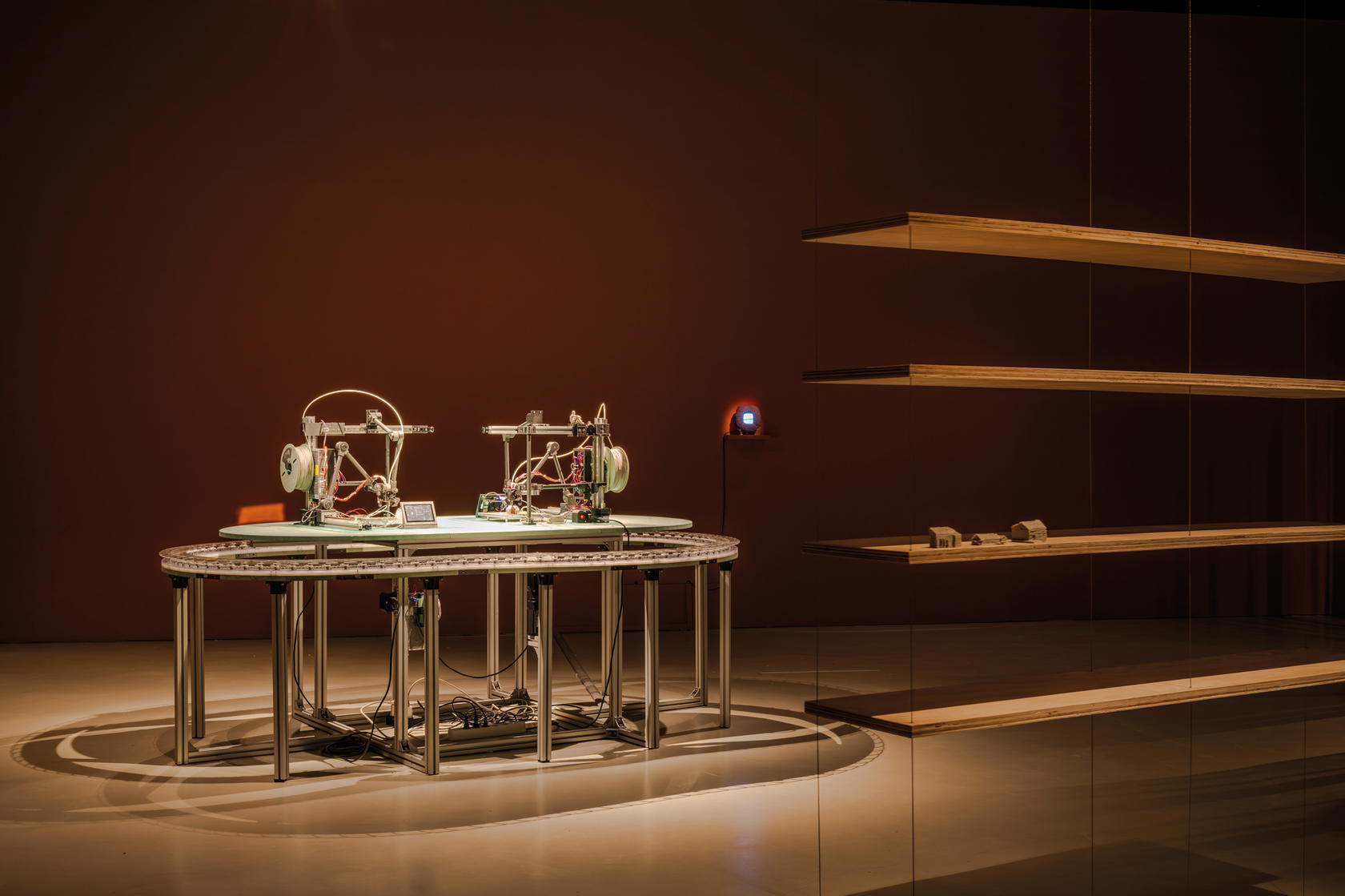
BP: They mirror the conditions I respond to: landscapes shaped by extraction, where natural processes are constantly exploited. Using plant biofeedback and industrial materials allows the artworks to breathe, react, and sometimes falter. As opposed to presenting technology as a solution, I am fascinated by how it exposes our dependence on fragile environmental systems, and how environmental disruptions become something we can no longer control or fully predict.
You oscillate between control and unpredictability in your work. What does this tension reveal about your response to environmental systems?
BP: Data and processes are often used to manage environmental systems, but they remain inherently unstable. Programmable structures coexist with biological inputs that cannot be fully controlled in my installations. Plant responses can alter the behaviour of physical components, causing the system to hesitate or act unexpectedly. As extraction exhausts ecosystems, this tension reflects the limits of technological mastery.