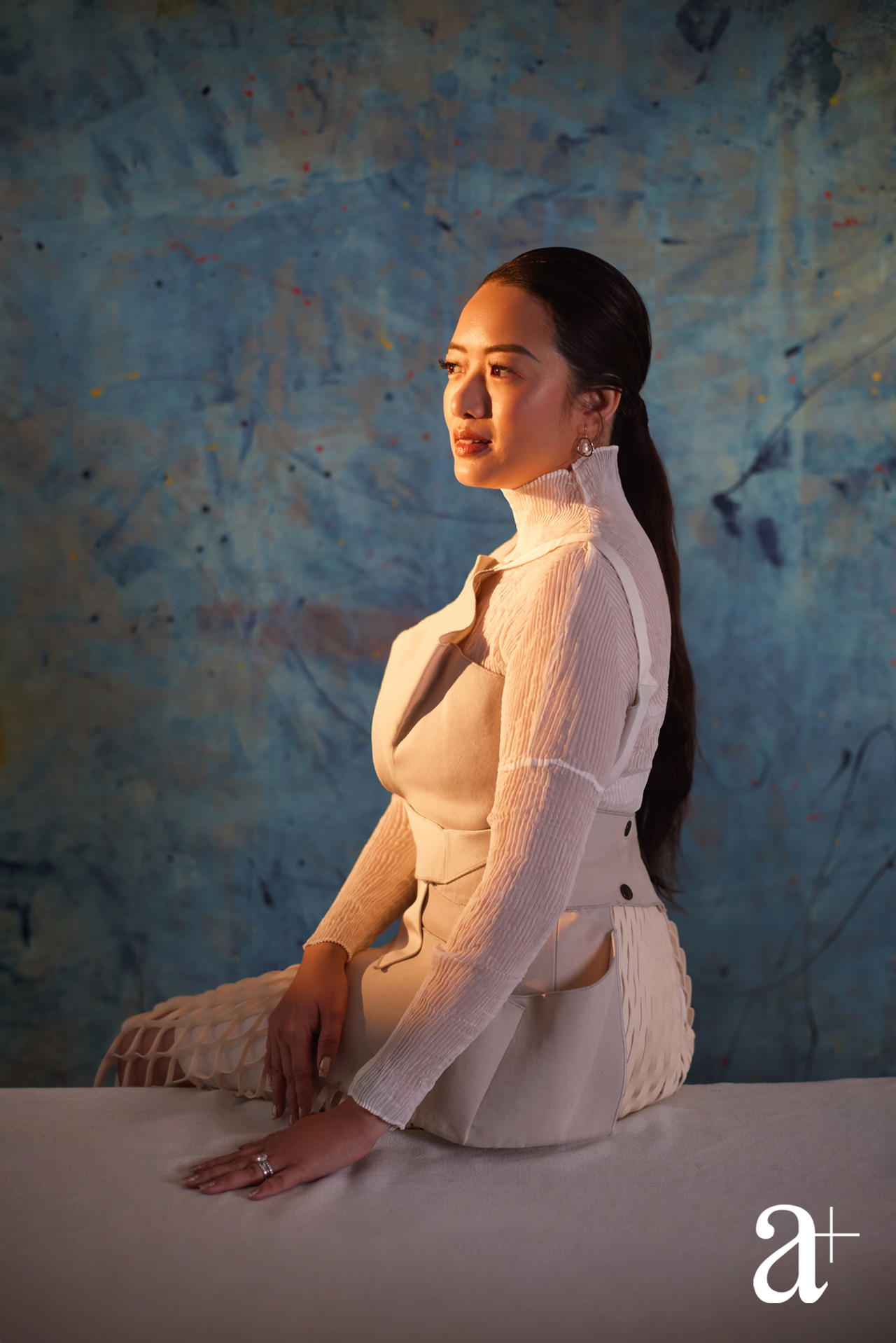
I glanced at the digital tape recorder on my smartphone. The screen showed 20 minutes, during which Elaine Kim had been dissecting and analysing the state of preschool education, pausing occasionally to catch her breath. “You must stop me if I’ve been talking for too long!” Kim protested good-naturedly. “I have a tendency to go on otherwise.” Passion, I assured her, has no arbitrary time limit.
Kim is a palliative doctor by profession, but she now devotes her time to Trehaus, an extraordinary preschool that doesn’t fit into any predefined box. She is also the co-founder of Crib Society, which focuses on empowering female entrepreneurs with guidance, community, and connections.
Since a young age, Kim had been interested in entrepreneurship. She started an event planning company when she was 17 and organised children’s birthday parties. She shares with a cheeky glint in her eye that the current CEO of TikTok Shou Zi Chew was her first employee. “He would wear a Spiderman costume to the parties!” They are still friends.
Later, she decided that the opportunity to do medicine does not come around very often, so she gave up the balloons for a stethoscope and blood pressure monitor. The universe, however, always listens.
Kim initially started as an angel investor in Trehaus. Combining her love of children with her interest in entrepreneurship made this the perfect business for her. After selling the shares in her previous fashion-focused venture, her business partner tapped her to become Trehaus’ interim CEO in 2018. It became her whole life.
The Smallest Step, The Biggest Results
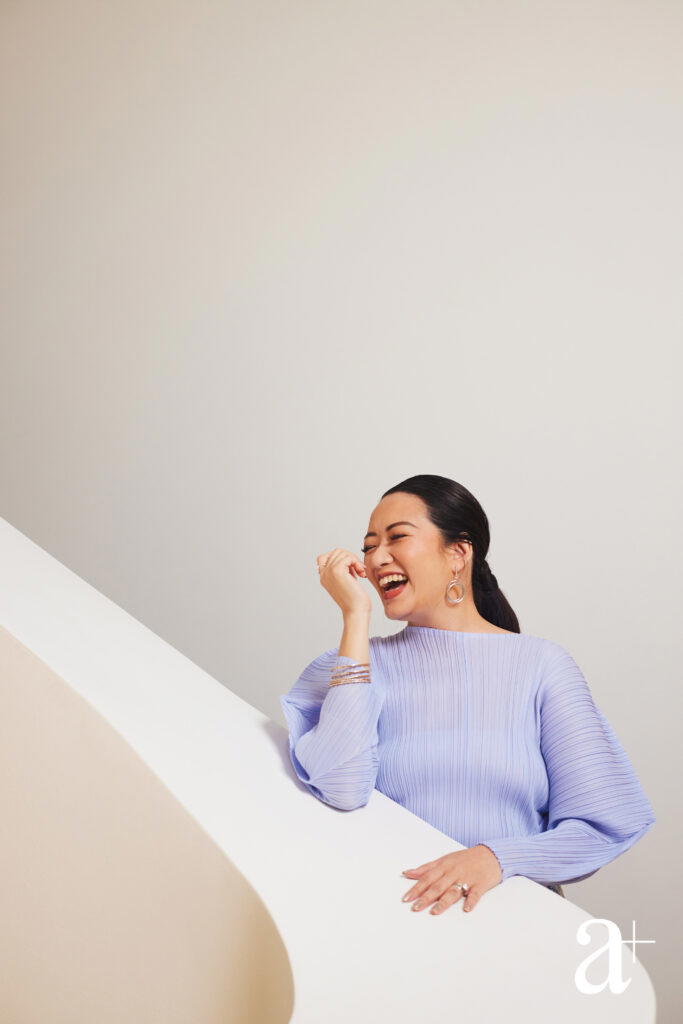
“I was thinking about what can make the greatest difference in the world and it was clearly early education. There are great opportunities from a business standpoint, of course. But the chance to build something that can move the needle called out to me,” said Kim.
In her typical style, she travelled to top global institutions at the forefront of early education and childhood development to learn about best practices. She learned that 90 percent of a child’s brain development is completed by the age of five.
From there, morals, values, and character followed.
Kim’s enthusiasm invigorated some of the biggest names in the space. She remembers flying to Finland to try and wrangle a meeting with the minister of education. The Finnish early childhood education system is one of the most renowned in the world. It was a long shot, but the minister agreed to be on the advisory board. She was soon joined by some of the biggest names in the space, all of whom were fully on board with Kim’s vision.
When she finally returned to Singapore, she jumped straight into the saddle. “Our education system was built for the Industrial Age, but our children are no longer coming out into such a world.”
Trehaus is her idea of the best possible brick-and-mortar preschool one can create to prepare children for the future. Everything, from the layout to the pedagogy, is different from what we’re accustomed to. There are programmes dedicated to topics such as entrepreneurship, engineering, and even philanthropy. From the ground up, it’s a new take on early education. Led by the children, the curriculum understands everyone learns at different speeds and has different interests. There is no longer a need to squeeze the triangle into a square-shaped hole.
More importantly, Kim hopes Trehaus will serve as a catalyst for closing the social inequality gap. It’s a tall order, but the entrepreneur has never shied away from challenges. The bigger the problem, the more galvanised she becomes.
“If you look at the research, by the time the child is seven, there is already this enormous chasm between those who have access to quality early education and those who don’t.
It is also already possible to predict outcomes in adulthood based on that age!”
While several schools are attempting to bridge that gap, it could be too late for many children. Kim’s solution is to ensure the crevasse doesn’t even form. She was also all too familiar with the exorbitant costs of preschool education that contributed to global inequality. “I did not want to be part of the problem by creating an amazing preschool that’s pegged at the highest end of the market. But how do we bring it to people in underprivileged communities and developing countries who need it the most? ”
Technology In Early Education

Photo: Lenne Chai
Her latest initiative is a moonshot attempt to address that. Little Lab is a tech-enabled solution that packages the Trehaus method into a comprehensive, scalable, and accessible programme. It comprises the Teacher Training Academy (TTA), which trains teachers in its pedagogy, and the Teaching Tool Box (TTB), which offers teachers the tools they need to plan their lessons.
Little Lab is already out in the wild. Initially, Kim planned to launch it this year. But her email inbox was inundated with inquiries about Trehaus’ curriculum from around the globe. The preschool’s excellent track record combined with Singapore’s stellar reputation in education made people sit up and take notice.
Several pilot projects are currently being conducted in different countries to test the utility and effectiveness of the programme. She rattles off a list of countries, including Indonesia, China, and Kenya, but Pakistan is the one she is most excited about.
It’s a massive undertaking. Sixty schools are taking part. Half are running Little Lab, while the remaining 30 act as control subjects. A plethora of parameters are being tested, including teacher-student ratios. But Kim reassures me that every student will experience the Trehaus method, albeit in different ways.
“We are performing randomised control trials, and the control groups have a teacher-student ratio of 1:60. We also bring in a community helper,” said Kim. The TTA usually trains community members to become helpers. By training more teachers in the Trehaus method, she hopes to reduce class ratios.
But that’s only half of the equation. The other half is the TTB, which empowers educators and gives them the tools that they need to become better while making their lives easier. For example, instead of manually evaluating the progress of a child, teachers using Little Lab can track how the student is developing using a framework of 21 developmental goals.
It’s not just reading, writing, and mathematics. The programme also tracks things such as empathy, grit, and resilience. With this holistic approach to early education, educators can track each child’s progress for the first time. Everyone moves at a different pace and Little Lab understands that.
Moving To Los Angeles
Elaine Kim At Home

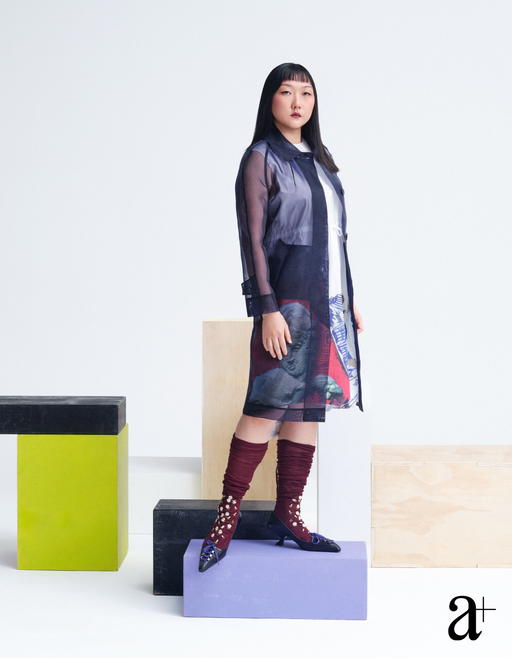
Elaine is wearing a top and skirt, from Wild Cosmos and heels, from Schutz.Photo: Lenne Chai 
Elaine Kim's latest initiative is LittleLab, which promises to change the way preschool education is disseminated.Photo: Lenne Chai 
Elaine Kim's latest initiative is LittleLab, which promises to change the way preschool education is disseminated.Photo: Lenne Chai
Kim is also in talks to open Trehaus preschools in Jakarta and Los Angeles, where she’s currently based. While Little Lab is progressing, Kim believes that it’s also important to have a physical presence. “We can road-test our curriculums and build thought leadership in the space. It also brings in revenue that we can reinvest in Little Lab.”
Jakarta came about because of a partner who believed in Trehaus. Los Angeles, however, was by chance. She first moved to the city in 2020 to spend more time with her father-in-law since Covid restrictions curtailed cross-border travel. The initial plan was to spend
four months there, but Kim and her husband fell in love with the place.
Then she saw an opportunity to expand Trehaus in the City of Angels. “You’ll be surprised but the country’s early education infrastructure isn’t great. Unless you can afford kindergarten or preschool, you can only send your children to daycare. It’s nothing like Singapore.”
There were also mass lay-offs from large technology companies during that time, so talent was plentiful. Kim hired several of them for Trehaus. It was the perfect storm—and one of the main reasons Little Lab has grown so rapidly.
Kim also shared that Singapore’s hothouse educational atmosphere played a significant role in the family’s decision to move. “There is a lot of research showing that children
who are exposed to a lot of rote learning in their early years are outperformed by those who go through child-led play learning,” she explained. While she acknowledged that Singapore’s education system is one of the best in the world, it wasn’t ideal for her children. Triangles can’t fit in square-shaped holes.
Kim found a school in Los Angeles that went beyond academia and imparted kindness, care, and sensibility to the students. At the same time, she realised that she had become a better leader. In Singapore, the whirlwind of daily operations consumed much of her time. She would flit in and out of meetings and put out fires almost every day. It left her little time to think strategically about the business. After her move, her team stepped up in “amazing ways” to manage the business while Kim focused on family matters. She appreciates her co-founder Elizabeth Wu for letting her do what she needed to do.
Without the hubbub, Kim has had more time and space to think about the business. “I could see the bigger picture,” she said. There are several images on her vision board, but the one-sentence pitch is simple. “In the past, and even now, parents sought to enrol their children in Montessori preschools. I want them to look for schools using the Trehaus method. I want to empower teachers and have a positive impact on millions of children around the world,” Kim said with conviction.
While many people would have given up on this journey, Kim is just getting started, and she still has a lot to give. Her passion is endless.

Photography Lenne Chai
Styling Sandy Phan
Hair and Grooming Tammy Yi
Photography Assistant Diane Lac and Logan Dagnen