I wasn’t surprised when I read the recent survey by the Ministry of Digital Development and Information (MDDI), which found that 63 percent of parents in Singapore felt little or no confidence about guiding their children’s digital habits. Concerned, yes. But not surprised.
The world in which our children are growing up is radically different from the one in which we grew up. There are screens everywhere. Artificial Intelligence (AI) is reshaping every aspect of work and life. In these conditions, parenting can feel like trying to build a boat while already adrift.
Nevertheless, I see this as an opportunity, not a crisis. It is not a question of whether we can shield our children from digitalisation. It’s not possible. Our challenge is to equip them, from an early age, with the mindsets and values they will need to navigate it successfully and with purpose.
For too long, our societies have treated tertiary education as the pinnacle of learning. The truth is, the real foundation is laid much earlier: during a child’s early years, when his or her mindset about learning and about themselves is developing.
In a world transformed by AI, traditional content delivery and rote thinking are out of date. Machines are always faster at storing and retrieving information. Our human edge lies in our mindset, not in our content.
It is for this reason that I have dedicated my life to what we call the 3-Mind Education Model. It nurtures three mindsets vital for the future: the Champion Mind (perseverance and excellence), the Learning Mind (academic excellence and adaptability), and the Creative Mind (imagination and concept formation).
These are more than just skills. These are ways of being. They will enable our children to not just survive, but to thrive in an AI-dominated world. The impact of this model across Asia and Australia, and soon the US, has resulted in MindChamps being hailed by New York Times and Wall Street Journal bestselling author Dr Joseph A. Michelli as “the global education movement of the 21st century”.

HOME NATION in DIGITAL PARENTING
The digital revolution has amplified parenting challenges. MDDI’s survey reflects what I hear from parents every day. Many feel ill-equipped to manage their children’s technology relationship.
But at the heart of this issue is something timeless. Family remains the most important building block of society: what I call the home nation. Children don’t just learn from what we say; they also absorb who we are. Educators and schools have a crucial role to play, but the home nation cannot be replaced.
It is for this reason that we focus on building bridges between the home and school. Besides joining forces with popular children’s entertainer Emma Memma to bring the 3-Mind model to the stage, we also introduce specially crafted parent and child learning as well as bonding activity books to connect what children learn in our classrooms with fun, educational activities they can enjoy with their parents. Rather than more content, it is about shared discovery: parents and children bonding through learning with fun, educational activities they can enjoy with their parents.
Another initiative is our research-backed, proprietary MindChamps Reading Programme, which develops a lifelong passion for reading in the early years by engaging both a child’s imagination and intellect. Applied Integration Research by MindChamps has demonstrated that the programme cultivates active understanding as well as narrative intelligence and higher order thinking abilities.
The accompanying MindChamps Read-A-Long App features an interactive library of over 200 eBooks by award-winning authors and researchers. Perhaps the app’s most powerful feature is also its simplest: parents can record themselves reading the stories. In this way, a child can hear his or her mother’s or father’s voice at any time, even if they are apart. As a result, technology becomes a bridge between parent and child, not a wedge.
This philosophy underpins everything we do. The education methodology we developed, which has been granted patents in the US, UK, and Australia, was not just designed for classrooms, but also for life. Instead of the traditional method of teaching subjects, such as numeracy, language and social skills in separate silos, this programme takes an interdisciplinary approach. It develops shared fundamental concepts across numerous subjects, resulting in a greater understanding of them all.

COMMUNITY OF SUPPORT
Government initiatives like Grow Well SG, launched by the Ministry of Health to promote healthy lifestyle habits, are crucial. However, guidelines alone are not enough. A real change requires consistent practice, modelled daily by teachers, families, and communities.
In the case of nutrition, this is especially true. That’s why we developed the MindChamps Wholefood Philosophy in Australia, dubbed the “Childcare Food Revolution” by News Corp. By replacing processed meals with freshly prepared menus created by nutritionists and chefs, we saw children develop a love for real food. Parents reported that their children began asking for
vegetables at home, or choosing water over sugary drinks.
While the full programme has not yet been implemented in Singapore, the principles are already being applied—and the results are encouraging. Developing healthy habits at a young age ripples outwards into the home nation and, ultimately, the whole society.
The same applies to digital habits. Guidelines can raise awareness, but what really matters is what children experience every day: what is modelled at school, what is reinforced at home, and what is valued in the wider community.
Digitalisation is a fact of life. As an educator and a parent, I don’t believe in resisting it wholesale. I believe in discerning what to embrace and what to resist. I embrace technology’s ability to expand horizons. A child can journey into space, walk through a rainforest, or explore the human body in ways unimaginable a generation ago. Through interactive platforms, reading, writing, and problem-solving have become more engaging and dynamic.
Nevertheless, I resist the temptation to let technology replace human roles. Screens must not replace the warmth of a parent’s voice, the give-and-take of play, or empathy learnt through human interaction. We must protect time for real, face-to-face contact if we want our children to be socially and emotionally literate.
From an educator’s perspective, the dos should include using technology to spark curiosity and creativity, model healthy digital habits in the classroom, and balancing online experiences with hands-on, sensory learning. It is also important to remember not to let passive consumption replace active exploration or to lose sight of the importance of play, storytelling, and conversation.
The same principles apply to parents. Watch or play alongside your child, so screen time becomes a shared experience. Set clear boundaries and routines.
Education needs to be turned upside down…It is only by nurturing resilience, creativity, and compassion from the start that we can raise a generation capable of thriving in an unpredictable world in ways we can never imagine now.
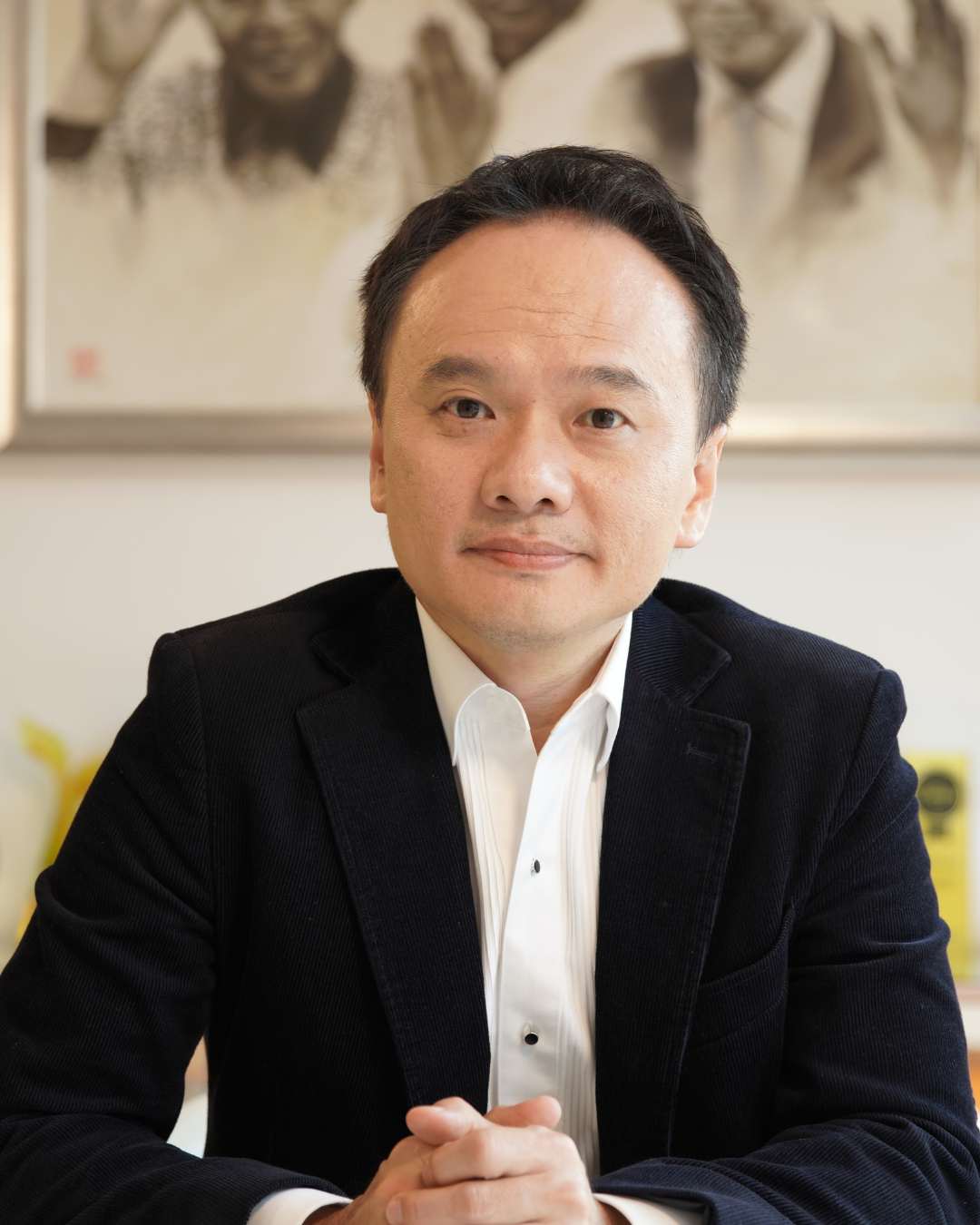
David Chiem, on learning amid the AI takeover
VALUES WE MUST ROLE-MODEL
Ultimately, the digital debate is about more than devices. It is about values. Singapore has moved from survival to success to significance. Our children are growing up in a society of abundance, but also of distraction. What will anchor them?
I believe the answer lies in strengthening values like resilience, kindness, integrity, and responsibility. But here’s the challenge: children rarely learn values by simply hearing them. They learn by watching us. It’s not about what we tell them, it’s about how we live. If we want them to be resilient, we must show how we face setbacks. If we want them to be kind, we must be kind in daily life.
This is why the home nation is so vital. Schools can reinforce values, but they cannot replace the lived examples of parents. Our role as educators is to partner with families and provide tools and environments that allow parents to model the values they hold dear.
Our success will result in not just competent learners, but well-rounded human beings: children who are anchored in values even as they face the challenges of an ever-changing technological environment.
The MDDI survey serves as a wake-up call to parents that they need more support. But the solution is not to retreat from technology. It is to build stronger partnerships between parents, educators, and society, so that every child grows up with both digital fluency and human strength.
MindChamps’ social charter has always been to raise education standards globally. However, at its core, this work is not just about schools or organisations. It is about the home nation, what parents and educators model every day, the environments we create, and the values we live in front of our children.
This is where I come back to my central conviction: education needs to be turned upside down. In an AI-dominated world, the old model of content and rote thinking is broken. The true foundation is built in the early years, when a child’s mindset is formed. It is only by nurturing resilience, creativity, and compassion from the start that we can raise a generation capable of thriving in an unpredictable world in ways we can never imagine now.