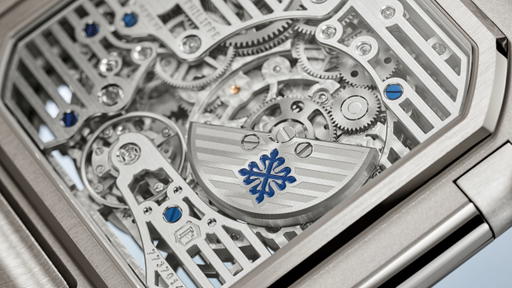


Being forward-thinking and free-spirited are the keys to success in the change resistant watch business. A case in point is Audemars Piguet, which persevered in developing the Royal Oak despite the negative press. Half a century later, the octagonal ticker is a powerful force in watchmaking and remains the undisputed reference for luxury sports watches.

Photo: Audemars Piguet.
With its history of iconoclasm, Audemars Piguet continues to polarise consumers for decades to come. Among the examples are the Royal Oak Offshore (1993) and Royal Oak Concept (2002) watches, as well as the Code 11.59 by Audemars Piguet from 2019. At that time, Code 11.59 by Audemars Piguet’s gender-neutral design, featuring a round silhouette alternating with an octagon case middle, divided the watch community. It would take time for the dust to settle.
Four years later, the verdict is out. In a short time, Code 11.59 by Audemars Piguet found its footing, rose to commercial success and established itself as a serious competitor to the brand’s best-selling timepieces. With watches ranging from simple three-hand models to ultra-complicated models such as the Code 11.59 by Audemars Piguet Ultra-Complication Universelle RD#4, the collection is as diverse as it is dynamic.

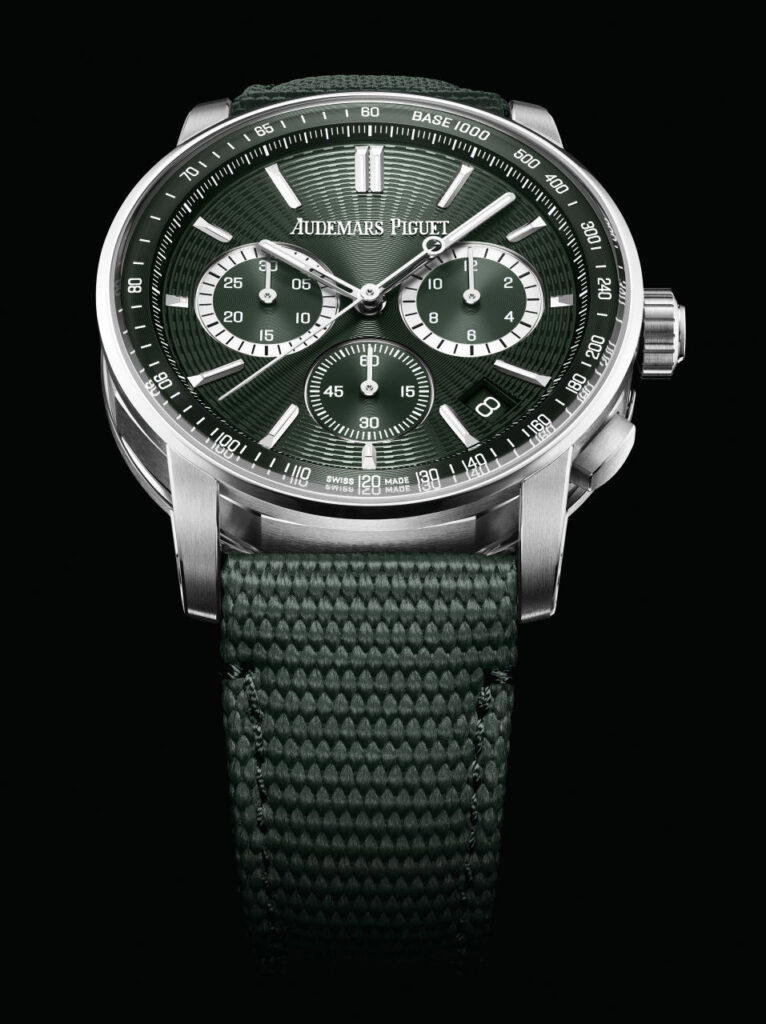
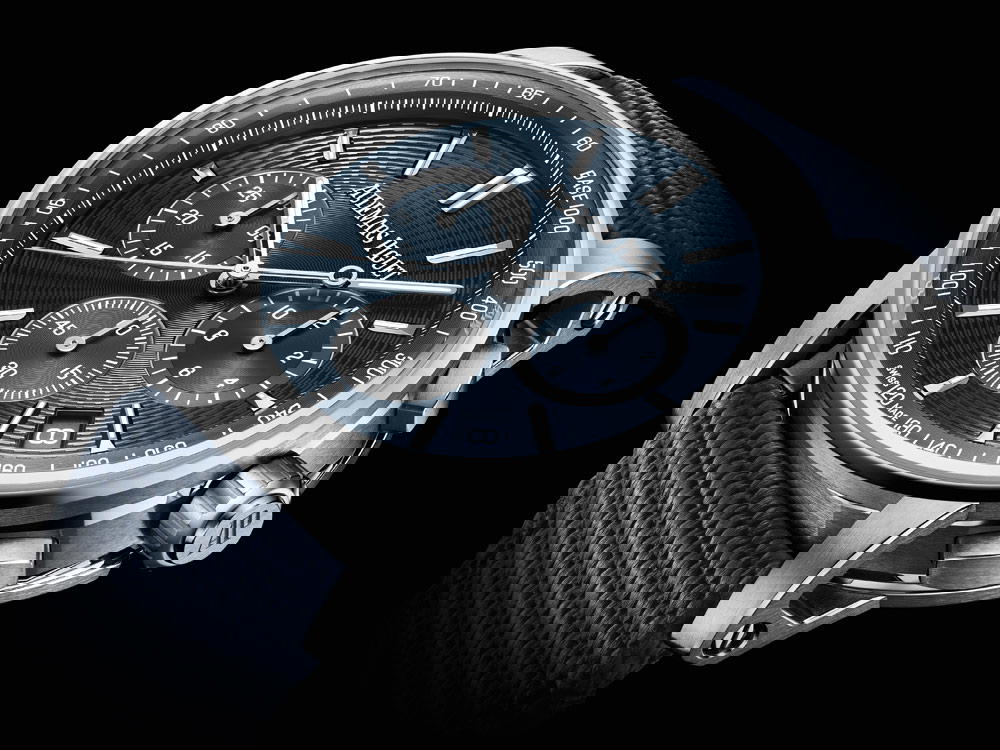
Recently, the brand unveiled six new references of its Code 11.59 by Audemars Piguet Selfwinding and Selfwinding Chronograph watches. Presented in 41mm cases and offered in stainless steel for the very first time, four of them are made entirely in steel, while the other two combine a black ceramic case middle with a steel bezel, lugs and case back.
There are three dial colours to choose from—the iconic Bleu Nuit, Nuage 50, Khaki Green and Smoked Beige—and they are paired with matching rubber straps decorated with a textile pattern and lined with calf leather.



The new references bear dials that have been stamped with an exclusively designed pattern created just for this collection. Developed by Audemars Piguet in collaboration with Swiss guilloché craftsman Yann von Kaenel, it is made up of concentric circles bearing a unique ripple pattern decorated with hundreds of tiny holes that catch the light.
The dials then undergo a PVD treatment (blue and green variants) or galvanic process (beige variant). The former is a process where a coating is deposited atom by atom to form a thin bonded surface layer. Both treatments were included to maximise the play of light and enhance the depth of the stamped pattern.
Additionally, these timepieces reflect new design updates that will define the look for all future Code 11.59 by Audemars Piguet watches. Elongated white gold hour-markers coated in Super LumiNova replace the Arabic numerals of the earlier models, while the hands have been faceted, polished, flattened and coated in Super LumiNova.
The inner bezel has evolved. Nestled within an ultra-thin bezel, it is now wider, more bevelled and closer to the dial for added visual impact. In place of the five-minute markers previously found on the older models is a seconds scale while the typography of the numerals has also been changed.





Audemars Piguet has also tweaked the crown and buckle design to better suit this sleek new silhouette. The stainless steel crown is now rounder and with shallower and more pronounced indentations. On the bracelet’s buckle, whether pin or folding, the engraved “Audemars Piguet” brand signature has been replaced with the AP monogram.
The watches are powered by the same movements as the earlier models: the self-winding Calibre 4302 with a seconds and date indication and the self-winding Calibre 4401, an integrated chronograph movement with a column wheel and flyback function.