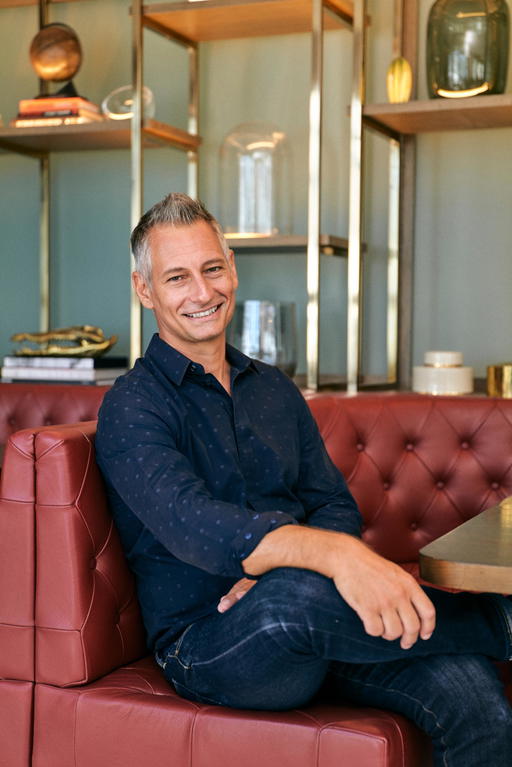
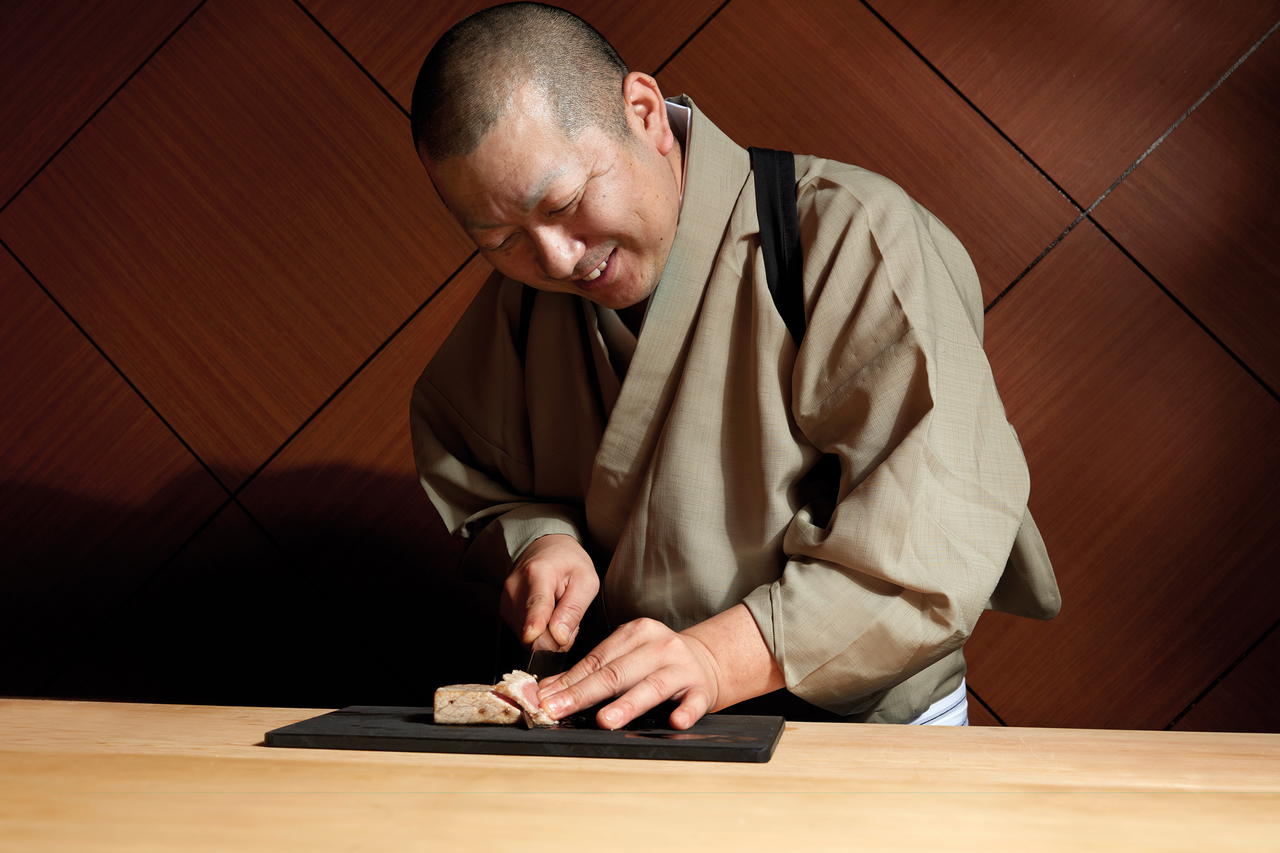
Watching Kazumine Nishida from behind the hinoki cypress counters of Shoukouwa is a treat. With over 20 years of culinary experience, his hands move with quiet confidence as he shapes the shari (seasoned sushi rice) before draping a generous slice of nodoguro (black throat sea perch) over it. The rice’s slightly warm softness, rather than its density, perfectly complements the deep-sea fish, grilled to an oily juiciness, thanks to its high fat content.
Shoukouwa, which turned 10 this year, is part of Food Inc, a hospitality group led by Chef-Owner Emmanuel Stroobant, whose portfolio includes the two Michelin-starred Saint Pierre, Star-Chef Academy, and Mycelium Catering. Last year, Nishida collaborated with Stroobant on Saki, an eight-seat avant-garde kappo counter at JW Marriott Hotel Tokyo, which combines Japanese flavours through a modern lens.
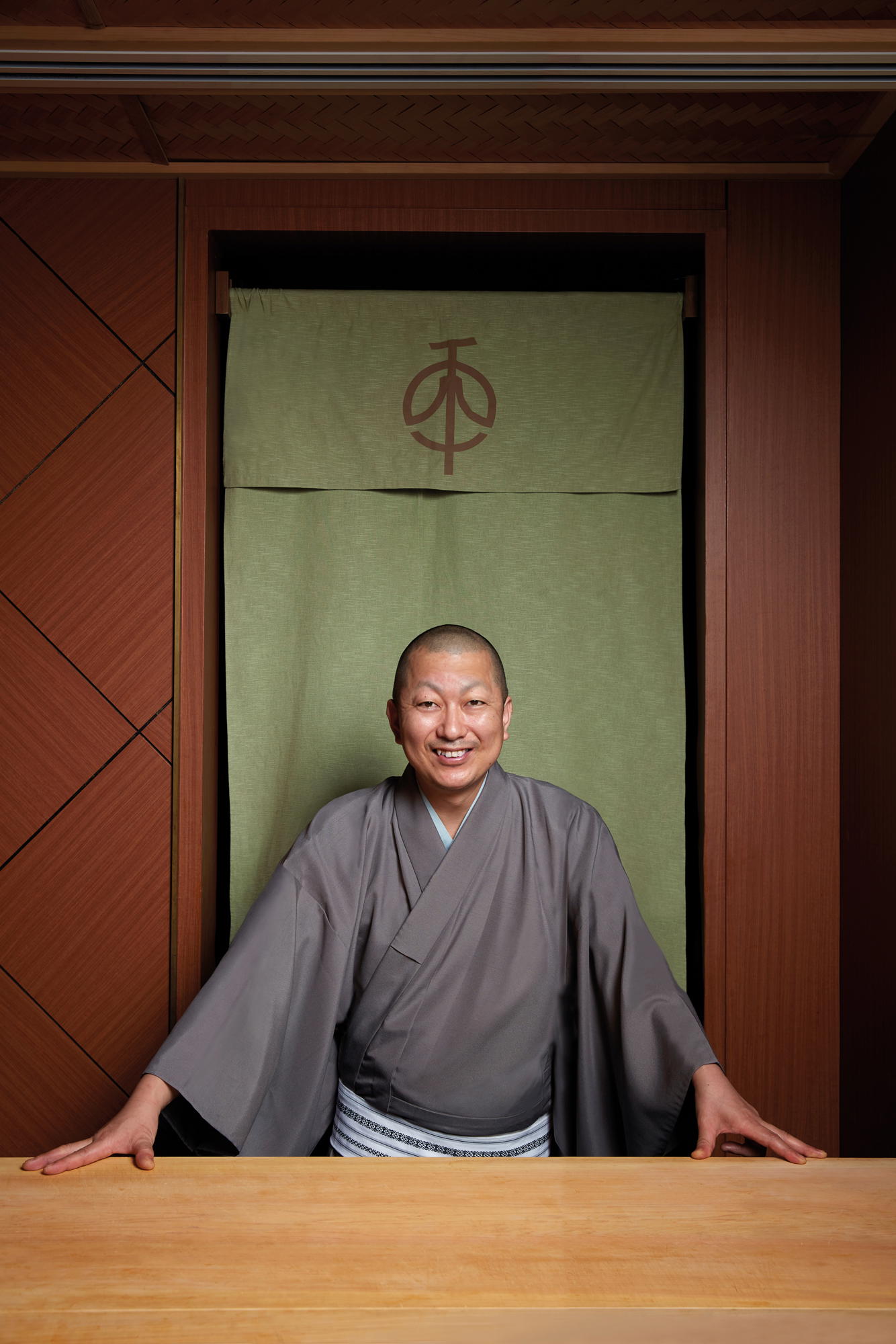
In Singapore’s competitive dining scene, Shoukouwa is a unicorn. Not only is it the country’s first two Michelin-starred sushiya, it has also maintained these stars for 10 consecutive years since 2016. The Kansai-born Nishida moved to Singapore in 2018 and started as a sous chef at Shoukouwa before being promoted to Head Chef in October 2019.
He attributes the restaurant’s success to consistency achieved by staying true to traditions while continually improving expertise among the team members. “Whether it is by getting our hands on seasonal ingredients of superior quality, improving our preparation techniques, or introducing thoughtful new ideas to the menu, it’s all about balance,” he says.
Manakatsuo (silver pomfret or Japanese butterfish) served with ponzu jelly, while seasonal, is a perfect example of modernity meeting tradition. Traditionally, acidity is obtained from curing vinegar or brushing nikiri shoyu on the fish. By adding ponzu jelly to the dish, the fish is given a bright, textural contrast that enhances its natural sweetness.
Having said that, Nishida is quick to remind us that the Edomae sushi tradition is the foundation for everything they do. “The core principles—respect for the ingredients, precise technique, and balance—never change,” he quips. For this reason, an exclusive buyer in Japan selects the seafood for Shoukouwa, ensuring the highest quality. That and other premium produce are flown in from Tokyo’s Toyosu Market four times
a week.
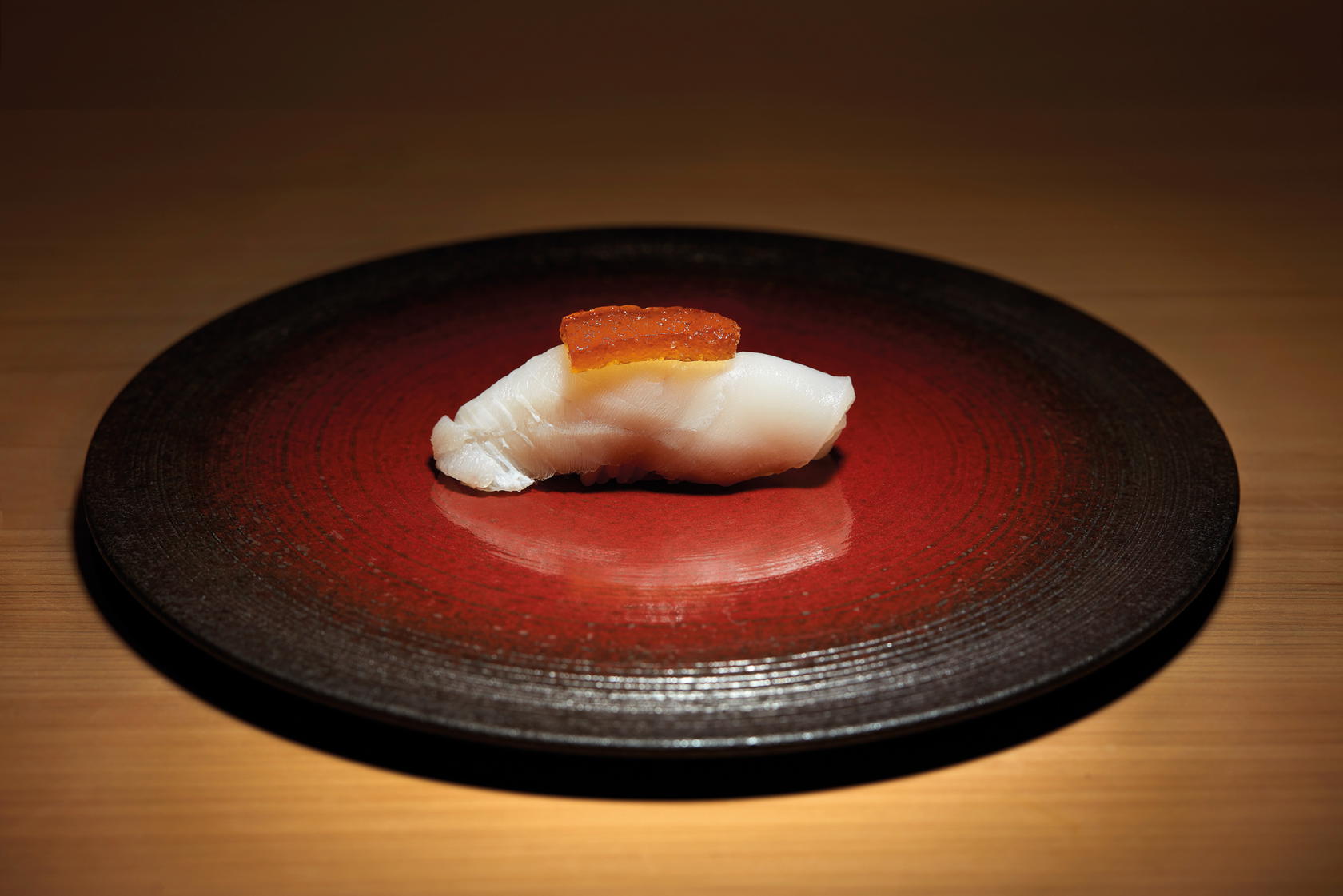
Nishida stresses the importance of quality, especially when preparing dishes like Awabi (buttery sake-braised abalone in a luxuriously unctuous kimo and uni sauce), Kasugo (tender baby sea bream cured in konbu), and Kinki (delicate rockfish blanched in konbu dashi stock).
“The buyer’s deep familiarity with the markets and long-standing relationships with fishermen enable him to determine when an ingredient is truly at its best,” he explains. Upon arrival, Nishida and his team assess the colour, texture, firmness, and overall condition to ensure each ingredient meets their exacting standards before reaching the table.
As ingredients are presented at their peak, the likes of meji maguro (young bluefin tuna), aka uni (red sea urchin), or ikura (salmon roe) may only be available for a few weeks every year. “Once the season passes, they will not return until the following year,” he tells us.
Shoukouwa’s omakase menus are legendary, according to regulars. Only available for lunch, Miyabi offers a subtle, refined sushi selection for lighter appetites. En, served only at dinner time, delivers a comprehensive, artisanal experience highlighting the absolute best ingredients. For lunch and dinner, Hana offers a more robust exploration of Japanese fruits de mer such as nodoguro (blackthroat sea perch).
Hana also proved more than adequate as a lighter meal for me. It featured three appetisers, including Echizengani (snow crab with crab roe sauce), one of my favourites. General Manager Desmond Wong handed out yellow tags indicating both the ship and port from which the snow crab was delivered—a thoughtful nod to provenance—before it was served. Topped with caviar and umami-rich crab roe sauce, the snow crab’s delicate, sweet, and lightly briny taste was beautifully elevated.
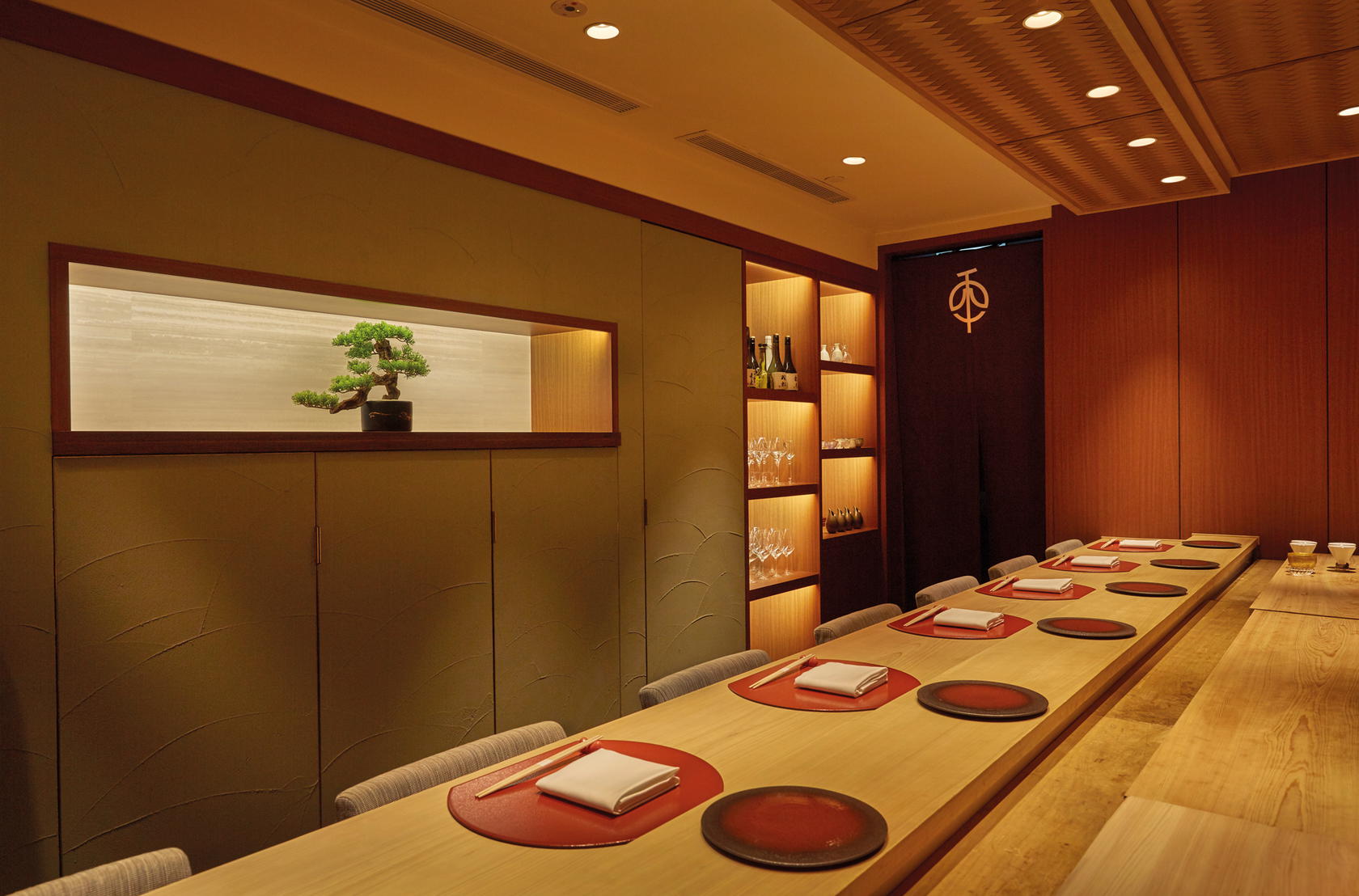
Nishida explains that serving the appetisers first gives him ample time to prepare the 12 sushi courses that follow at their ideal temperature. His favourite sushi is nodoguro, prized for its delicate texture and rich, buttery flavour. “I find its versatility remarkable. Both raw and cooked, it is exceptional. As sashimi, its natural sweetness and fine marbling shine. When lightly grilled or prepared aburi-style, the flavour deepens to reveal a subtly smoky richness.”
Nishida also enjoys toro, available as a handroll on the Hana menu. It is generally available throughout the year, although subject to catch. Uni is another favourite. “We use bafan uni, which has a sweet and cleaner-tasting milt only during winter when the colder waters make it fattier, while murasaki uni peaks in warmer waters during the summer,” he says.
To Nishida, an omakase sequence is about building flavours while honouring the Edomae tradition. He likes to create a rhythm where appetisers and sushi alternate, guiding diners through an array of tastes and textures. My omakase meal also included two soups: Kinki, a rockfish soup with seasonal vegetables, began the meal, and shijimi clam Miso Soup, the second-to-last course, elevated the scallop.
Every course looked almost too good to eat, and the food was excellent. Chef Nishida smiled when I told him I would return, adding, “When our guests leave Shoukouwa satisfied and carry the experience with them, I know the omakase has been successful in telling its story.”