
Excellence has a peculiar ceiling. At a certain level of mastery, progress is no longer focused on reinvention. Instead, the ambition shifts from proving something new to operating within set boundaries—to refine what is already, in theory, complete, until the difference is barely noticeable. Cartier now stands at this fascinating frontier, and it signalled as much by unveiling its latest high jewellery collection, En Équilibre, not along a familiar Mediterranean circuit but in Stockholm, last June.
The premise is simple and stringent: harmony is built through negotiation between opposites—volume answered by a measured line; colour pushed to intensity, then balanced by quieter intervals; the tension between empty space and visual weight. Nothing is excessive because every element has been deliberately placed.
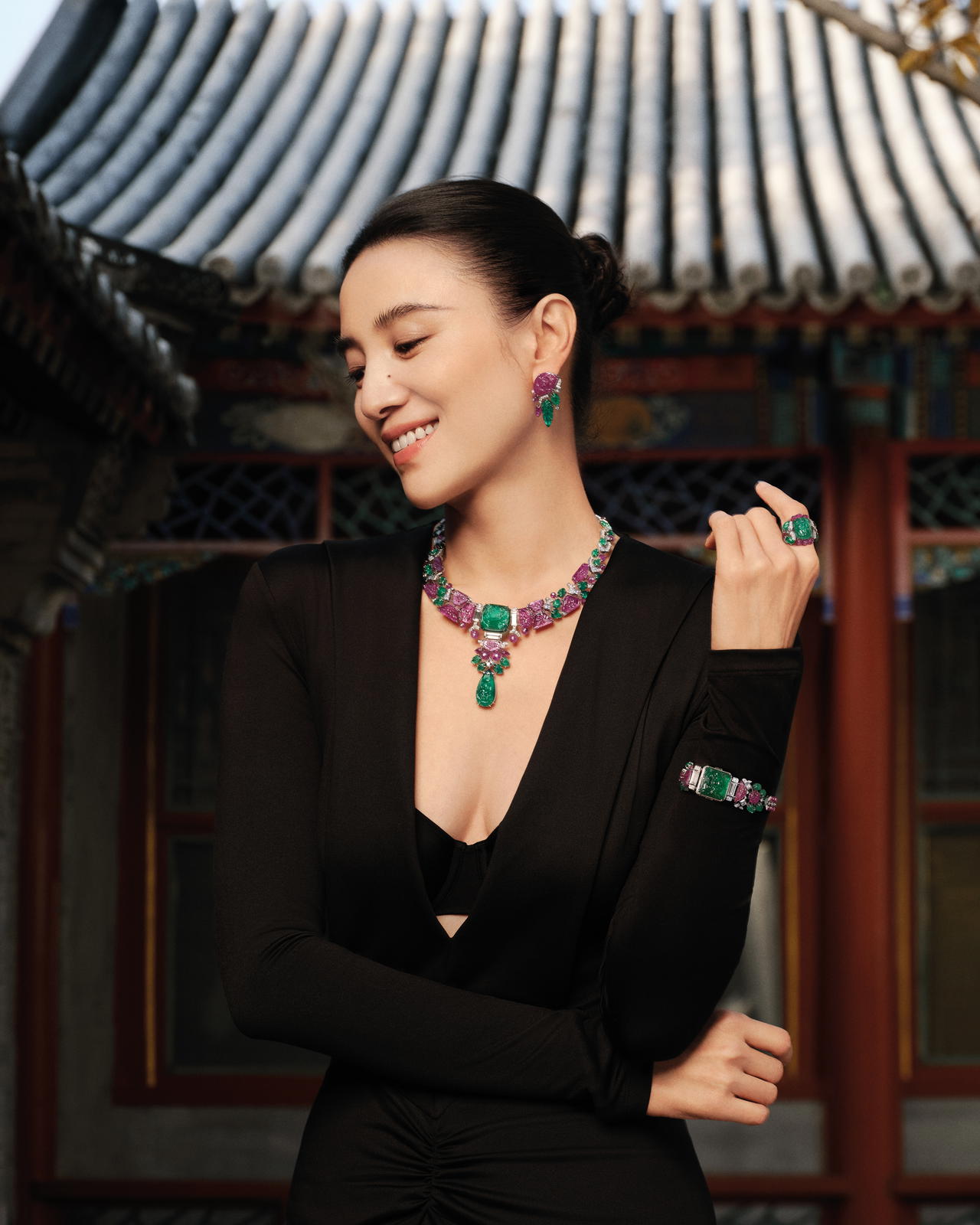
Cartier chose Beijing to launch En Équilibre Chapter Two, staging it alongside the century-old imperial gardens at Aman Summer Palace, and extending the concept of equilibrium into a place where balance carries its own philosophical significance.
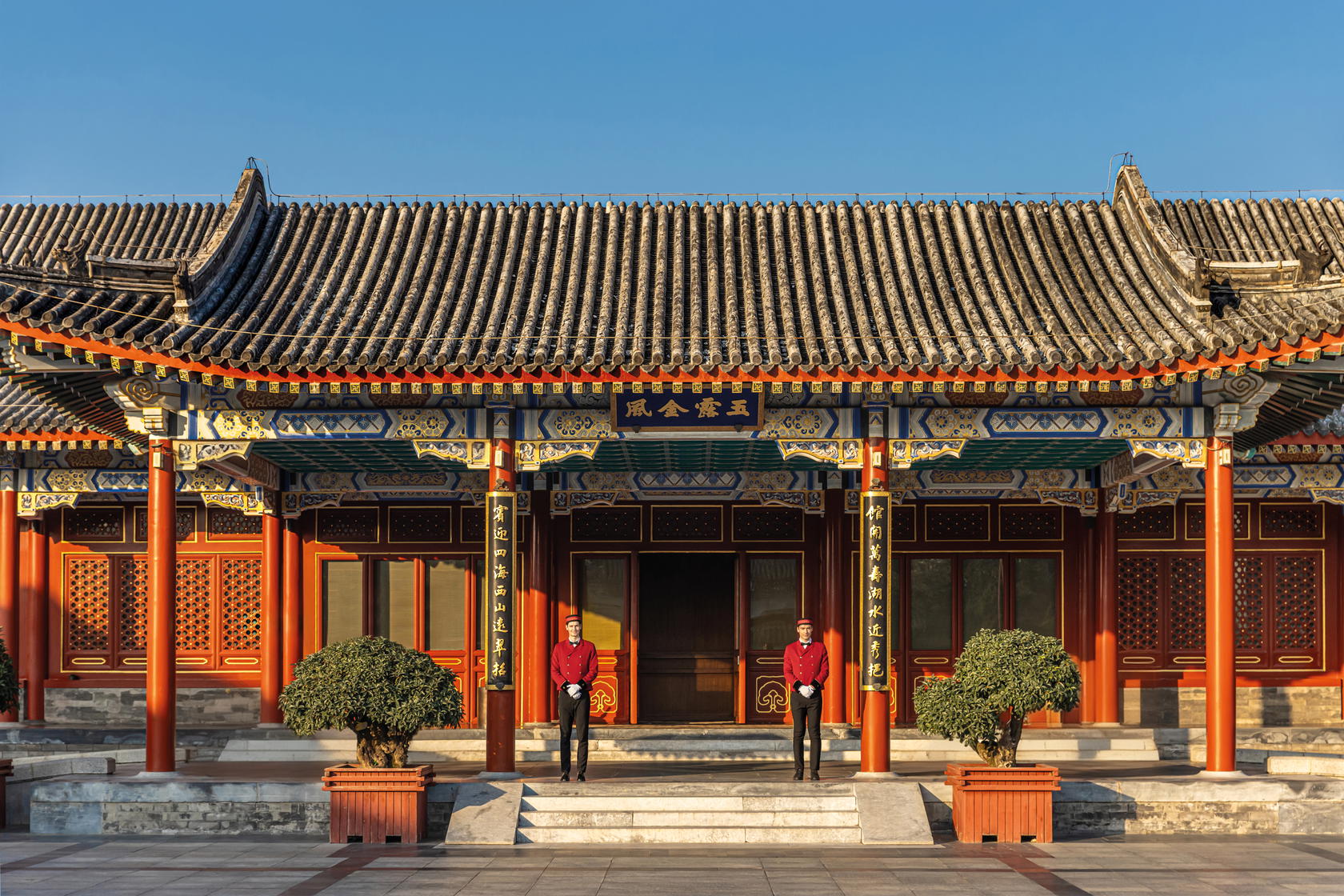
In Chinese thought, balance is rarely static; it is a state achieved through the delicate interplay of yin and yang, forces that define each other through their contrast. What Cartier refers to as equilibrium corresponds with this ancient idea: intensity cannot exist without its counterbalance, and that form only becomes clear when it meets its opposite.
If the concept risks sounding abstract, the collection’s structure makes it understandable. En Équilibre Chapter Two is organised into Rhythm, Colours, and Volume. These are not so much categories as they are three expressions of the same discipline.
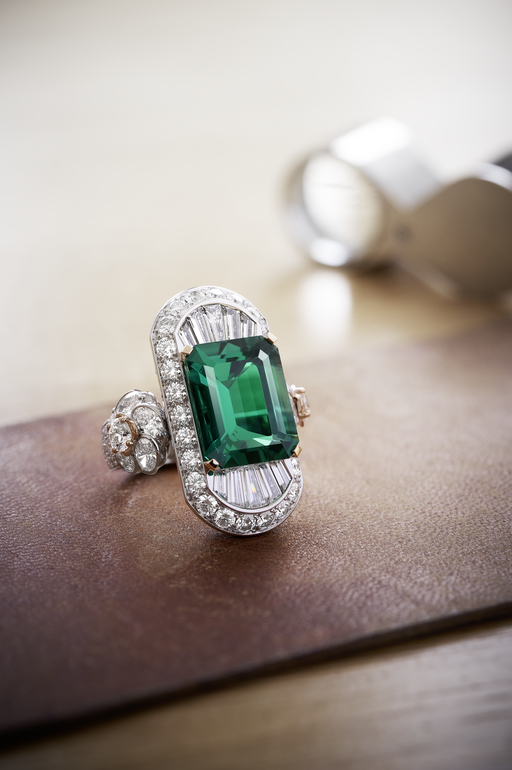
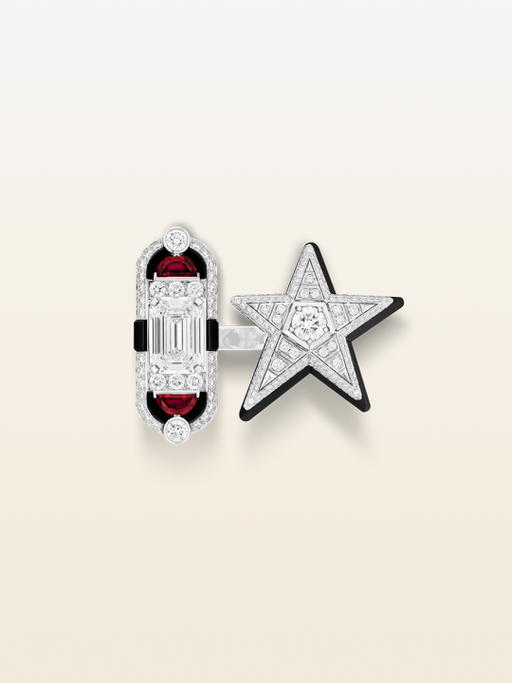
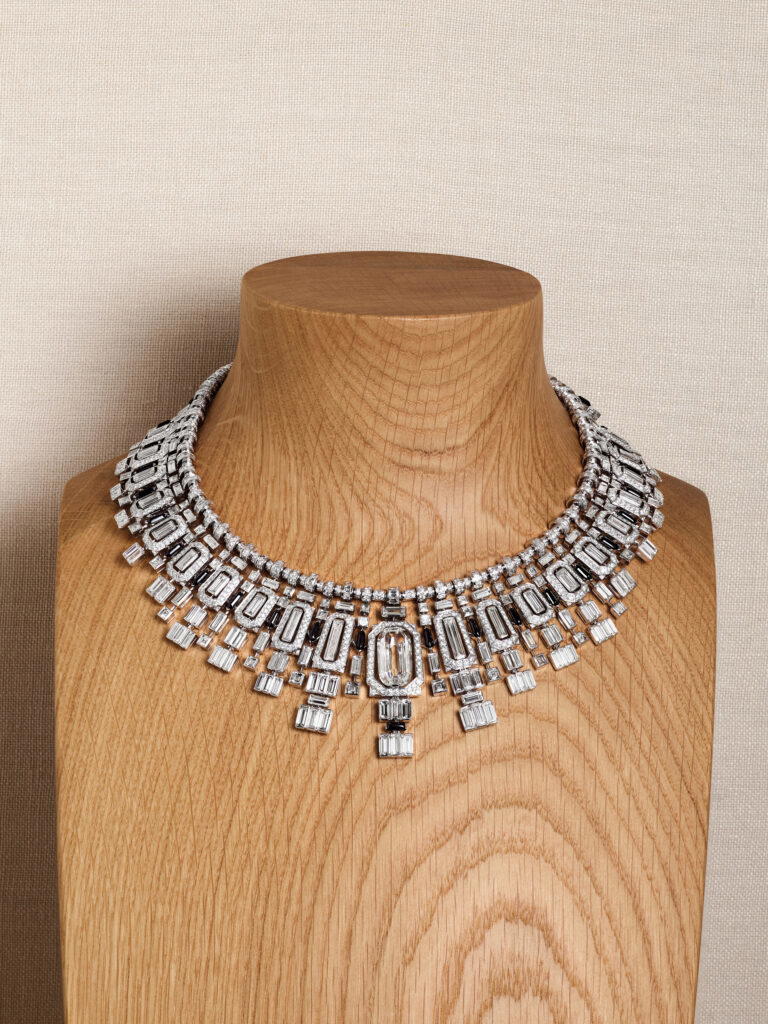
Volume is where Cartier’s control is easiest to discern because the pieces declare themselves through sheer size before you even notice the engineering. The Vetreta necklace exemplifies this, drawing on strict symmetry to revisit the Art Deco era, when Cartier’s graphic language set the benchmark. Built around an exceptional collection of diamonds, an 8.15-ct cut-cornered rectangular step-cut stone anchors the design. From there, the geometry radiates in structured, tiered forms, with step cuts and baguettes arranged to emphasise order, as if the design has been pulled taut along invisible axes.
The reference to skyscrapers is clear, but it is Cartier’s striking black-and-white contrast that gives the piece its edge. Small, precise onyx accents define and sharpen the structure, making the diamonds appear even brighter.
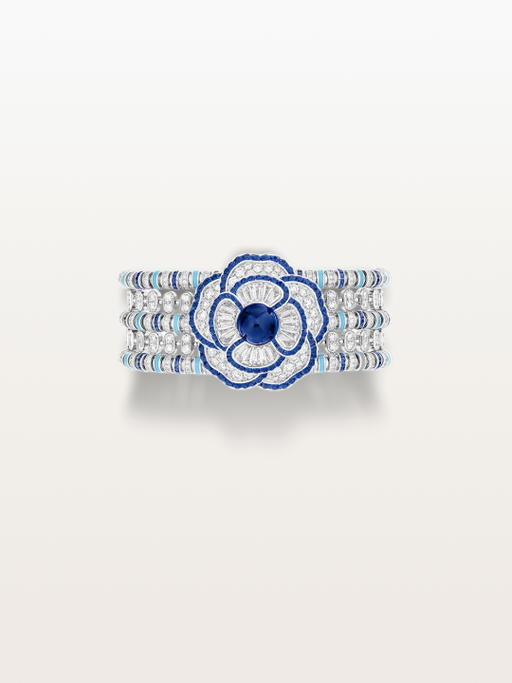
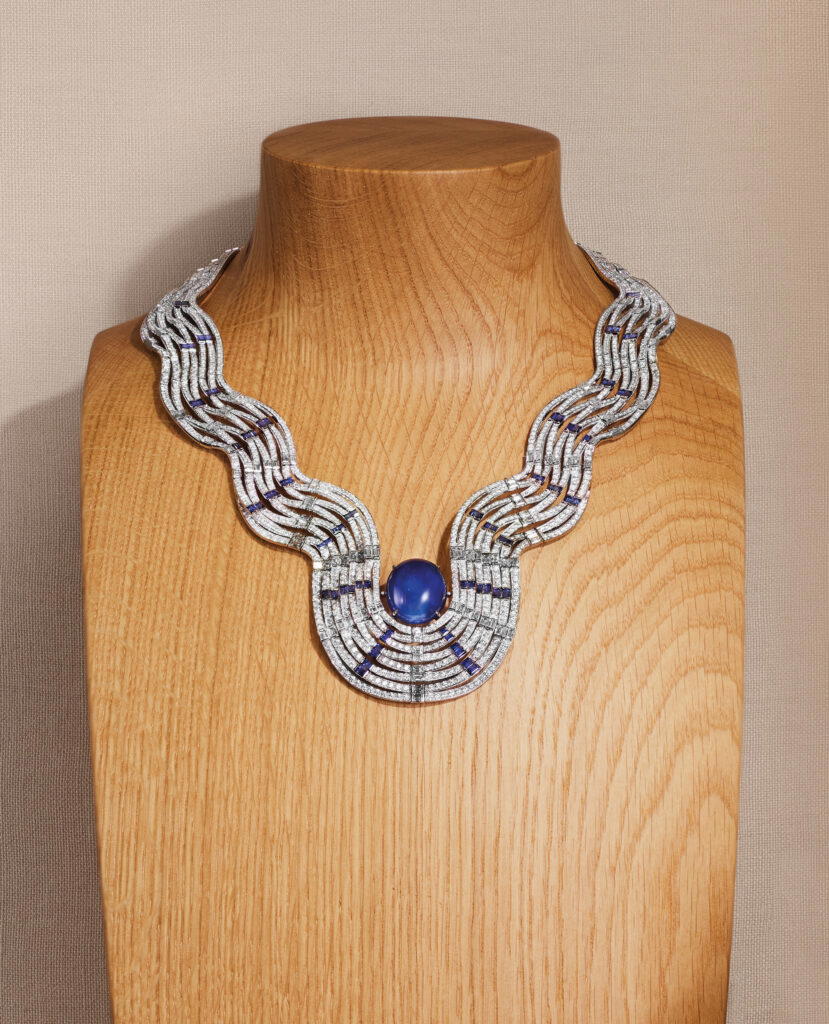
With the Haliade necklace, Cartier incorporates movement within a disciplined structure, using precisely calibrated links and exacting gem-setting to make the flow appear natural. A 41.85-ct deep-blue Madagascan cabochon sapphire anchors the piece, with greyish undertones resulting from inclusions.
The metalwork surrounds the stone with looping arabesques; calibre-cut sapphires, set with millimetric precision, punctuate the curves like steady beats, preventing the line from becoming too soft. The carefully designed openwork allows the necklace to breathe, with the volumes resembling waves flowing along the neck. Over 100 hours of lapidary work were dedicated to calibrating and matching the stones.
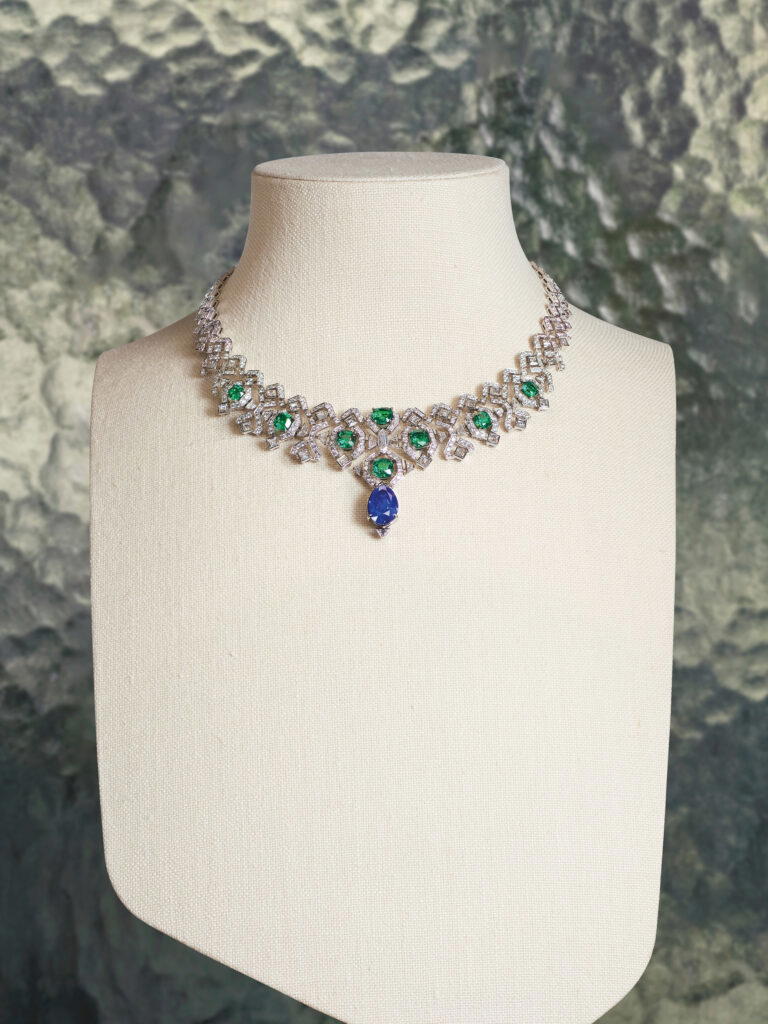
Nowhere, though, is Cartier’s sense of balance more immediate than in colour, where contrast does what structure and volume usually do. At times, the effect is familiar and reassuring, as in the Byzas necklace, which reprises Cartier’s blue-green pairing—the “peacock” combination it has refined for more than a century. A pear-shaped Ceylon sapphire, weighing 11.70ct, is set alongside Zambian emeralds totalling 8.94ct, whose cushion-like outline is echoed by the graphic motifs around them. The setting is designed to maintain a composition in tension, with dense areas offset by openwork and filled spaces contrasted with deliberate emptiness.
The palette becomes even more recognisable in Cartier’s Tutti Frutti tradition. Nearly a century after the style’s earliest expressions, the maison revisits it with the Tutti Ta Prohm necklace named after the Angkor complex’s Ta Prohm temple. Botanical forms press against architectural order: two Zambian emeralds anchor the composition, surrounded by a rare suite of carved rubies whose baroque cuts add to the sense of abundance. Subtle geometric touches, created by the paved metal and a set of square- and baguette-cut diamonds, lend structure to the stones and provide graphic contrast to this notably organic creation.

A Cartier high jewellery collection would not be complete without new additions to its bestiary. This instinct resurfaces once more in En Équilibre. In the Najaatra necklace, Cartier revisits one of its most iconic motifs, the cobra. It is crafted with unsettling realism: a head fully sculpted in volume, an emerald gaze, and slender scales precisely articulated. It appears to guard a 51.70-ct aquamarine, while kite-shaped diamond accents add a striking edge. Smaller aquamarines and tourmalines are arranged rhythmically, accentuating the reptile’s movement, while the tail coils around the neck in a final winding gesture, giving the piece structure and energy.
The animal, however, is not always predatory. The Nakaru brooch celebrates glyptic, the art of carving hardstones—a rare craft Cartier is dedicated to preserving. From a pink quartz block, artisans sculpted a flamingo with remarkable naturalism. This includes an agate beak and feathers rendered with softness that contrasts with the stone’s durability. A kite-shaped diamond suspended below serves as a small, precise counterweight to the bird’s graceful stance.
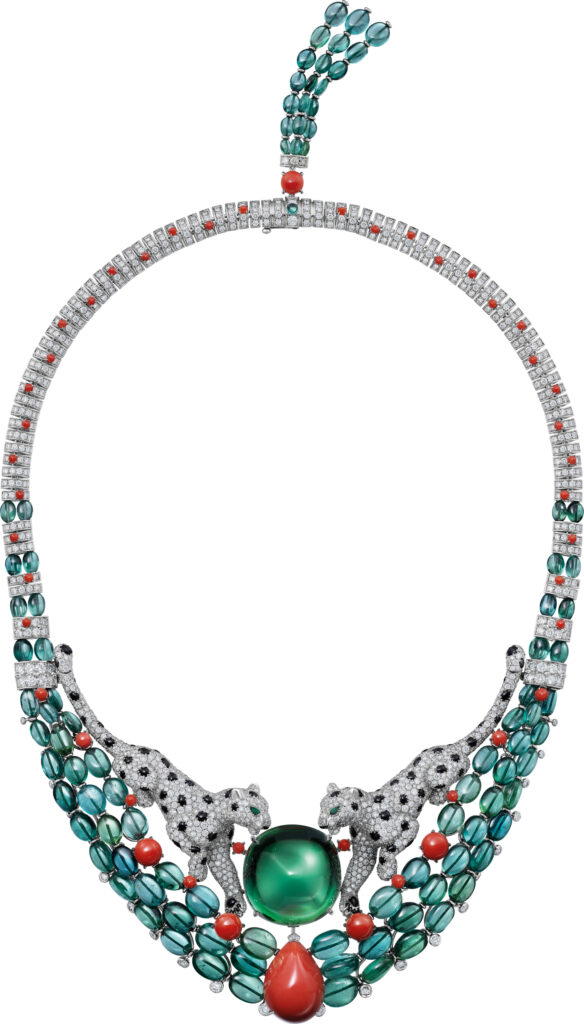
Finally, the panther appears, still prowling and insistent on its place. In the Panthères Reflexio necklace, Cartier focuses the drama around two main stones: a 74.10-ct green tourmaline and a 14.91-ct coral drop, their green-red contrast a Cartier signature. Blue-green tourmalines extend the palette on either side, while the structure remains symmetrical. In a mirror composition, two panthers face each other, poised to strike. Sculptural proportions, emerald eyes, onyx spotted pelts, and sinewy limbs give them their power. Even at its most iconic, Cartier relies on precision to maintain its balance.