In the world of whisky, single malts get all the glory. They far outprice whisky blends, are more sought-after by collectors, and tussled over by investors. But some impressive new releases of rare and aged whisky blends, at prices more often reserved for single malts, are a reminder that this category should not be overlooked.
House of Hazelwood, the name under which an on-going series of small-batch bottlings from the private collection of the Gordon family are being released, is turning heads. The Gordons own William Grant & Sons, which produces much-loved single malts Glenfiddich and Balvenie, but the family also has arguably the greatest inventory of long-aged Scotch held in a personal collection anywhere in the world.
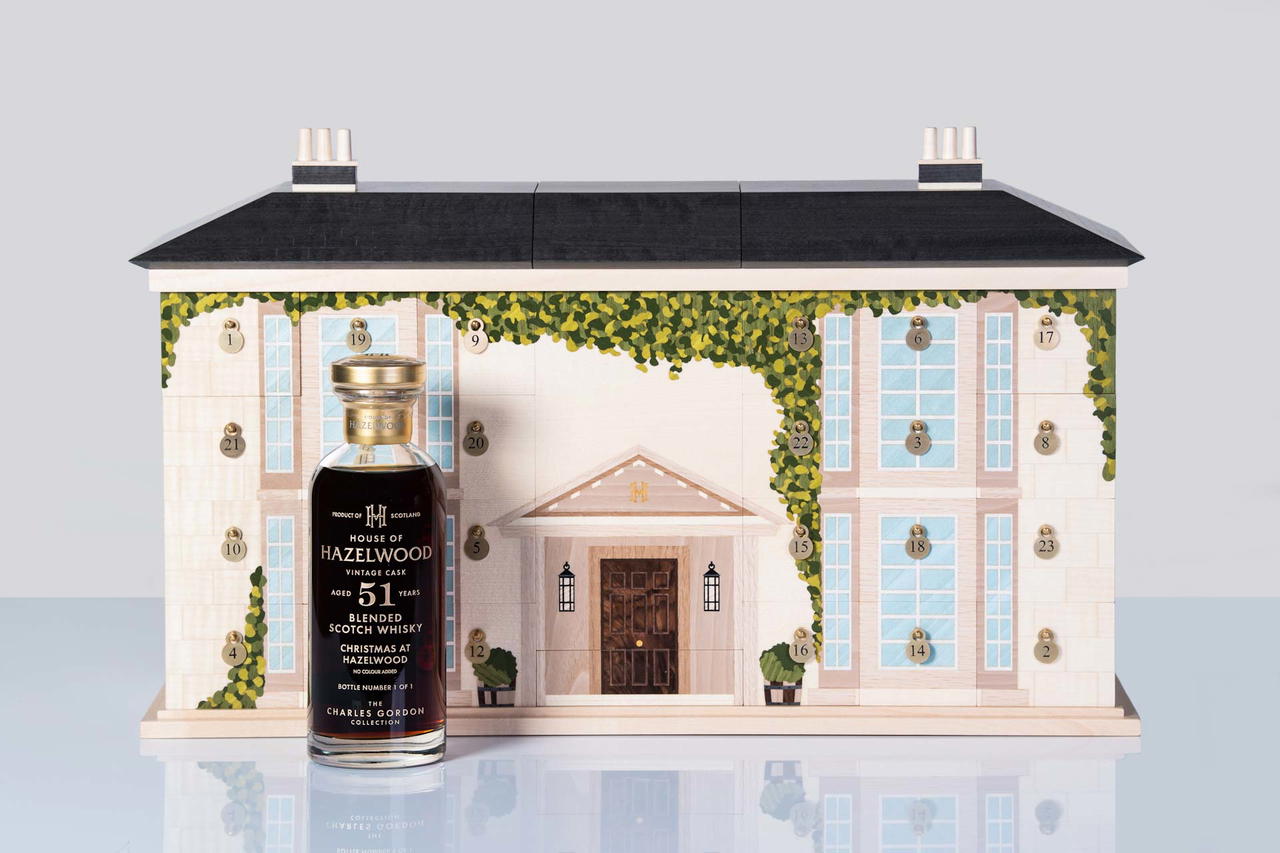
The House of Hazelwood releases (whether single grain or blended whisky, grain, or malt) usually sell for around £950 to £4,900 per bottle, but their lot for the Distillers’ One of One charity auction in Scotland on 5 October sold for an impressive £47,500, over three times its pre-sale low estimate. The lot, a 51-Year-Old blended Scotch whisky, was released as part of a one-of-a-kind whisky advent calendar, called Christmas at Hazelwood, presented in a sycamore, walnut and brass box inspired by the Gordon family’s ancestral home, Hazelwood House.
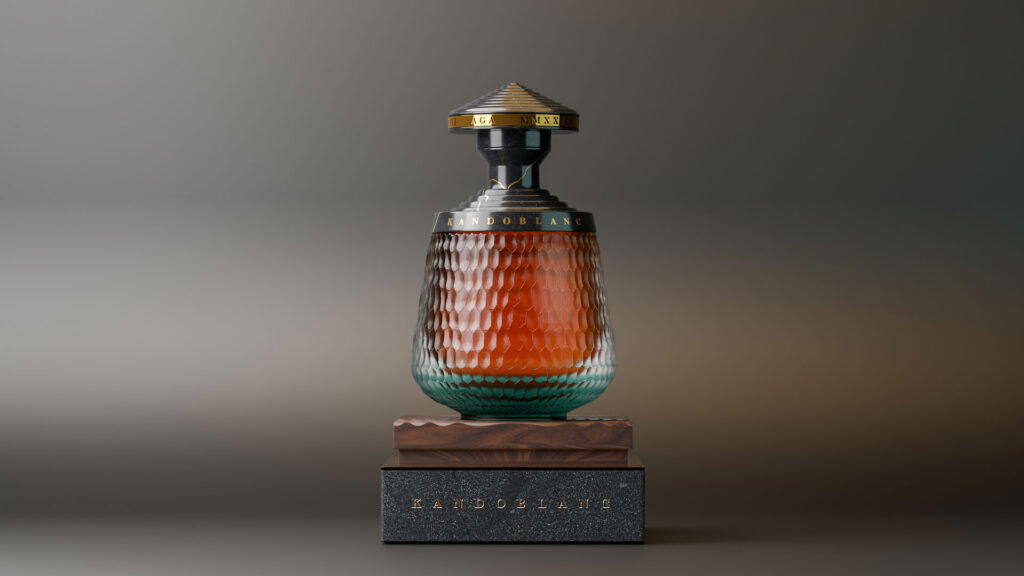
AGA by Kandoblanc, a new brand from Dhavall Gandhi, a former whisky maker at The Macallan and whisky director at The Lakes Distillery, sold for £45,000 at the same auction. AGA is a blend of two Scotch whiskies, one from the famed Speyside region and the other from the Highlands, both distilled in 1979.
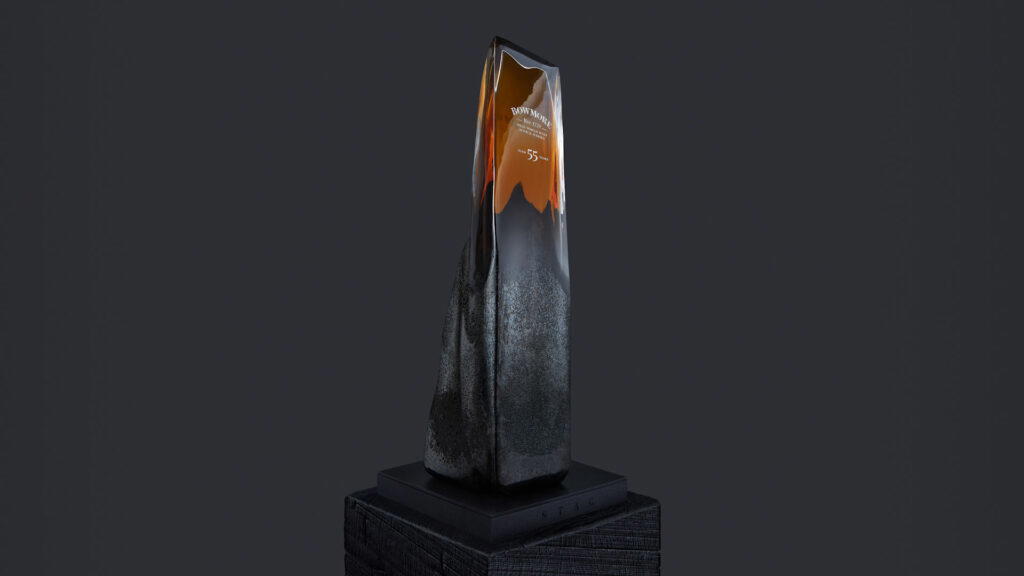
These sales stand out for their impressive sums, but they are still substantially less than the priciest single malts on offer in the auction: the magnum-sized Bowmore STAC 55 Years Old, the oldest whisky ever released by the distillery, sold for an impressive £562,500, while bids for the 50 Year Old, 1.5 litre Brora Iris finished at £400,000.
According to Whiskybase.com, which claims to be the world’s largest whisky database, blended whisky at auction represents less than 10 percent of market share by volume, and under 5 percent of market share by value.
There are signs the market for blends is increasing, however.
“This year, we could be seeing some expansion in the market for blended whisky, with its market share through early September beating its 2020-2022 performance,” says Nate McCray of Whiskystats. “With Q4 the whisky market’s most active, it remains to be seen whether blended whisky will continue to beat its numbers from prior years.”
Three qualities account for a whisky’s collectability: scarcity, brand value, and perceived quality. The sheer availability of so many whisky blends (more than 90 percent of the whisky produced in Scotland is blended) means they are inherently less collectible.
There are, however, notable exceptions, and a few whisky blends have succeeded in positioning themselves for collectors. “These are marked by high quality limited releases, where the number of bottles available is well communicated,” says McCray.
Over the past 3 years (September 2020–September 2023), the Royal Salute 21-year-old (World Polo Edition 2017) has tripled in price to £640; Midleton Very Rare 2001 more than doubled in price to £1500; and Midleton Very Rare 2011 increased by 169 percent to £720.
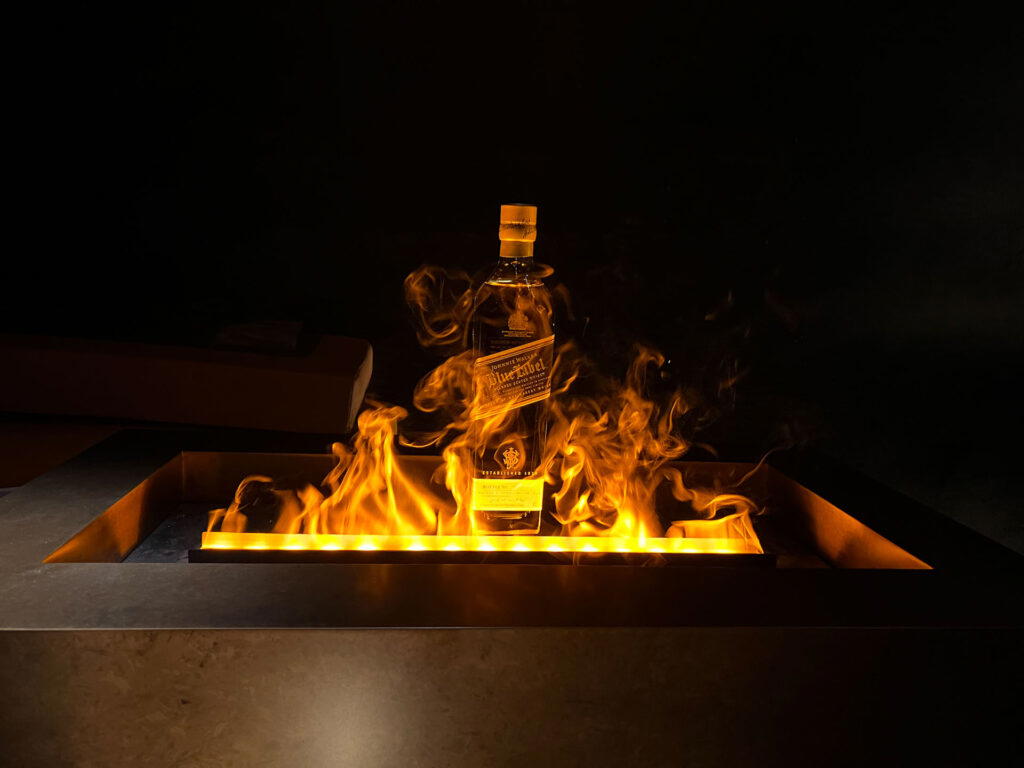
McCray also points to the strong performance of the Johnnie Walker Blue Label Ghost and Rare series, which includes whisky from closed distilleries, making supplies of the liquid finite; Hibiki whiskies, for example the Japanese Harmony 30th Anniversary release, which benefit from the market’s positive perception of the quality of Japanese whisky; and Irish whiskey makers Walsh Distillery with their Writers’ Tears Cask Strength 2015 Limited Edition and Writers’ Tears Pot Still Cask Strength 2014 Limited Edition.
The affordability of blends can be a boon for new collectors looking to build a collection. Shanghai-based Lou Qi, who first developed a love for whisky when studying at the University of Aberdeen in the Scottish Highlands, started collecting whisky three years ago. She found that knowledge of whisky in China was low, so spent many hours tracking sales on auction websites and now offers friends and family advice on starting their own collections. Together with two other Aberdeen graduates, she has opened a whisky bar in Shanghai.
She has numerous blends in her own collection, which she sees as stable long-term investments that are less likely to fall prey to the volatile whisky market in China.
“If a whisky tastes good, the bottle looks good, and it’s a limited edition, then for a long-term investment you don’t need to be too worried about return on investment,” she says.
Qi has snapped up boxes of the first release from Ardray, a new brand from Beam-Suntory. Ardray is made with spirit from a handful of Beam Suntory-owned Scottish distilleries (its portfolio includes Laphroaig, Bowmore, and Glen Garioch) and its partner Edrington (owner of The Macallan, Glen Rothes, and Highland Park). The blending team in Japan, led by chief blender for Scotch, Calum Fraser, in Scotland, trialled almost 200 combinations of grain and malt whiskies before settling on the final combination for Ardray.
“I have a strong feeling that this one will be valuable for collection. There were limited bottles in the first-ever release, and it’s very easy to open a bottle. My friends and I got through two cases in no time. The fewer bottles there are in a market the more valuable the remaining bottles will be,” says Qi. “In one or two years, the first edition will be more valuable, and when the second edition is released, price of the first will surely go up.”
A major reason why whisky blends are overshadowed by single malts in the secondary market is opacity. While Scotch single malts are, by definition, made at one distillery only using malted barley, the category of whisky blends includes blended malt whisky (a combination of single malt whiskies from various distilleries), blended grain whisky (grain whiskies from different distilleries), and blended whisky (malt whisky and grain whisky combined). Most whisky blends do not provide information on their contents in terms of distillery, age or percentage of malt or grain.
“The simple answer why single malts are preferred by collectors and investors is that they’re identifiable with a precise provenance and therefore seen as a safer bet. This transparency is key to the success of single malts as a whole,” says Jonny Fowle, Global Head of Whisky at auction house Sotheby’s. “To lift blends as a category, you’d have to change market perception and override the ease of identifying single malts.”
Makers of blends are going about this in various ways. Compass Box stands out for publishing the composition of its blends on the brand’s website, while House of Hazelwood tells stories of the age and rarity of the liquid without always providing detail. Indeed, in some releases, such as the 44 Year Old blended Scotch called The Unknown, the original provenance of the whisky has been lost. Ardray promotes the art of blending, and how Japanese blenders worked with Scotch whisky to create an approachable East-meets-West release.
The drinkability of blends, some of which are on par with, if not better than, a significant portion of single malts, comes down to this art. Blending whisky requires an excellent palate and memory, years of experience, and in-depth knowledge of the distilleries and their individual styles. It also needs an uncanny sense of intuition as to how the blended flavours will marry together over time, hopefully creating a symphony rather than a cacophony.
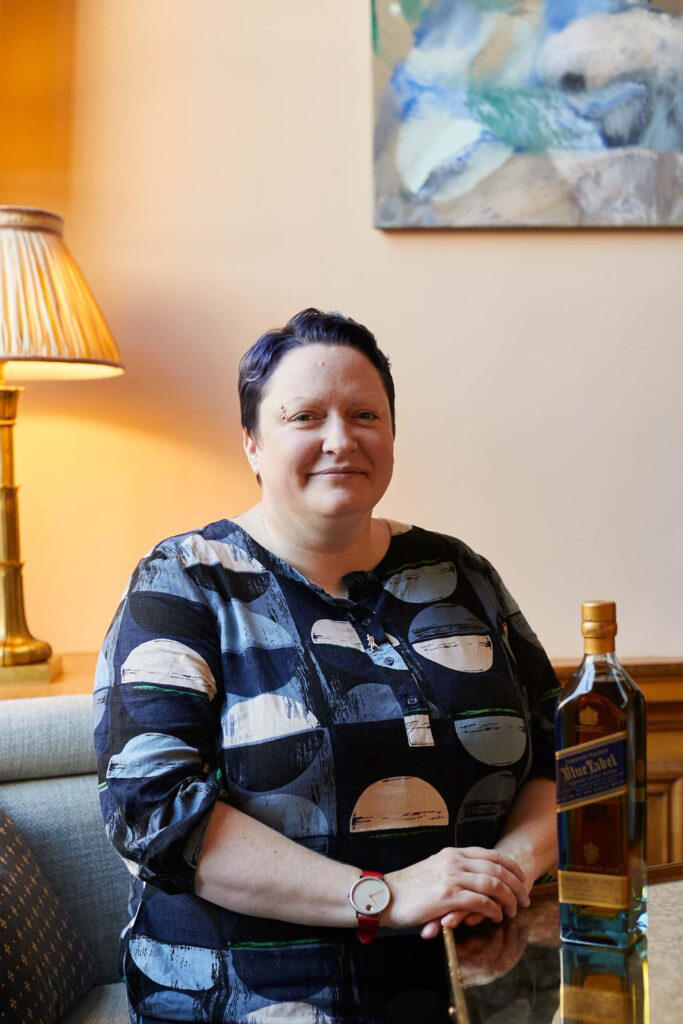
“What we do is not just about combining different expressions, with every whisky playing its own, individual role; rather it’s about how each of the whiskies can bring out a particular aspect or note in another whisky,” says Dr Emma Walker, Johnnie Walker Master Blender. “The part we play is trying to see the bigger picture–understanding how all of these component parts will interplay with each other and which can be wed to unearth new flavours or textures.”