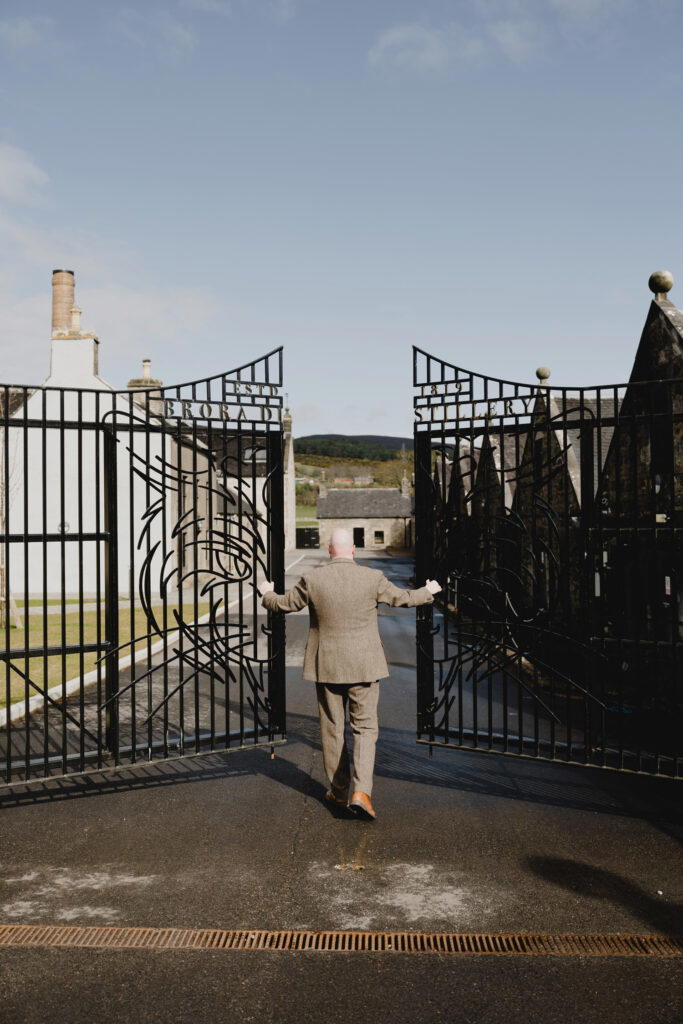
Pushing open Brora’s black metal gates shaped with the face of the endangered Scottish wildcat, the distillery’s logo, is an extraordinary feeling. Upon entering, I feel like I am experiencing something of historical significance. As it turns out, I am—the iconic Scottish Highlands distillery, which first opened in 1819 and then closed in 1983, has been revived.
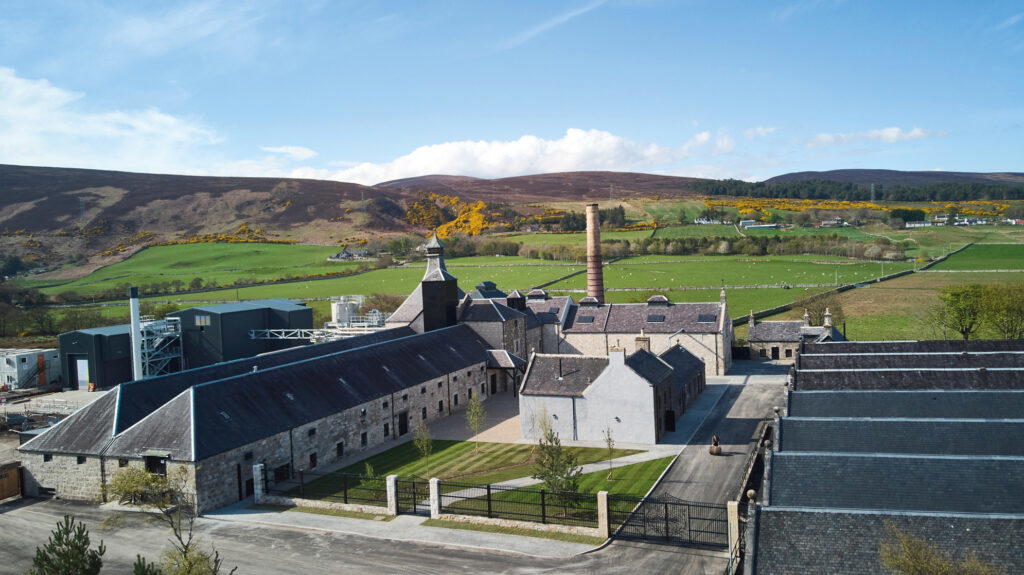
Towards the right, I see a long row of dark grey stone warehouses stacked, I guess excitedly, with casks of the deliciously waxy, earthy, and smoky whisky Brora is revered for. On the left, the old chimney rises above the still house, along with a single pagoda—the classic architectural motif of malt whisky distilleries—that was used in days past to extract heat from barley malting.
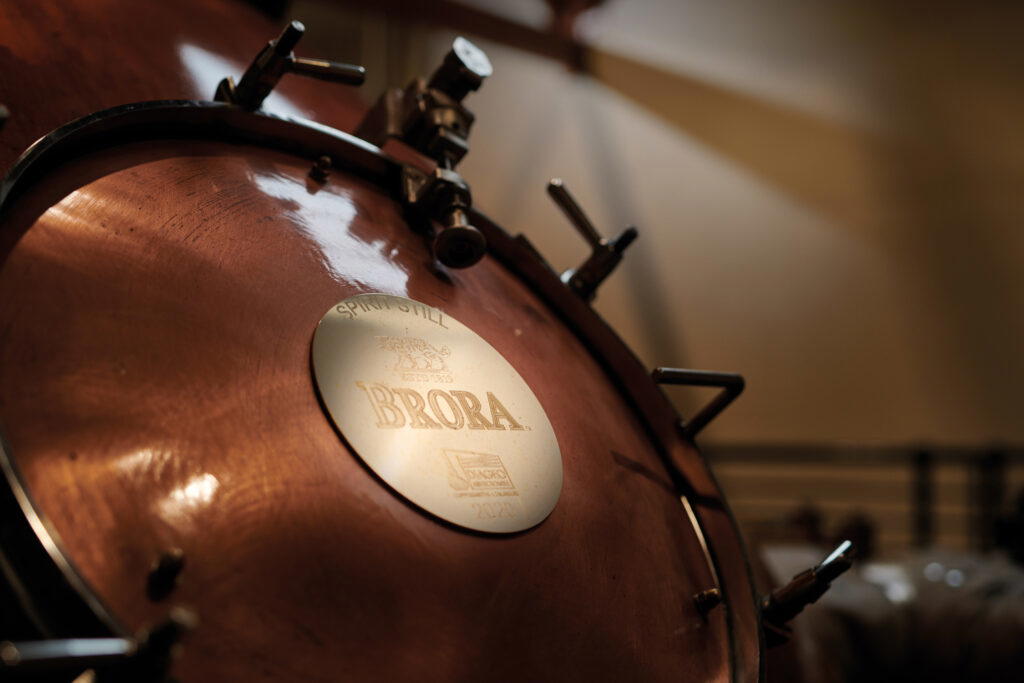
The fresh country air is scented with the sweet, yeasty notes of whisky-making, and the two gleaming copper stills—refurbished by hand and beckoning to be touched—are once more at scalding temperatures. The outdoor worm tubs, pools of water in which spirit is converted from gas to liquid, give off a light steam that swirls up against a backdrop of green, sheep-speckled hills.
Few people have visited Brora since it reopened in the depths of the pandemic. The distillery is currently open by appointment—but only to those who have a private invitation, including British multinational alcoholic beverage company Diageo’s prestigious Cask of Distinction programme members.
Those looking for a spectacular taste of Brora’s legacy can also bid in a Sotheby’s auction in October. It will be held both in person at Hopetoun House near South Queensferry, which dates back to 1699, and online so bidders from around the world can participate.
Historic bottlings of Brora have become collectors’ favourites, bolstered by its ghost or silent distillery status. In 2019, a bottle of 1972 Brora Limited Edition 40 Year Old sold for £54,450 (S$93,526), a distillery record.
A never-to-be-repeated release will go under the hammer in early October. While further details are still under wraps, the auction lot celebrates Brora’s artistry through the generations.
The first cask of liquid produced when the stills were fired up again was laid down in May 2021—over 38 years after an old distillery ledger was marked with the record: “Commencement of Brora Distillery silent season (undetermined period)”.
It was the last exciseman at Brora who wrote those words in 1983, and it was his son, master distiller Stewart Bowman, who sealed the bung on Cask 001 in a new century.
Bowman has since moved on, but Brora’s past continues to echo throughout the distillery. Rekindling its legacy, the restoration team recorded the oral histories of former distillery staff, poured over old stillmen’s records, and tasted and catalogued samples of remaining stocks.
To recreate the flavour of Brora whisky, the team emulates the distillery’s earlier whisky-making process as faithfully as possible, including sourcing peated malt from Glen Ord Maltings, as was done in the old days, and grinding it to a similarly rough texture.
Making the process more complex is Brora’s convoluted past, which resulted in different styles of whisky being produced. The distillery, standing high on the north-east coast of Scotland, was originally called Clynelish.
Years passed, sometimes with short closures due to the vagaries of the whisky market, until in the late 1960s, when demand for blended whisky was rising, a new distillery was built next door and production was expanded. This new distillery is today called Clynelish.
In 1968, the original distillery was officially renamed Brora and after trials of peated malt, its style became more heavily peated and intense, with a smoky finish and aromas of vanilla and fruit. Brora supplied this heavily peated whisky, a style more associated with distilleries on the western island of Islay, for blending.
In the late summer of 1981, Brora returned to more traditional peating levels.
As the 1980s progressed, citrus notes took over, along with grassy aromas and the typical waxy mouthfeel. The Scotch whisky industry then faced some tough years, and Brora was no exception. It went silent for several decades until 2021.
Brora, for example, is carbon neutral. Fuel for the stills comes from a biomass boiler powered by sustainably sourced wood chips.
Reopening ceremony
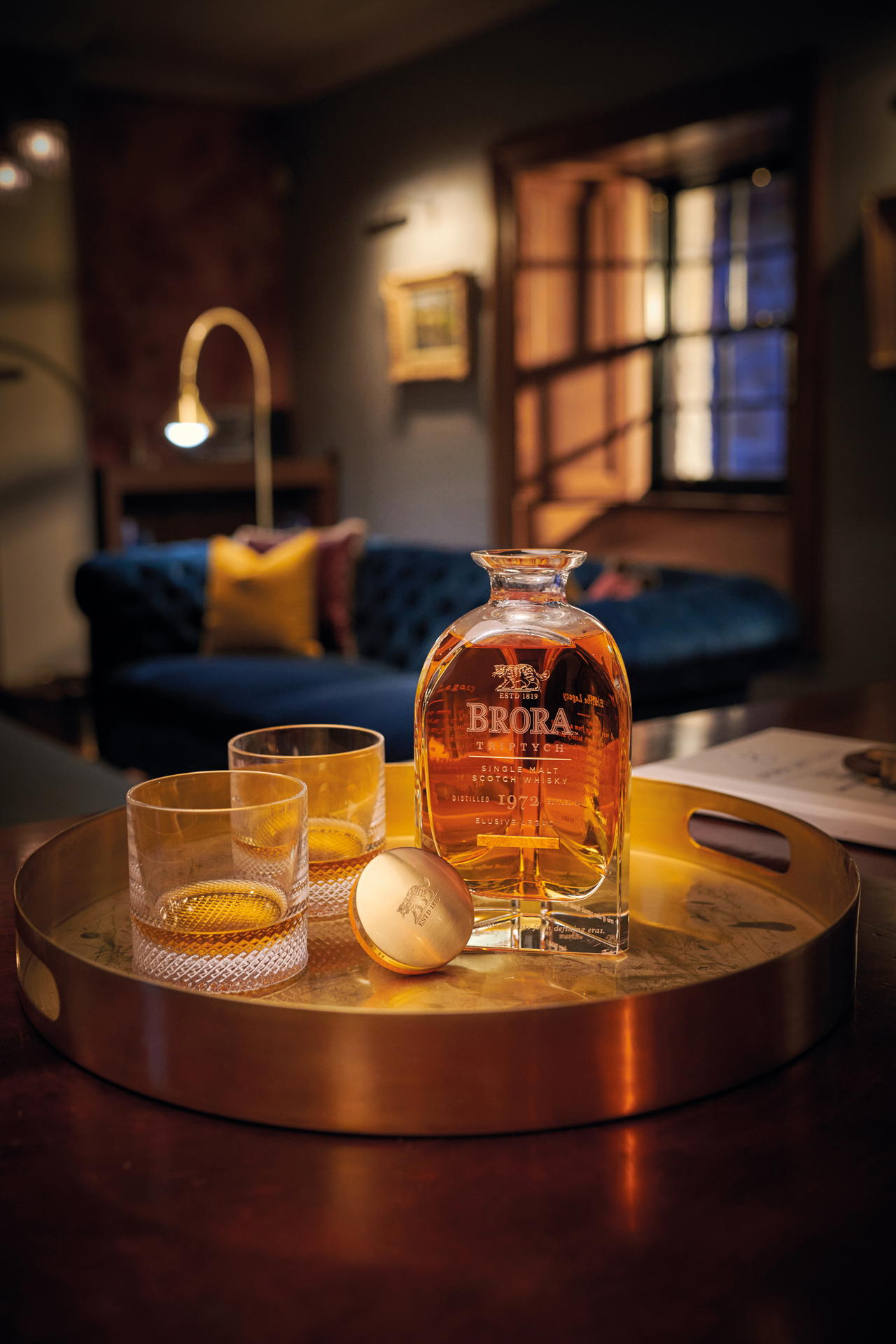
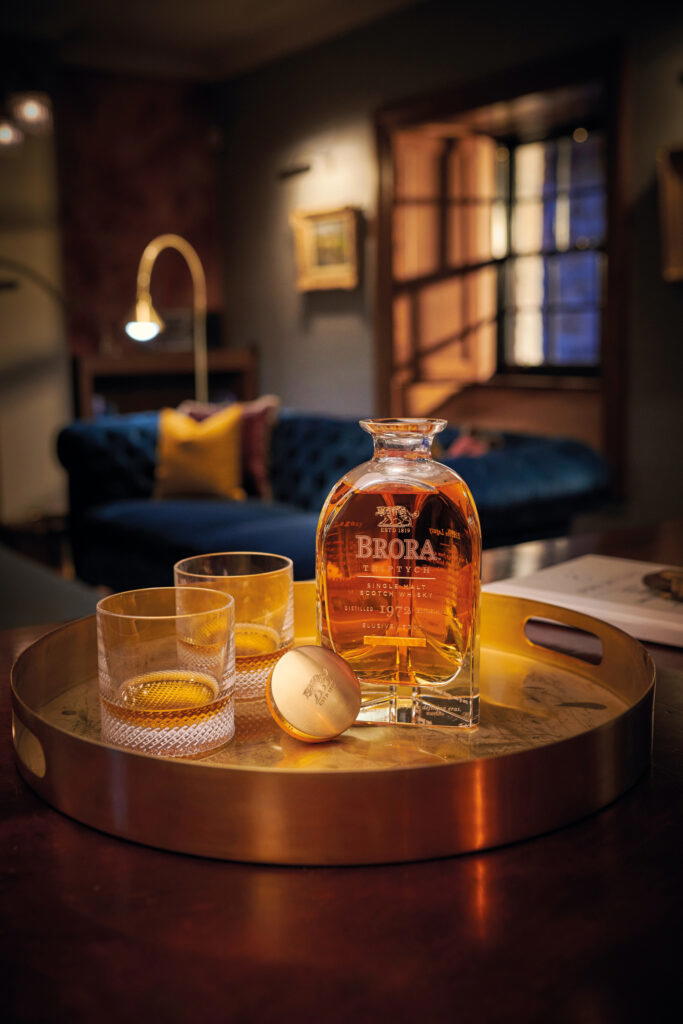
The three styles are captured in the Brora Triptych (£30,000), featuring 48, 43, and 38 Year Old whiskies, which was released to celebrate the reopening of the distillery.
I am treated to a tasting of the Triptych with Brora brand home host, Andrew Flatt. He also talks me through a new make spirit nosing with samples from Clynelish and Lagavulin distilleries that represent the three eras that define Brora, and which the distillery hopes to recreate one day. As another highlight, he serves a dram of a distillery-exclusive 39 Year Old in Warehouse No 1, where Cask 001 lies, keeping us company.
Visitors are also walked through the distillery to experience the whisky-making process first-hand. We even get to taste the liquid. In the fermentation room, Flatt drops a slender pail on a chain into the washback, a tall cylindrical vessel in which the process of fermentation takes place, so we can taste the wash or fermented “beer” of around 6 to 8 percent ABV produced from malted barley before distillation.
After the tour, we enjoy a four-course lunch with wine pairing, featuring langoustines from Brora harbour, Scottish scallops, and venison. In front of rolling green hills, a final whisky is served on the terrace.
Links House, a stately luxury boutique hotel about half an hour by limousine from the distillery, caters to the distillery’s meals. Located next to the Royal Dornoch Golf Club, each of its 15 uniquely styled bedrooms is named after a North Highland salmon river, giving an idea of what attracts guests to the hotel besides whisky.
The restaurant Mara serves fish and other seafood from nearby waters, as well as Scottish classics like haggis, including vegan versions. You can also relax in an armchair with tartan fabric by the log fire in the lounge or read a Sherlock Holmes novel or a book of Robert Burns’ poems in the library while enjoying the lovely weather.
Even though a trip to Brora is a chance to immerse yourself in Scottish whisky-making’s long history, some of its newer features are compatible with 21st-century tastes and expectations.
Brora, for example, is carbon neutral. Fuel for the stills comes from a biomass boiler powered by sustainably sourced wood chips.
While the traditional distillation regime has not changed, water efficiency has also improved in the distillation processes, with the worm tubs cooled by an adiabatic system. Additionally, the pot ale and spent lees tanks have been positioned to supply heat to other areas of the building.
The distillery was originally constructed in 1819 for £750 before being brought back to life as part of a £35 million investment package by Diageo to revive both Brora and Port Ellen, another legendary ghost distillery on Islay that is slated for reopening next year.
While it is an exercise in patience, now that the ghost of Brora is reawakening and whisky’s wildcat is purring once more, we can only wait. It will be years before Cask 001 is bottled so we can enjoy 21st-century Brora.