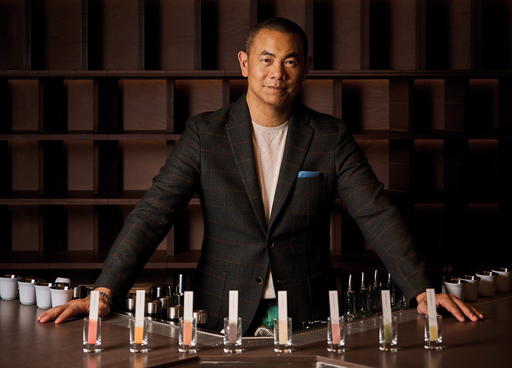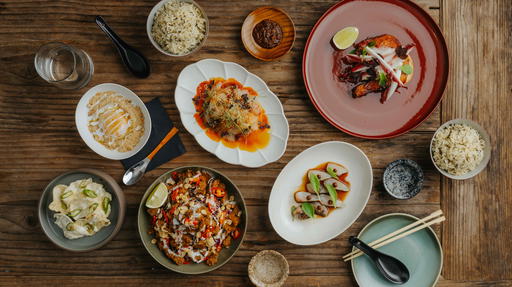

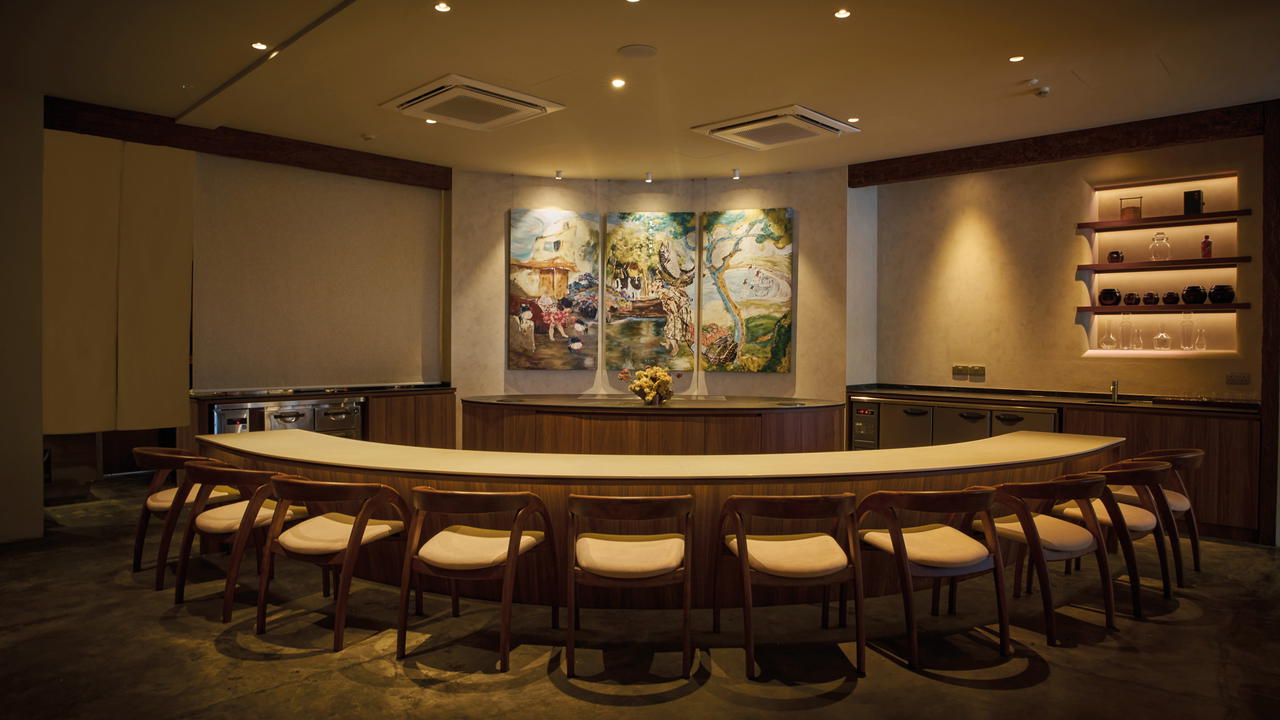
Dining at Asin awakens all my senses at once. I’m ushered to a walnut wood chair at the 10- seater counter, its semi-elliptical wing shape intimate yet theatrical as chef and owner Ace Tan and his team finish our first dish. His Southeast Asian hawker-inspired Oyster Omelette is elevated by an aromatic chilli and holy basil sauce.
A triptych by Hong Kong-based artist Chloe Woon graces the walls and menu cards. The painting evokes an idyllic countryside with girls feeding chickens beside a fisherman returning with a bounty of seafood. In the background, ducks in a pond, a jumping fish, and a cow hint at the produce featured on the current menu. As Tan treats each season with reverence, the painting and menu cards are refreshed with each menu launch.
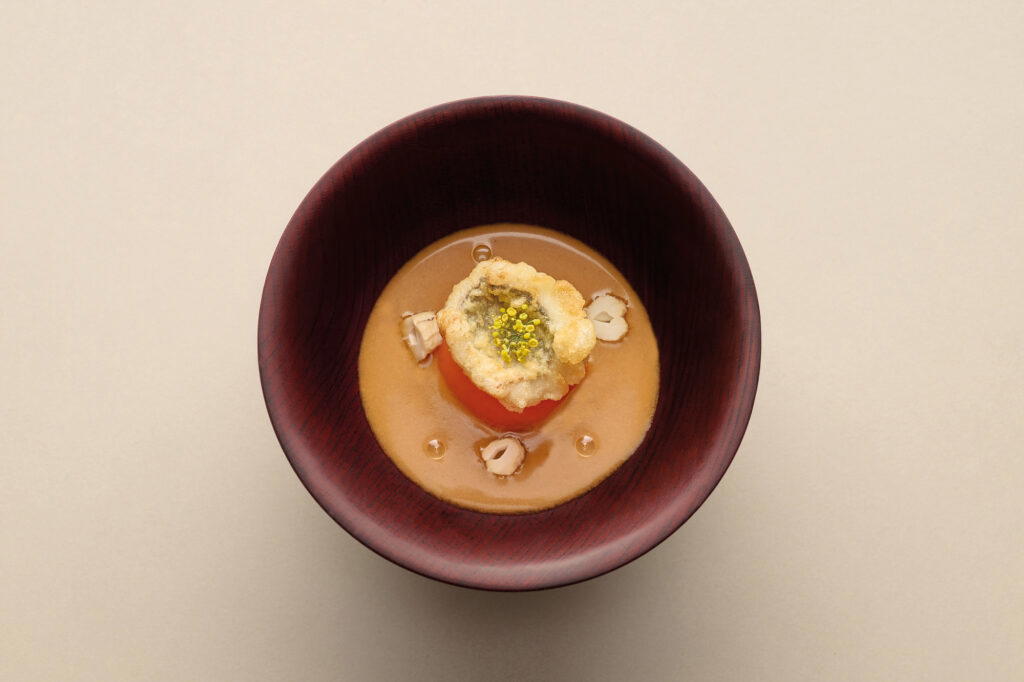
Before each dish is served, a beautifully illustrated card by Woon rests on a miniature easel in front of us. It explains the ingredients and seasons behind the dish. For Tan’s Oyster Omelette, the card highlights molluscs. Featuring battered kuzu (a vine native to East Asia) and potato starch spheres filled with lightly grilled baby oysters and topped with egg floss, these bite-size morsels burst with umami.
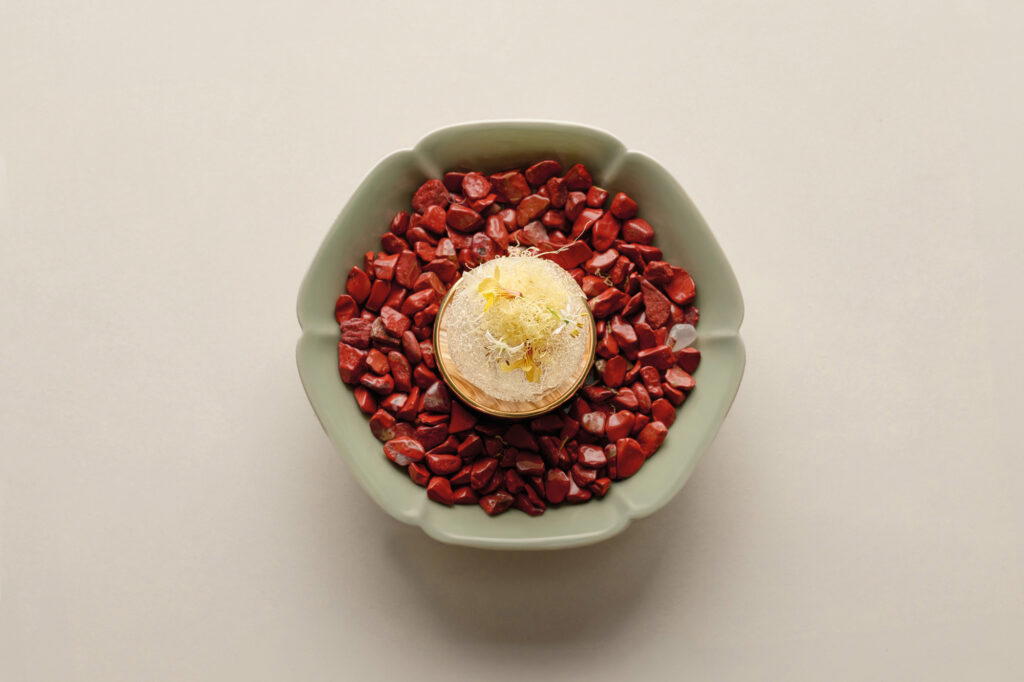
Following that, the Tori Luffa Bao, a tribute to drunken chicken, is served braised and silky. It is paired with luffa, a summer gourd valued for its mild, refreshing properties in Chinese and Southeast Asian cuisine. The vibrant beetroot-coloured swirls in the bao echo the fire element.
On the accompanying card, an adorable chicken wanders about beneath a luffa. “The cards explain what the dishes are and why they are prepared, they create anticipation for the food and reveal why we chose these specific seasonal ingredients. This connects diners to the season’s elemental philosophies for an immersive, mindful dining experience,” Tan says.
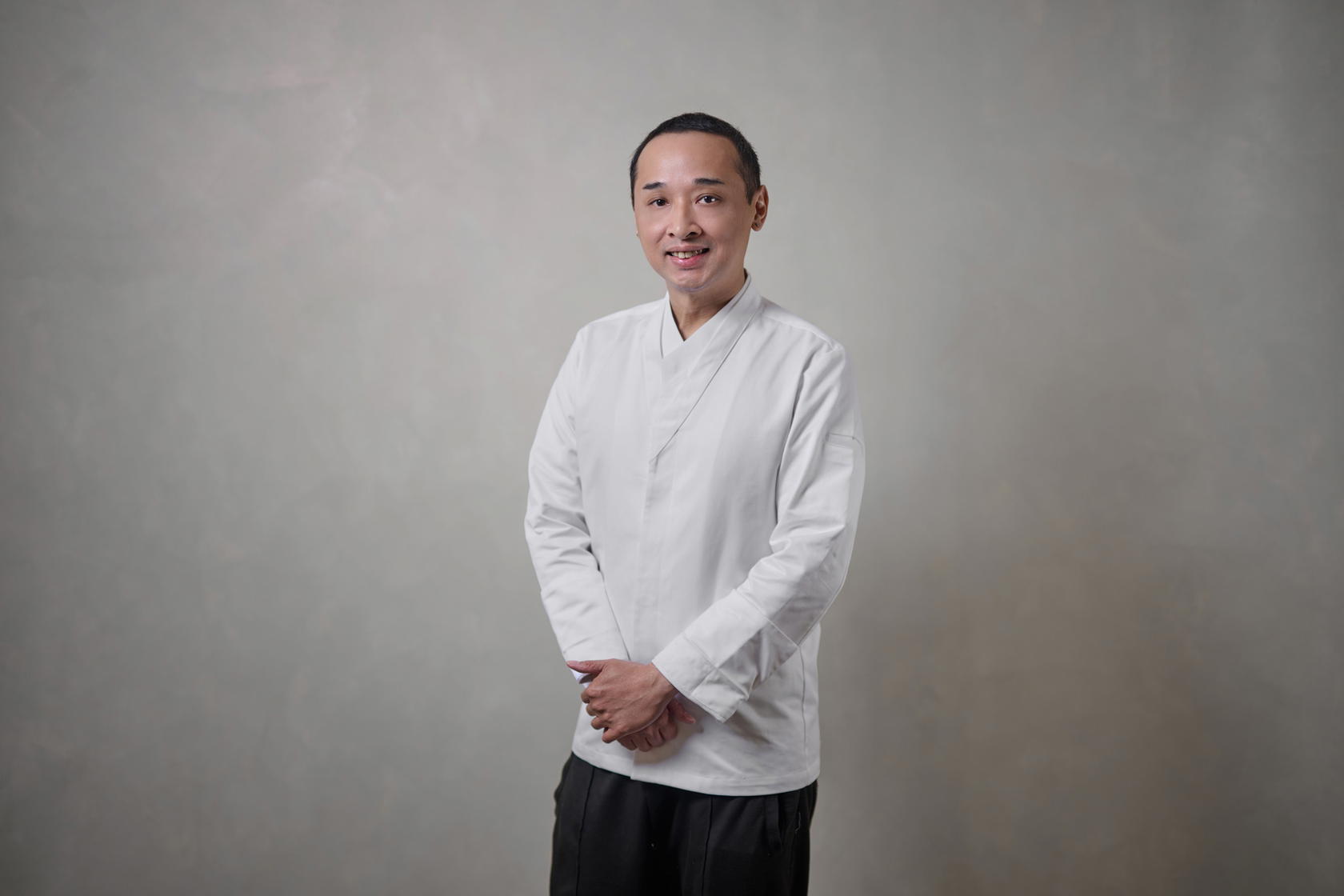
The brainchild of Tan and his partner Desmond Heng of Suguru, Asin (pronounced “Ace-in”) is a play on the word “Asian”. The name pays homage to the region’s culinary traditions—the flavours, techniques, ingredients, and histories that continue to shape Tan’s dishes.
Asin also means salt in Tagalog, while in Bahasa Indonesia it translates to “salty”. Salt, both elemental and essential, forms the foundation upon which all other flavours are built, he shares.
Tan’s professional journey has taken him through some of the region’s most demanding kitchens, including Les Amis in Singapore and Flower Child in Seoul. Exposure to local culinary traditions deepened his appreciation of seasonality.
Returning to Singapore in 2023, Tan established Asu in 2024, now-defunct, where he began developing what he calls progressive Asian cuisine. Rooted in tradition but expressive and evolving, it is a cuisine shaped by diligent research and continual experimentation.
Asin represents Tan’s culinary journey thus far, including visits to his relatives’ traditional Chinese medicine (TCM) shop in Tanjong Pagar. His concept of progressive Asian cuisine draws on his early exposure to shi liao (食疗) in which one’s diet should respond to both the body and its environment.
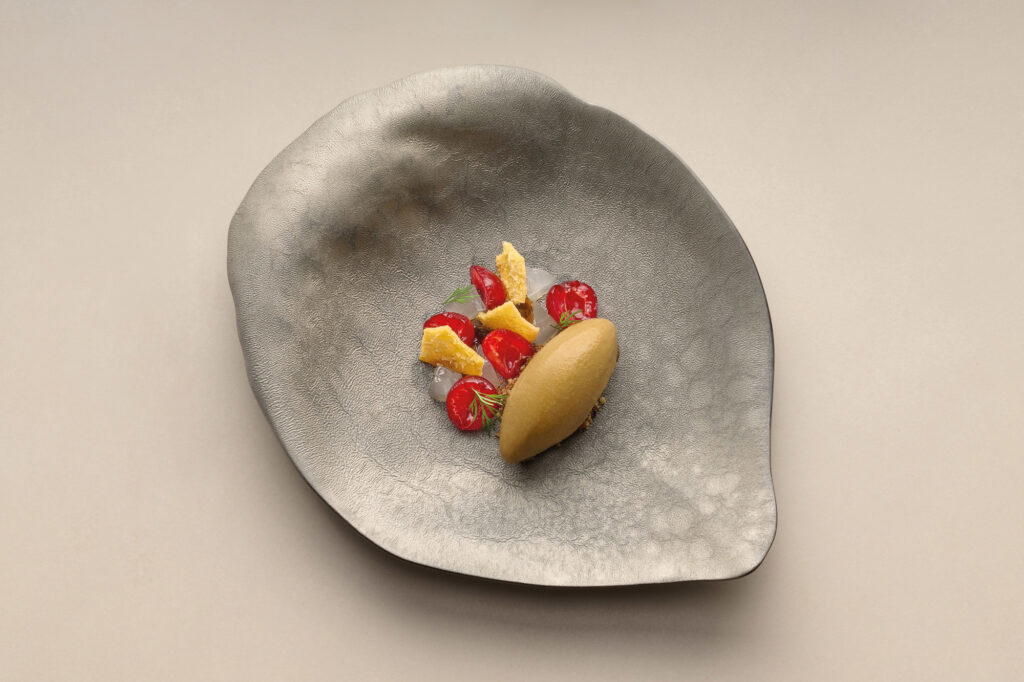
As a result, Asin’s cuisine is primarily influenced by Asia’s four seasons and the Five Elements. This ancient Chinese philosophy and TCM concept focuses on how sour, bitter, sweet, pungent, and salty interact with the body’s internal state to create natural harmony. Sharp-eyed diners will notice that some dishes, such as Summer Roll 2.0 and Ngor Hiang 6.0, are numbered. The reason for this is that Tan revisits and refines dishes whenever he has a chance to clarify them.
“Ngor hiang is a deeply personal dish; it is a tribute to my late grandmother and something I always looked forward to having when I visited her as a child. For the Ngor Hiang 6.0 version, we emphasised technical precision—from the quality of tiger prawns and the pork’s seasoning to the crispness of the yuba and the balance of the wild ginger chilli sauce,” he explains.
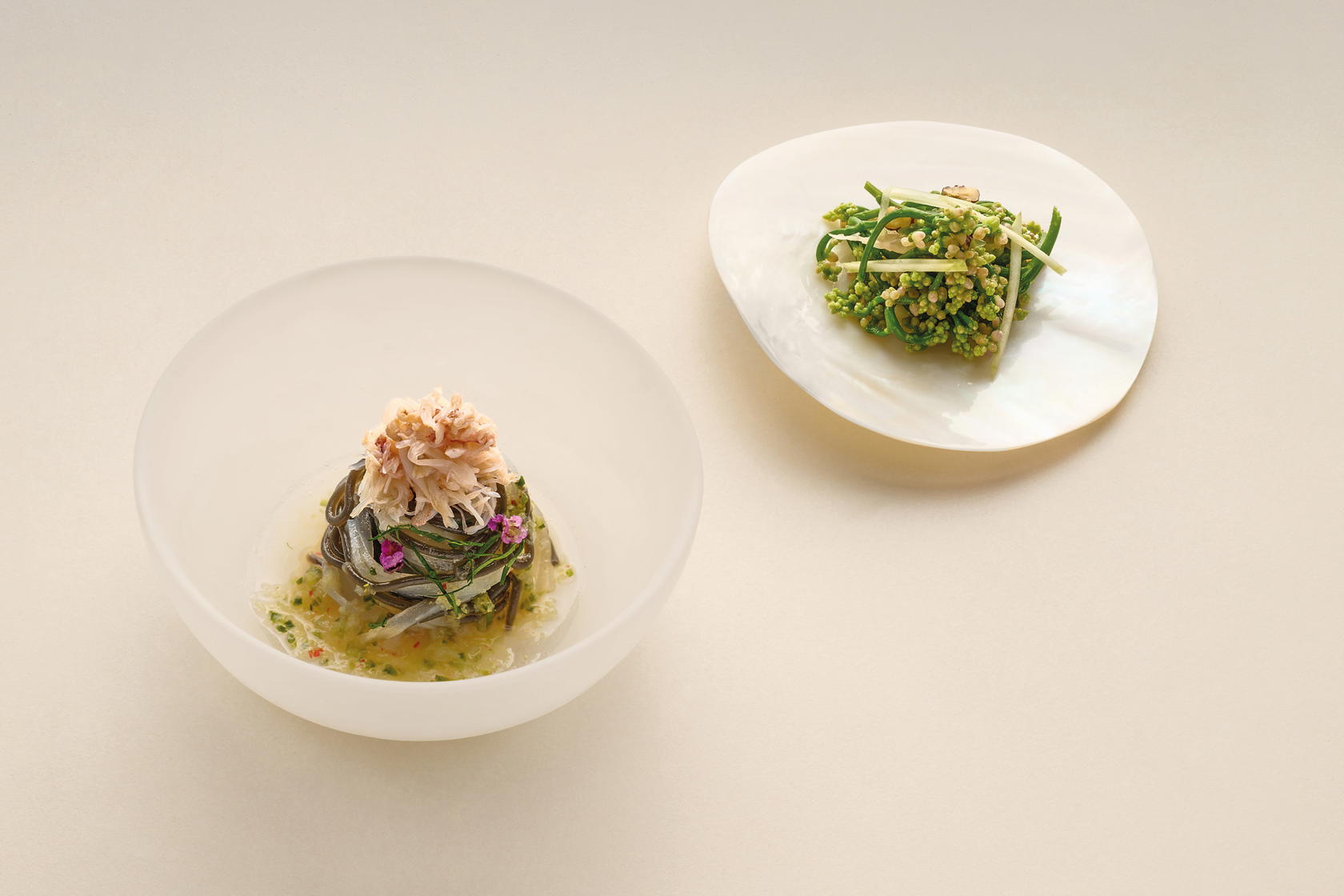
A delicious respite from Singapore’s heatwave, the refreshing Yum Pu Ma Noodles is easily my favourite dish of the day. Chilled fern and rice noodles are served with Thai raw-marinated hanasaki crab, Ceylon spinach, and hanaho flowers. It nods to the Teochew tradition of raw-marinated crab in which the crab is cured rather than cooked, preserving its sweetness and briny depth, before being reimagined through a Thai lens.
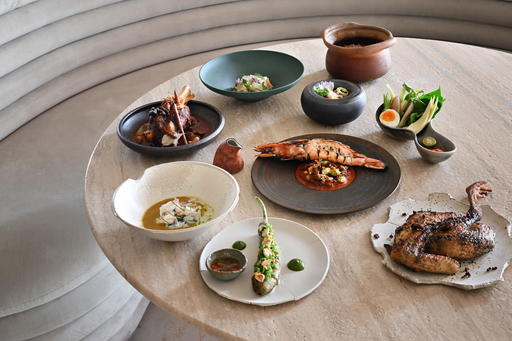
Black Beauty reflects the Asin team’s fascination with Southeast Asian immigrant history. “We were particularly drawn to how early Chinese immigrants adapted their traditional fish-cooking techniques to the native catches of East Malaysia.” To honour adaptation, classical Cantonese techniques are paired with regional produce.
For example, Black Emperor Fish—a prized hybrid of Malaysian empurau and sultan freshwater river fish—is paired with buah kulim (jungle garlic) for its complex, earthy flavour. Tan describes it as a meeting of heritage and geography.
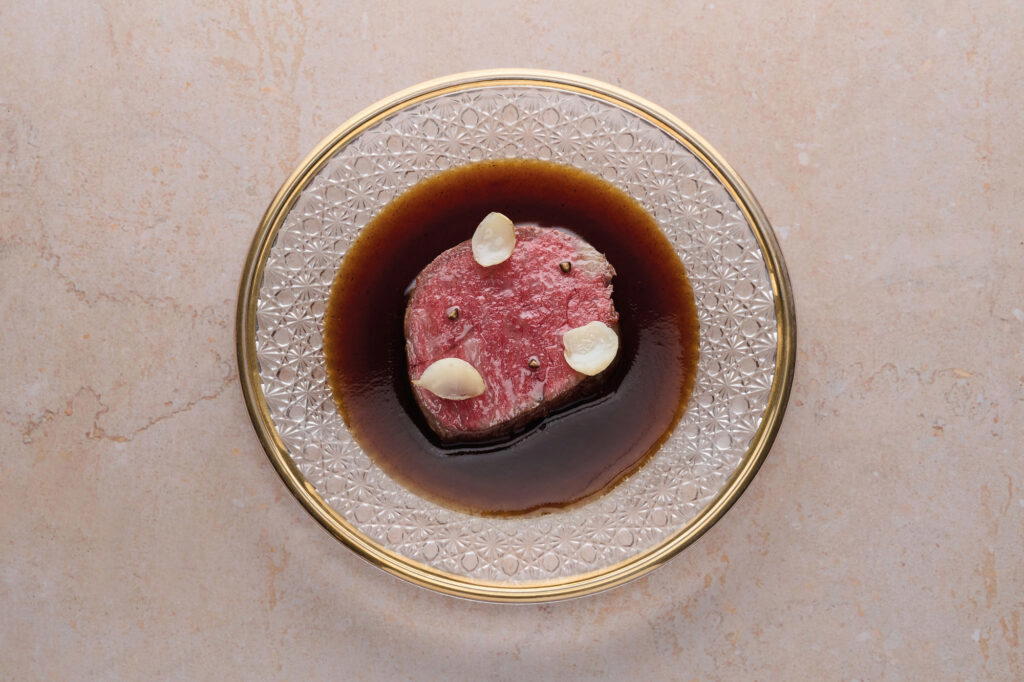
The hearty main dish Jiang Mu Ya consists of roasted Irish duck, watercress consomme, mountain yam rice, celtuce (Chinese lettuce stems), and pickled finger ginger. The rice, celebrated for its wellness properties, and the clarified duck bone consomme infused with fresh watercress are said to cleanse the palate and nourish the qi.
Tan hopes diners leave Asin with a deeper appreciation of Asia’s seasonal rhythms, and a clearer understanding of how tradition translates into contemporary expression. “I want them to be excited by the breadth and quality of Southeast Asian ingredients, including the lesser-known ones.”